West Nile Virus in New York Grouse
West Nile Virus threatens New York ruffed grouse populations, causing lethargy, neurological symptoms, and significant mortality.
Know what you’re after.
Big game, small game, upland birds, and waterfowl — identification, behavior, rut and migration timing, and how each species moves through the season.
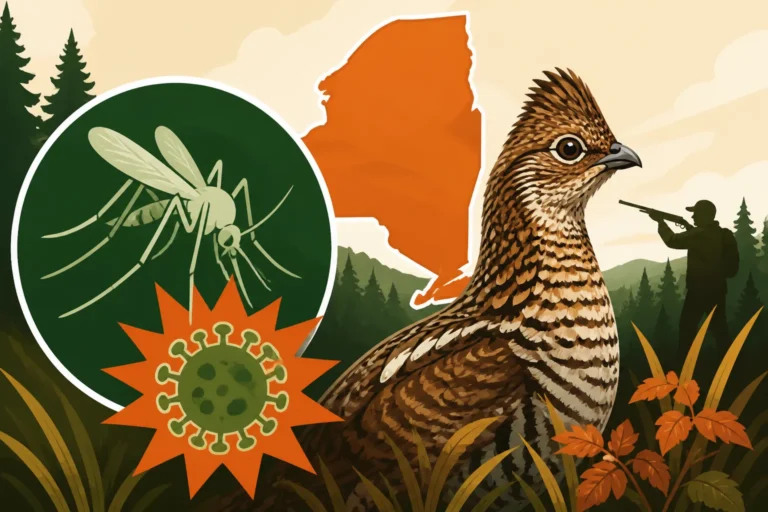
West Nile Virus threatens New York ruffed grouse populations, causing lethargy, neurological symptoms, and significant mortality.
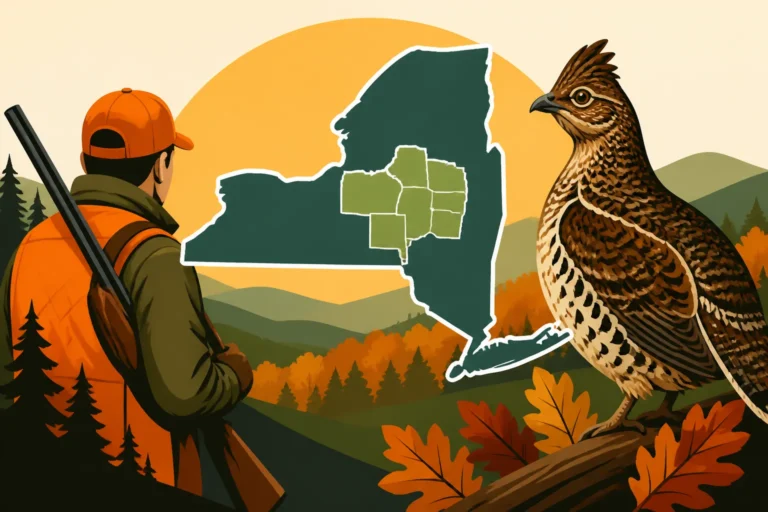
Top New York counties with active timber management offer hunters consistent populations of ruffed grouse in young woodlands.
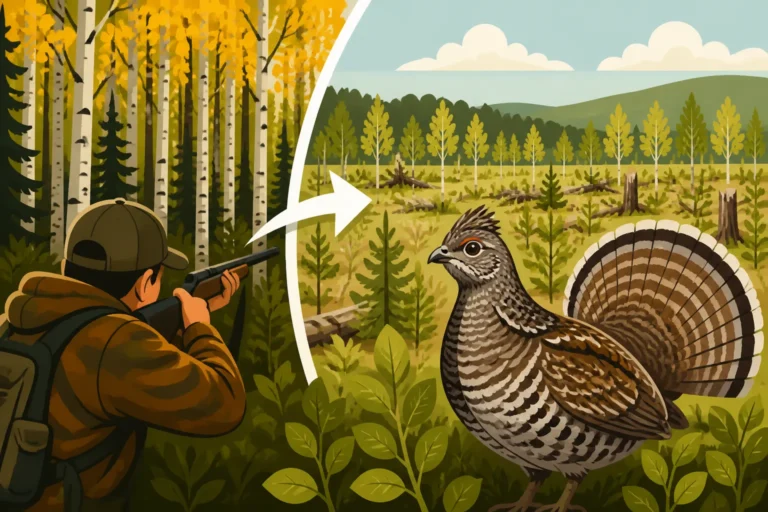
Aspen cuts provide New York ruffed grouse with dense protective cover, thermal insulation, and vital winter food sources.
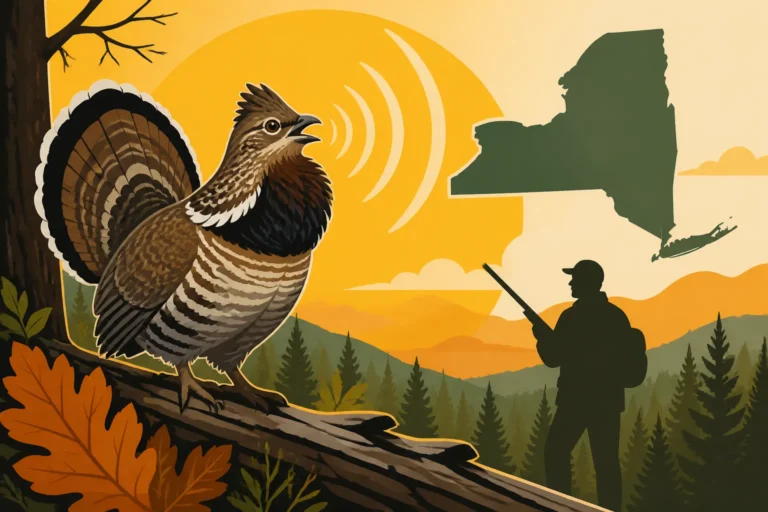
New York ruffed grouse drumming surveys track breeding populations and help hunters locate birds across the Adirondacks and Southern Tier.
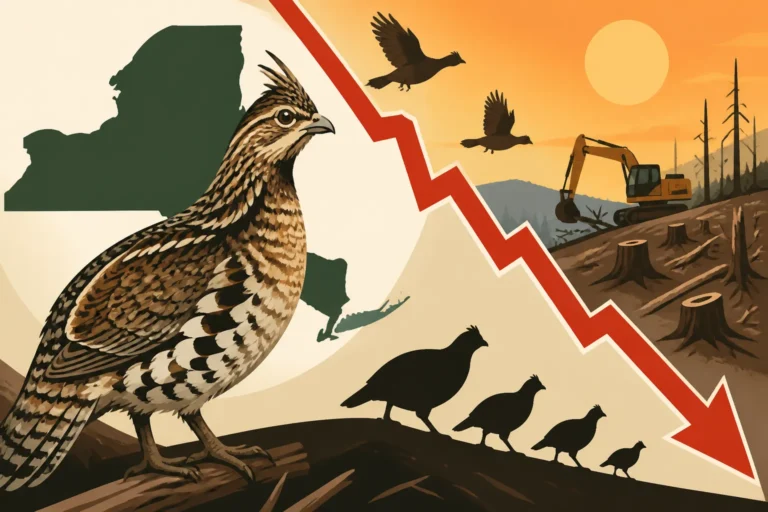
Maturing New York forests, declining aspen stands, and increasing generalist predators explain why ruffed grouse numbers keep falling.
New York ruffed grouse numbers and long term population decline across the Catskills, Adirondacks, and Tug Hill regions.
New York turkey scoring criteria explain how beard length, spur length, and weight determine NWTF record book gobbler status.
New York wild turkey roosting habits, preferred tree species, safety factors, and proximity to food help hunters locate gobblers.
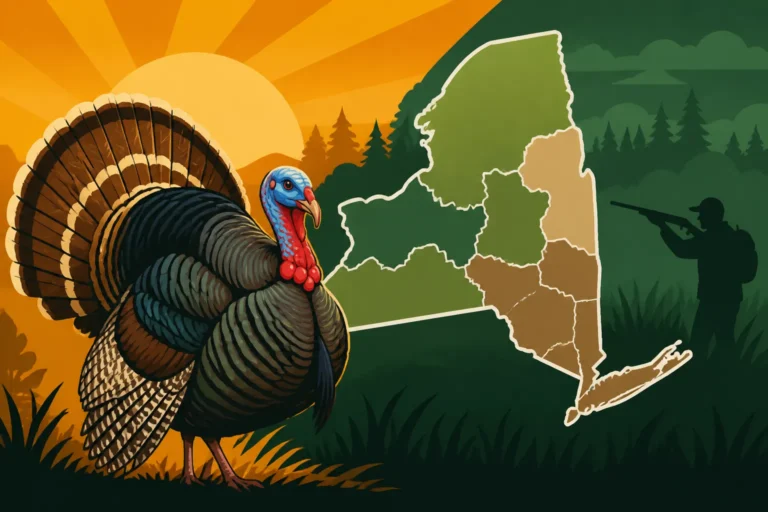
New York turkey population data and habitat factors help hunters locate prime counties for successful spring or fall hunting trips.
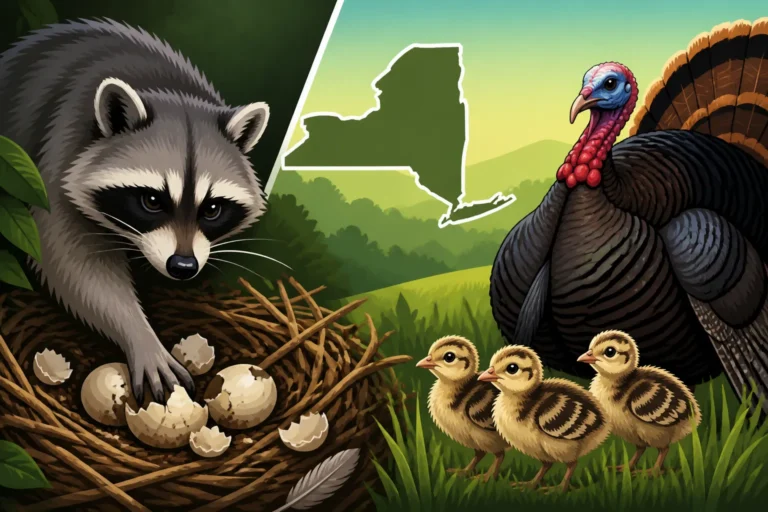
New York wild turkey nest predation impacts spring incubation and survival rates, explaining why fewer poults emerge each summer.