Predator and Furbearer Hunting in New York
There’s a unique thrill that comes with hunting predators and furbearers in New York, a different kind of challenge than pursuing a big buck or a strutting gobbler. It’s about understanding subtle cues, mastering calling techniques, and often, braving the elements when other seasons have closed. If you've ever felt the itch to extend your time afield, or to try a completely different approach to hunting, this comprehensive guide will walk you through everything you need to know to get started with predator and furbearer hunting in the Empire State, from the wily coyote to the elusive bobcat and beyond.
Understanding New York's Predators and Furbearers
New York is home to a diverse array of predators and furbearers, each presenting its own set of challenges and rewards for hunters and trappers. Unlike deer or turkey, many of these species are nocturnal or highly secretive, requiring different tactics and a deeper understanding of their habits. Getting to know the specific behaviors and habitats of these animals is the first step toward a successful hunt.
Common Species and Their Habits
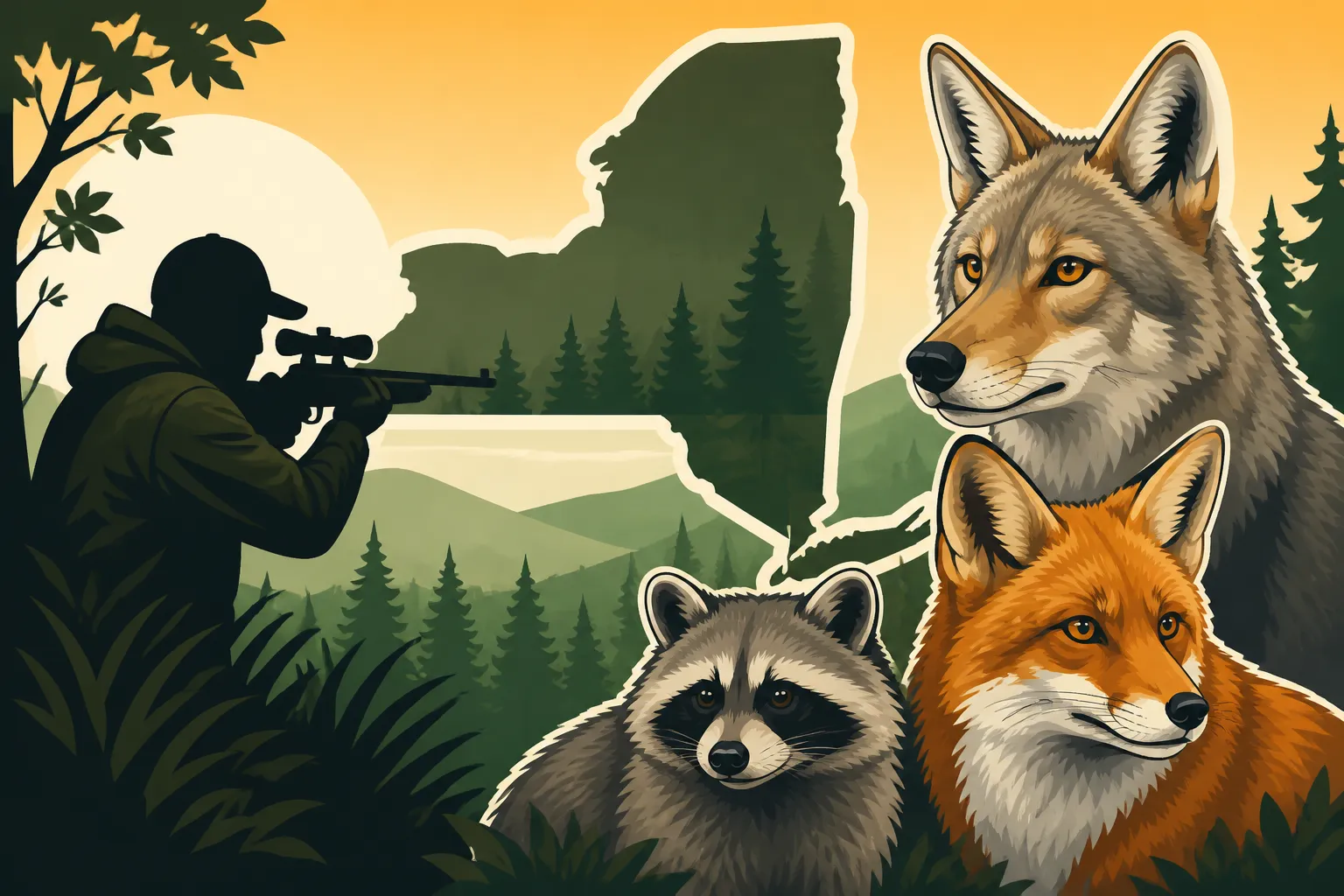
When we talk about predators and furbearers in New York, a few key species typically come to mind. The coyote, for instance, is perhaps the most widespread and frequently pursued predator. They are incredibly adaptable, found everywhere from the dense Adirondack forests to suburban fringes and agricultural lands of the Southern Tier. Their diet is broad, including deer (especially fawns), small mammals, and even fruits and insects, making them opportunistic hunters. Understanding their vocalizations and movement patterns is crucial; they often travel established trails and respond to various calls.
Then there are the foxes – both red and gray – elegant and cunning. Red foxes, with their distinctive rust-colored coats, are common in open country, farmlands, and mixed woodlands, often seen on field edges at dawn and dusk. Gray foxes, on the other hand, prefer denser, brushier cover and are unique among canids for their ability to climb trees, an important habit to remember when scouting. Both are primarily nocturnal but can be active during the day, especially when raising kits or when food is scarce. Hunters targeting foxes often rely on small game calls or specific distress sounds.
Further up the food chain, and certainly more challenging to pursue, are bobcats and fishers. Bobcats, with their short tails and tufted ears, are elusive creatures of dense cover, rocky outcrops, and thick swamps, common in the Catskill and Adirondack regions. They are solitary and territorial, preying on rabbits, hares, and small deer. Fishers, a member of the weasel family, are fast, agile, and fiercely predatory, often found in mature northern forests. They’re notorious for their pursuit of porcupines and are primarily trapped due to their secretive nature, though dedicated still-hunters may encounter them. Other furbearers like raccoons, skunks, opossums, and weasels are also prevalent and offer additional opportunities for hunters and trappers, often being more accessible due to their higher densities and more predictable nocturnal habits around human settlements or water sources.
Conservation Status and Management
New York's Department of Environmental Conservation (DEC) actively manages predator and furbearer populations to ensure healthy numbers while balancing ecological roles and minimizing conflicts with humans. Unlike some game species, coyotes in New York are generally unclassified and can be hunted year-round without a specific season, though night hunting does have specific rules. This open season reflects their robust and expanding population across the state, and hunting them can be a valuable tool in deer management by reducing fawn predation, especially in areas with high deer densities like the Finger Lakes Region.
Foxes, bobcats, and fishers, however, have regulated seasons and bag limits, reflecting a more sensitive population dynamic. For instance, bobcats are most prevalent in the more remote regions, and their harvest is carefully monitored. The DEC relies on hunter and trapper harvest reports, track surveys, and scientific studies to assess population health. By participating in these hunts, you're not just enjoying the outdoors; you're also contributing to wildlife management efforts by providing valuable data and helping to keep populations in balance. Understanding why certain species have specific rules helps foster an appreciation for the conservation science behind the regulations. For example, knowing the harvest limits for fisher helps ensure that these unique animals continue to thrive in their specific forested habitats across the state.
Legal Framework and Regulations
Before you even think about setting foot in the woods, understanding New York's extensive hunting and trapping regulations for predators and furbearers is absolutely non-negotiable. These rules dictate everything from when you can hunt to what equipment you can use, and they change periodically. Staying informed is key to a legal and enjoyable experience.
New York Trapping Seasons and Tagging
Trapping furbearers is a distinct skill set with its own comprehensive rulebook in New York. The seasons for various furbearers, such as muskrat, beaver, mink, bobcat, fisher, and otter, are highly specific and vary by species and geographic zone. For instance, the season for beaver might open in early November in the Northern Zone, while in the Southern Zone, it could be a bit later, or even split into different timeframes. It’s crucial to consult the current New York Trapping Seasons and Tagging regulations published by the DEC, as these are updated annually and often contain nuanced details. Many furbearers caught through trapping, especially bobcats, otters, and fishers, require a special pelt tag that must be affixed to the animal by a DEC official within a certain timeframe after harvest. This tagging system helps the DEC gather vital data on harvest numbers, locations, and population health, making it an integral part of furbearer management. Trappers also need to be acutely aware of trap type restrictions, placement rules (e.g., setback distances from public roads, body-gripping trap limitations), and daily trap check requirements to ensure humane practices and compliance.
New York Coyote Hunting Season Rules
Coyotes are unique among New York's hunted species due to their year-round open season. This means that if you have a valid hunting license, you can technically pursue coyotes any day of the year, providing fantastic opportunities to extend your time afield, especially when other seasons are closed. However, this general rule comes with significant caveats, particularly concerning night hunting. New York allows night hunting for coyotes from January 1 through March 25. This specific window is critical to remember, as hunting coyotes at night outside of this period is illegal. When engaged in night hunting, you are generally permitted to use artificial lights, but there are strict regulations about their use, including wattage limits and safety considerations. Always double-check the current regulations for specific counties or WMUs, as local ordinances or land management rules could impose additional restrictions. It’s also important to note that when hunting coyotes during deer season, any blaze orange requirements for deer hunting still apply, even if you are primarily targeting coyotes. Understanding these nuances, especially the Night Hunting Rules for New York Coyotes, is essential for staying legal and safe.
Licensing and Permits
Before embarking on any predator or furbearer hunt or trap, you’ll need the proper New York hunting licenses and permits. For most hunting, a basic New York hunting license is required. If you plan to use a bow or crossbow, you’ll also need the appropriate bowhunting or crossbow privileges, which are usually obtained by completing separate education courses. Trapping, as a specialized activity, requires a separate New York Trapping License, which also typically necessitates completing a trapper education course. These educational requirements ensure that hunters and trappers are familiar with not only the regulations but also ethical practices, wildlife identification, and responsible equipment use.
It's not just about the license itself; you need to understand what your license covers. For instance, a basic small game license might cover foxes and coyotes (with proper additional permits/privileges if hunting during specific big game seasons), but a separate trapping license is needed for setting traps for those same animals, or for species like beaver and muskrat. Additionally, always carry proof of your license while in the field, whether it's the physical copy or an electronic version on your phone via the HuntFishNY app. The DEC website and the annual hunting and trapping guide are your definitive sources for the most up-to-date information on costs, requirements, and any special permits for specific species or management units.
Effective Hunting Methods for Coyotes and Foxes
Hunting coyotes and foxes in New York is an engaging pursuit that demands patience, stealth, and a keen understanding of animal behavior. Unlike sitting patiently in a deer stand, predator hunting often involves active calling and strategic movement to draw animals into range. It’s a chess match with nature, where every move matters.
Calling Techniques and Strategies
Calling is undeniably the cornerstone of successful coyote and fox hunting. The goal is to mimic prey animals in distress or to imitate other canids to pique their curiosity or territorial instincts. Electronic calls, like those offered by FoxPro or Lucky Duck, provide a vast library of sounds, from rabbit distress to pup howls and territorial barks, giving you immense versatility. Hand calls, while requiring more skill to master, offer a raw authenticity that can be incredibly effective, especially on pressured animals. When setting up, always consider the wind – predators have an incredible sense of smell, and a single whiff of human scent will send them packing. Position yourself downwind, ideally with some cover at your back, and a clear field of view in front of you.
Your stand setup is crucial. Try to find a location that offers a wide view of potential approach lanes, like a field edge, a logging road, or an open hardwood ridge. Many experienced hunters advocate for multiple calling stands during a single outing, moving every 20-30 minutes if nothing responds. Start with softer distress calls to attract curious individuals, then escalate to more urgent sounds if you don’t get a response. Sometimes, a series of lonesome howls, similar to those you might hear when calling a New York gobbler off the roost, can trigger a territorial response, making a dominant coyote come to investigate. Varying your calling sequence, incorporating pauses, and being ready for a quick shot as soon as a predator appears are all part of the game. Remember, these animals can appear silently and quickly, so constant vigilance is required.
Spot and Stalk vs. Ambush Hunting
While calling is paramount, combining it with other methods can significantly increase your odds. Spot and stalk, though challenging, can be effective in open terrain or during periods of heavy snow cover where fresh tracks are easily visible. In the rolling farmlands of Western New York or the open fields of the Southern Tier, using good optics to spot a coyote or fox from a distance, then carefully planning an approach to get into calling or shooting range, can be very rewarding. This method demands extreme stealth, an intimate knowledge of the terrain, and the ability to read animal movement.
Ambush hunting, on the other hand, involves setting up near known travel corridors, den sites, or feeding areas without relying solely on calls to draw the animal in. This might mean identifying a funnel between two swamps or a well-used game trail along a ridgeline, similar to how you might approach Reading a Ridge for Catskill Deer Movement. After Scouting New York Public Land Before Season, you might identify areas where coyotes cross regularly or where foxes frequent rodent-rich fields. Setting up a ground blind or finding natural cover along these routes and waiting for animals to pass can be successful, especially during periods of low activity or when animals are less responsive to calls due to hunting pressure. Combining an ambush with occasional soft calls can sometimes turn the tide, luring a hesitant predator just a few extra yards into your effective range.
Night Hunting for Coyotes and Fox
Night hunting for coyotes is a thrilling and effective method, legally permitted in New York during a specific window from January 1 through March 25. This opens up entirely new opportunities, as coyotes and foxes are primarily nocturnal. The key to success at night lies in specialized gear and a heightened sense of awareness. You’ll need a good quality headlamp or a weapon-mounted light with a red or green filter to avoid spooking animals. Thermal imaging or night vision devices, while an investment, can dramatically increase your ability to spot animals at a distance in the dark, giving you a significant advantage.
Safety is paramount during night hunts. Always positively identify your target before taking a shot, and be acutely aware of your backdrop. It’s a good idea to hunt with a partner, establishing clear zones of fire and communication protocols. Setting up on a moonlit night, especially over snow, can provide enough ambient light to hunt effectively without intense artificial light, making animals less wary. When using lights, sweep slowly and methodically, looking for eye reflections. As detailed in the New York Coyote Hunting Season Rules, specific regulations on light usage and firearms apply, so understanding these before heading out after dark is crucial. The silence and intensity of a night hunt create an unforgettable experience, but responsible and safe practices are non-negotiable.
Tactics for Bobcat and Fisher
Hunting and trapping bobcats and fishers are among the most challenging pursuits in New York, demanding specialized knowledge and a deep understanding of these elusive animals. These aren't creatures that respond readily to a simple call; success often comes from meticulous scouting, patience, and precise setup.
Tracking and Trapping Methods
For bobcats and fishers, trapping is by far the most effective method, especially given their dense forest habitats and secretive nature. Trappers often focus on areas with thick cover, rocky outcroppings, and mature timber – places where these animals naturally travel and hunt. Identifying fresh tracks in snow or soft soil, scat, or kill sites are critical for pinpointing prime trap locations. Trappers utilize various sets, including cubby sets, dirt hole sets, and snaring. Cubby sets, which mimic a small cave or den, are particularly effective for fishers, often baited with meat or a strong lure. Bobcat trappers frequently use visual attractants like feathers or reflective materials combined with scents to draw the curious felines to a set.
It's absolutely vital to be intimately familiar with New York Trapping Seasons and Tagging regulations, as specific trap sizes, types, and placement rules are strictly enforced to ensure humane trapping and avoid non-target catches. Traps must be checked regularly, and proper tagging is required for harvested animals. A detailed understanding of the landscape, including identifying bottlenecks, natural travel corridors, and preferred denning areas, is gained through extensive scouting. Tools like onX Hunt, combined with a good understanding of topographic maps, can help identify potential ambush points or trap lines in areas of the Adirondacks or Catskills known for their robust bobcat and fisher populations.
Still-Hunting and Calling
While less common than trapping, still-hunting and very specific calling techniques can yield results for determined bobcat and fisher hunters. Still-hunting for these animals requires an extraordinary level of stealth and patience. Moving slowly, stopping frequently to scan the environment, and listening intently for subtle sounds like rustling leaves or breaking twigs are key. Focus on areas of dense cover, particularly around recent logging cuts, beaver ponds, or rocky terrain where they might be hunting their own prey. Hunters might spend an entire day covering only a few hundred yards, meticulously picking apart the landscape.
Calling for bobcats and fishers is typically less about aggressive vocalizations and more about subtle distress sounds or curiosity calls. Small game distress calls, especially those mimicking a rabbit or a rodent, can sometimes draw in a cautious bobcat. However, these animals are incredibly wary, and the calling sequence must be brief and interspersed with long periods of silence. Unlike coyote calling, where you might blast a series of howls, fisher and bobcat calling often involves soft, infrequent bleats or chirps. The key is to be extremely patient and to expect the animal to approach silently and cautiously from any direction. Always set up with good visibility and ensure you are camouflaged effectively, as their eyesight is phenomenal.
Habitat Preferences and Locations
Understanding the preferred habitats of bobcats and fishers is paramount to finding them. Bobcats in New York tend to favor diverse landscapes with a mix of mature forests, dense thickets, rocky ledges, and swamps. They thrive in areas with good cover for ambushing prey and secure dens for raising young. The Catskill Forest Preserve, with its rugged terrain and abundant small game, offers prime bobcat habitat, as do parts of the Adirondack Forest Preserve and the larger state forest blocks in the Southern Tier. You'll often find them along the edges of clear-cuts, near beaver ponds (where small game like muskrats are plentiful), or in dense cedar swamps.
Fishers, on the other hand, are primarily associated with dense, mature coniferous or mixed forests, particularly those with a continuous canopy. They prefer areas with lots of downed timber and hollow logs for denning and foraging. The deep woods of the Adirondacks, especially the central and northern parts, and some of the more rugged sections of the Tug Hill Plateau offer excellent fisher habitat. While both species are found across significant portions of the state, their densities vary, with higher concentrations in these wilder, less developed regions. Using mapping tools to identify these habitat types – noting evergreen stands, swamp boundaries, and contour lines that indicate rocky terrain – is invaluable for pinpointing potential hunting or trapping grounds. The more you understand the specific ecological niches these animals occupy, the better your chances of encountering them.
Small Furbearers: Raccoon, Skunk, Opossum, Weasel
While coyotes and bobcats get a lot of attention, New York’s smaller furbearers offer accessible and exciting hunting and trapping opportunities. These animals are often more abundant, found closer to human settlements, and can provide a great introduction to furbearer management. Plus, they’re largely nocturnal, making them perfect targets for after-hours excursions.
Hunting and Trapping These Species
Raccoons, skunks, and opossums are primarily nocturnal, making night hunting with a powerful flashlight or headlamp a popular and effective method. For raccoons, "coon hunting" with dogs is a deeply rooted tradition across New York, especially in the Southern Tier and parts of the Hudson Valley. Treed raccoons provide an exciting chase and a clear target. Without dogs, hunters can still find success by focusing on water sources—creek beds, pond edges, and swamps—where raccoons forage. Baiting, when legal and done ethically, can also be effective. Skunks and opossums are often opportunistic and can be found foraging in similar areas, though they are less likely to be pursued actively for their fur by hunters.
Trapping is also highly effective for these species, particularly raccoons, mink, and weasels, which offer valuable pelts. Duke Traps and Victor traps are common choices. Dirt hole sets, cubby sets, and body-grip traps strategically placed along trails, near water, or around farm outbuildings are standard methods. For example, a properly set foothold trap near a culvert or a leaning log over a stream can be incredibly productive for raccoons and mink. Again, adhering to all New York Trapping Seasons and Tagging regulations, including trap type and check times, is crucial. Trapping small furbearers is an excellent way to learn trap setting techniques and animal behavior, and it allows for sustained activity throughout the colder months.
Understanding Their Behavior
To successfully hunt or trap these small furbearers, you need to understand their predictable, often opportunistic, behaviors. Raccoons are incredibly adaptable omnivores, thriving in diverse habitats from urban areas to deep forests. They are strongly associated with water, frequently found along stream banks, pond edges, and marshy areas where they forage for crayfish, frogs, and other edibles. Their dens are often in hollow trees, rock crevices, or abandoned buildings. Hunting them requires knowing their travel routes between denning and feeding sites.
Skunks are also omnivorous and primarily nocturnal, known for their defensive spray. They prefer open woodlands, grasslands, and agricultural areas, often denning in burrows, rock piles, or under sheds. While not typically a primary target for hunting, they are often caught incidentally by trappers. Opossums, North America's only marsupial, are highly adaptable generalists, found across most of New York. They are slow-moving and nocturnal, often scavenging. You’ll find them in a wide range of habitats, usually near human activity, and they den in various natural or man-made shelters. Weasels, including the short-tailed weasel (ermine) and long-tailed weasel, are small but fierce carnivores, hunting rodents and small birds. They are often associated with brushy areas, rock walls, and timber piles, and their presence can be identified by their distinctive tracks in snow or soft mud. Understanding these habits allows hunters and trappers to predict where these animals will be and to tailor their methods accordingly, whether it's setting traps near a reliable food source or patrolling a creek bed at night.
Essential Gear for Predator and Furbearer Hunters
Just like any specialized hunting pursuit, going after New York's predators and furbearers requires specific gear to maximize your chances of success and ensure your safety. The right equipment can make all the difference, especially when you're out in challenging weather or after dark.
Firearms and Ammunition Choices
When it comes to firearms for coyotes and foxes, versatility and accuracy are key. Many hunters opt for small-caliber, high-velocity rifles like a .223 Remington or a .204 Ruger. These calibers are flat-shooting, accurate, and cause minimal pelt damage, which is important if you plan to save the fur. The .22-250 Remington is another popular choice, offering excellent reach and knockdown power for coyotes. For close-range encounters in thick brush, a shotgun loaded with buckshot or heavy small game loads (like #4 buck or even T-shot) can be very effective, especially for night hunting or when calling in dense cover. A 12-gauge or 20-gauge with an appropriate choke can provide a wide pattern for fast-moving targets. Remember to check local ordinances regarding firearm use, and always prioritize safety by ensuring you have a clear backstop. For larger furbearers like bobcats, the same rifle calibers apply, with careful shot placement being paramount. New York's legal firearms for deer hunting often include rifles of larger calibers, but for coyotes and foxes, smaller and faster is usually better.
Optics and Night Hunting Equipment
Optics are critical for predator hunting, allowing you to spot subtle movements and identify animals at a distance, especially in low light. A good pair of 8×42 or 10×42 binoculars, like those from Vortex Optics or Maven, will serve you well for daytime scouting and scanning the landscape during calling stands. A rangefinder is also essential for accurately judging distances, especially when making precision shots on wary coyotes that often hang up at the edge of your effective range.
For night hunting, specialized equipment becomes indispensable. A powerful, weapon-mounted spotlight or handheld flashlight, often with a red or green lens filter, is necessary for target identification and illumination. The color filters help preserve your night vision and are less likely to spook animals. Thermal imaging monoculars or scopes, while a significant investment, are game-changers for night hunting, allowing you to detect the heat signature of an animal from hundreds of yards away, even in complete darkness or dense fog. Night vision devices are another option, amplifying ambient light to create a visible image. Whichever technology you choose, ensure you are familiar with its operation before heading out.
Clothing, Calls, and Accessories
Your clothing needs to be adaptable to New York's often unpredictable weather. Layering is key, allowing you to add or remove insulation as conditions change. Good quality camouflage is important, as predators have excellent eyesight. For late-season hunts or when hunting during big game seasons, make sure you are wearing the legally required amount of blaze orange, or even blaze pink options, to ensure you are visible to other hunters. Warm, waterproof boots are essential, especially when traversing snowy or wet terrain common in a New York winter.
As for calls, a combination of electronic and hand calls offers the most versatility. An electronic caller with a remote control allows you to place the speaker away from your position, drawing attention away from you. Have a variety of sounds programmed, from rabbit distress to coyote howls and bird calls. Hand calls, like those from Primos or Zink, are great for quick, subtle sounds. Other essential accessories include a comfortable backpack to carry your gear, scent control products to minimize human odor, a good field dressing knife, and a GPS unit or reliable mapping app like GoHunt to navigate public lands and mark locations, especially when you're deep in the Adirondack interior. A sturdy shooting stick can also provide a stable platform for accurate shots, which is crucial when an animal might only offer a brief window of opportunity.
Safety, Ethics, and Best Practices
Hunting predators and furbearers, while exhilarating, demands a high level of responsibility, ethical conduct, and adherence to safety protocols. These hunts often take place in challenging environments or during non-traditional hours, making awareness and preparedness even more critical.
Hunting Pressure on New York Public Land
New York offers a vast amount of Public Hunting Land, from State Forests to Wildlife Management Areas. However, popular areas, particularly those easily accessible, can experience significant hunting pressure, especially during peak deer season. This pressure can make predators, especially coyotes and foxes, extremely wary and less responsive to calls. To counter this, savvy hunters need to be willing to go deeper into the woods, explore less-traveled areas, or hunt during off-peak times.
Utilize resources like the New York HuntFishNY Map Tool or private mapping apps like GoHunt to identify remote corners of public land. Look for large blocks of State Forest hunting areas, such as those found in the Southern Tier or Tug Hill Plateau, that might require a longer walk from the road. The further you're willing to hike, the less pressure you're likely to encounter. This strategy not only increases your chances of success but also provides a more solitary and rewarding outdoor experience. Understanding where others walk past and how to find ground that sees fewer hunters is a critical skill for any New York public land hunter.
Respecting Private Land and Retrieving Game
While much of the focus of predator hunting revolves around public lands, hunters must always be mindful of private property boundaries. New York Trespass and Permission Law is clear: you need permission to hunt on private land. This is particularly relevant when hunting along the edges of agricultural fields or near suburban areas where private parcels often abut public access. Always know your location and property lines.
The question of retrieving game that crosses onto private land is a common one. While it's generally permissible to retrieve legally taken game from private land without explicit permission if the land is unposted, it is always best practice to seek landowner permission first, especially if the land is posted. A simple knock on the door, explaining your situation, can go a long way in maintaining good hunter-landowner relations. Never assume; always verify. Unethical retrieval practices can quickly lead to strained relationships and further restrictions for all hunters. This courtesy is part of being a responsible hunter, ensuring continued access and a positive public image for our sport.
Carcass Handling and Reporting
Responsible carcass handling is vital for ethical hunting and for preventing the spread of wildlife diseases. For coyotes and foxes, if you plan to use the fur, proper field dressing and skinning immediately after the kill are essential to preserve the pelt quality. If you don't intend to utilize the fur, ensure the carcass is disposed of respectfully and legally, often by burying it or leaving it in a discreet location away from trails or water sources.
For certain furbearers like bobcats and fishers, there are specific reporting requirements and potentially a bear tooth reporting rule if these animals are taken incidentally. The New York State DEC often requires hunters and trappers to submit specific parts of harvested furbearers (e.g., a canine tooth from a fisher or bobcat) for biological data collection. This data helps biologists assess age structure, reproductive success, and overall population health. Always consult the current DEC regulations for any mandatory reporting or carcass part submission requirements. These measures are crucial for responsible wildlife management and contribute directly to the ongoing health of New York’s predator and furbearer populations.
| Species | Primary Habitat | Best Methods (Hunting/Trapping) | Key Season Window (General) | Special Considerations |
|---|---|---|---|---|
| Coyote | Adaptable: Forests, fields, suburban fringes | Calling, Night Hunting, Spot & Stalk | Year-round (Night Jan-Mar) | Year-round hunting, night hunting rules, excellent hearing |
| Red Fox | Open country, farmlands, mixed woodlands | Calling (small game distress), Trapping | Fall/Winter | Wary, excellent sense of smell, primarily nocturnal |
| Gray Fox | Dense, brushy cover, rocky areas | Calling (small game distress), Trapping | Fall/Winter | Can climb trees, prefers denser habitat |
| Bobcat | Dense cover, rocky outcrops, swamps, mature forests | Trapping, Still-Hunting | Limited Fall/Winter (WMU spec) | Elusive, requires pelt tagging, highly secretive |
| Fisher | Mature coniferous/mixed forests, dense canopy | Trapping | Limited Fall/Winter (WMU spec) | Relies on strong lures, often associated with porcupines |
| Raccoon | Near water sources: streams, ponds, swamps, urban | Night Hunting (w/dogs), Trapping | Fall/Winter | Nocturnal, omnivorous, good fur value |
| Skunk | Open woodlands, grasslands, agricultural | Incidental Trapping | Fall/Winter | Defensive spray, nocturnal scavenger |
| Opossum | Diverse: Forests, fields, urban fringes | Incidental Trapping | Fall/Winter | Nocturnal, slow-moving, scavenger |
| Weasel | Brushy areas, rock walls, timber piles | Trapping | Fall/Winter | Small, fierce predator, valuable winter pelt |
Disclaimer
Please remember that hunting regulations, seasons, and licensing requirements can change. Always consult the most current New York State Department of Environmental Conservation (DEC) hunting and trapping regulations before heading afield. This guide is for informational purposes only and should not be considered a substitute for official DEC publications.