Hunting the Northern Zone Fall Turkey Window
The crisp air of a New York fall, the leaves ablaze with color, can fool you into thinking it's just a beautiful hike in the woods. But when you’re chasing fall turkeys in the Northern Zone, those stunning visuals often come with unique challenges—birds that are flocked up, wary, and often on the move. This guide is dedicated to helping you unravel the mysteries of the Northern Zone fall turkey window, offering practical advice and strategies to fill your tag when these wily birds test your patience.
Understanding the Northern Zone Fall Turkey Window
Unlike the passionate, vocal spring gobblers, fall turkeys in New York's Northern Zone operate on a completely different playbook. The season dates themselves set the stage, offering a specific, often shorter, opportunity that requires a shift in tactics and mindset. You can't just expect to set up a decoy and call a bird in like you might in May.
Navigating the Season Dates and Zone Differences
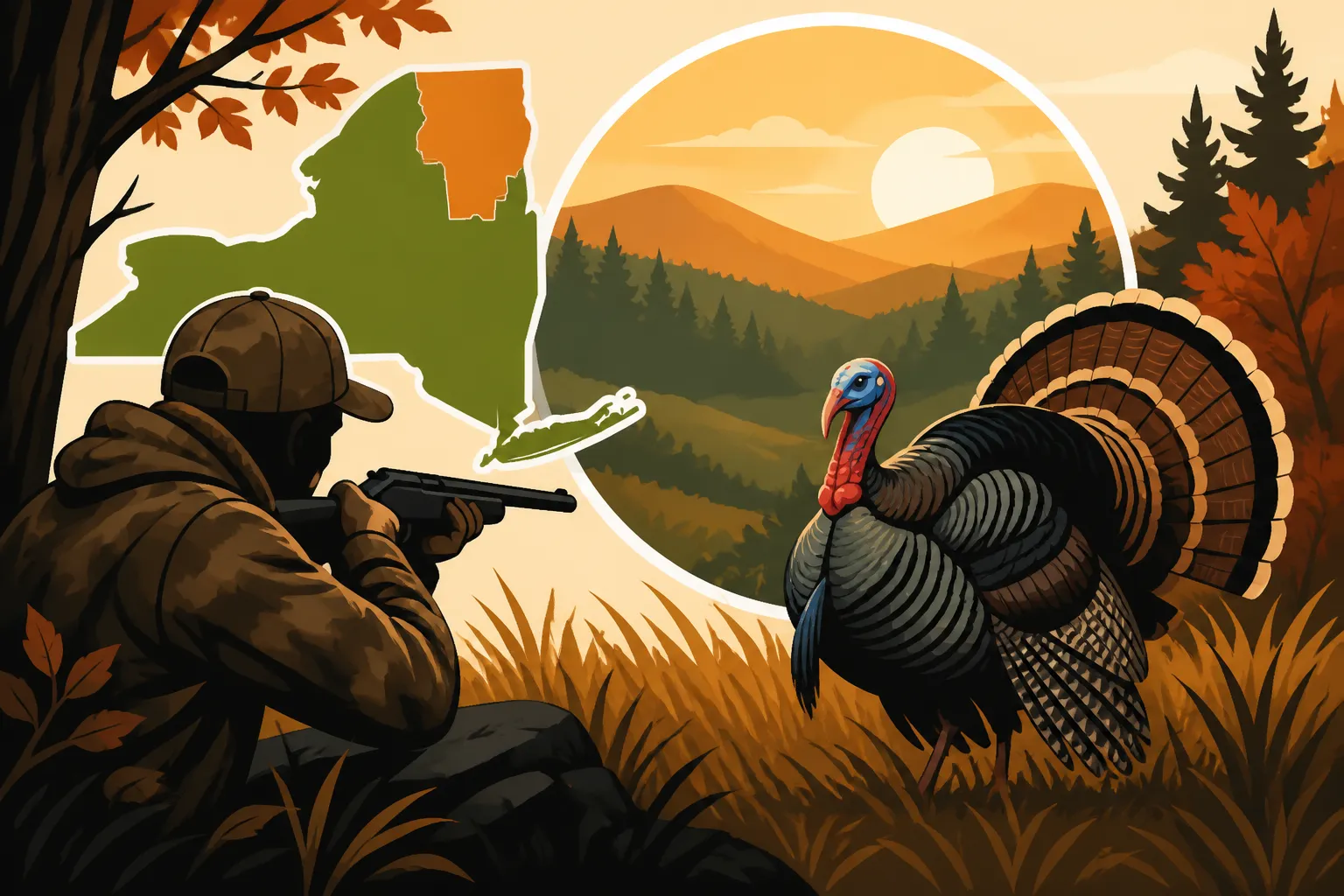
The Northern Zone, encompassing a vast and rugged landscape primarily defined by the Adirondack Park and its surrounding areas, presents a different turkey hunting experience compared to its Southern Zone counterpart. While the Southern Zone typically enjoys a more extended fall season, often with a longer split or continuous period, the Northern Zone's window is generally more condensed. For instance, the season often opens in early October and runs for a specific, shorter duration, usually a couple of weeks, though it's always critical to double-check the latest DEC regulations for the precise dates each year. This limited timeframe means that every day afield counts, emphasizing the need for efficient scouting and execution.
The differences aren't just about calendar days, though. The sheer scale of the Northern Zone, with its expansive state forests and wild areas, means turkeys often have vast tracts of undisturbed land to roam. This can make locating them a significant challenge. Furthermore, these birds are under pressure from other hunters pursuing deer and bears, making them extra skittish. Understanding How Long New York's Northern Zone Fall Turkey Runs is step one in making a plan, but it's just the beginning.
Fall Turkey Hunting vs. Spring: A Mindset Shift
If you're primarily a spring turkey hunter, the fall can be a jarring experience. In spring, you're trying to attract a love-struck gobbler to your position, often with aggressive calling and visual decoys. Fall hunting, however, is much more akin to deer hunting in many ways. You're trying to locate flocks, understand their feeding and roosting patterns, and often intercept them or break them up to call them back.
The social dynamics of turkeys also shift dramatically. Instead of lone gobblers seeking hens, you're dealing with flocks—often large groups of hens and poults, or smaller bachelor groups of adult gobblers. These flocks stick together for safety and foraging efficiency, making them incredibly difficult to sneak up on. Your calls in the fall aren't for attracting a breeding bird, but for re-establishing contact within a scattered flock, primarily using assembly calls. The satisfaction comes not from an aggressive strutting gobbler, but from the subtle sounds of a flock regrouping, or a single bird cautiously working its way back to your position.
Key Differences in Fall Turkey Behavior
Fall turkeys behave less like individual romantic suitors and more like highly efficient, survival-oriented foraging machines. Their focus is on fattening up for winter, and their flock dynamics are all about collective security. This means understanding their daily routines and how they use the landscape is paramount.
Flock Dynamics and Movement Patterns
In the fall, turkeys form large, cohesive flocks. These can be made up of a mature hen and her brood of poults, several hens and their combined broods, or bachelor groups of gobblers. These flocks have a distinct hierarchy and communication system. They move together, feed together, and roost together, providing safety in numbers. This makes them incredibly difficult to approach undetected. One alert bird can spook the entire group, often sending them scattering into the timber with an explosive flush.
Their movement patterns are highly dictated by food availability. They'll travel significant distances each day, often covering several miles from their roost to prime feeding areas. These movements are typically predictable: fly down from the roost at first light, spend the morning feeding, loaf during midday, feed again in the afternoon, and then fly back up to their roosting trees before dark. Scouting these patterns is more effective than blind calling. Tools like the GoHunt app can be invaluable for pinpointing potential roosting areas along ridge lines or near water, as well as identifying travel corridors between food sources. You can mark potential areas on a map, analyze terrain, and even use satellite imagery to predict where these flocks might be moving.
Fall Food Sources and Habitat Preferences
The fall landscape offers a smorgasbord for turkeys, and understanding their preferred menu items is key to finding them. Acorns are, without a doubt, the king of fall turkey foods in New York. White oaks, red oaks, and chestnuts (where present) will draw turkeys like magnets. If you can find a productive oak flat, especially one near a water source or a good roosting ridge, you’ve likely found a turkey hotspot.
Beyond acorns, turkeys will also key in on beech nuts, wild grapes, dogwood berries, and various agricultural crops if they're near farmland. In the Northern Zone, where vast expanses of timber dominate, hard mast like acorns and beech nuts become even more crucial. When considering Hunting After a Poor Acorn Year, turkeys will shift their focus to other food sources, making those less obvious spots (like wild berry patches or even certain insect populations) suddenly very attractive.
Turkeys also prefer specific habitats. Mature, open timber with a relatively clear understory allows them to see predators and move easily. They'll use dense cover for loafing during the midday hours, and prefer tall, sturdy trees with strong horizontal limbs for roosting. Look for sign: fresh droppings, scratch marks in the leaves, and dusting bowls. Finding Where New York Turkeys Are Densest often involves locating these critical feeding and roosting areas.
Effective Hunting Strategies for Northern Zone Fall Turkeys
Success in the fall often hinges on a combination of patient scouting, aggressive action when the moment is right, and a keen understanding of turkey psychology. It's less about sweet-talking a gobbler and more about outsmarting an entire flock.
Scouting for Flocks and Roosts
Before the season even opens, or in the days leading up to your hunt, dedicated scouting is your best friend. This means covering ground, looking for fresh sign, and listening. Turkeys are vocal animals, even in the fall. Listen for excited yelps, clucks, and even the "kee-kee" run of young birds as they call to each other. Roosting areas are usually on high ground, along ridges, or in mature trees near water. Look for large droppings and displaced leaves under potential roost trees.
Walking logging roads, old two-tracks, and game trails can reveal tracks and dusting bowls. Pay close attention to recent mast crops. If you find an oak ridge dropping acorns, plan to spend time there. You can use mapping apps like GoHunt to mark these locations, analyze terrain features, and even use historical data if available to predict turkey movements. A good pre-season scouting trip might feel like a long walk, but it can save you days of fruitless searching once the season starts. For more general advice on preparation, check out Scouting New York Public Land Before Season.
The Art of the Scatter and Re-Call
The most classic and often effective fall turkey tactic is the "scatter and re-call." The goal here is counter-intuitive: you want to intentionally break up a flock. When a flock is scattered, especially young birds, they immediately feel vulnerable and will work to regroup using assembly calls.
Here's how it works:
- Locate a flock: This is the hardest part. You might use locator calls (owl hoots, crow calls) to get a shock gobble if any gobblers are around, or simply listen for general turkey chatter. Once you've located a flock, try to approach quietly and get as close as possible without being detected.
- Rush the flock: When you're within range (say, 50-100 yards, or even closer if possible), rush them aggressively. Run, shout, make noise. The goal is to get them to flush in all directions, as widely as possible. Avoid shooting at flushing birds unless it's a very clear, safe shot and you’re confident in identifying individual birds.
- Set up immediately: Once the birds have scattered, immediately find a good setup. A natural ground blind is ideal, offering concealment and a good shooting lane. Make sure your back is against a large tree to break up your silhouette. If you prefer a more established setup, consider Using a Ground Blind on New York Public Land.
- Wait and call: Give the birds about 15-20 minutes to settle down. Then, start making soft "assembly" calls – a series of soft yelps, clucks, and especially the "kee-kee" run of a lost young bird. These calls are designed to sound like a lonesome bird trying to find its flock. Be patient. Turkeys may take a long time to come back, often approaching silently. The key is to be still and observant. The most difficult part is often waiting out the quiet period. This strategy of Breaking Up a Fall Turkey Flock requires patience and confidence in your calling.
Decoys and Calling in the Fall
While not as critical as in spring, decoys can still play a role in fall hunting, especially if you're trying to re-call scattered birds. A single hen decoy, or even a jake decoy, can provide a visual reassurance to birds cautiously approaching your calls. However, be mindful that fall birds are often more skittish, so over-decoying can sometimes be counterproductive.
Calling in the fall is much more focused on realistic flock communication. Forget the aggressive gobbler yelps unless you specifically know there's a bachelor group of gobblers nearby and you're trying to challenge them. Instead, master the clucks, purrs, and soft yelps of a hen or poult. The "kee-kee" run, a series of high-pitched whistles followed by yelps, is particularly effective for calling in scattered young birds. It mimics a lost poult desperately trying to find its family. Practice these calls to sound authentic, as pressured Northern Zone birds will quickly discern unnatural sounds.
Gear and Preparation for a Northern Zone Fall Hunt
The Northern Zone's rugged terrain and often unpredictable fall weather demand thoughtful preparation and the right gear to stay comfortable, safe, and effective.
Essential Clothing and Layering
Fall in the Northern Zone can range from surprisingly warm Indian summer days to bitter cold, especially in late October. Layering is non-negotiable. Start with a moisture-wicking base layer, add an insulating mid-layer (fleece or down), and top it with a waterproof/windproof outer shell. Your outer layer should also be quiet for stalking through the woods. Don't forget a warm hat and gloves, as heat loss from your head and hands can quickly lead to discomfort. Opt for durable, briar-resistant pants if you're going to be busting through thick cover. Brands like Sitka or First Lite offer excellent layering systems designed for varied conditions. For long sits, particularly if you're doing something like Cold-Weather Sitting Strategy in New York, proper insulation from the ground is also critical.
Footwear is equally important. Waterproof, insulated boots are a must. You'll be crossing streams, slogging through damp leaves, and potentially encountering early snow. Good ankle support is also crucial for navigating uneven terrain and steep hillsides common in the Northern Zone. Think about companies like Schnee's or Kenetrek for serious mountain hunting boots that will stand up to the abuse.
Navigation and Safety Tools
The Northern Zone is vast, and it’s easy to get disoriented, especially if you're venturing deep into state forests or the Adirondack Park. A reliable GPS unit or a mapping app on your smartphone (like GoHunt or onX Hunt) is absolutely essential. Don't rely solely on cell service, as it's often non-existent in remote areas. Download offline maps before you go. Having a physical map and compass as a backup, and knowing how to use them, is always a smart move. When comparing GPS Units Versus Phone Apps, consider the battery life and ruggedness of a dedicated GPS for extended trips.
Beyond navigation, always carry a small first-aid kit, a headlamp with extra batteries (for walking out after dark), fire-starting material, and enough water and high-energy snacks for the day. A multi-tool or a good hunting knife is also indispensable. If you're on a multi-day trip, especially in more remote areas, consider Packs for a Multi-Day Backcountry Adirondack Hunt that can carry all your essentials comfortably. Telling someone your hunt plan and expected return time is also a critical safety measure.
Shotguns, Ammunition, and Calls
For fall turkeys, a 12-gauge or 20-gauge shotgun is the standard. Pattern your shotgun with your chosen ammunition before the season. Turkey loads, with their dense patterns, are ideal. While you're not usually calling birds to a static position like in spring, having a tight pattern for a precise head and neck shot on a moving bird is still important.
As for calls, focus on slate calls, box calls, and mouth calls that can produce realistic clucks, purrs, and assembly yelps, especially the "kee-kee" run. A locator call (owl or crow) can be useful for shock-gobbling any roosted birds in the morning or evening, but your primary focus should be on realistic turkey sounds. Practice your calling often to build confidence and muscle memory. The ability to make soft, subtle calls when a bird is close is just as important as being able to reach out with louder yelps. Sometimes, the softest clucks are what ultimately pull in a wary, scattered bird.
Table: Fall vs. Spring Turkey Tactics
| Feature | Spring Turkey Hunting | Fall Turkey Hunting |
|---|---|---|
| Primary Goal | Attract a breeding gobbler | Locate flocks, scatter, and re-call scattered birds |
| Social Dynamics | Gobblers seeking hens, often alone or in small groups | Large, cohesive flocks of hens/poults or bachelor gobblers |
| Calling Focus | Aggressive yelps, cuts, gobblers to challenge/attract | Soft clucks, purrs, assembly yelps, "kee-kee" run for regrouping |
| Decoy Use | Often critical (hen, jake) for visual attraction | Less critical, a single hen for reassurance, or none |
| Movement | Often stationary, waiting for birds to come to you | More mobile, actively scouting and moving to find flocks |
| Key Strategy | Mimic a receptive hen | Break up flocks, mimic a lost bird trying to regroup |
| Best Time of Day | Early morning, mid-morning | All day, especially mid-morning after scattering |
| Food Sources | Less critical, focus on breeding areas | Highly critical, focus on acorns, beech nuts, crops |
Hunting fall turkeys in New York's Northern Zone is a fantastic way to extend your season and experience the woods in a unique way. It demands a different skill set than spring hunting, favoring patience, stealth, and a deep understanding of turkey behavior. With proper scouting, the right gear, and a solid game plan, you'll be well on your way to success, enjoying the challenge and the rewards of these intelligent birds. Even when the birds are tight-lipped, just being out there, learning their habits, and enjoying the vibrant autumn woods is a victory in itself. Remember, sometimes the best strategy is simply Finding Ground Others Walk Past and adapting to what the birds are telling you.
Disclaimer
Hunting is a challenging and rewarding pursuit that carries inherent risks. Always prioritize safety, adhere to all New York State Department of Environmental Conservation (DEC) hunting regulations, and respect private property. The information provided in this guide is for educational and informational purposes only and should not be considered a substitute for official hunting regulations or professional guidance. Make sure to check the current hunting seasons, bag limits, and licensing requirements before heading afield.