Hunting Long Island Farmland Deer
Hunting deer on Long Island can feel like a whole different ballgame compared to the vast wilderness of the Adirondacks or the rolling hills of the Southern Tier. Many hunters from upstate look at the density of population and assume there's no real deer hunting to be had, or that it's just too complicated with all the suburban sprawl. But for those of us who live here or are willing to explore, the agricultural pockets and fragmented landscapes of Long Island offer surprisingly robust opportunities for harvesting whitetails, if you know how to navigate its unique challenges. This guide will walk you through the specifics of hunting Long Island's farmland deer, sharing tactics and insights to help you find success in these often-overlooked areas.
Understanding Long Island's Unique Deer Landscape
Long Island isn't just beaches and suburbs; tucked away, you'll find active farms, vineyards, and nurseries that create a distinct environment for deer. This isn't the big timber hunting most New Yorkers envision, but it offers its own set of fascinating challenges and rewards.
The Interplay of Development and Agriculture
When you think of Long Island, sprawling subdivisions and busy roads probably come to mind long before cornfields or soybean plots. Yet, these agricultural pockets persist, often right alongside residential areas, creating a mosaic landscape that deer have learned to exploit. They use small woodlots, thick hedgerows, and even dense residential backyard cover as safe havens during the day, emerging under the cover of darkness to feast on farm crops or manicured landscaping. The constant hum of human activity means deer here are often accustomed to noise and movement, but they are also incredibly adept at disappearing into surprisingly small patches of cover. This creates a fascinating push-and-pull, where deer might tolerate more human presence than their upstate cousins, yet require extreme stealth and precision from hunters due to the close quarters. It’s a delicate balance to understand, knowing when they're truly spooked versus just moving through their daily routine.
Deer Densities and Suburban Influence
It might seem counterintuitive, but many areas of Long Island actually boast surprisingly high deer densities. This isn't just anecdotal; the numbers show that in some pockets, deer populations are thriving. The reason is simple: an abundance of easily accessible, high-calorie food sources. Farmlands provide corn, soybeans, and other crops, while suburban yards offer lush gardens, fruit trees, and ornamental plants – a veritable buffet for whitetails. Combine this with fewer natural predators and restricted hunting pressure in many areas, and you have deer populations that can sometimes become quite concentrated. However, this also means deer in these areas are often more nocturnal or accustomed to human scent and sounds. You won't find them standing in an open field at noon too often; they're masters of using whatever cover is available, even if it's just a thick brush line or a small, overlooked woodlot behind a shopping center. Hunting near residential zones demands an even higher level of caution, prioritizing safety above all else, and making sure every shot is ethical and responsible.
Scouting and Gaining Access to Farmland Deer
Hunting Long Island farmland is often less about covering vast tracts of land and more about pinpointing specific, high-value areas and, crucially, securing access. Without the right approach, even the best hunting spots are off-limits.
Identifying Key Agricultural Hotspots
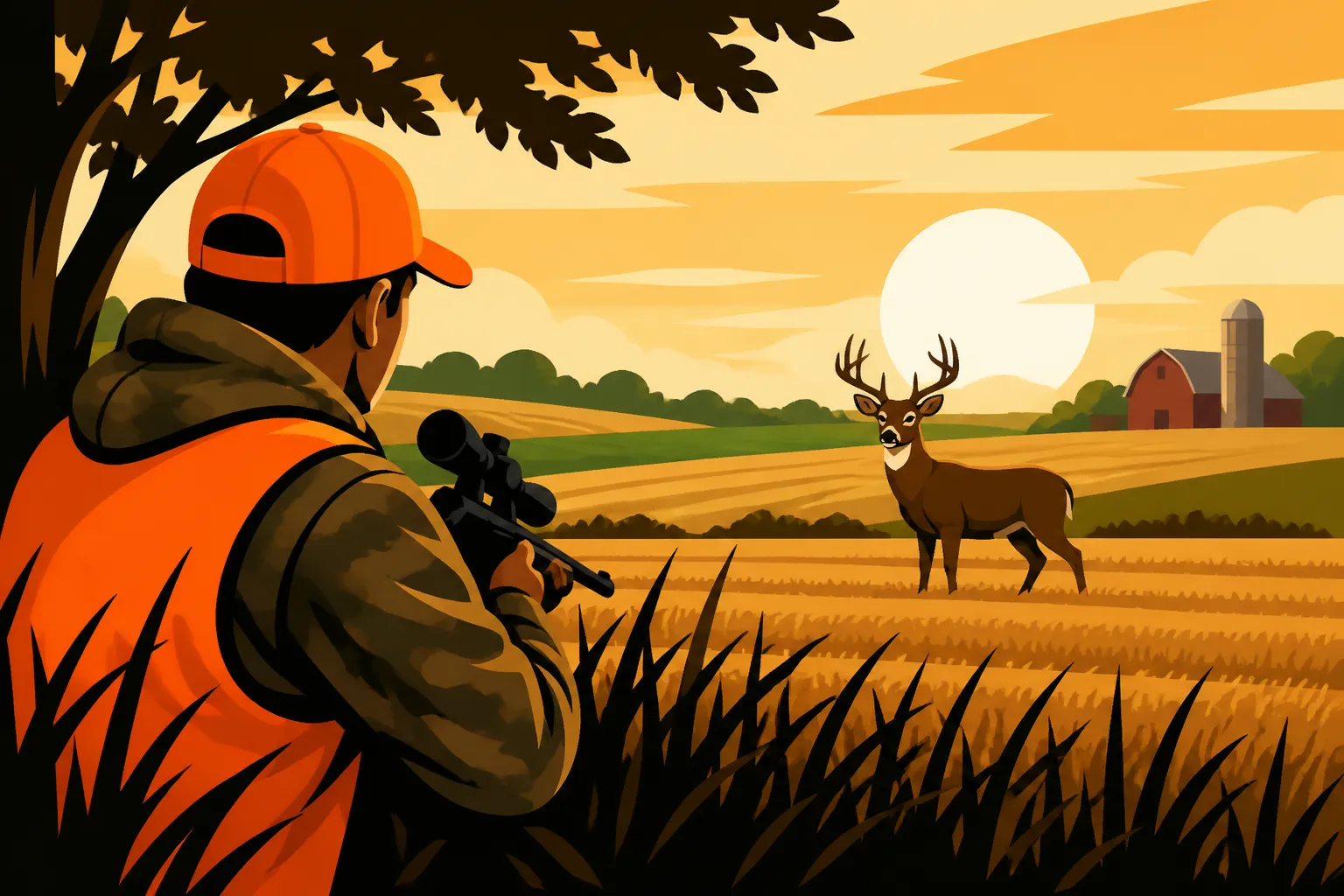
To hunt Long Island farmland deer effectively, you first need to identify where these pockets of agriculture actually exist and, more importantly, where deer are actively using them. Start by looking for active farms growing corn, soybeans, alfalfa, or even the numerous vineyards and orchards that dot the landscape. These are primary food sources. Once you've identified potential feeding areas, the real detective work begins: finding the travel corridors. Deer rarely bed in the open fields; they'll use the closest available cover, which could be anything from a thick fencerow, a drainage ditch grown up with brush, a small woodlot bordering a field, or even dense suburban thickets.
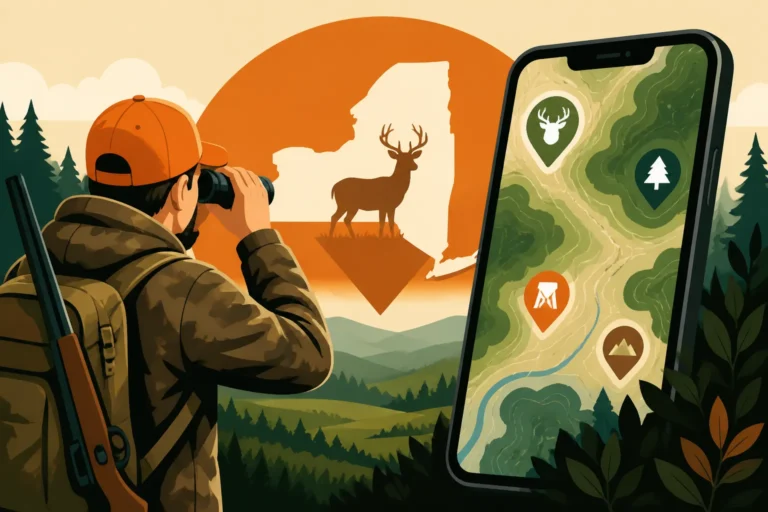
High-tech tools can be a huge asset here. Apps like GoHunt or the New York HuntFishNY app are invaluable for overlaying satellite imagery with property boundaries. This allows you to visually pinpoint those small woodlots, brushy edges, and fencerows that connect feeding areas to bedding cover. You're looking for subtle funnels and pinch points that deer use to move unobserved. Spend time scouting these areas before the season, either on foot (with permission) or by observing from a distance. Look for fresh tracks, droppings, rub lines, and especially worn trails leading into and out of fields. Don't underestimate how small a piece of cover deer will use if it offers safety and direct access to food. Reading aerial photos for Southern Tier deer is a skill that translates incredibly well to this kind of fragmented hunting, helping you visualize movement patterns.
The Art of Securing Private Land Permission
Unlike the vast public lands upstate, hunting Long Island's agricultural areas almost invariably means hunting private land. This makes gaining permission not just a good idea, but an absolute necessity. Many hunters shy away from this, but with the right approach, it's very achievable. Start by researching the landowners of the farms you've identified as promising. A polite, in-person visit is often best. Dress respectfully, be articulate, and clearly explain your intentions. Offer to help them out: many farmers suffer significant crop damage from deer, and you're offering a solution. Emphasize safety, your hunter education, and your commitment to ethical hunting.
Having liability insurance (often part of hunting organization memberships) can also reassure landowners. Be prepared to discuss specific rules: where you'll park, what weapons you'll use, when you'll hunt, and how you'll retrieve game. A signed permission slip isn't legally required in all cases in New York, but it's always a good idea for clarity and peace of mind for both parties. Building a good relationship with a landowner can secure you a fantastic hunting spot for years to come. For more on this, check out our guide on Getting Private Land Permission in New York. Remember, courtesy and respect go a long way in these situations.
Leveraging Public Land Opportunities (Limited but Present)
While prime, sprawling farmland is predominantly private, don't completely discount public land when hunting Long Island. There are limited, but still valuable, opportunities, particularly if you're willing to hunt the edges. Some New York State Park hunting rules allow for deer hunting, and certain Wildlife Management Areas might have small agricultural components or border private farms, creating transition zones that deer frequently use. The trick is to find these public land pieces that act as staging areas or travel corridors for deer moving to and from private farmland.
For example, sections of the Long Island Pine Barrens offer excellent public access, and deer often move between these wilder areas and adjacent private properties with food sources. The key is to thoroughly scout these public parcels using maps like those on the New York HuntFishNY app. Look for trails leading off public land onto private land (respecting boundaries, of course) or areas where a public woodlot offers a secure bedding spot close to a private field. These fringe areas can be incredibly productive, especially during the early morning and late evening hours when deer are most likely to be in transit. It’s about leveraging the public resource to intercept deer that are ultimately drawn to the rich food sources of private agriculture.
Effective Hunting Strategies for Long Island Farmland Deer
Hunting deer on Long Island farmland demands a slightly different playbook than hunting dense forests. These deer are often accustomed to human presence, but they are also incredibly wary and quick to adapt.
Stand Placement and Concealment
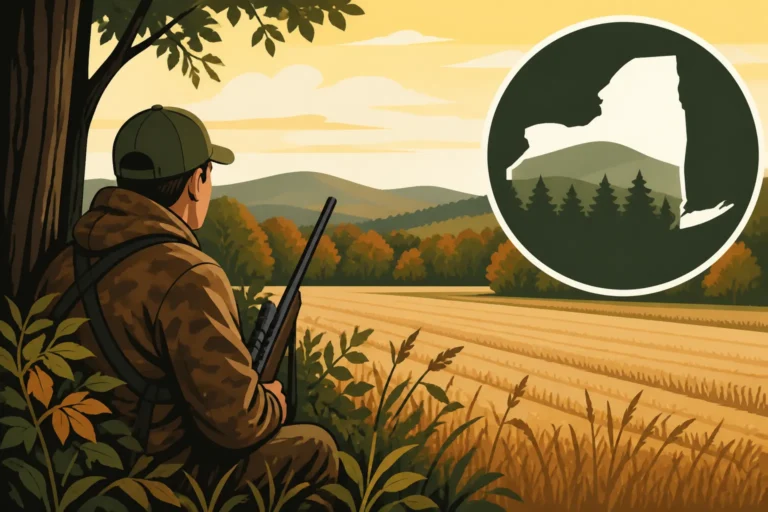
When hunting Long Island farmland, your stand placement needs to be absolutely dialed in. Forget wide-open hardwoods; here, you’re looking for subtle advantages. Focus on the edges of fields, especially where dense cover like fencerows, hedgerows, or small, thick woodlots meet the open feeding areas. These are the natural travel routes deer will use to enter and exit fields. Look for pinch points – narrow strips of cover between two fields, or where a woodline curves inward, forcing deer into a tighter space. Because deer are used to seeing and hearing people, extreme concealment is paramount.
Often, a well-brushed-in ground blind can be more effective than a treestand, allowing you to blend seamlessly into the edge cover without silhouetting yourself against the sky. If using a treestand, choose a tree with ample cover, and take the time to really trim out shooting lanes while ensuring you remain hidden. Deer in these areas often move during low light, so placing your stand where you can catch them just as they leave cover at dusk or before they re-enter at dawn is critical. And, as always, meticulously playing the wind is non-negotiable. Even a slight whiff of human scent will send these pressured deer backtracking. The principles of understanding wind and thermals on a Catskill ridge apply universally to deer hunting, even in flatter terrain.
Still-Hunting and Driving Small Tracts
Given the fragmented nature of Long Island’s deer habitat, still-hunting or carefully executed small drives can be incredibly effective tactics. Still-hunting involves moving very slowly and deliberately through dense cover – those thick hedgerows, small woodlots, or brushy creek bottoms that deer use for bedding and security. You’re not just walking; you’re observing, pausing, listening, and taking one or two steps at a time. The goal is to surprise a deer in its cover or to intercept one moving subtly through the thick stuff. This requires extreme patience and attention to detail.
For small, contained patches of cover, consider a small deer drive. This is often best executed with three or four hunters. Two hunters might slowly push through a thicket, while one or two others are strategically positioned on the downwind side, covering escape routes. Communication and safety are absolutely key here, especially given the proximity to developed areas. Everyone involved needs to know the plan, the boundaries, and exactly where each person is at all times. This tactic is particularly effective for pushing deer out of an area you know they’re using but where a stand might not be practical. Knowing how to execute deer drives with three or four hunters can really pay off in these tighter, more defined cover areas.
Adapting to Deer Movement Patterns
Long Island deer, especially those in farmland areas, develop distinct movement patterns influenced by hunting pressure and human activity. Expect a significant portion of their movement to be nocturnal, particularly during daylight hours after opening day. This makes hunting the first and last hours of light absolutely critical. Set up before dawn and stay on stand until well after sunrise, and be prepared to sit until dark, as deer will often wait for the last sliver of daylight before venturing into fields.
Their feeding patterns will also shift throughout the season depending on crop availability. Early season might see them hitting lush green fields; later, they'll target standing corn or recently harvested fields for leftover grains. Pay attention to what crops are being planted and harvested in your area, as this dictates where the deer will be. While the rut still occurs on Long Island, it might not manifest with the same overt daylight activity you see in more remote areas. Bucks will still cruise for does, but they often do so discreetly, following established travel corridors and cover lines. Tactics for hunting the rut in the Southern Zone, which includes Long Island, still apply, but be ready for more subtle signs and shorter windows of activity. Focus on those funnels and pinch points, as bucks will use them consistently.
Gear and Safety Considerations for Long Island Farmland
Hunting Long Island farmland brings with it a few specific gear and safety considerations that hunters need to keep top of mind. The blend of rural and suburban environments requires both adaptability and an unwavering commitment to safety.
Weapon Choices and Local Regulations
When hunting Long Island farmland, your choice of weapon is often dictated by local regulations, which can be more restrictive than upstate. Many areas on Long Island are shotgun slug zones or even archery-only, due to the population density and safety concerns. It’s absolutely vital to know the specific rules for the Wildlife Management Unit (WMU) you’re hunting in. For deer hunting, New York's legal firearms for deer hunting outlines what's permissible, but always double-check local ordinances.
If you’re using a shotgun with slugs, practice extensively to ensure precision and confidence in your shot placement. In these closer-quarters environments, you often won’t have long-range shots, but you need to be deadly accurate at typical farmland distances. Archery, including crossbows, is an excellent choice for these areas, offering stealth and precision. Make sure you’re up to date on crossbow rules during New York archery season, as these can change. Regardless of your weapon, always prioritize ethical shot placement. With potential residential areas nearby, you cannot afford a poorly placed shot that leads to a difficult or prolonged recovery.
Essential Gear for Suburban Hunting
Your gear for Long Island farmland hunting should prioritize concealment, quietness, and efficiency. Instead of large, bulky treestands, consider compact, lightweight models that are easy to carry in and out, especially if you're frequently moving your setup or hunting smaller tracts. Ground blinds are also incredibly effective, allowing you to blend into field edges or hedgerows without needing to climb a tree. If you're using a ground blind on New York public land, the principles of brushing it in apply even more stringently here – you want to disappear into the landscape.
Quality optics are crucial. Binoculars will help you scan field edges for subtle movement at dawn and dusk, and a rangefinder is invaluable for confirming distances in often-complex backdrops. Quiet clothing is a must; rustling fabrics will give you away quickly when deer are accustomed to quiet suburban noises. Layering for a New York deer stand is important, as temperatures can vary widely through the season. Finally, always have a good headlamp, a sharp field dressing knife, and sturdy game bags. Being able to quickly and cleanly field dress your deer is especially important when you might be close to homes or need to minimize your presence.
Prioritizing Safety and Hunter Ethics
Safety is paramount when hunting on Long Island, particularly in areas near human habitation. Always, always, always be aware of your surroundings. Know your shooting lanes, and never take a shot if you’re unsure of what lies beyond your target. New York has strict firearms discharge setback rules, meaning you must be a certain distance from dwellings, roads, and other structures. Adhere to these religiously. Wearing blaze orange, even when not legally required for archery, is a smart safety practice to make yourself visible to other hunters or even non-hunters who might be recreating nearby.
Clear communication with landowners is critical. Let them know when and where you’ll be hunting. If you’re hunting with a partner, maintain communication to ensure everyone knows each other’s location. Lastly, hunter ethics dictate quick and efficient game recovery. Hunting in a semi-developed area means you cannot afford to have a wounded deer wander onto someone’s private property or into a busy area. Be prepared to track effectively, even Blood trailing after dark in New York, and always have a plan for getting your deer out cleanly and respectfully. Your actions reflect on all hunters, and upholding a strong ethical standard is especially important in these sensitive hunting environments.
Here's a quick comparison of what you might expect when hunting Long Island farmland versus more traditional upstate wilderness hunting:
| Feature | Long Island Farmland Hunting | Upstate Wilderness Hunting |
|---|---|---|
| Habitat | Fragmented woodlots, hedgerows, crop fields, suburban edges | Large tracts of timber, mountains, swamps, remote areas |
| Deer Density | Can be surprisingly high in localized pockets | Varies, but often lower than agricultural zones |
| Primary Food Source | Farm crops (corn, soybeans), suburban landscaping, orchards | Acorns, browse, natural mast crops, clearcuts |
| Deer Behavior | Often more nocturnal, accustomed to human activity, pressured | More natural patterns, less direct human influence |
| Access | Primarily private land, requiring landowner permission | Mix of public land (state forests, WMAs) and private land |
| Hunting Pressure | Localized, can be high in accessible areas | Varies, can be very high near access points, decreases with distance |
| Typical Shot Distance | Often shorter, within 100 yards, precise | Can vary from close to long, depending on terrain and cover |
| Weapon Restrictions | More likely to be archery-only or shotgun-slug zones | Wider use of rifles and muzzleloaders |
| Concealment Need | Extreme, often requires ground blinds or heavily brushed stands | Important, but often aided by dense natural cover |
| Safety Concerns | High due to proximity to residential areas and roads | Focus on self-sufficiency, navigating rough terrain |
Disclaimer
Hunting is an inherently dangerous activity. This guide is for informational purposes only and does not replace the need for proper hunter education, adherence to all New York State Department of Environmental Conservation (DEC) regulations, local laws, and sound judgment in the field. Always prioritize safety, respect landowners, and ensure ethical hunting practices. Conditions and regulations can change, so always consult the most current official DEC hunting guide before heading afield.