Sitting a Field Edge in Late Season
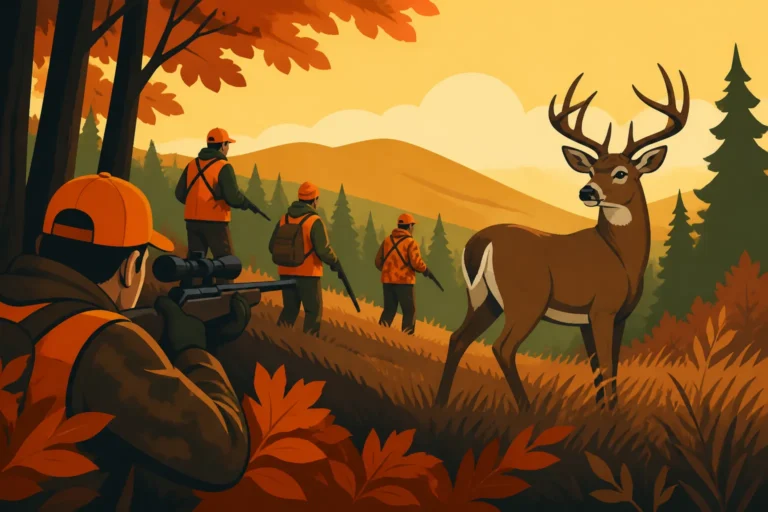
The late season in New York can be a real grind for deer hunters. Those crisp fall days of October and early November are long gone, replaced by bitter cold, often snow, and deer that seem to have vanished or gone completely nocturnal. It's especially frustrating when you're looking at a vast, open field, wondering if it's even worth sitting on the edge. This guide is here to help you navigate the challenges of hunting field edges during New York's late deer season, offering strategies to increase your chances of success when conditions are tough.
Understanding Late-Season Deer Behavior on Field Edges
Deer behavior shifts dramatically as the hunting season progresses, especially once temperatures plummet and snow begins to fall across New York. What worked in October or during Hunting the Rut in the Southern Zone won't necessarily cut it in December or January. Understanding these changes is critical for effective field edge hunting.
Why Deer Use Field Edges Late in the Season
In the late season, a deer's world revolves almost entirely around two things: survival and calories. Food sources that were abundant earlier in the fall, like acorns and lush green browse, are often depleted or buried under snow. This makes agricultural fields, particularly those with leftover crops, absolute magnets for deer. A field edge isn't just a boundary; it’s often the transition zone between secure bedding cover and vital feeding areas. Deer will hug these edges, using the cover of woods, brush, or topography to minimize their exposure before venturing into the open to feed. They're looking for standing corn, soybean stubble, or even overlooked pockets of brassicas if a farmer happened to plant them. It’s all about finding accessible energy to combat the cold. Even simple grass fields, if they have some lingering green, can draw deer in a pinch, especially if they haven't been heavily browsed. For a deeper dive into what they're munching on, check out Late-Season Food Sources for New York Whitetails.
The Impact of Cold Weather and Snow
Cold weather changes everything. Deer need more calories just to maintain their body temperature, which means feeding becomes a higher priority. When heavy snow blankets the ground, their options dwindle even further. Fields that might have been ignored earlier in the season suddenly become prime real estate because the food there is easier to access than digging through deep snow in the woods. Imagine trying to paw through two feet of snow for a few buried acorns versus walking into a cornfield where some kernels are still on the ground. It's a no-brainer for a deer. Also, deer movement patterns can become more predictable in harsh conditions. They will often shorten their travel routes between bedding and feeding, meaning those field edges become even more critical travel corridors. Look for tracks in the snow leading directly from dense thermal cover, like conifer stands or thick creek bottoms, to the most appealing food sources.
Pressure and Nocturnal Movement
By the time late season rolls around, deer in most areas of New York have been heavily pressured. Opening day for New York's Southern Zone Firearm Season or New York's Northern Zone Firearm Season might feel like a distant memory, but the deer certainly haven't forgotten the influx of hunters. This sustained pressure often pushes deer to become largely nocturnal, especially in open areas. They might hold tight in heavy cover during daylight hours, only emerging into fields well after dark. This is the ultimate frustration for a field edge hunter. However, there are exceptions. Extreme cold, heavy snow, or a sudden change in weather (like a storm breaking) can sometimes override their natural caution, forcing them to feed during daylight to survive. Also, areas with less hunting pressure, or private land where hunters manage their access, might see deer moving earlier in the evening or later in the morning. Being able to read the pressure in your specific hunting area is key. Tools like the GoHunt app can help you analyze terrain and identify areas that might naturally see less pressure due to difficult access or surrounding land use.
Strategic Stand Placement and Setup
Once you understand why deer use field edges in the late season, the next step is figuring out where to put yourself for the best chance at intercepting them. This isn't just about throwing up a stand; it's about making smart, informed decisions.
Identifying Key Entry and Exit Points
Deer don't just randomly pop out into a field. They use established travel routes, especially when moving between bedding and feeding in cold weather. Your job is to find these paths. Look for funnels created by terrain features, thick brush lines, narrow strips of timber connecting larger woodlots, or even changes in elevation. These natural pinch points concentrate deer movement, making them ideal places to set up. Think about how deer will approach the field from their bedding areas. Are there specific corners they always use? Are there subtle ditches or swales that offer them covered access? Often, the most consistent entry and exit points are not directly where the field meets the deepest woods, but rather 50-100 yards inside the timber, or at a natural bottleneck along a hedgerow. Using aerial photos, perhaps with a tool like GoHunt, can be incredibly helpful for identifying these features before you even step foot in the woods. This kind of pre-season scouting, similar to what you’d do when Scouting New York Public Land Before Season, is invaluable.
Concealment and Wind Direction
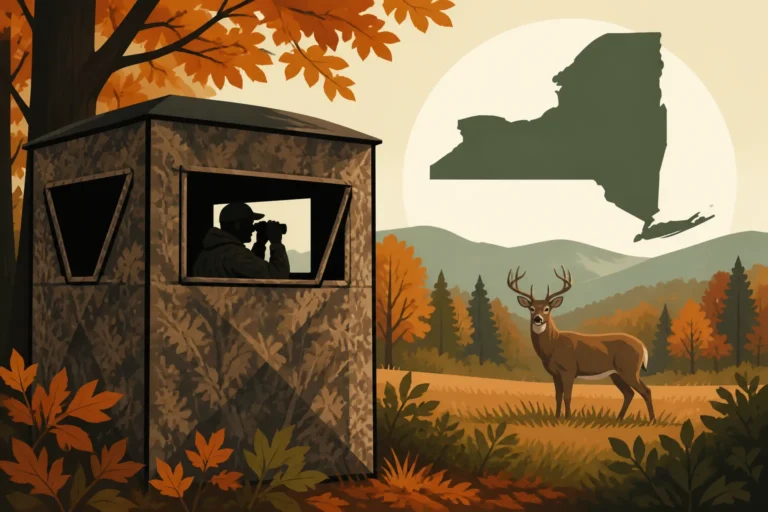
Concealment is paramount when hunting field edges, especially against the backdrop of a bare late-season landscape. Deer will be looking for danger, and any silhouette or unnatural shape will stand out. Choose a tree for your stand that offers good cover, like a mature oak with plenty of branching or a clump of evergreens. If using a ground blind, brush it in thoroughly to break up its outline. Imagine it disappearing into its surroundings, as described in Brushing In a Blind on a Field Edge. Even more critical is wind direction. Deer rely heavily on their sense of smell, and a single puff of your scent can ruin an entire hunt. Always set up downwind of where you expect deer to approach or cross. This often means having multiple stand locations for different wind directions. On frosty mornings or calm evenings, thermals can also play a significant role, often pulling scent downhill in the morning and lifting it uphill in the evening. Pay attention to how the air currents move in your chosen spot.
Elevated Versus Ground Blinds
The choice between an elevated treestand and a ground blind often comes down to the specific field edge and your personal hunting style. Both have distinct advantages and disadvantages in the late season.
Elevated Treestands:
- Pros: Provide a wider field of view, help get your scent off the ground (though wind still dictates), and offer a better angle for shooting over obstructions like standing corn or tall grass. In certain scenarios, they allow you to watch deer without being seen as easily, especially if the deer are looking for predators at ground level. They can be particularly effective if you're hunting open areas and need to see deer approaching from a distance.
- Cons: Can be cold and exposed in bitter late-season winds. Getting into a cold treestand quietly and safely in the dark can be challenging. Finding a suitable tree with good cover and a safe climbing route can also be an issue, especially on heavily hunted public lands where good trees are often already taken or overused. Remember to always use a safety harness, especially in icy conditions.
Ground Blinds:
- Pros: Offer excellent concealment, warmth, and protection from the elements, which is a huge bonus in the late season. They're easier to set up quickly in many locations and allow for more movement to stay warm without alerting deer. A properly brushed-in blind can be almost invisible. They're also a great option if suitable trees are scarce or if you're Using a Ground Blind on New York Public Land.
- Cons: Limited field of view, especially in tall crops or uneven terrain. Scent control is even more critical since you're at ground level. Deer have an easier time smelling and seeing danger when it's at their eye level. They can also draw attention if not well camouflaged and often require a week or more to allow deer to get used to their presence.
Consider your specific location. If it's an open, flat field with little cover, an elevated stand might be better. If you have thick brush or a hedgerow to tuck into, a ground blind could be ideal.
Essential Gear and Tactics for Success
Late-season hunting is as much about mental toughness as it is about strategy, but having the right gear can make all the difference in keeping you comfortable and focused. Don't skimp on the details when the thermometer plummets.
Cold Weather Clothing and Comfort
When you're sitting for hours on a frigid New York field edge, comfort isn't a luxury; it's a necessity for staying focused. Start with a good base layer that wicks moisture away from your skin, followed by insulating mid-layers like fleece or wool. Your outer layers should be windproof and waterproof, designed to trap heat. Don't forget your extremities: a warm hat that covers your ears, insulated gloves or mittens (with hand warmers inside), and serious insulated boots are non-negotiable. I’m talking about boots rated for extreme cold, like those from Irish Setter or Lacrosse, meant for standing still in freezing temperatures. Consider bringing a small insulated pad to sit on, which makes a surprising difference in warmth. A good thermos of hot coffee, tea, or cocoa can also be a game-changer. For a comprehensive guide, check out Cold-Weather Sitting Strategy in New York. Remember, if you're shivering uncontrollably, you're not hunting effectively.
Optics and Patience
Late-season deer often move during the last precious minutes of daylight or the first faint glimmers of dawn. High-quality binoculars and a dependable rangefinder are crucial for making the most of these low-light conditions. A good pair of 10×42 binoculars, like those from Vortex or Leupold, will gather enough light to help you pick out deer at long distances in the dim light, identifying whether it's a doe, a fawn, or that buck you've been after. A rangefinder is essential for confirming distances, especially in open fields where judging yardage can be tricky. You don't want to make a bad shot simply because you misjudged 20 yards. And perhaps most importantly, patience. Late-season hunting often involves long, unproductive sits. Deer might not show up until the very last second, or they might not show up at all. Don't get discouraged. Stay vigilant, scan those field edges constantly, and be ready to make a move when an opportunity finally presents itself.
Calling and Decoying Strategies
While not always effective, late-season calling and decoying can sometimes tip the odds in your favor, especially if you're trying to coax a wary deer into range. The rut is over, so aggressive calling like heavy rattling might not be as productive, but softer, more subtle calls can still work.
Calling:
- Doe bleats and fawn bawls: These can appeal to the maternal instincts of a mature doe or pique the curiosity of a buck still looking for a receptive female. In the cold, deer are looking for each other.
- Soft grunts: A short, subtle grunt can sometimes stop a deer that's cruising the field edge or draw one closer that might be out of range. Don’t overdo it.
- Social calls: These are subtle communication calls that simply announce a deer's presence, which can sometimes reassure other deer or draw a curious one in.
Decoying:
- Single doe decoy: A lone doe decoy can sometimes draw in other deer, both does and bucks, looking for company or a potential mate. Place it strategically so that approaching deer have to walk past your stand to investigate.
- Fawn decoy: A fawn decoy, especially if paired with soft bleats, can sometimes appeal to protective does or even attract predators like coyotes, which in turn might draw in a buck keeping an eye on the area.
- Timing: Late-season decoying is often most effective during periods of extreme cold when deer are more social and focused on finding resources or company.
Always consider the level of hunting pressure in your area. Heavily pressured deer are far more likely to shy away from anything that seems unnatural. For more on vocalizations, check out Rattling and Grunting in New York.
Real-World Scenarios and Adaptations
New York offers a diverse range of hunting landscapes, from the rolling farmlands of the Southern Tier to the vast expanses of the Adirondacks. Field edge hunting, while a general concept, requires specific adaptations depending on the local environment.
Hunting a Standing Cornfield in Farm Country
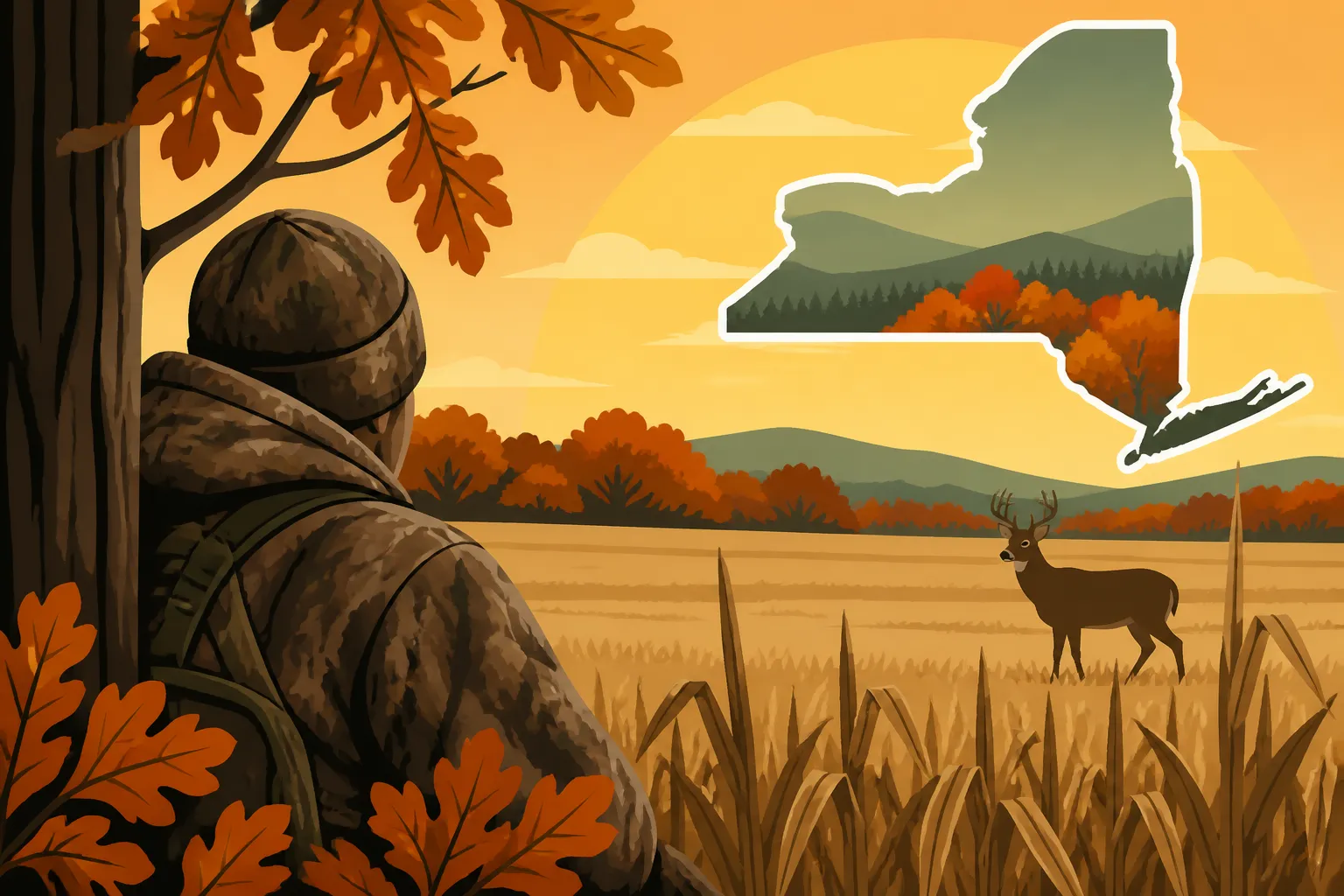
New York's agricultural regions, particularly in the Southern Tier and parts of Western New York, are dotted with cornfields that often remain standing well into the late season. These fields are prime late-season deer magnets because the corn provides both food and incredibly dense thermal cover. Deer will bed inside these fields, especially during daylight, only moving to the edges or out into cut fields under the cover of darkness.
- Approach: When hunting a standing cornfield, your approach is paramount. Deer will often bed close to the edges. Walk into your stand location slowly, quietly, and using any available cover like hedgerows or ditches.
- Stand Placement: Instead of setting up directly on the edge, consider a stand placement 10-20 yards inside the woods, overlooking a clear shooting lane into the corn. Deer will often step just out of the corn, mill around for a few minutes, and then venture further. This gives you a better opportunity. Also, focus on corners or points where the cornfield narrows or bends.
- Wind and Sun: The wind direction is critical. You want to be downwind of where you expect deer to exit the corn. Also, consider the angle of the late-day sun. Setting up with the sun at your back can blind incoming deer or make it harder for them to see you, while you'll have good visibility.
- Patience: Deer can spend all day in standing corn. Be prepared for a long sit, and wait until the last possible minute. They often won't emerge until the very end of legal shooting light. For more specialized tips, see Hunting a Standing Cornfield in Farm Country.
Working a Hedgerow for Late-Season Deer
Hedgerows are linear strips of trees, shrubs, and thick brush that act as natural travel corridors, especially in open farmland or agricultural landscapes. They provide vital cover for deer moving between woodlots, bedding areas, and feeding fields. In the late season, with sparse natural cover elsewhere, hedgerows become superhighways for deer.
- Identify Crossings: Walk the length of the hedgerow, looking for obvious deer trails or breaks in the brush where deer consistently cross or enter/exit a field. These are your target zones.
- Concealed Setup: A hedgerow often doesn't offer large trees for elevated stands, making ground blinds an excellent option. Tuck your blind into the thickest part of the hedgerow, brushing it in completely. You want to be as invisible as possible.
- Pinch Points: Look for points where the hedgerow narrows or where it comes very close to another piece of cover (like a small woodlot or a creek bed). These natural funnels will force deer past your position.
- Thermals and Wind: Pay very close attention to thermals here. If the hedgerow is in a slight depression or near a water source, air currents can be tricky. Always prioritize wind direction, ensuring your scent is blowing away from the travel corridor.
- Early and Late Movement: Deer will often use hedgerows for both early morning movement from fields back to bedding and late afternoon movement from bedding to fields. Be prepared for a full day sit or focus your efforts on the last couple of hours before dark.
When to Pack Up and Move
Knowing when to call it quits on a particular field edge setup is a skill that comes with experience. It's tough to admit a spot isn't working, especially after investing time and effort, but sometimes it's the smartest move.
- Lack of Fresh Sign: If you're consistently not seeing any fresh tracks, droppings, or rubs/scrapes along the field edge after a few sits, it's a strong indicator that deer simply aren't using that spot regularly anymore. Maybe the food source is depleted, or pressure has pushed them elsewhere.
- Consistent Nocturnal Activity: If trail cameras (where allowed on private land or within specific public land rules) show deer are only coming out into the field well after dark, or if you're only seeing them under moonlight, it might be time to move. You're hunting the wrong timeframe.
- Changing Conditions: A sudden warm spell that melts snow and opens up new food sources in the woods, or a new batch of hunting pressure in the area, can completely change deer patterns. Be adaptable, and be ready to find a new primary food source or less pressured travel route.
- Trust Your Gut: Sometimes, you just get a feeling that a spot is dead. Don't ignore that instinct. It's often based on subtle observations your conscious mind hasn't fully processed.
Remember, late-season success often comes from being flexible and relentless. Don't be afraid to pull your stand, scout a new area with fresh eyes (perhaps using GoHunt's mapping tools to identify new potential food sources), and try a different approach. After all, the season is short, and every sit counts.
| Feature / Consideration | Elevated Treestand (Late Season Field Edge) | Ground Blind (Late Season Field Edge) |
|---|---|---|
| Concealment | Good, especially against sky/trees. | Excellent, if properly brushed in. |
| Wind Protection | Poor, very exposed to cold winds. | Excellent, offers significant shelter. |
| Scent Management | Helps get scent off ground, but wind critical. | Critical, scent at deer level. |
| Field of View | Wide, excellent for scanning. | Limited, can be obstructed by terrain/crops. |
| Warmth/Comfort | Low, can be extremely cold. | High, provides good insulation. |
| Setup Time | Moderate, requires suitable tree. | Quick, very versatile placement. |
| Deer Acclimation | Less, often perceived as natural part of tree. | More, requires time to blend in. |
| Shooting Angle | Steep, good for clear shots. | Flat, can be obstructed by brush/terrain. |
Disclaimer
Hunting is an inherently dangerous activity. Always prioritize safety, follow all New York State Department of Environmental Conservation (DEC) regulations, and be aware of your surroundings. This guide provides general information and recommendations, but individual hunting situations can vary. Always hunt ethically and responsibly.