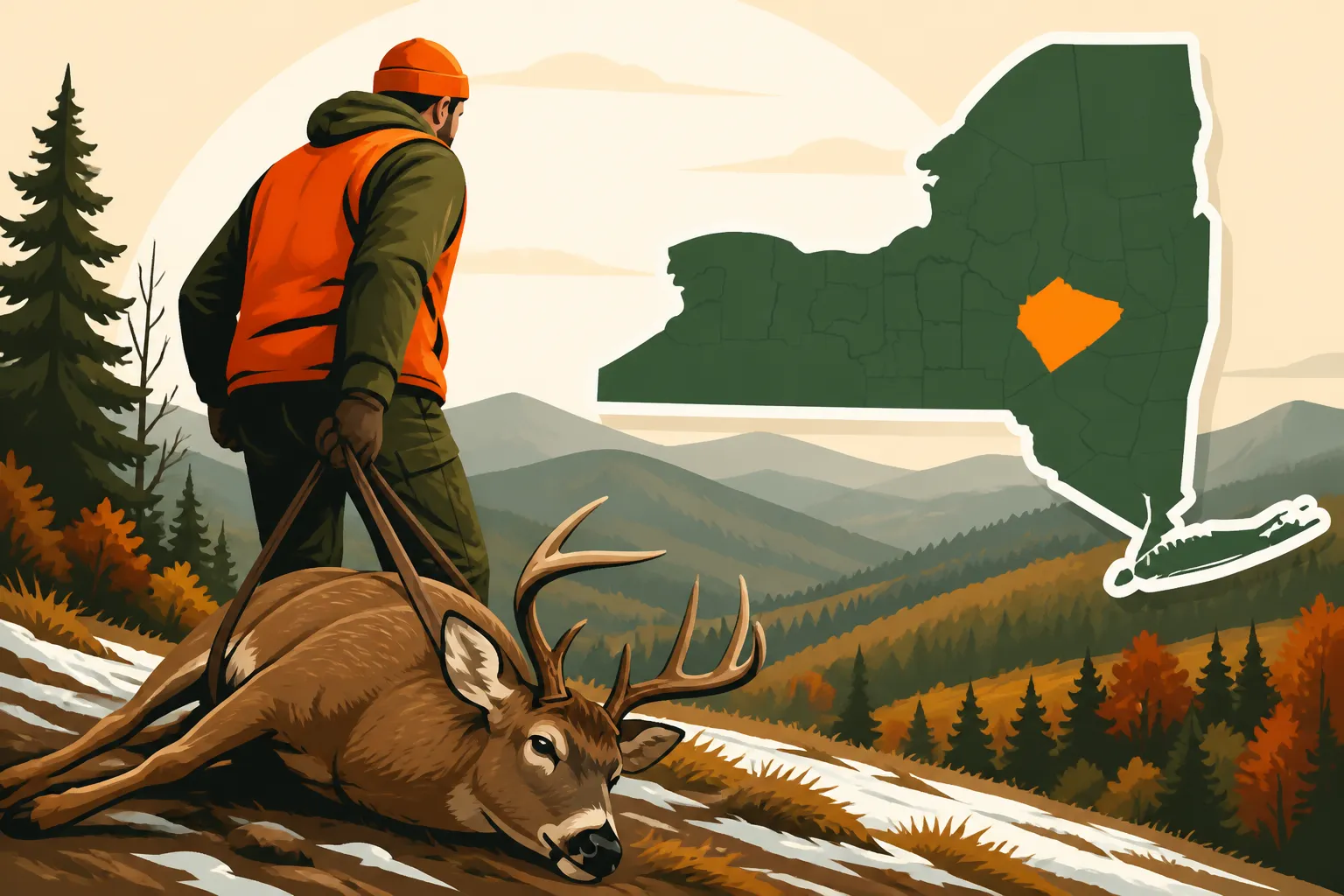
Moving a Deer Carcass Out of Herkimer County
It's incredibly frustrating when you've had a successful hunt, only to then face a confusing maze of regulations about what you can and can't do with your deer, especially when it comes to transporting it. The reality of hunting in New York means being acutely aware of specific rules, particularly when Chronic Wasting Disease (CWD) is a concern. This guide will walk you through the essential rules and practical steps for moving a deer carcass out of Herkimer County, ensuring you stay compliant and help protect our precious deer herd.
Understanding New York's CWD Containment Area in Herkimer County
Hunting is about connecting with nature, but it also comes with a serious responsibility: protecting wildlife from diseases. Chronic Wasting Disease (CWD) is one of the most significant threats to deer and elk populations across North America, and New York State takes it very seriously. That's why, when CWD was detected in a captive deer facility in Herkimer County, the New York State Department of Environmental Conservation (DEC) swiftly established a CWD Containment Area (CDA).
What is the Herkimer County CWD Containment Area?
The Herkimer County CWD Containment Area isn't just an arbitrary line on a map; it's a critical zone designed to prevent the potential spread of this devastating disease. CWD is a neurological disease that affects cervids, like our beloved white-tailed deer, and it's always fatal. It's caused by abnormal proteins called prions, which can persist in the environment for years, making containment absolutely crucial. The specific towns that are either fully or partially within the Herkimer County CWD Containment Area include parts of Fairfield, Little Falls, Salisbury, and Russells Corners. It’s vital to know these boundaries, which you can often find detailed on the DEC website or by utilizing mapping applications like GoHunt, which can help overlay these specific management zones onto your hunting maps when you're scouting New York Public Land Before Season.
Why Are These Restrictions in Place?
The immediate concern after a CWD detection is preventing its spread into the wild deer population. Once CWD takes hold in a wild herd, it's incredibly difficult, if not impossible, to eradicate. The prions concentrate in certain tissues of an infected animal, particularly the brain, spinal cord, eyes, spleen, and lymph nodes. These are the parts that pose the highest risk of spreading the disease if they're transported outside the affected area and improperly disposed of, or if other deer come into contact with them. The restrictions on carcass movement are a direct response to this threat, aiming to contain any potential infection to a limited geographical area. This proactive approach helps protect our larger state deer herd, including the healthy populations in areas like the Finger Lakes Region and the Southern Tier Farmland Deer. New York has worked hard to keep wild CWD cases at bay, and these regulations are a testament to that effort.
Navigating Carcass Transport Restrictions
So, you've harvested a deer within the Herkimer County CWD Containment Area. Now what? The rules about what parts of the deer can leave the containment area and what must stay are very specific. It’s not about making things difficult for hunters; it’s about making sure we don't inadvertently contribute to the spread of CWD.
What Parts of a Deer Carcass Can Be Moved?
The good news is, you can still enjoy your venison and your trophy! The regulations are primarily focused on the high-risk parts of the animal. Here's what you are allowed to move out of the Herkimer County CWD Containment Area:
- Deboned meat: This is the safest way to transport your harvest. Once the meat is completely removed from the bone, it can be taken out of the CDA. This means bringing it to a processor or doing it yourself.
- Cleaned skull plates and antlers: If you're hoping to keep the rack, the skull plate must be free of all brain tissue, as brain tissue is a high-risk material. You can scrape and clean it thoroughly or have a taxidermist do it within the CDA. Antlers detached from the skull can also be moved.
- Hides: Deer hides can be transported as long as there is no brain or spinal cord tissue attached. This usually means a good fleshing and cleaning.
- Teeth: Individual teeth can be moved.
- Finished taxidermy products: Once a taxidermy mount is fully processed and all high-risk tissues are removed and properly disposed of, the finished product can leave the area.
It might seem like a lot of work, but following these guidelines is crucial for preventing the spread of CWD. Think of it as a small sacrifice to ensure future generations can still enjoy hunting White-Tailed Deer Across New York.
What Parts Must Stay or Be Disposed of Within the CDA?
This is where you need to be extra vigilant. The following parts of a deer harvested within the Herkimer County CWD Containment Area cannot be transported out of the CDA:
- Brain and spinal column: These are the absolute highest-risk tissues. They must be removed and disposed of properly within the containment area. This means careful field dressing and butchering.
- Eyes: Also considered high-risk due to their proximity to brain tissue.
- Spleen and lymph nodes: These organs can also harbor CWD prions and must remain within the CDA.
- Any unprocessed head or spinal column material: Unless it's being transported directly to a permitted taxidermist or processor within the CDA, the entire head and spinal column cannot cross the containment area boundary.
It's a serious offense to violate these rules. The DEC actively monitors compliance, and penalties can be steep. Understanding New York Carcass Transport Restrictions is part of being a responsible hunter, helping to protect our wildlife from serious threats.
| Carcass Part | Can Be Moved Out of Herkimer County CDA | Must Stay/Be Processed Within CDA | Notes |
|---|---|---|---|
| Deboned Meat | ✅ Yes | ❌ No | Bone must be completely removed |
| Cleaned Skull Plates | ✅ Yes | ❌ No | All brain tissue must be removed |
| Antlers (detached) | ✅ Yes | ❌ No | |
| Hides | ✅ Yes | ❌ No | No brain or spinal tissue attached |
| Teeth | ✅ Yes | ❌ No | |
| Finished Taxidermy | ✅ Yes | ❌ No | All high-risk tissues removed during processing |
| Brain | ❌ No | ✅ Yes | Highest risk tissue |
| Spinal Column | ❌ No | ✅ Yes | Highest risk tissue |
| Eyes | ❌ No | ✅ Yes | High risk |
| Spleen | ❌ No | ✅ Yes | High risk |
| Lymph Nodes | ❌ No | ✅ Yes | High risk |
| Whole Carcass | ❌ No | ✅ Yes | Unless going to a CDA processor/taxidermist |
Practical Advice for Hunters in the CWD Containment Area
Dealing with these regulations can feel like an extra layer of complexity to an already challenging hunt. But with a bit of planning, you can navigate the rules without sacrificing your experience or your harvest.
Field Dressing and Processing Considerations
When you successfully harvest a deer in the Herkimer County CWD Containment Area, your field dressing procedure takes on even greater importance. The goal is to remove as much of the high-risk material as possible before leaving the immediate kill site, or at least before leaving the containment area.
First, standard field dressing to remove the entrails is always the initial step. You can dispose of the gut pile at the kill site, which is generally acceptable for low-risk tissues, though check local regulations for any specific disposal requirements. If you plan to bring the carcass to a processor, make sure they are within the CWD Containment Area if you intend to leave the skull or spinal column intact. Many hunters choose to quarter their deer in the field, deboning as much meat as possible right there. This significantly reduces the weight you need to haul and ensures the high-risk materials are left behind. Learning techniques for Field Dressing a Deer in Cold Weather or even the gutless method can be invaluable here, as it allows you to get the meat off the bone efficiently. Remember, only deboned meat can safely cross the CDA boundary without further processing.
Choosing a Taxidermist
If you've taken a buck you want to mount, you'll need to be mindful of taxidermy rules. Ideally, you should find a taxidermist located within the Herkimer County CWD Containment Area. You can bring the entire head, including the skull and brain, to them directly. They are equipped to properly remove and dispose of the high-risk tissues according to DEC regulations. If you use a taxidermist outside the CDA, you must ensure that all brain and spinal tissue is completely removed from the skull plate before you transport it to them. This means a thorough cleaning, which can be messy and time-consuming. Most hunters find it far easier to work with a local taxidermist within the containment zone to avoid any potential missteps.
Planning Your Hunt and Using Resources
Preparation is key, especially when dealing with specific regulations like these. Before you even head out to hunt in Herkimer County, familiarize yourself with the precise boundaries of the CWD Containment Area. The DEC website is your best friend here, providing detailed maps and the most up-to-date regulations. Tools like the New York HuntFishNY App or third-party mapping solutions such as GoHunt can also be invaluable for knowing exactly where you are in relation to the CDA boundary.
It's a good idea to identify local meat processors and taxidermists within the containment area beforehand. Have their contact information handy. If you anticipate success, you'll want to know exactly where you can take your deer for proper handling. This foresight can save you a lot of stress and ensure you're in full compliance. Understanding these localized rules is just as important as knowing the statewide rules on Reporting a New York Deer Harvest Online, which is a mandatory step after every successful hunt.
The Bigger Picture: New York's Fight Against CWD
The regulations in Herkimer County are not just arbitrary hoops to jump through; they are a critical line of defense in New York's ongoing battle against CWD. Understanding the broader context helps emphasize why these rules are so important for all hunters.
New York's History and Monitoring of CWD
New York State has a vigilant history when it comes to CWD. The state has invested heavily in monitoring and prevention efforts for decades. The discovery of CWD in a captive herd in Herkimer County was a significant concern precisely because it represented the first-ever detection of the disease within the state. Thankfully, through aggressive measures and a swift response, the disease has not been found in the wild deer herd within New York State since that initial captive animal detection. This success story is a testament to the DEC's proactive stance and the cooperation of hunters. The New York CWD Testing for Hunters program, particularly within the containment area, involves sampling many deer to ensure the disease has not spread. Hunters often play a crucial role by providing samples, which helps wildlife biologists monitor the situation closely. This surveillance is paramount to protect the overall New York Deer Population Estimate.
Why Containment is So Crucial
CWD is a truly insidious disease. Unlike many other wildlife illnesses, it's not caused by a bacterium or virus that can be easily treated or contained with vaccines. The prions that cause CWD are incredibly resilient; they can survive in the soil for years, potentially infecting deer that feed in contaminated areas. This environmental persistence is why moving high-risk carcass parts is so dangerous. If an infected carcass part is left outside the containment area, it creates a new potential source of infection for local wildlife. The risk isn't just to individual deer; it's to the long-term health and sustainability of the entire deer population and, by extension, the hunting heritage we all cherish. The state goes to great lengths to ensure New York's Chronic Wasting Disease Containment Area is effective, including regular updates to policies like those found for The Herkimer County CWD Containment Towns. This commitment helps preserve our wildlife for years to come.
The Role of Hunters in CWD Prevention
As hunters, we are often the first line of defense and the most important partners in wildlife management. By understanding and adhering to the carcass transport restrictions, you become an active participant in protecting New York's deer herd from CWD. This responsibility extends beyond just following the rules; it's also about staying informed. The DEC constantly updates its information regarding CWD, and hunters should regularly check these resources. Your diligence, whether it's responsibly disposing of carcass parts or participating in CWD sampling efforts, directly contributes to the health of our wildlife. For more details on the statewide management efforts, you can look up information on Why New York Tracks Captive Deer Facilities, which outlines part of the broader strategy.
Protecting our resources ensures that traditions like Hunting the Rut in New York in November or enjoying a successful Spring Turkey Hunting in New York season can continue for future generations. Thank you for doing your part to keep New York's wild places healthy and vibrant.
Disclaimer
The information provided in this guide is for general informational purposes only and is not a substitute for official regulations. Hunting regulations, including those pertaining to Chronic Wasting Disease (CWD) and carcass transport, are subject to change. Always consult the most current New York State Department of Environmental Conservation (DEC) hunting regulations and official advisories before hunting. Compliance with all applicable laws and regulations is the sole responsibility of the hunter.