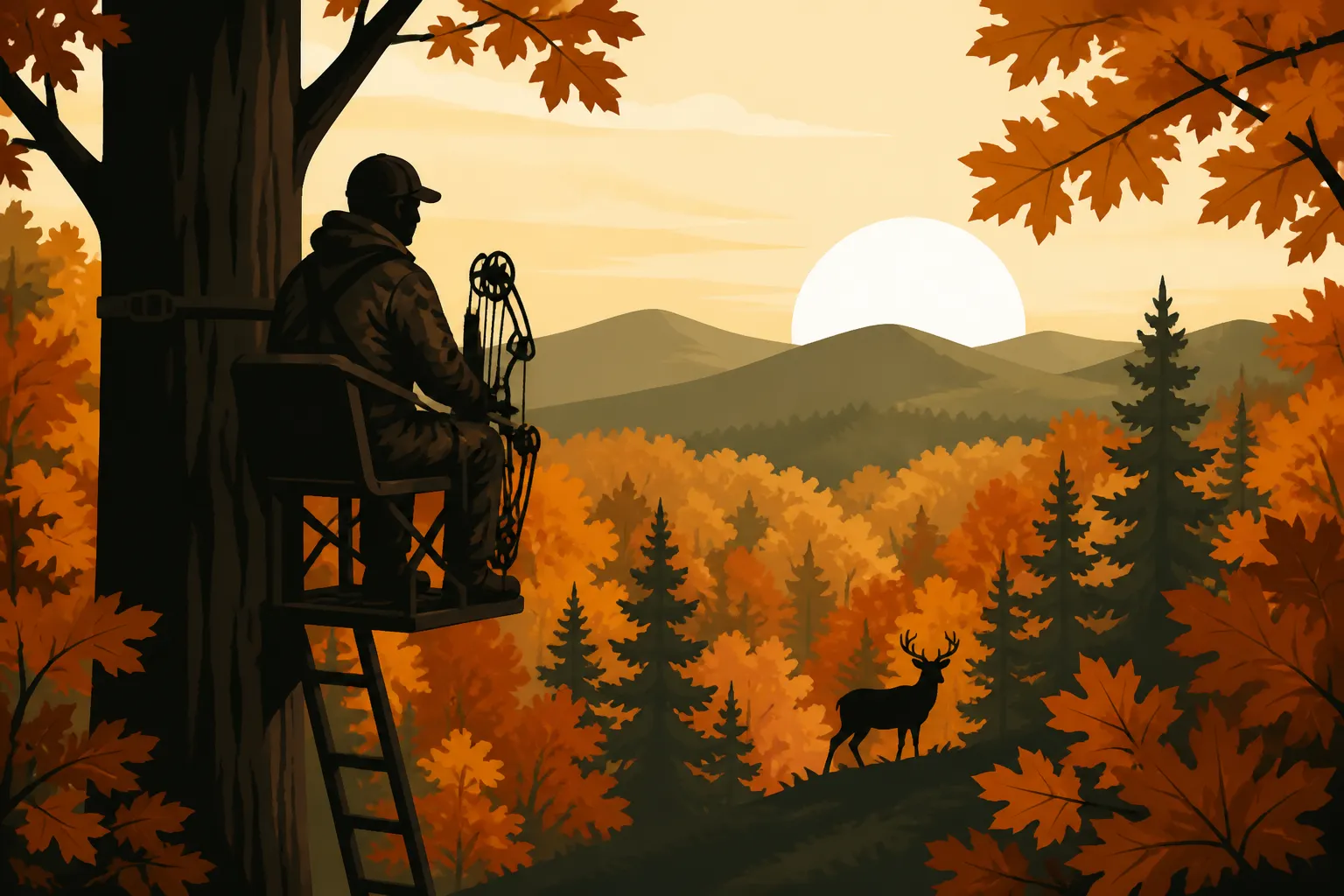
Treestand Setups in Adirondack Hardwoods
Hunting the vast, often unforgiving Adirondack hardwoods can feel like an impossible puzzle when it comes to consistently placing a treestand. The sheer scale, broken terrain, and the cunning nature of mature Northern Zone deer mean a poorly chosen or improperly set stand will yield nothing but cold sits and frustration. This guide is designed to cut through that complexity, providing you with detailed strategies for selecting the right equipment, identifying prime locations, and executing stealthy setups that will put you in position for success in New York’s magnificent, yet challenging, northern woods.
Understanding the Adirondack Hardwoods Environment
The Adirondack region is a beast of its own, far different from the rolling farmlands of the Southern Zone or the broken hills of the Catskills. Its unique blend of elevation, forest cover, and deer behavior demands a tailored approach to treestand hunting. If you go in expecting easy pickings, you'll be quickly humbled by this grand wilderness.
Topography and Terrain Challenges
The Adirondacks are characterized by rugged, often steep topography, rocky outcrops, and a mix of dense evergreens and expansive deciduous forests. This isn't flat ground where you can pick any old oak. We're talking about drainages, subtle ridges, steep ravines, and boulder fields that make walking a challenge, let alone carrying a stand. Access can be limited, and the vastness means that many areas see little human intrusion, while others near trailheads are pounded. Understanding this broken terrain is paramount. You'll often find yourself navigating areas where you can't see more than 50 yards, even in mature hardwoods, due to undulations in the land or pockets of thick regeneration. This isn't just about finding a good tree; it's about finding a good tree within a landscape that forces deer into predictable patterns, even if those patterns are subtle. The sheer effort of packing in a stand and sticks means you want to get it right the first time, or at least minimize trial and error.
Typical Deer Movement Patterns
Deer in the Adirondack hardwoods operate on a different schedule and use the landscape differently than their Southern Zone cousins. Food sources are often spread out and can change rapidly, particularly after a mast crop. Early season might see deer hitting scattered oak flats or beech ridges, while later in the fall, they'll key into whatever remaining browse or hard mast they can find, often moving into the thicker softwood cover for shelter from harsh weather. Understanding Where Adirondack Bucks Bed is crucial. They favor dense, often remote thickets of spruce, balsam, or hemlock, particularly on north-facing slopes that offer thermal cover and protection. Travel corridors often follow the path of least resistance: old logging roads, subtle benches along hillsides, or even just the edges of different timber types. These aren't always obvious trails; sometimes it's just a slight dip in the terrain that makes travel easier. Their movements are largely influenced by weather, food availability, and the need for security, making them more nocturnal in pressured areas.
The Impact of Hunting Pressure
Despite its vastness, the Adirondack Forest Preserve sees its share of hunting pressure, especially near accessible points. We all want to believe we're hunting truly untouched wilderness, but deer are smart. They quickly learn to avoid areas with high human activity. Bucks, especially, will become largely nocturnal, moving predominantly under the cover of darkness or during midday lulls in hunting activity. This means your stand setup needs to consider not just where deer want to go, but where they feel safe going. This often pushes them into less accessible, thicker cover, or forces them to move during periods when most hunters are out of the woods. Recognizing Hunting Pressure on New York Public Land is key. You might need to walk further, climb higher, or push deeper into areas that others deem too difficult. This can be frustrating, especially when you're dragging heavy gear, but it's often where the biggest rewards lie.
Choosing the Right Treestand for Adirondack Terrain
Given the diverse and often challenging terrain of the Adirondacks, your choice of treestand is more than just a preference; it's a strategic decision. What works perfectly on a Southern Tier field edge might be utterly useless on a steep Adirondack ridge.
Climbing Stands Versus Hang-Ons
- Climbing Stands: These can be incredibly efficient for hunters who like to stay mobile and cover a lot of ground. If you're targeting those mature, straight hardwoods that often define prime Adirondack ridges and valleys, a good climbing stand can be set up quickly and quietly. They're great for situations where you're scouting on the fly and need to get up a tree with minimal fuss. However, their biggest limitation in the Adirondacks is tree selection. You need a straight, limbless tree, ideally with consistent taper. Many areas, especially in mixed stands or areas with abundant undergrowth, simply won't offer suitable "climber trees." Imagine hauling a heavy climber deep into a ravine, only to find nothing but knotty, crooked maples or small evergreens. It's a real buzzkill. Plus, they can be noisy to carry, especially when navigating rocky terrain.
- Hang-On Stands: These offer far greater versatility in terms of tree selection. Paired with a set of Climbing Sticks for Adirondack Hardwoods, a hang-on stand allows you to get into almost any tree that offers good cover and position, regardless of its shape or limb structure (within reason, of course). This adaptability is huge in the Adirondacks, where varied forest types are the norm. You can set them up in crooked oaks, pines, or even double-stemmed trees that would be impossible for a climber. The downside? They generally involve more pieces to carry (stand plus multiple sticks) and often take longer to set up initially. If you're planning to leave stands in the woods for the season (check local WMA rules first!), hang-ons are usually the go-to. However, for a mobile approach, the multiple trips to set and remove can be cumbersome.
Saddle Hunting Advantages in Big Timber
Saddle hunting has truly revolutionized mobile hunting, and it's particularly well-suited for the Adirondack big timber environment. If you haven't looked into it, now's the time. A saddle system offers unparalleled mobility and a 360-degree shooting radius, which is a game-changer in dense cover. The gear is incredibly lightweight and compact, making those long treks into remote spots much more manageable. Unlike a traditional stand, you're not fixed to a platform, allowing you to reposition around the tree as needed to get a shot, even when a deer walks behind you. This is a huge advantage when you're trying to hide your outline against a tree. The ability to climb almost any tree, regardless of its size or limb configuration, opens up a world of possibilities for stealthy setups. For hunters serious about deep-woods hunting in challenging terrain, exploring Saddle Hunting in New York Hardwoods could be your ticket to consistent success.
Essential Safety Gear and Practices
No matter what type of stand you choose, safety is paramount. We all get excited, we all get in a hurry, but a fall from a treestand can be life-altering or even fatal. Always, and I mean always, wear a full-body harness that fits properly. This isn't just a suggestion; it's non-negotiable. Attach your harness to the tree before your feet leave the ground and remain attached until you're safely back on solid earth. Using a lifeline or a similar system that keeps you connected during ascent and descent is a wise investment. Make sure all straps, buckles, and ropes are in good condition and free from wear and tear.
- Pre-Season Inspection: Before every season, and before every hunt if you're super diligent, thoroughly inspect your stand, sticks, and harness. Check for cracks, frayed ropes, loose bolts, and corrosion. Rodents can chew through straps, so be vigilant if you leave gear out.
- Practice at Home: Set up your stand in your backyard. Get comfortable with the process in daylight, without the pressure of a pre-dawn hunt. Practice climbing, securing your harness, and maneuvering in your stand.
- Tell Someone: Always let someone know where you're hunting and when you expect to be back. The remote nature of the Adirondacks means help can be a long way off.
- Secure Your Weapon: Use a haul rope to pull up your bow or unloaded firearm after you're safely in your stand. Never climb with a weapon in your hands or on your back.
For more detailed information, checking out Treestand Safety Gear for Steep Ground is a must-read before heading into the woods.
Strategic Treestand Placement: Reading the Woods
This is where the art and science of Adirondack hunting really come together. It's not about finding a tree, it's about finding the tree – the one that puts you in the perfect ambush position.
Identifying Key Funnels and Pinch Points
Deer, especially big woods deer, are creatures of efficiency. They will take the path of least resistance or the path that offers the most security. This is where funnels and pinch points come into play. A funnel is any feature that concentrates deer movement from a wide area into a narrower one. This could be a narrow strip of timber between two clearcuts, a saddle between two ridges, or a strip of hardwoods bordered by dense swamp on either side. Pinch points are often more acute, forcing deer through a very small window. Think about a rocky bluff that pushes deer to walk along its base, or a small gap in a dense thicket.
- Ridge Saddles: These are natural low spots on a ridge that deer use to cross from one side to another, especially when traveling between bedding and feeding areas.
- Creek Crossings/Drainages: Deer often follow drainages, particularly if there's an easy crossing point. Look for worn trails along the banks.
- Logging Roads/Old Trails: While sometimes over-pressured, abandoned logging roads or subtle paths can serve as major travel arteries, especially when they funnel into thicker cover.
- Topographic Maps and Aerial Imagery: Use tools like GoHunt (or the New York HuntFishNY App) to really dissect the terrain before you even step foot in the woods. Identify saddles, steep contours, and changes in vegetation that might create these natural bottlenecks. These maps are invaluable for Scouting With the New York HuntFishNY App and helping you find potential hotspots.
Locating Food and Bedding Areas
Understanding the seasonal availability of food and where deer feel safe enough to bed is fundamental. In the Adirondacks, these can be quite far apart.
- Food Sources: In early archery season, look for oak flats (if present) or beech ridges. Beech nuts, when they drop, are a huge draw for deer and bears alike. As the season progresses, deer will browse on regenerating saplings and shrubs. Don't overlook soft mast like wild apple trees or even leftover agricultural fields if you're on the fringe of farm country. A good strategy is to find areas with a variety of food sources, as one might fail while another thrives.
- Bedding Areas: Adirondack deer often bed in dense thermal cover. This includes thick stands of spruce, balsam fir, or hemlock, especially on north-facing slopes that protect them from prevailing winds and offer good visibility downslope. Look for dense pockets of regeneration after a logging operation, or blowdown areas that create impenetrable tangles. These thickets provide security from predators and harsh weather. Finding fresh sign, like beds or heavily used trails leading into these areas, confirms their use. For a deeper dive into where big bucks disappear during the day, read Where Adirondack Bucks Bed.
Considering Wind, Thermals, and Sun Position
These environmental factors are often overlooked but are absolutely critical for a successful setup.
- Wind: Your scent cone is your biggest enemy. Always set up downwind of where you expect deer to approach. This sounds simple, but in the Adirondacks, wind can be notoriously shifty, especially in broken terrain. Use a milkweed puff or a commercial wind checker frequently. Pay attention to prevailing winds for that day, but also consider micro-thermals.
- Thermals: In hilly or mountainous terrain, air currents move differently throughout the day. In the morning, cool air sinks down into valleys and drainages (down-draft), while in the evening, warm air rises up the slopes (up-draft). This means a stand location that's perfect for a morning hunt might be terrible for an evening hunt, and vice-versa. Understanding Wind and Thermals on a Catskill Ridge (which translates well to the Adirondacks) is essential. Your stand needs to be positioned so that your scent is carried away from the deer's approach and probable travel routes.
- Sun Position: Consider where the sun will be during your hunting window. An evening stand with the setting sun directly in your eyes can make it impossible to see approaching deer. Conversely, the sun at your back can silhouette you against the sky, making you more visible. Try to choose a tree that offers some shade or back cover, especially if hunting near open areas.
Executing the Perfect Setup: Stealth and Longevity
Getting to your spot and setting up without alerting every deer in a square mile is the difference between seeing game and seeing nothing but squirrels. Adirondack deer are incredibly sensitive to disturbance.
Entry and Exit Routes
This is arguably as important as the stand location itself. Your entry and exit need to be as quiet and scent-free as possible.
- Avoid Deer Travel Paths: Never walk directly on a well-used deer trail. Deer will smell your presence and quickly learn to avoid that area. Parallel the trail 20-30 yards away, if possible, or pick an entry route that uses dead ground, dense cover, or terrain features to mask your approach.
- Use Waterways/Ridges: Sometimes, walking in a shallow creek bed (if it allows for quiet movement) can help eliminate scent. Similarly, using the very top of a ridge, where scent dissipates quickly, can be effective.
- Timing: Get to your stand early, well before first light, to allow the woods to settle. Depart well after dark, once deer have moved off to feed. If you bump deer on your way in or out, you're educating them and potentially ruining your spot for days, if not weeks.
- GoLightly: Minimize noise. Wear quiet clothing. Don't rustle through brush needlessly. This might mean walking a longer, but quieter, route.
Tree Selection and Camouflage
The right tree does more than just hold your stand; it hides you.
- Backdrop and Cover: Choose a tree with a good background, like a clump of evergreens or the darker side of a ridge. This helps break up your outline. Look for trees that have some natural branching or small limbs around your desired height to provide additional cover without impeding your shooting lanes.
- Tree Diameter: Ensure the tree is sturdy enough for your stand and safe to climb. For hang-ons and saddles, a tree that's too small can be unstable. Climbers require specific diameters.
- Height: In the big woods, 20-25 feet is often a good starting point. This gets you above the deer's primary line of sight and helps disperse your scent more effectively. However, in certain terrain, like a steep sidehill, you might be able to get away with being lower, as long as you're above the deer's expected path.
- Trimming Shooting Lanes: Trim only what's absolutely necessary. Every cut branch leaves a sign, and deer will notice. Create shooting lanes that allow you to cover the most likely approach angles, but don't over-trim. You want to maintain as much natural cover as possible around your stand. When cutting, take the trimmed branches with you or throw them into thick brush away from your setup.
Pre-Season Scouting with Tools
Successful Adirondack treestand hunting starts long before the season opener.
- Maps and Aerial Imagery: As mentioned, utilize mapping tools like GoHunt (or your state's official HuntFishNY app). Look for changes in elevation, timber types, and potential funnels. Identify old logging roads, power lines, or natural barriers that might concentrate deer. The satellite view can reveal hidden clearings, thickets, and mast-producing trees.
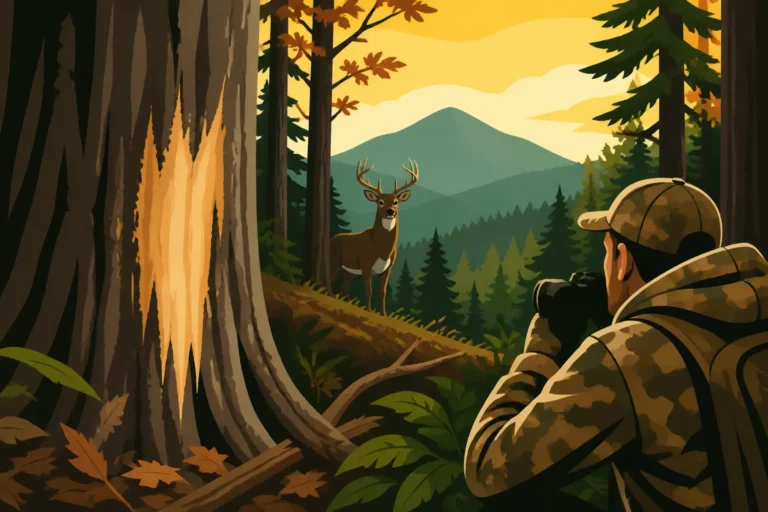
- Ground Scouting: There's no substitute for boots on the ground. Visit your chosen areas in the off-season. Look for rub lines, scrape lines, and well-worn trails. Find Sign in Big Adirondack Timber to understand how deer are actually using the landscape. Identify bedding areas and potential food sources. This is also when you can quietly set up your stand, trim those few necessary shooting lanes, and prepare your entry/exit routes. The more effort you put in before the season, the better your chances when hunting season arrives.
- Trail Cameras: If regulations allow, trail cameras can confirm deer movement patterns, especially nocturnal activity. Place them strategically on trails leading into bedding areas or near potential food sources to understand when and where deer are moving.
Adapting to Conditions and Deer Behavior
The Adirondacks are dynamic, and deer behavior shifts with the seasons. A static approach will rarely lead to consistent success.
Mid-Season Adjustments and Relocation
What worked in early October might be a bust by November. Deer are constantly adapting, and so should you.
- Changing Food Sources: Early season might be all about acorns or beechnuts. By mid-November, those are gone, and deer will be browsing on woody stems or seeking out any remaining green growth. You need to be where the current food source is.
- Hunting Pressure: If your initial spots are seeing too much pressure, deer will adjust. They'll move to thicker cover, become more nocturnal, or use less obvious travel corridors. Don't be afraid to pull a stand and move it to a more remote area or an overlooked pocket. The Adirondacks are vast enough to find new ground.
- Rut Activity: As the rut approaches, bucks will shift their focus from food to does. Cruising lanes, doe bedding areas, and subtle funnels used by does become prime locations. Look for fresh rubs and scrapes. For a deeper understanding of this critical time, check out Hunting the Rut in the Northern Zone. This is when aggressive tactics like rattling and grunting can sometimes be effective, and having a stand in a strategic cruising lane is vital.
Dealing with Changing Weather
Adirondack weather can be unpredictable and extreme, significantly influencing deer movement and your comfort on stand.
- Cold Fronts: A sharp drop in temperature after a mild spell can get deer up and moving, especially around food sources as they need to fuel up. This can be a prime time to be in your stand, even if it's uncomfortable.
- Snow: Fresh snow quiets the woods, making it easier to hear approaching deer. It also reveals fresh tracks, which can be invaluable for pinpointing current travel routes. Deer often move more heavily before and after a significant snowfall.
- Rain/Wind: Light rain can actually be a good time to hunt, as it dampens sound and washes away your scent. Heavy rain or high winds, however, typically put deer down. Strong winds make it difficult for deer to hear or smell, so they often bed down in protected areas. In these conditions, focusing on sheltered leeward slopes or dense conifer stands might be more productive.
- Dress for Success: Staying warm and dry is essential. Layering is key, and quality wool or synthetic outer layers are a must. Nothing ruins a hunt faster than being miserably cold and wet.
Hunting the Rut in Adirondack Hardwoods
The rut in the Northern Zone can be a magical, albeit short, window. Unlike agricultural areas where bucks might cruise wide open fields, in the Adirondacks, they often stick to timber and thickets.
- Cruising Lanes: Bucks will travel between doe bedding areas and feeding spots, scent-checking for receptive females. These cruising lanes are often subtle funnels through thick timber. Set up on the edges of these, where you have good visibility and your scent is controlled.
- Doe Bedding Areas: Find where the does are bedding down, especially in thick cover. Bucks will eventually come calling. Positioning your stand downwind of these areas, or on a travel corridor leading to them, can be deadly.
- Buck Sign: Fresh rub lines and scrape lines are clear indicators of a buck's presence and travel patterns. While bucks don't always hit every scrape, a well-placed stand overlooking a concentrated scrape line or a dominant rub can intercept a cruising buck. Just remember, in the big woods, sign can be less intense than in farm country.
Successfully hunting the Adirondack hardwoods from a treestand is a journey of continuous learning, adaptation, and patience. It’s tough, yes, but that’s what makes the reward so much sweeter. By understanding the unique challenges of the terrain, choosing the right gear, meticulously scouting, and remaining flexible to changing conditions, you’ll be well on your way to punching that tag in New York’s incredible Northern Zone.
Treestand Type Comparison for Adirondack Hunting
When choosing a treestand for the Adirondacks, each type offers distinct advantages and disadvantages. Here's a quick comparison to help you weigh your options:
| Treestand Type | Portability | Setup Difficulty | Stealth | Ideal Adirondack Terrain | Key Advantages |
|---|---|---|---|---|---|
| Climbing Stand | Moderate | Easy to Moderate | Moderate | Mature, straight hardwoods | Quick setup, good for mobile hunters, less gear |
| Hang-On Stand | Moderate | Moderate to Difficult | High | Diverse timber, varied tree shapes, long-term sets | Highly versatile, can hang in almost any tree |
| Saddle Hunting | High | Moderate to Difficult | Very High | Steep hillsides, dense cover, highly mobile hunting | Lightweight, 360-degree shooting, excellent stealth |
Disclaimer
Hunting is an inherently dangerous activity. Always prioritize safety, adhere to all New York State hunting regulations, and ensure you have the proper licenses and permits before heading afield. The information provided in this guide is for informational purposes only and should not replace professional safety instruction.