Essex County Adirondack Public Land
Trying to navigate the vast, wild stretches of the Adirondack Park to find public hunting land in Essex County can feel like staring at a massive, complex puzzle. Many of us look at those sprawling green maps and wonder where to even begin, feeling overwhelmed by the sheer scale and the unique regulations. This guide is here to untangle that confusion, helping you understand the immense opportunities that await you in Essex County's public lands, so you can plan a successful and rewarding hunt.
Understanding the Scope of Public Land in Essex County
When we talk about hunting in Essex County, especially within the Adirondack Park, we're not just talking about any patch of woods. We're talking about a significant chunk of the six-million-acre Adirondack Park, much of which is designated as "Forever Wild" Forest Preserve. This designation, enshrined in the New York State Constitution, means these lands are protected in a unique way, which impacts everything from timber harvesting to recreational use, including hunting. It’s a truly special place, offering a backcountry experience unlike almost anywhere else in the Northeast.
The Adirondack Forest Preserve in Essex County
Essex County is home to a substantial portion of the Adirondack Forest Preserve, a mix of both Wild Forest and Wilderness Areas. These lands are managed by the New York State Department of Environmental Conservation (DEC) and are generally open to public hunting. The sheer acreage can be mind-boggling, giving hunters plenty of room to roam and pursue game away from the crowds often found closer to urban centers. Imagine mile after mile of unbroken forest, crisscrossed by old logging roads, hiking trails, and endless drainages – that's the kind of landscape you'll be stepping into.
The "Forever Wild" constitutional protection means you won't find active logging operations or significant commercial development on these Forest Preserve lands. This commitment to wilderness ensures a pristine environment, but it also means hunters need to understand that the habitat management isn't geared towards creating specific game openings through clear-cuts, as you might see on some other state lands. Instead, you'll be hunting in mature, often dense, timber, which presents its own unique challenges and rewards. It's truly a place where you can immerse yourself in the wild. If you're looking for more depth on this, check out What "Forever Wild" Means for Hunters.
Wild Forest Versus Wilderness Areas
Within the Adirondack Forest Preserve, there's a critical distinction between Wild Forest and Wilderness Areas that every hunter needs to understand, as it directly impacts your hunting methods and access. While both are "Forever Wild," the permissible activities differ significantly.
Wild Forest areas generally offer a bit more flexibility in terms of access. You might find designated campsites, maintained trails, and sometimes even seasonal roads that allow vehicle access closer to your hunting grounds, though motor vehicle restrictions are common and strictly enforced. These areas often have a blend of public access points, making them a good starting point for hunters who appreciate a balance between accessibility and a wild experience. You can bring a mountain bike on some trails, or use a canoe to access remote ponds.
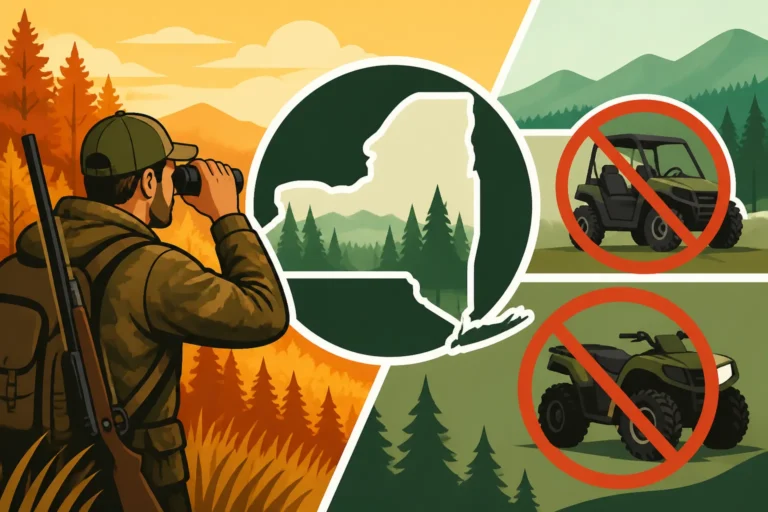
Wilderness Areas, on the other hand, are designed for truly primitive recreation. Motorized vehicles, including ATVs, are strictly prohibited, as are bicycles and even lean-tos in many spots. Access is typically foot traffic only, often meaning long hikes deep into remote terrain. For the hunter seeking solitude and a profound backcountry experience, Wilderness Areas offer an unparalleled opportunity. However, they demand a higher level of fitness, navigational skill, and self-sufficiency. You'll need to be prepared for multi-day trips and be comfortable with primitive camping.
Here's a quick comparison to help visualize the differences:
| Feature | Wild Forest | Wilderness Area |
|---|---|---|
| Access | Foot, designated roads (seasonal), mountain bike | Foot only (no motor vehicles, no bikes) |
| Campsites | Designated sites, primitive camping | Primitive camping only, specific rules on duration |
| Structures | Lean-tos, some designated campsites | Primitive, no permanent structures |
| Mechanized Equipment | Limited use allowed (e.g., chainsaws for trail work) | Prohibited for personal use |
| Experience | Backcountry with some amenities/access | Truly primitive, solitude-focused |
Understanding these distinctions is crucial for planning your hunt and ensuring you comply with regulations. You don't want to get deep into a Wilderness Area with gear that's prohibited! For more detailed information, look into Adirondack Wild Forest Versus Wilderness Areas.
Navigating Access and Regulations in Essex County's Public Lands
Getting into the thick of Essex County's public land requires more than just showing up. You need to know how to find these areas, what rules apply once you're there, and how to stay safe in such a vast and often unforgiving environment. It's all part of the adventure, but preparation is key to a successful and legal hunt.
Finding Your Hunting Grounds
The sheer size of the Adirondack Park and Essex County can be daunting when you're trying to pinpoint good hunting spots. While traditional paper maps are invaluable, modern digital tools have revolutionized the way many of us scout and navigate these expansive lands. Platforms like onX Hunt are incredibly useful here, offering detailed topographical maps overlaid with public and private land boundaries, access roads, trails, and even historical satellite imagery. This allows you to identify potential travel corridors, pinch points, and bedding areas right from your living room, long before you ever set foot in the woods. You can mark waypoints for future reference, plot potential routes, and download maps for offline use—a lifesaver when cell service is nonexistent, which is often the case deep in the Adirondacks.
Another excellent resource is the DEC's own mapping tools and information. Their website often provides detailed maps of specific Wild Forest and Wilderness Areas, along with any special regulations for those units. Cross-referencing these resources with tools like onX Hunt can give you a comprehensive picture of the landscape. Don't forget to look at features like elevation changes, water sources, and mature timber stands, as these are critical for understanding deer and bear movement. A little upfront scouting with these tools can save you countless miles of walking in the wrong direction. For deeper insights into digital tools, consider Scouting With the New York HuntFishNY App or onX Layers for New York Land Status.
Adirondack-Specific Hunting Regulations
Hunting in the Adirondack Park, including Essex County, comes with its own set of rules that can differ from other parts of New York State. While the general state hunting regulations apply, there are often specific nuances for the Forest Preserve. For instance, temporary structures like treestands and ground blinds usually must be removed at the end of the hunting season, and you can't leave them up year-round. This is part of the "Leave No Trace" philosophy that's strongly emphasized in these protected areas. Permanent tree stands are absolutely forbidden.
One critical aspect to be aware of is camping. If you're planning an overnight or multi-day backcountry hunt, understanding the Camping Rules in the Adirondack Preserve is paramount. Generally, primitive camping is allowed below 4,000 feet elevation, more than 150 feet from any road, trail, or body of water, and out of sight of trails and water. You'll need to carry out everything you carry in, including all trash and food scraps, to maintain the pristine nature of these lands. Additionally, bear-resistant food containers are often recommended or even required in certain areas to prevent wildlife habituation.
It’s also important to remember that much of the Adirondack Park falls within the Northern Zone for deer and bear seasons, which typically has different opening and closing dates and bag limits compared to the Southern Zone. Always double-check the current hunting and trapping regulations guide from the DEC specifically for the Northern Zone and any special provisions for Essex County. This diligence ensures you're hunting legally and ethically.
Ensuring Safety and Preparedness
The Adirondacks are beautiful, but they can also be unforgiving. Safety should always be your top priority, especially when venturing into remote public lands in Essex County. Tell someone where you're going and when you expect to return. This simple step, often overlooked, can be a literal lifesaver if you get lost or injured. Carry a reliable GPS unit (or a fully charged phone with offline maps, like onX Hunt) and know how to use it. Don't rely solely on cell service, as it's often nonexistent in many areas.
Dressing in layers is crucial, as weather conditions can change rapidly, particularly during the fall hunting seasons. Hypothermia is a real risk. Always carry enough water, high-energy snacks, a first-aid kit, a headlamp, and emergency fire-starting supplies. If you're planning on being out after dark, a quality headlamp with fresh batteries is non-negotiable. Furthermore, remember that blaze orange (or pink) requirements apply during firearm seasons. Even during archery season, wearing some orange while walking to and from your stand is a smart safety practice. The more prepared you are, the more you can focus on the hunt itself. If you’re venturing deep, a robust Packs for a Backcountry Adirondack Hunt is essential.
Hunting Opportunities and Species in Essex County's Adirondack Public Land
Essex County offers incredible hunting opportunities across its vast public lands, but it’s a different game than hunting agricultural fields or suburban woodlots. Here, you'll be matching wits with wary animals in their wild domain, requiring patience, stealth, and a deep understanding of the forest.
Deer Hunting in the Essex County Backcountry
Deer hunting in the Adirondacks, particularly in Essex County, is generally a low-density affair compared to the Southern Zone. Don't expect to see dozens of deer in a day. Instead, it's about covering ground, understanding subtle sign, and being persistent. Deer here are often more spread out, and their movements are dictated by available food sources, cover, and topography rather than agricultural patterns. Finding natural funnels created by ridges, swamps, or thick conifer stands can be incredibly productive. These are the places deer naturally travel, especially during the rut.
Food sources can be a real challenge. Unlike areas with abundant oak or agricultural fields, Adirondack deer often rely on beech nuts, browse, and the occasional patch of soft mast. After a poor acorn year, for instance, deer will shift their feeding patterns dramatically. It pays to scout thoroughly, looking for fresh tracks, rub lines, and deer droppings to identify active feeding and bedding areas. Knowing Where Adirondack Bucks Bed can be key to understanding their patterns. Still-hunting through mature hardwoods, especially after a fresh snow, can be an incredibly effective tactic here. The quiet woods amplify every sound, making it easier to detect distant movement. You might also want to explore Finding Sign in Big Adirondack Timber for more ideas.
Bear Hunting Opportunities
Essex County is prime black bear country, and the public lands here offer fantastic opportunities for bear hunters. While baiting is illegal in New York, hunting bears over natural food sources or through spot-and-stalk methods can be highly successful. Bears are constantly on the move, especially in the fall, seeking out acorns, beech nuts, and berries to pack on weight before denning season. Focusing on areas with a high concentration of these natural foods, particularly in years of good mast crops, can greatly increase your chances.
Bear hunting in the Adirondacks often involves a lot of walking and glassing. Spot-and-stalk hunting from higher elevations, looking down into clearings, swamps, or old logging cuts, can be effective. If you encounter fresh bear sign—scat, claw marks on beech trees, or overturned rocks—slow down and pay attention. Bears can be surprisingly quiet despite their size. Remember that shot placement is critical on bears, and being prepared to handle a large animal in remote terrain is a must. Knowing Handling a Bear After the Shot is vital.
Upland Birds and Small Game
Beyond big game, Essex County's public lands also offer opportunities for upland bird and small game hunters. Ruffed grouse, while their populations have seen declines, can still be found in pockets of suitable habitat, typically younger aspen and birch stands or areas with thick undergrowth. Hunting these birds often involves walking logging roads or old clear-cuts with a good bird dog, or slowly still-hunting through cover in hopes of a flush. Woodcock also migrate through the Adirondacks, concentrating in damp, brushy areas, especially along alder runs and stream bottoms.
Squirrels are abundant in areas with mature hardwoods, particularly oak and beech, providing a fun and accessible hunting opportunity. Rabbit and hare can also be found in areas with dense brush and conifer thickets. These small game hunts are a great way to enjoy the Adirondacks, introduce new hunters to the sport, and hone your woodsmanship skills without the intense pressure of big game season. If you're interested in pursuing upland birds, you might want to read Grouse Hunting New York Aspen Cover or Finding Woodcock in Alder Runs.
Planning Your Hunt: Essential Considerations for Essex County
A successful hunt in Essex County's Adirondack public land hinges on meticulous planning and an understanding of the unique challenges and rewards this region presents. It's not a place to rush into; it demands respect and preparation.
Access Points and Trail Systems
While the Adirondack Forest Preserve is vast, access isn't always straightforward. Many areas are only accessible via foot trails that can be miles long, or by paddling across lakes and ponds. Researching specific access points, parking areas, and trail conditions beforehand is crucial. The DEC website and resources like GoHunt, which can provide general regional data and insights into game trends, can help you identify popular trailheads, but don't shy away from looking for less-used entry points. Sometimes, walking an extra mile or two from a less obvious pull-off can get you into ground that sees significantly less pressure. The Adirondacks are famous for their hiking trails, and while beautiful, these trails can also be busy, especially during peak foliage season. Try to find areas away from major hiking routes to avoid conflicts and increase your chances of undisturbed game. Consider Hunting Wild Forest Land Near a Trailhead for more ideas on this.
Knowing whether you'll encounter a well-maintained trail, an old overgrown logging road, or just raw bush is vital for packing and navigation. In some Wilderness Areas, even designated trails can be rugged and minimally maintained, making travel slow and challenging. Always budget more time for travel than you think you'll need, especially if you're planning to go deep.
Weather and Terrain Challenges
The Adirondacks are legendary for their unpredictable weather. A crisp fall morning can quickly turn into a cold, driving rain or even an early season snowfall. Being prepared for all conditions is not just comfortable, it's a matter of safety. Layering your clothing, packing reliable rain gear, and having insulated boots are non-negotiable. If you're planning a late-season hunt, be ready for deep snow and biting cold. The terrain itself also presents challenges; Essex County is characterized by steep mountains, rocky outcrops, dense spruce thickets, and expansive swamps. These features can make travel difficult and physically demanding.
Understanding the topography through detailed maps (digital or paper) is crucial for both navigation and hunting strategy. Steep ravines can be natural funnels, while dense conifer stands offer excellent bedding cover for deer and bears. Always hunt with the wind in mind, as thermals can be tricky in mountainous terrain, often rising in the morning and falling in the evening. Planning your approach and exit routes to account for wind and thermals will give you a significant advantage. This kind of careful planning also helps you determine Entry Routes on Steep Catskill Ground if you apply it to the Adirondack context.
Respecting the Resource and Other Users
Hunting in Essex County's public lands is a privilege, and it comes with the responsibility of respecting the land, the wildlife, and other users. This means practicing "Leave No Trace" principles—pack out everything you pack in, minimize your impact, and leave the wilderness as pristine as you found it. Be mindful of hikers, campers, and other outdoor enthusiasts who may be sharing the trails and wild spaces, particularly near popular areas. A friendly wave and a courteous attitude go a long way in fostering positive public perception of hunters.
Additionally, always remember to accurately Reporting a New York Deer Harvest Online (or bear) as required. This data is vital for wildlife managers to assess population health and set future regulations, ensuring that these incredible hunting opportunities remain for generations to come. The Adirondacks are a treasure, and our actions as hunters play a critical role in preserving their wild character. It’s about being a steward of the land, not just a visitor.
Disclaimer
This article is for general informational purposes only and does not constitute professional advice. Laws, prices and regulations vary by location and change over time. Consult a qualified professional for guidance on your specific situation.