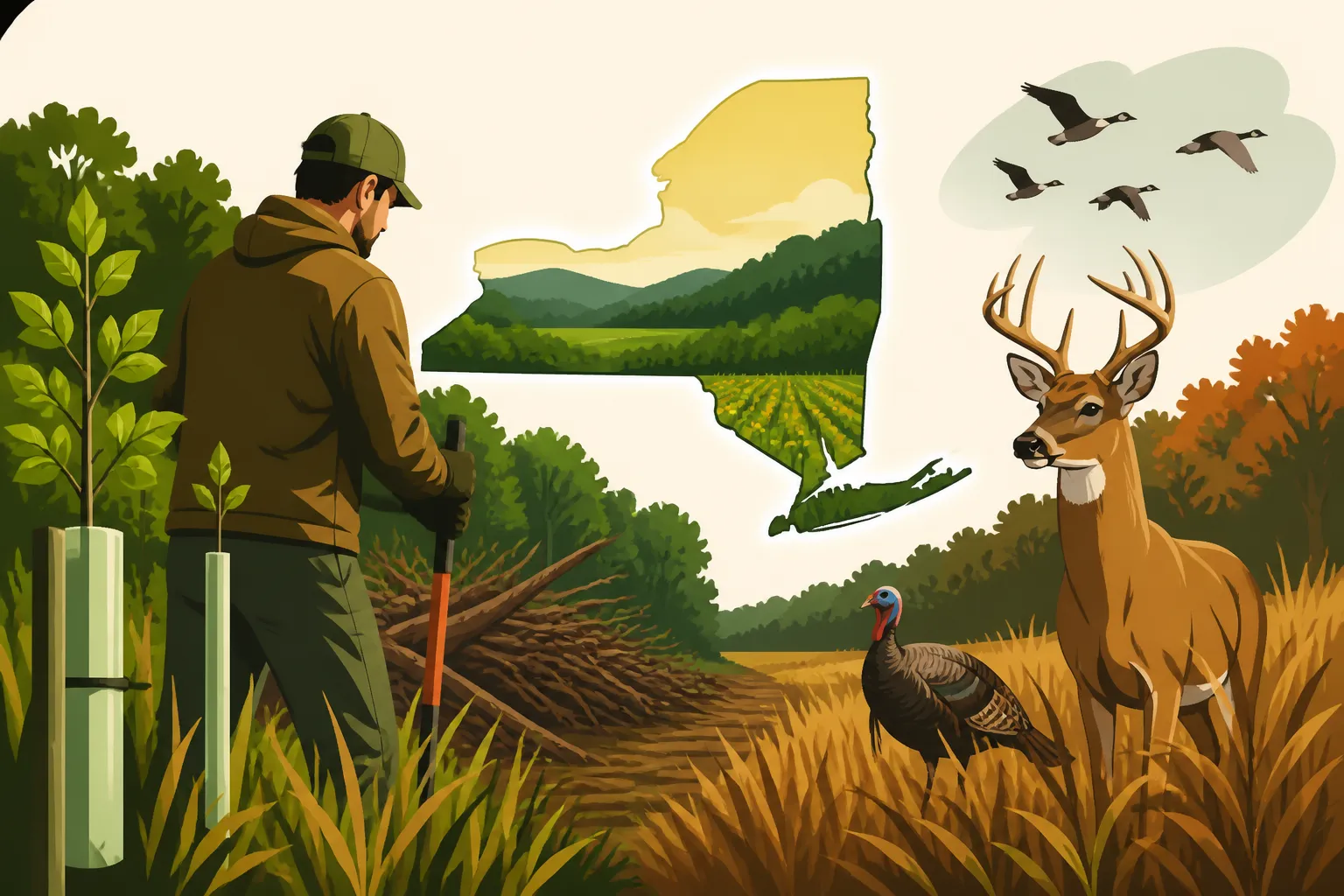
Habitat Work on New York WMAs
Many New York hunters scratch their heads when they stumble upon a section of their favorite Wildlife Management Area (WMA) that looks, well, different. Maybe there's a recent timber cut, a prescribed burn area, or a field that's been purposely left overgrown. It's easy to wonder if the habitat is being destroyed, or if it's just random maintenance. This guide is here to pull back the curtain, explaining the vital habitat work that goes on within New York's WMAs and, crucially, how understanding these efforts can dramatically improve your hunting success.
The Foundation: Understanding New York's Wildlife Management Areas and Their Purpose
Let's start with the basics. Wildlife Management Areas, or WMAs, are parcels of public land across New York State that are owned and managed specifically for the benefit of wildlife and for public recreation, especially hunting and trapping. Unlike some other public lands that might have broader uses or simply be preserved, WMAs have a laser focus on habitat. This isn't just a place to park your truck and wander into the woods; these are living, breathing ecosystems under constant, careful stewardship.
The "management" part is key here. It means wildlife biologists, foresters, and land managers are actively intervening in the natural processes to create and maintain specific habitats. This isn't always about pristine, old-growth forests; often, it's about creating a mosaic of different habitats that supports a wide diversity of game species. Without this proactive work, many areas would slowly transition into mature forests, which might be beautiful but often lack the diverse food and cover needed for species like deer, turkeys, pheasants, and grouse. So, when you see what looks like a "disturbance," remember it's likely part of a grander plan. These are lands specifically designed for hunters, and understanding that design is your first step to unlocking their potential. You can find more general information about these crucial areas in New York Wildlife Management Areas.
Diverse Approaches to Habitat Management on New York WMAs
The type of habitat work you'll encounter on a WMA is as varied as New York's landscape itself. Managers employ a whole toolbox of techniques, each designed to achieve specific ecological goals and, in turn, provide better hunting opportunities for different game animals. It's far from a one-size-fits-all approach.
Forest Management for Deer and Upland Birds
One of the most common types of habitat work in forested WMAs involves various forms of timber management. You might see areas that have been clear-cut, though usually in small, strategic blocks rather than vast swaths. This isn't just about selling timber; it's about creating early successional habitat. When sunlight hits the forest floor after a cut, a burst of new growth erupts – tender saplings, shrubs, and briars that provide crucial browse for deer and dense cover for species like ruffed grouse and cottontail rabbits.
Other techniques include selective cutting, where only certain trees are removed to promote the growth of desired species (like oaks for acorns, a key deer and turkey food source), or hinge cutting, where trees are partially cut and pushed over to create immediate, low-level cover and browse while keeping the tree alive. These methods aim to increase habitat diversity, creating areas of thick cover adjacent to more open woods, which deer absolutely love for bedding and feeding. If you're looking for Grouse Hunting New York Aspen Cover, these younger forest cuts on WMAs are often prime locations.
Wetland and Waterfowl Impoundment
For those who chase ducks and geese, New York WMAs often feature extensive wetland management. This can involve the construction of dikes and impoundments, allowing managers to control water levels. They might draw down water in late summer to expose mudflats where moist-soil plants, natural duck foods, can grow. Later in the fall, these areas are reflooded, creating perfect feeding and resting grounds for migrating waterfowl.
Sometimes, agricultural crops like corn or millet are planted in these units and then flooded, providing a high-energy food source. These managed wetlands are a magnet for ducks and geese, creating reliable hotspots year after year, especially when other natural water sources might be less productive. Understanding water control structures and their likely impact on bird movement is key for hunters focused on New York Waterfowl Hunting by Zone.
Grassland and Farmland Programs
Many WMAs, particularly in the flatter, more agricultural regions of New York, feature expansive grasslands or old farm fields. Here, habitat work focuses on maintaining these open areas. This includes periodic mowing, but often managers will delay mowing until after bird nesting seasons to protect young broods. Native warm-season grasses might be planted, providing excellent nesting and brood-rearing cover for pheasants, turkeys, and various songbirds, while also offering thermal cover in winter.
Food plots are another common tool. Fields of corn, sorghum, soybeans, or clover are planted to provide high-quality food sources for deer, turkeys, and pheasants. These plots are strategically placed to draw game into specific areas, often bordering dense cover, making them excellent places to focus your hunting efforts. Knowing how to hunt these edges is crucial for success, especially in areas like Pheasant Hunting Western New York Farmland.
The Tangible Benefits for New York Hunters
All this habitat work isn't just academic; it directly translates into better hunting experiences for you. When you understand the purpose behind the management, you can predict animal behavior more accurately and make smarter decisions in the field.
Boosting Game Populations and Health
The primary benefit of WMA habitat work is the direct support it provides for game populations. By providing optimal food sources, secure cover for bedding and nesting, and safe places to raise young, managers help boost reproduction rates and survival. For instance, creating dense thickets might save more fawns from predation, leading to a healthier and larger deer herd. A diverse food base, whether it's acorns from managed oaks or standing corn in a food plot, ensures animals enter winter in better condition, which is critical for survival and successful breeding the following spring.
This also means that WMAs can often sustain higher densities of game compared to unmanaged public land. While individual deer density varies by Deer Density by New York Wildlife Unit, WMAs are designed to maximize the potential of their acreage for wildlife.
Creating Predictable Hunting Opportunities
Hunters thrive on patterns and predictability. Habitat work on WMAs helps establish these. A recently cut area, for example, will become a feeding hotspot as new browse emerges, and a bedding area as it thickens up. A managed wetland will consistently draw waterfowl. Food plots will be magnets for deer and turkeys, especially in late season.
This deliberate manipulation of the landscape funnels game, creates travel corridors, and defines feeding and bedding zones. For you, this means less aimless wandering and more focused scouting. Instead of just looking for "any deer sign," you can look for deer sign in relation to specific habitat features that have been intentionally created. This offers diverse scenarios, from sitting a field edge in the evening to still-hunting through a regenerating clear-cut.
Reliable Public Access and Diverse Species
In an age where private land access can be challenging to secure, WMAs are an invaluable resource for hunters. They guarantee public access to thousands of acres specifically managed for hunting. This means you don't have to worry about knocking on doors or navigating complex leasing agreements. You know you have a place to hunt, and that place is being actively improved for your pursuit.
Furthermore, because managers often aim for habitat diversity, WMAs frequently support a wider array of game species within a single property. You might find excellent deer hunting on one part of a WMA, while another section offers prime turkey or pheasant opportunities. This multi-species approach makes WMAs a fantastic destination for hunters who enjoy pursuing different game throughout the season.
Navigating and Utilizing Actively Managed Areas for Success
Knowing what habitat work is being done is only half the battle. The real magic happens when you understand how to use that knowledge to your advantage in the field. This requires proactive scouting and smart strategy.
Pre-Season Scouting: Leveraging Technology
Before the season even begins, you should be pouring over maps and, if possible, putting boots on the ground. Modern mapping tools like onX Hunt are indispensable here. Use aerial photos to identify different habitat types on your chosen WMA. Look for changes in canopy cover that might indicate recent timber cuts. Identify wetland impoundments, power line clearings, old fields, and brushy edges. onX Layers for New York Land Status can even help you confirm boundary lines so you know exactly where you're permitted to hunt and where these habitat projects are located.
Many WMAs also have online maps or fact sheets on the New York DEC website that detail management plans or recent projects. Cross-referencing these with your mapping app can give you a significant advantage. Tools like GoHunt might also offer insights into general habitat trends and game populations, which can further inform your scouting strategy. Think of it like this: if you see a clear-cut on the map, envision it as a future bedding area or a browse hotspot, and then scout the fringes for travel routes.
Understanding "Why" and "When" for Game Use
It's not enough to just spot a managed area; you need to understand why it's there and when game animals will use it. A young clear-cut, for instance, might be too open for deer to bed in during opening week, but as it grows thicker, it becomes prime bedding cover. Those tender shoots will be heavily browsed in spring and summer, but once they lignify in fall, deer might shift to acorns or agricultural food plots.
Similarly, a flooded cornfield on a waterfowl impoundment will be a magnet for ducks and geese during migration, but once the food is depleted or if it freezes over, the birds will move on. Learning to "read" the habitat, and anticipating how game will interact with it through different seasons and times of day, is a skill that comes with observation and experience. Pay attention to Reading Aerial Photos for Southern Tier Deer and you'll start to see patterns emerging in the managed landscapes.
Finding Specific Game in Specific Habitat
Each type of habitat work favors certain species. If you're targeting deer, look for interfaces between thick cover (like regenerating clear-cuts or hinge-cut areas) and food sources (like mast-producing timber or food plots). These edge habitats are often where you'll find the most deer movement. For turkeys, managed grasslands near mature timber are fantastic for nesting and roosting, while food plots will draw them in for feeding.
For small game, dense brushy areas created by cutting projects are phenomenal for rabbits and hares. Ruffed grouse thrive in the early successional habitats created by timber cuts, especially those with an abundance of aspen or alder, offering both food and cover. Waterfowl will gravitate to those managed impoundments and wetlands. By knowing what each habitat project is designed to achieve, you can narrow down your search and focus your efforts. Don't forget to consult Scouting New York Public Land Before Season for general tips that apply especially well to WMAs.
Table: Common WMA Habitat Management Techniques and Target Species
| Management Technique | Primary Goal | Key Game Species Benefited | Best Hunting Strategy |
|---|---|---|---|
| Clear-cutting (small scale) | Promote early successional growth, browse | Deer, Grouse, Rabbits | Hunt edges, trails in regrowth, morning bedding areas |
| Selective Timber Harvest | Enhance mast production, forest health | Deer, Turkey, Squirrels | Sit near mast trees, identify travel corridors |
| Hinge Cutting | Create immediate low-level cover and browse | Deer, Rabbits, Ruffed Grouse | Still-hunt thickets, set up on leeward sides |
| Wetland Impoundments | Control water levels, moist-soil plants | Ducks, Geese, Shorebirds | Layout blinds, jump shooting, pass shooting (check regs) |
| Food Plots (Corn, Clover) | Provide seasonal food source, attract game | Deer, Turkey, Pheasant | Evening sits, morning ambushes, hunting edges |
| Native Grass Plantings | Nesting cover, brood rearing, thermal cover | Pheasant, Turkey, Rabbits | Push pheasant fields, still-hunt edges, look for strutting |
| Prescribed Burning | Rejuvenate understory, reduce invasives | Deer, Turkey, Grouse | Hunt fresh browse zones once new growth starts, open areas |
Respecting the Work and Regulations
Finally, always remember that WMAs are carefully managed resources. This means respecting the efforts of the land managers and adhering to all WMA-specific regulations. These rules might cover things like vehicle access, camping, or specific hunting methods. You can usually find these details through the Using the New York HuntFishNY Map Tool or on the DEC website for the specific WMA you plan to visit.
Do not damage any plantings, structures, or equipment. Leave gates as you find them. And always pack out everything you pack in. By being a responsible user, you help ensure that these vital habitat programs continue to provide excellent hunting opportunities for generations to come.
Disclaimer
This article is for general informational purposes only and does not constitute professional advice. Laws, prices and regulations vary by location and change over time. Consult a qualified professional for guidance on your specific situation.