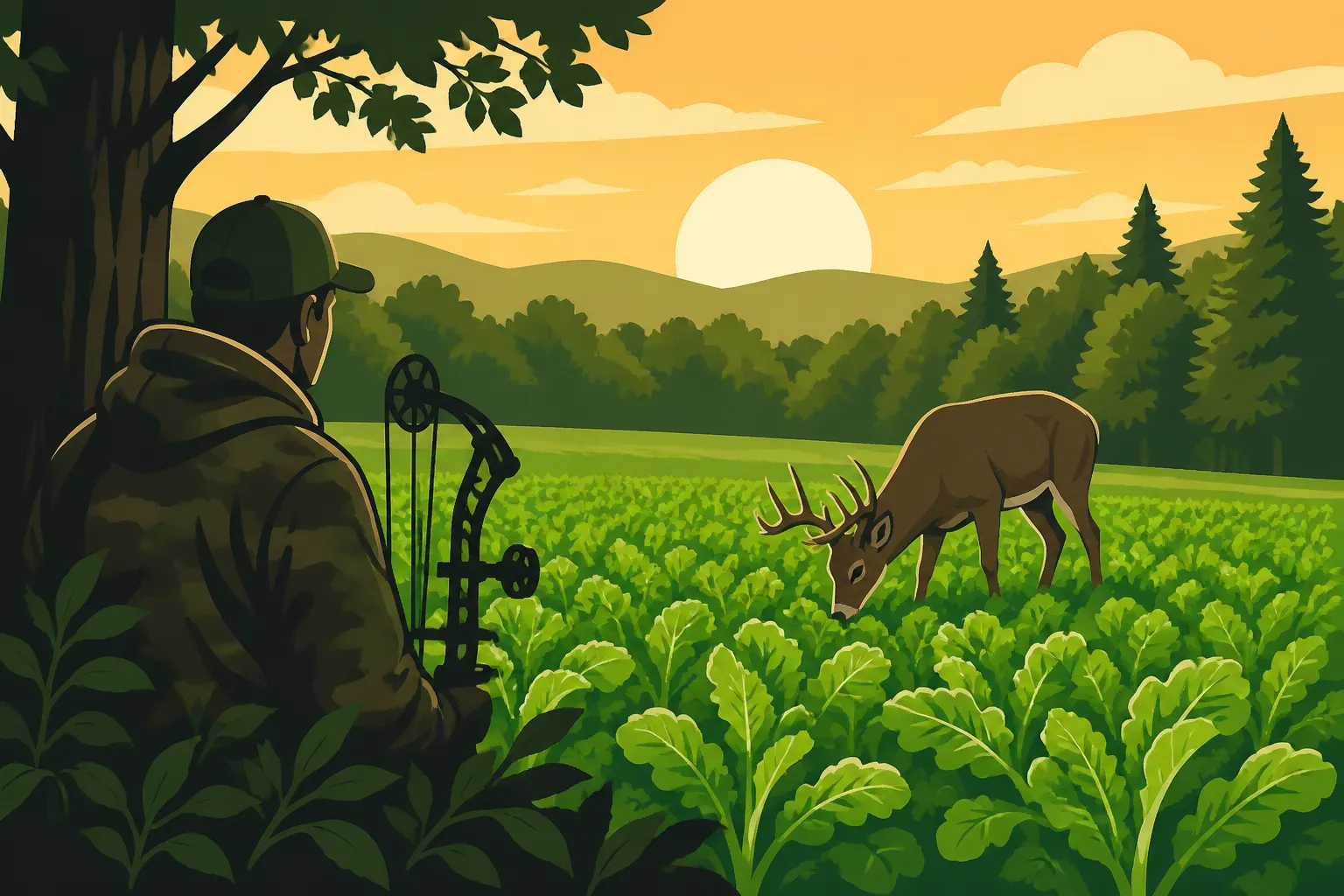
Food Plots on New York Private Land
There's a special kind of satisfaction that comes with owning a piece of hunting ground in New York, but also a persistent question: how can you make it even better? Just letting nature take its course often leaves deer looking for better groceries elsewhere. Many hunters dream of seeing more deer, especially mature bucks, consistently using their property, and the frustrating reality is that without active management, it often doesn't happen. This guide will walk you through the practical steps of establishing and maintaining effective food plots on your private New York land, turning those dreams into a consistent hunting reality.
Why Food Plots Matter for New York Whitetails
Food plots are far more than just "bait stations"; they are a critical component of habitat management, especially on smaller parcels of private land. They provide essential nutrition, draw deer to specific areas, and can significantly increase your property's carrying capacity and overall hunting potential.
Supplementing Natural Forage
New York's diverse landscape offers a lot of natural forage, from acorns and beech nuts in the fall to browse throughout the year. However, the quality and quantity of this natural food can fluctuate dramatically. A bad acorn year, for instance, can send deer searching far and wide, making it harder to hold them on your property. Food plots act as a reliable, high-quality supplement to whatever Mother Nature provides. They fill nutritional gaps, especially during critical periods like late winter and early spring when natural food is scarce, or in late summer when does are lactating and bucks are growing antlers. By providing consistent, nutrient-rich food, you're building healthier deer, which means better antler growth and improved fawn survival rates. Hunting After a Poor Acorn Year highlights just how important supplemental food can be.
Consider a property in the Southern Tier, perhaps surrounded by a mix of mature timber and older hayfields. While the woods offer browse, it might be sparse or low in nutrient density. A well-placed food plot of clover or brassicas can offer a concentrated buffet that deer simply can't resist, especially when everything else is turning brown. This isn't just about attracting them; it's about providing the building blocks for a more robust herd.
Attracting and Holding Deer
Let's be honest, one of the biggest reasons hunters put in food plots is to draw deer in and keep them around, especially during hunting season. A lush food plot acts like a magnet, pulling deer from surrounding properties and encouraging them to spend more time on your land. This becomes particularly vital if your property is smaller or if surrounding landowners aren't managing for deer. You're creating an oasis that makes your property a preferred destination.
The key is consistency and quality. A food plot that's actively growing and appealing when other food sources are dwindling will concentrate deer movement. This isn't just for feeding; it often becomes a social hub for deer, with bucks checking scrapes along the edges and does bringing their fawns to feed. When you're using tools like onX Hunt to scout your property, you can overlay your potential food plot locations with known bedding areas and travel corridors, essentially creating a managed deer movement pattern that funnels them right past your stand. This strategic placement can dramatically increase your hunting success, especially in areas with moderate to high hunting pressure.
Year-Round Benefits
While many hunters focus on food plots for the fall and winter, their benefits extend throughout the entire year. In the spring, lush green plots provide essential protein for does giving birth and fawns developing, as well as for bucks in the early stages of antler growth. Summer plots offer crucial carbohydrates and protein to fuel antler development and lactation. As fall approaches, these plots become prime feeding locations, offering energy reserves before the breeding season and crucial fat reserves for winter survival.
Think of a perennial clover plot. It might be greening up in April, providing early nutrition. By June, it's a consistent summer buffet. In October, as acorns drop, deer might split their time, but come late November when the acorns are gone, that clover plot becomes gold. Then, if you've got a brassica plot adjacent to it, those plants sweeten up after a few hard frosts, becoming an irresistible late-season draw. This continuous food availability not only keeps deer on your property but also improves the overall health and productivity of the herd year-round.
Planning Your New York Food Plot
Putting in a food plot isn't just about throwing some seeds on the ground. Strategic planning is crucial to success, taking into account everything from the natural environment to local regulations.
Site Selection: Sun, Soil, and Water
The location of your food plot is paramount. Deer, like all animals, need security, water, and food. Your plot should ideally be near good cover – dense woods, thickets, or swamp edges – where deer feel safe bedding down. Avoid wide-open areas far from cover, as deer will be hesitant to use them during daylight hours. Access is also important; can you get equipment in and out without disturbing bedding areas or travel corridors? Use mapping tools like onX Hunt to visualize elevation, cover, and water sources. Look for natural funnels or pinch points where deer are already traveling, and consider placing smaller "kill plots" along these routes. Reading Aerial Photos for Southern Tier Deer can provide excellent insights into identifying these key areas.
Sunlight is a non-negotiable requirement for most food plot plants. Aim for at least 6-8 hours of direct sunlight per day. Too much shade, often found under dense canopy, will result in spindly, unproductive plants. Water, while not something you directly control beyond rainfall, is critical. Ensure your chosen site has good drainage; you don't want a bog. However, proximity to a reliable water source (creek, pond, swamp) will make the plot even more attractive, especially in drier periods. Finally, consider the soil type – while you can amend it, starting with reasonably good soil saves a lot of work.
Understanding New York Regulations and Neighbors
Before you break ground, it's vital to know the rules. New York has specific regulations regarding hunting, and while food plots on private land are generally permissible, using them for hunting still falls under state laws. For instance, while you can create food plots, you cannot hunt over bait, and there's a distinction between a natural food plot and "baiting." Generally, food plots that are designed to grow forage are considered habitat enhancement, whereas simply dumping corn is baiting. Always check the current New York State DEC regulations to ensure your practices comply. New York Hunting Licenses and What They Cost is a good starting point for understanding general regulations.
It's also crucial to consider your neighbors. While it's your land, a food plot right on the property line might draw deer onto your land that your neighbor feels are "theirs." This can lead to tension. A little communication and common courtesy can go a long way. Let them know your plans, explain the benefits, and perhaps even offer advice if they're interested in similar projects. Avoiding conflict ensures a more peaceful hunting season for everyone. Knowing New York Trespass and Permission Law is also essential, especially if deer travel between your plot and neighboring properties.
Soil Testing and Amendments
This is perhaps the most overlooked, yet critical, step in food plot success. You wouldn't build a house without checking the foundation, and you shouldn't plant a food plot without checking your soil. A soil test will tell you two main things: your soil's pH and its nutrient levels (nitrogen, phosphorus, potassium, and micronutrients). In New York, many soils tend to be acidic, meaning a low pH, which can hinder nutrient uptake by plants.
You can get a soil test kit from your local Cornell Cooperative Extension office, agricultural supply store, or even order one online. Follow the instructions carefully to collect representative samples from various spots within your planned plot. Once you get your results back, they'll usually include recommendations for how much lime (to raise pH) and fertilizer (to add nutrients) you'll need. Don't guess! Applying the wrong amendments or incorrect amounts can be a waste of time and money, and in some cases, can even harm your plot. For instance, if your soil is too acidic for clover to thrive, no amount of phosphorus will fix the problem until the pH is adjusted.
Types of Food Plots for New York Deer
The world of food plots offers a dizzying array of options, but they generally fall into two main categories: annuals and perennials, often mixed into specific blends. Understanding the characteristics of each will help you choose what's best for your New York property and hunting goals.
Annual Plots: Quick Growth, High Attraction
Annual food plots complete their life cycle within one growing season. They are typically planted in the spring or late summer and offer a burst of rapid growth and high attraction. This makes them ideal for quickly establishing a new plot or for rotating crops to maintain soil health. Popular annuals for New York include:
- Brassicas: (e.g., turnips, radishes, rape, kale). These are phenomenal late-season draws. Planted in late summer, they grow lush foliage through the fall. After a few hard frosts, the starches in the plants convert to sugars, making them incredibly palatable and highly nutritious for deer right into the bitter cold of December. Muzzleloader Tactics in December Cold often focus on these types of food sources.
- Cereal Grains: (e.g., oats, wheat, rye). These are hardy, easy to grow, and provide attractive forage quickly. Oats are great for early fall attraction, while wheat and rye are incredibly cold-tolerant, providing green forage well into winter and greening up early in spring. They offer high carbohydrates, crucial for energy.
- Legumes: (e.g., soybeans, cowpeas). These are warm-season annuals, providing abundant protein-rich forage during the summer, which is excellent for antler development and lactating does. They can be heavily browsed, so large plot sizes are often recommended, or protection if planted on smaller scales.
- Corn & Sorghum: These are classic choices, offering high-energy grains in the late season. They can be more labor-intensive and require more space but provide a significant food source. However, they can also be attractive to other wildlife like turkeys, bears, and even squirrels.
The main advantage of annuals is their immediate impact and flexibility. You can experiment with different types each year. The downside is the need for yearly planting, which involves more recurring effort and expense in seed and equipment.
Perennial Plots: Long-Term Investment
Perennial food plots are designed to last for several years with proper maintenance, reducing the need for yearly planting. While they take more effort to establish initially, they offer a consistent, low-maintenance food source once thriving. They are often the backbone of a comprehensive food plot strategy.
- Clover: This is arguably the most popular perennial food plot choice for New York hunters, and for good reason. Varieties like Ladino, Durana, and Alice white clover are extremely palatable, high in protein, and can tolerate a range of soil conditions once established. They thrive in New York's climate, providing consistent forage from spring through fall, and often stay green under snow. Clover is also a nitrogen fixer, improving soil health over time.
- Alfalfa: While more demanding in terms of soil pH and drainage than clover, alfalfa offers even higher protein content and drought tolerance once established. It's a powerhouse for antler growth and doe health but requires more diligent management to truly shine.
- Chicory: Often blended with clover, chicory is a deep-rooted perennial that offers excellent drought resistance and palatable, highly nutritious forage, especially during the hot summer months when other plants might struggle.
The upfront cost and effort for perennials can be higher, but the return on investment over multiple years is significant. A well-maintained clover plot can last 3-5 years or even longer, providing a consistent food source with just occasional mowing, weed control, and fertilization.
Warm Season vs. Cool Season Blends
Rather than sticking to just one plant, many successful food plot strategies involve blends tailored to specific seasons. This provides diverse nutrition and maintains attractiveness throughout the year.
- Cool Season Blends: These are designed to grow vigorously in cooler temperatures, making them perfect for fall and winter attraction. They often include a mix of brassicas (for late-season sweetness), cereal grains (for reliable green forage), and sometimes annual clovers or chicory. Planting these in late summer (August to early September in many parts of New York) allows them to establish before the first hard frosts. These are excellent choices for drawing deer during the regular firearm and muzzleloader seasons.
- Warm Season Blends: These blends are planted in late spring or early summer once soil temperatures are consistently warm. They focus on providing high-protein and carbohydrate sources during the summer months when bucks are growing antlers and does are raising fawns. Common components include soybeans, cowpeas, sunflowers, and sorghum. These plots are critical for herd health and growth, even if you're not directly hunting them. They ensure the deer on your property enter the fall season in prime condition.
The beauty of blending is that you can cater to different needs and seasons on different parts of your property. You might have a large perennial clover plot providing year-round forage, a smaller brassica plot for late-season hunting, and a summer soybean plot for maximum protein. This diversity not only benefits the deer but also provides multiple hunting opportunities. When considering your overall habitat strategy, thinking about Late-Season Food Sources for New York Whitetails is crucial, and diverse food plots provide the answer.
| Food Plot Type | Primary Season | Key Benefits | Establishment Effort | Longevity | Common Plants |
|---|---|---|---|---|---|
| Annual | Warm/Cool | Quick growth, high attraction, rotation flexibility | Moderate (yearly) | 1 season | Brassicas, oats, wheat, rye, corn, soybeans |
| Perennial | Year-round | Consistent food, less yearly work, soil improvement | Higher (initial) | 3-5+ years | Clover, alfalfa, chicory |
| Cool Season | Fall/Winter | Late-season draw, winter food | Moderate (yearly) | 1 season | Brassicas, cereal grains |
| Warm Season | Summer | Antler/fawn growth, high protein | Moderate (yearly) | 1 season | Soybeans, cowpeas, sunflowers |
Maintaining Your Food Plot for Peak Performance
Establishing a food plot is only half the battle; ongoing maintenance is what truly determines its long-term success and appeal to deer. Without proper care, even the best-laid plans can quickly become overgrown weed patches.
Weed Control and Pest Management
Weeds are the arch-nemesis of any food plot. They compete with your desired plants for sunlight, water, and nutrients, quickly choking out your valuable forage. Early and consistent weed control is essential. This can involve several methods:
- Mowing: For perennial plots like clover, periodic mowing (typically when plants reach 10-12 inches) can help suppress weeds, encourage new growth, and prevent the clover from going to seed too early. For annuals, mowing is usually part of the initial site prep, but not a continuous maintenance activity once they're established.
- Herbicides: Selective herbicides are invaluable for managing weeds without harming your food plot plants. For instance, grass-selective herbicides can be used in clover plots to kill invasive grasses while leaving the broadleaf clover untouched. Always read product labels carefully and apply according to instructions, especially regarding safety and timing. If you're unsure, consult with your local agricultural extension service.
- Competition: A dense, healthy food plot can itself suppress weeds by outcompeting them for resources. This is why proper soil amendments and planting rates are so important.
Pest management generally refers to insect pests or disease, though deer overgrazing can also be considered a "pest" in some ways. Healthy plants are more resistant to insect damage. If you notice significant insect damage, identifying the pest and consulting with an expert can help determine if chemical treatment is necessary, though many hunters prefer to avoid pesticides in food plots.
Rejuvenation and Rotation
Even perennial plots need a little love to stay productive. Over time, perennial plots can become thin, less productive, or succumb to weed pressure. Rejuvenation techniques can extend their life:
- Frost Seeding: For clover, broadcasting seed over frozen ground in late winter allows the freeze-thaw cycles to work the seeds into the soil, providing a fresh flush of growth in spring.
- Light Disking/Tilling: For older perennial plots, a light disking can help break up the sod, incorporate organic matter, and provide a fresh seedbed for overseeding with more clover or a different perennial.
- Fertilization: Reapplying fertilizer based on updated soil tests every few years will ensure your perennials have the nutrients they need to remain vigorous.
For annual plots, rotation is key. Planting the same crop in the same spot year after year can deplete specific soil nutrients and encourage disease. Rotating between different plant families (e.g., brassicas one year, cereal grains the next, then soybeans) helps maintain soil health, breaks pest and disease cycles, and provides a varied diet for deer. Think about how this fits into your overall Habitat Work on New York WMAs, where rotation and diversity are often planned.
Protecting Your Investment from Overgrazing
This is a common problem, especially for smaller plots or properties with very high deer densities. You plant a beautiful plot, and the deer mow it down before it even has a chance to establish or produce enough forage.
- Plot Size: Larger plots can better withstand heavy browsing pressure. If you have a high deer density, don't try to get by with a tiny quarter-acre plot. Aim for at least an acre or more if possible.
- Temporary Fencing: For small, critical plots (especially high-protein summer plots for antler growth), temporary electric fencing can protect plants until they are mature enough to withstand browsing. You can remove the fence just before hunting season.
- Diversity: Having multiple plots with different forage types can spread out the browsing pressure. Deer might hit the clover hard, but leave the brassicas alone until a frost sweetens them.
- Herd Management: Sometimes, the best way to protect your plots is through herd management. If your property is overrun with deer, even the best plots will struggle. Utilizing New York Deer Management Permits Explained to harvest sufficient does can bring the population into balance with the available forage, ensuring your plots can thrive and contribute to a healthier, more robust deer herd overall. Tools like GoHunt might offer insights into local deer densities, though always cross-reference with DEC data for your specific WMU.
By putting in the effort to plan, plant, and maintain your food plots, you're not just creating a hunting hot spot; you're actively contributing to the health and vitality of the New York deer herd on your private land.
Disclaimer
This article is for general informational purposes only and does not constitute professional advice. Laws, prices and regulations vary by location and change over time. Consult a qualified professional for guidance on your specific situation.