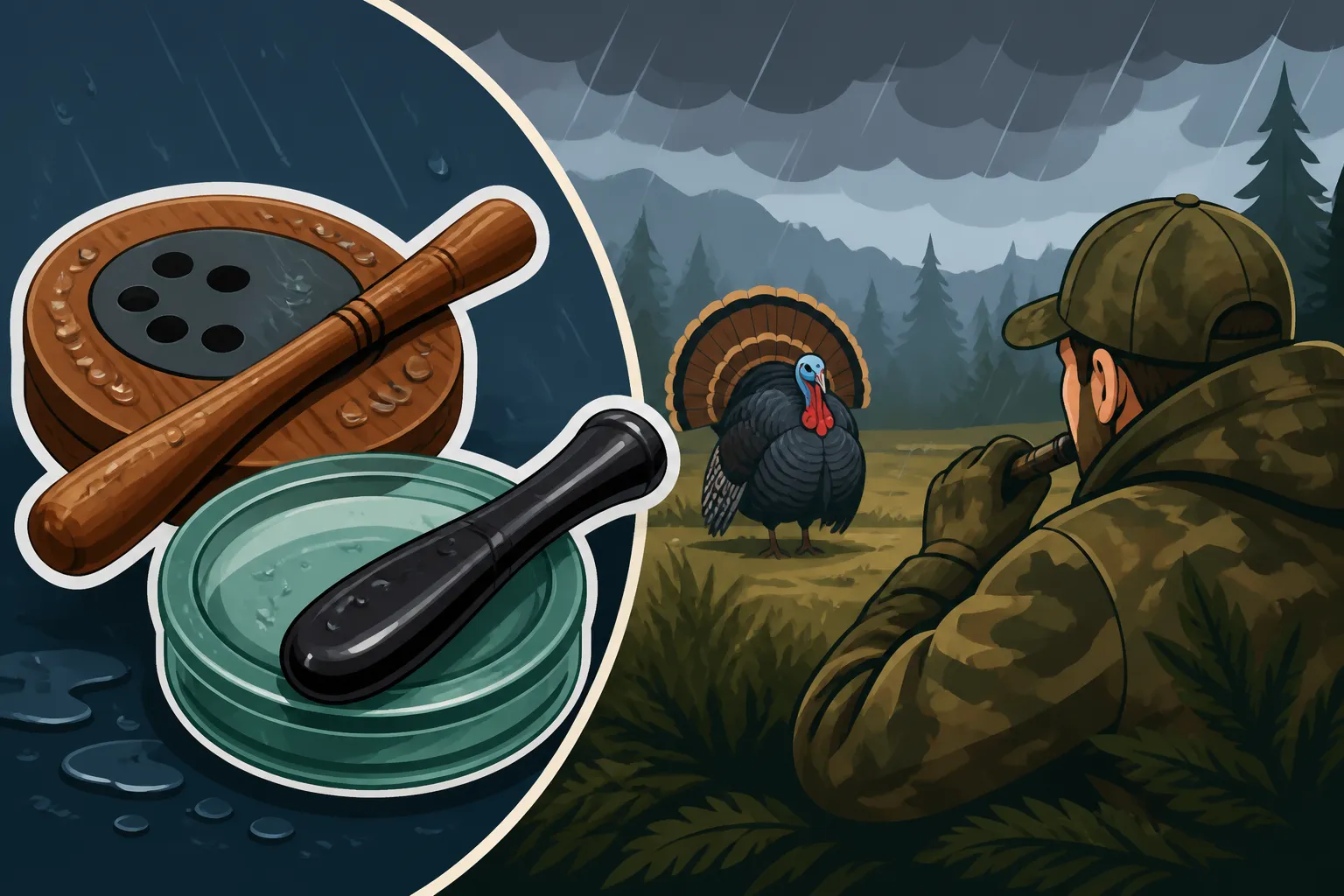
Slate and Glass Calls in Wet Weather
There's nothing quite as frustrating as heading into the New York turkey woods on a damp spring morning, full of hope, only to have your trusty slate or glass call sound like a soggy sponge. That once-sharp kee-kee or throaty gobble turns into a pitiful whisper, or worse, sticks altogether. Wet weather can absolutely ruin your friction call's performance, leaving you feeling defeated and those gobblers silent. But don't despair! This guide is all about mastering your slate and glass calls, even when Mother Nature decides to douse your hunting plans, helping you coax those wary birds into range, rain or shine.
The Challenge of Wet Weather on Friction Calls
We've all been there: you wake up before dawn, the air is thick with humidity, or worse, a light drizzle is falling. You pull out your favorite pot call, ready to unleash a symphony of turkey talk, and… nothing. Or maybe a squawk that sounds more like a dying crow than a lovesick hen. It's enough to make you want to throw in the towel, but understanding why moisture is such a problem is the first step to overcoming it.
Why Moisture is the Enemy: Slate vs. Glass Nuances
Friction calls, whether slate or glass, rely on a very specific interaction between the striker and the call's surface. That friction generates vibrations, which then produce sound. When moisture, even just humidity, enters the equation, it completely disrupts this delicate balance.
For slate calls, the surface is inherently porous. When it gets wet, those tiny pores fill with water, preventing the striker from grabbing and sliding effectively. Instead of a crisp, sharp sound, you get a muddy, muffled tone. It's like trying to write on wet paper – the pen just doesn't glide right. Glass calls, while less porous, face a different challenge. Water acts as a lubricant, making the surface incredibly slick. Instead of the striker "biting" into the glass, it skates across, producing a squeak, a whistle, or just plain silence. Think about trying to start a fire with a bow drill on a wet log; the friction simply isn't there. Both materials suffer, but for slightly different reasons, and understanding this helps you adapt your tactics.
Common Frustrations: Sticky Strikers, Muffled Sounds, and Silent Gobblers
The list of woes for a hunter relying on a wet friction call is long and frustrating. Perhaps the most common complaint is the "sticky striker." You try to run a note, and the striker drags, leaving a grotesque, uneven sound. This happens because moisture creates surface tension or even a slight vacuum effect, making smooth movement impossible. Then there are the muffled sounds. Your normally vibrant yelps become weak, airy imitations, lacking the resonance and volume needed to reach a distant gobbler. It's incredibly demoralizing to pour your heart into a series of calls, only for them to fall flat.
And of course, the ultimate frustration: silent gobblers. Turkeys are incredibly perceptive, and an unnatural, struggling call can instantly put them on high alert. Instead of responding with an eager gobble, they might just shut up, or worse, decide to walk the other way. You've scouted, picked your spot, and done everything right, only to be undone by a damp call. It feels like a betrayal from your most trusted hunting companion. This is precisely why having a strategy for wet weather is so crucial for success during New York's spring turkey season. You want to make sure your calling sounds convincing, even when the humidity is thick enough to cut with a knife.
Preparing Your Calls for New York's Unpredictable Forecasts
New York weather, especially in spring, can be notoriously fickle. One minute it's sunny and calm, the next, a pop-up shower rolls through. Proactive preparation of your calls is just as important as your hunting strategy when it comes to dealing with moisture. Don't wait until the first drop hits to think about it!
Surface Conditioning: Beyond Dry Weather
Maintaining the calling surface of your slate or glass pot call is critical, and it takes a bit more thought when wet weather is a possibility. In dry conditions, you're usually roughing up the surface with sandpaper or a conditioning stone to create maximum friction. For wet conditions, this conditioning becomes even more vital. You need to ensure the surface is as clean and roughed up as possible to shed water and provide enough texture for the striker to grab. Carry a dedicated piece of medium-grit sandpaper (around 120-220 grit) and a conditioning stone specifically for your calls.
Before you even leave the truck on a damp morning, give your call surface a thorough conditioning. For slate, try using a slightly coarser grit sandpaper than you might normally, or really work the conditioning stone in multiple directions. The goal is to create tiny peaks and valleys that the striker can catch, even with a thin film of moisture present. For glass, a conditioning stone is usually best. Really scuff up that surface. After conditioning, always wipe away any dust or grit with a clean, dry cloth. This dust, when wet, can form a paste that further inhibits sound. Repeat this process periodically throughout a wet hunt, especially if your call starts to sound off. Tools like those found on the GoHunt platform can help you stay updated on weather patterns, giving you a heads-up on when you might need to extra prepare your gear.
Strikers: The Often Overlooked Element
The striker is half the equation, and often it's the weak link in wet weather. Most hunters focus solely on the call surface, but a slick or poorly maintained striker will negate all your efforts. Different striker materials react to moisture differently.
Consider carrying a variety of strikers. Carbon or synthetic strikers tend to fare better in damp conditions than natural wood. Carbon doesn't absorb moisture, so it maintains its integrity and consistency. Plastic or composite strikers can also be good options. However, if you're a fan of wooden strikers, not all woods are created equal. Persimmon, for example, is dense and less prone to swelling or getting waterlogged than softer woods. Hickory is another good choice. Just like your call surface, your strikers need conditioning. Use a striker conditioner (a small piece of sandpaper or a special abrasive pad) to keep the tips rough. A rough striker tip provides more grab on a slick call surface. Keep a separate piece of conditioning material for your strikers so you don't cross-contaminate with call dust. In extremely wet conditions, some hunters even lightly "score" the very tip of their wooden strikers with a knife blade to create more texture, though this takes practice to do effectively without ruining the striker. Remember that your Turkey Calls Worth Carrying in New York should always include a variety of strikers for different conditions.
Carrying and Protecting Your Calls in the Field
It doesn't matter how well you've conditioned your calls if they get soaked on the walk-in. Proper carrying and protection are paramount.
The simplest solution is a waterproof call pouch or a dedicated compartment within your turkey vest. These pouches often have individual slots for pot calls and strikers, keeping them separate and preventing them from knocking together. Make sure the pouch itself is made of a water-resistant material, and if possible, has a roll-top or zipper closure to really seal out moisture. Even a heavy-duty Ziploc bag can work in a pinch for individual calls. When you're not actively calling, keep your call tucked away. Don't leave it exposed to the rain on a log or hanging from a branch. Some hunters even carry a small, absorbent cloth, like a microfiber towel, to quickly wipe down their calls and strikers before and after use. The goal is to minimize direct exposure to rain, dew, or even heavy fog. If you're using a ground blind, you have a natural shelter for your calls, but if you're Setting Up Against a Big Oak without overhead cover, extra protection is crucial. Think about how you protect your Rain Gear for a New York Downpour – your calls deserve similar consideration.
Field Tactics for Rainy and Damp Days
When the rain starts falling, or even when the morning dew is heavy, you can't just call the same way you would on a dry, sunny day. Adapting your technique and choosing the right call are key to success.
Adjusting Your Calling Style
Wet conditions demand a more deliberate and often lighter touch with friction calls. The goal is to create friction without dragging the striker across a saturated surface.
First, reduce the pressure you apply to the striker. Instead of pressing down hard, which can cause the striker to stick or create a squeal, use a lighter, more controlled hand. Let the natural texture of the conditioned surface and striker tip do the work. Think of it less as grinding and more as caressing the surface. Secondly, adjust your tempo. Slower, more deliberate strokes can sometimes allow the call to "clear" itself of a thin film of moisture as you go. Rapid, frantic calling is more likely to result in sticky, broken notes. Try shorter, sharper yelps rather than long, drawn-out ones. If your call is really struggling, you might even consider changing the angle of your striker slightly. Experiment with holding it a bit more perpendicular to the surface than usual; sometimes this can help the tip bite better. Remember, turkeys aren't expecting perfection in the wild, but they are expecting consistency. A consistent, if slightly subdued, call is far better than a series of broken, squealing attempts. This is especially true when trying to Call a New York Gobbler Off the Roost – a hesitant call could prevent him from flying down in your direction.
Choosing the Right Call for the Conditions
While this article focuses on slate and glass, it's wise to acknowledge that some calls are simply better suited for wet weather than others. A savvy turkey hunter in New York will carry a diverse arsenal.
Slate Calls: In light moisture or high humidity, a well-conditioned slate can still perform admirably. Its slightly more porous nature can actually be an advantage over super-slick glass in some situations, as the surface might provide a bit more grip. However, in a steady rain, slate can become almost unusable.
Glass Calls: Glass can be tricky. In a light mist or fog, if the surface is extremely well conditioned, it can still produce decent sound. But once it's truly wet, glass becomes incredibly slick. Ceramic calls, which are a close cousin to glass, often perform a bit better in damp conditions due to their unique surface texture. They can be a great choice to have on hand.
Alternatives: This is where diversity in your call bag pays off. When your friction calls are failing, don't be afraid to switch to a box call. While box calls can also be affected by extreme wetness (the lid sticking, the soundboards warping slightly), they generally hold up much better than pot calls in a downpour. Their larger surface area and different mechanism make them more forgiving. Mouth calls (diaphragm calls) are, of course, the ultimate wet-weather champions. Since they are internal, moisture doesn't affect their performance at all, making them indispensable on truly miserable days. If you're debating your options, check out Box Calls Versus Mouth Calls for a deeper dive into their advantages.
Alternative Strategies When Friction Fails
Sometimes, despite your best efforts, your friction calls just won't cooperate. Or maybe the weather turns unexpectedly. This is when you need to pivot your strategy entirely.
Beyond switching to mouth or box calls, consider how the weather affects the turkeys themselves. On rainy days, turkeys often become less vocal and more concentrated in areas offering cover or readily available food. They might stick to dense pines, cedar swamps, or fields with standing stubble. This means your calling strategy should shift from trying to strike a bird at long range to more subtle, close-range calling. Instead of loud, aggressive calling, try soft clucks, purrs, and quiet yelps. These more intimate sounds can be incredibly effective at drawing in a bird that's already close but holding up in the thick stuff.
Another strategy is to combine your calling with movement. If you're on public land, and the birds are quiet, a slow, methodical still-hunt, stopping every 50-100 yards to call softly, might pay off. This works well if you're familiar with the terrain, perhaps Hunting the Southern Zone Holiday Hunt and know where birds like to congregate in bad weather. Always remember your safety, especially on public land. The best calling in the world won't bring a bird in if it can't hear you, or if it doesn't want to leave its current position. On challenging days, patience and adaptability are your most valuable assets. GoHunt, with its detailed mapping features, can be a great tool for understanding terrain and predicting where birds might move in adverse weather, helping you make those strategic pivots.
| Call Type | Wet Weather Performance (General) | Best Use in Damp/Rain | Notes on Conditioning / Maintenance |
|---|---|---|---|
| Slate Call | Poor to Fair | Light mist, humidity | Aggressive scoring/sanding. Wipe frequently. |
| Glass Call | Poor to Fair | Light mist, humidity | Aggressive conditioning stone use. Very slick when wet. |
| Ceramic Call | Fair to Good | Light rain, heavy fog | Can maintain grip better than glass. |
| Box Call | Good | Moderate rain, light drizzle | Less affected by surface moisture, but wood can swell. Keep dry. |
| Mouth Call | Excellent | Any weather | Unaffected by external moisture. The ultimate backup. |
Post-Hunt Care for Longevity
You've weathered the storm (literally!), maybe even called in a gobbler. Now, don't just toss your calls back into your vest. Proper post-hunt care, especially after a wet outing, is crucial for maintaining your calls and ensuring they're ready for your next adventure. Neglecting this step can lead to permanently warped surfaces, rusted springs, or mold growth.
Cleaning and Drying Your Calls
Immediately after a wet hunt, give your calls a thorough cleaning and drying. For pot calls, gently wipe down the calling surface with a clean, dry cloth. Don't use abrasive cleaners or harsh chemicals, as these can damage the material. For slate, ensure all mud, dirt, or debris is removed from the surface and edges. For glass, a little rubbing alcohol on a cotton ball can help remove any stubborn residue and moisture, just make sure it fully evaporates before storage.
It's absolutely critical to let your calls air dry completely. Don't seal them up in a plastic bag or a damp pouch. Remove them from their storage containers and let them sit in a well-ventilated area for at least 24-48 hours. Placing them near a fan, but not direct heat (which can cause warping), can speed up the process. For box calls, open the lid and let air circulate around the soundboards. If you have any metal components, like the springs on some box calls, make sure these are also completely dry to prevent rust. Once dry, you can re-condition the surface as needed, ensuring it's pristine for your next outing. Remember, you might be out there on the Opening Weekend Crowds in the Southern Zone, so you need your gear ready to perform.
Storage for the Off-Season
When the turkey season winds down, proper storage ensures your calls last for years to come. The key is to store them in a cool, dry, and stable environment. Avoid extreme temperature fluctuations, such as leaving them in a hot garage or a freezing shed, as this can cause wooden components to crack or warp, and call surfaces to degrade.
Many hunters use small, airtight containers with a desiccant packet (like silica gel) to absorb any residual moisture. This is especially good for friction calls. Keep your strikers stored separately, or in designated slots in a call box, to prevent them from damaging the call surface. For box calls, some hunters slightly loosen the screw on the lid to relieve tension, preventing the soundboards from warping over time. It's also a good idea to periodically check on your calls during the off-season, just to ensure no mold or mildew has started to grow, especially if they were put away slightly damp. Taking this extra step will ensure that when you pull out your gear for the next Spring Turkey Hunting in New York season, your calls are just as crisp and reliable as the day you bought them, ready to call in that trophy gobbler.
Disclaimer
This article is for general informational purposes only and does not constitute professional advice. Laws, prices and regulations vary by location and change over time. Consult a qualified professional for guidance on your specific situation.