Locator Calls for New York Gobblers
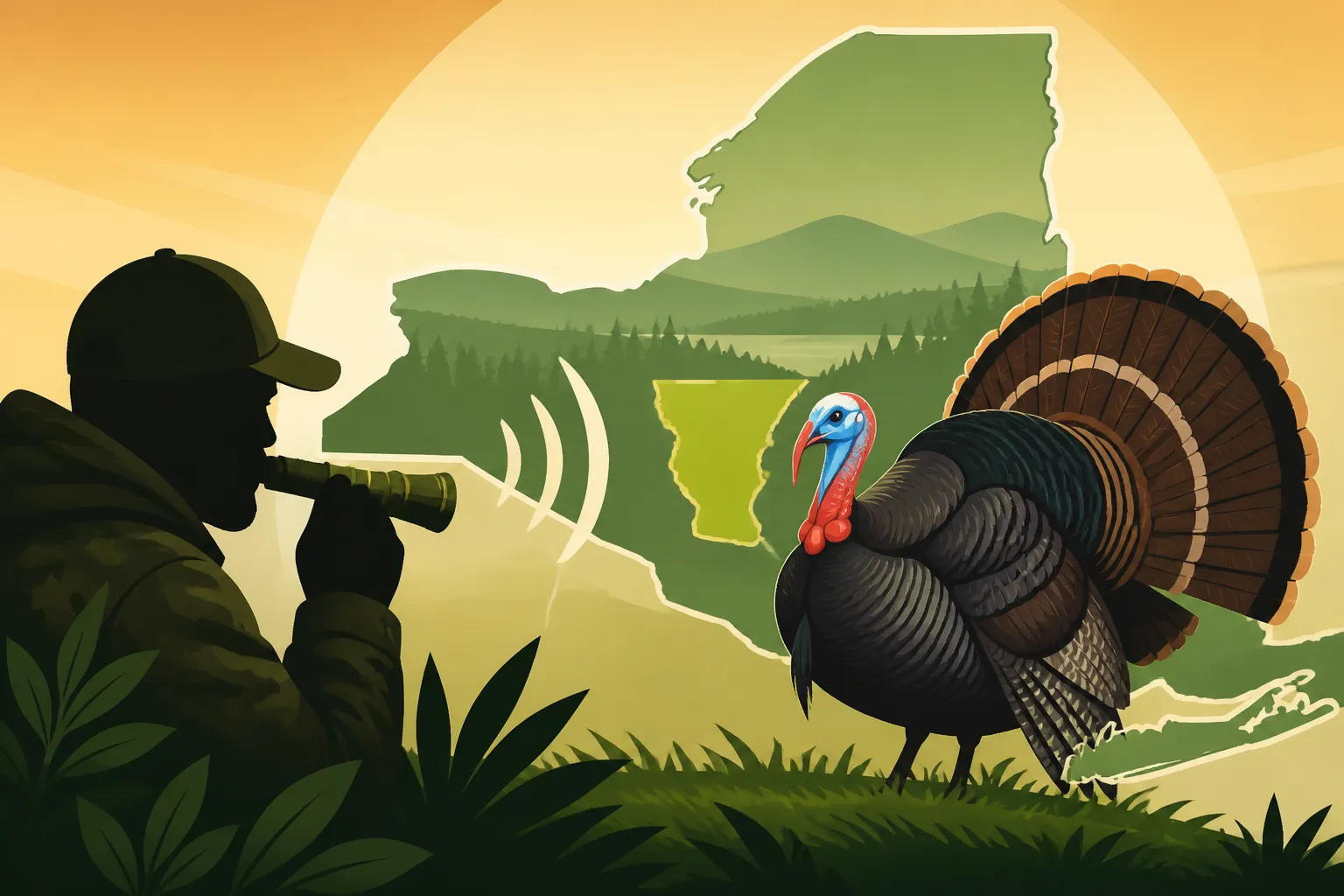
We've all been there: out in the New York woods on a crisp spring morning, convinced there's a gobbler lurking just over the ridge, but he just won't utter a peep to your best hen yelps. It’s incredibly frustrating to know birds are around but remain silent. This guide is all about equipping you with the knowledge and tactics to get those tight-lipped New York gobblers to reveal their location using locator calls, transforming your silent hunts into action-packed pursuits.
Why Locator Calls Are Your Secret Weapon in New York's Turkey Woods
There's a common misconception among new turkey hunters that you only need a hen call to bring in a gobbler. While a realistic hen call is undeniably crucial, it's often not the first step in finding a bird, especially on public land or heavily hunted areas where gobblers have heard every yelp and cluck under the sun. This is where locator calls become an absolute game-changer, acting as your primary scouting tool and a mid-hunt strategy when things go quiet.
Think about it: a gobbler's main defense mechanism is often his vision, not his hearing, especially when he's on the ground and feeling pressured. He's evolved to respond to a hen, but he's also wary. However, he's also programmed to gobble at loud, sudden, non-threatening noises in his environment. These "shock" gobblers aren't meant to attract a hen; they're an instinctive response to a perceived disturbance or threat that another gobbler might be intruding on his territory. We're simply tapping into that primal instinct. New York Spring Turkey Season Rules emphasizes specific legal calls, and locator calls are definitely in your arsenal.
Breaking the Silence of Wary Gobblers
New York's turkey populations are healthy in many regions, but that doesn't mean every bird is eager to respond to a yelp. Public lands, especially in the Southern Tier or Finger Lakes regions, see significant pressure. These gobblers get "educated" fast. They might gobble intensely on the roost but go completely silent once their feet hit the ground, opting to slip away or silently approach. A well-executed locator call can often elicit a response from these silent birds when they refuse to answer traditional turkey sounds. It's like asking a different question; sometimes, that's all it takes to get an answer.
Pinpointing Roosted Birds Before Dawn
One of the most effective uses of a locator call is before first light. You're set up, waiting for the woods to wake up, but you're not entirely sure where the birds are roosted. Firing off an owl hooter or a crow call can make a gobbler shock gobble on the limb, telling you exactly where he is. This is invaluable, allowing you to fine-tune your setup before the fly-down. You can then position yourself to intercept him or his hens once they hit the ground. It’s a vital piece of scouting information gained in real-time, right there in the dark woods. Being able to confirm a bird’s exact location from a distance allows you to move into a prime ambush spot, potentially saving your morning hunt.
Covering Ground Effectively
New York has vast tracts of public land, from the dense hardwoods of the Catskills to state forests in the Southern Tier. You can't just sit and call all day, especially when you're covering new ground. Locator calls transform your Run-and-Gun Turkey Tactics on Public Land approach. Instead of randomly yelping, you can walk, stop, hit a locator call, and listen. If you get a response, you know which direction to head and how aggressively to move. If silence reigns, you move on to the next promising ridge or field edge. This systematic approach saves time and energy, putting you in front of more turkeys throughout the day. Mapping tools like GoHunt are invaluable for understanding the contours of the land, which directly impacts how sound travels and where a gobbler's response might come from.
Different Types of Locator Calls and When to Use Them
Not all locator calls are created equal, nor are they effective in every situation. Just like you wouldn't use a box call in a downpour, you wouldn't typically use an owl hooter at midday. Understanding the nuances of each call type and when to deploy them will dramatically increase your success rate. The key is variety and observation.
The Classic: Crow Calls
The crow call is arguably the most popular and versatile locator call out there, and for good reason. Crows are ubiquitous across New York, so their calls are a natural sound that doesn't typically alarm turkeys. A loud, sharp series of "caw-caw-caws" can often make a gobbler sound off from a good distance, even well after fly-down when other calls fail.
I've had countless experiences where a gobbler was completely silent to my hen calls, only to hammer back instantly after a sharp crow call. They're particularly effective from late morning through midday when birds are often scattered and less vocal. When using a crow call, vary your cadence and volume. Sometimes a short, sharp burst is best, while other times a longer, drawn-out series of caws gets the job done. The key is to mimic the natural sound of a crow without overdoing it, avoiding a sound that would suggest something is amiss in the woods.
The Dawn Patrol: Owl Hooters
For pinpointing roosted birds in the dark, nothing beats an owl hooter. Barred owls, in particular, are common in New York, and their "Who cooks for you? Who cooks for you all?" call is a classic turkey locator. I often use an owl hooter the moment I step out of the truck, or even when I'm still driving slowly on a back road, especially if I'm trying to confirm a general roosting area I marked on my GoHunt app during scouting. Roost Hunting New York Gobblers benefits immensely from this.
The best time to use an owl hooter is in the pre-dawn darkness and right at dusk. A gobbler will often shock gobble from his limb as a natural territorial response to another "animal" calling in his space. Be cautious not to call too loudly or too close to a known roost, as you might spook the bird off the limb or make him wary. A softer hoot, especially on those calm, quiet mornings, can be incredibly effective without giving away your exact position if the bird is super close.
The Aggressor: Coyote Howlers
Coyote howlers are a less common but incredibly effective locator, particularly for those truly stubborn gobblers. A coyote howl is an aggressive, dominant sound in the woods, and it can often trigger a territorial response from a gobbler who might otherwise remain silent. It's a "wake-up call" that screams, "Hey, there's something big in your woods, and it's calling!" This often forces a gobbler to announce his presence.
I typically save the coyote howler for later in the morning or midday when traditional calls and even crow calls have failed. It's a high-risk, high-reward call. The sheer volume and intensity can sometimes send a bird running the other way, but more often, it elicits a thunderous gobble from a bird that felt safe remaining quiet. Use it sparingly and listen intently after each sequence. A good howl, followed by a series of yips, can really get under a gobbler's skin.
The Understated: Pileated Woodpecker Calls
This is one that surprises a lot of hunters, but a good pileated woodpecker call can be a fantastic, subtle locator. Pileated woodpeckers are large, loud birds common in the mature timber found in many New York hunting areas. Their distinctive, almost maniacal call is a natural sound that rarely spooks anything, but it's often loud enough and unique enough to trigger a gobble.
I find these calls especially useful when I'm in dense timber or walking along a ridge line where sound doesn't carry as well, or when I suspect the birds are particularly wary. It's not as piercing as a crow or as aggressive as a coyote, making it a good choice for a softer approach when you want to be less intrusive. It's a great "change-up" call if the more common locators aren't producing.
Locator Call Comparison
Here's a quick rundown of some popular locator calls and their typical use:
| Call Type | Best Use Time | Sound Description | Pros | Cons |
|---|---|---|---|---|
| Crow Call | Anytime, especially late morning | Loud "Caw-Caw" series | Very versatile, natural, great range | Can be overused, may attract real crows |
| Owl Hooter | Pre-dawn, Dusk, Roosting | "Who cooks for you?" or "Hoo-hoo-hoos" | Excellent for locating roosted birds, distinct | Less effective mid-day, limited range once on ground |
| Coyote Howler | Mid-morning, Mid-day, Aggressive | Long, mournful howls, yips, barks | Triggers shock gobbles from wary birds, great range | Can spook birds if overused or too close, less natural |
| Pileated Woodpecker | Anytime, especially in timber | Loud, high-pitched "kik-kik-kik-kik" | Unique, natural, less likely to spook, good in dense cover | Shorter range, less intense shock response |
| Gobble Tube | Sparingly, post-flydown, aggressive | Realistic gobble sound | Challenges dominant gobblers, gets instant responses | Can attract other hunters, can scare off some birds |
Remember, the goal is to sound natural within the environment, not like a human trying to mimic an animal. Practice makes perfect, and listening to actual animal sounds will help you nail the inflection and cadence.
Mastering the Art of Locator Calling for New York Turkeys
Simply blowing into a call won't guarantee success. There's an art to locator calling that involves understanding volume, cadence, listening skills, and adapting to the terrain. It’s a dynamic process that requires patience and keen observation.
Volume and Cadence: Finding the Right Rhythm
One of the biggest mistakes hunters make is calling too loudly or too frequently. When using a locator call, aim for a volume that mimics the real animal. A crow's call is loud, but it's not ear-splittingly shrill. An owl's hoot carries, but it's not a shriek. Start with a moderate volume and increase it if necessary. If you're in open country, your sound will travel further, so you might need less volume. In thick Adirondack timber or steep Catskill terrain, you might need a bit more.
Cadence is also crucial. Don't just blast out a continuous string of calls. Mimic the natural pauses and rhythms. For a crow call, a series of 2-4 caws, followed by a pause, then another series, is often effective. For an owl hooter, typically 2-3 distinct hoots are enough. Listen to real animals in the wild to get a feel for their rhythm.
The Golden Rule: Listen, Listen, Listen
This might sound obvious, but it's the most critical part of locator calling. After every call, stop and listen intently. Turkeys often gobble immediately after a locator call, but sometimes there's a slight delay. Turn your head, cup your ears, and try to pinpoint the direction of any response. A gobble might sound like it came from directly in front of you, but the sound could be bouncing off a ridge or carrying on the wind.
It's also important to listen for other sounds. Did a hen cluck in response? Did a different gobbler answer from a different direction? These subtle clues are invaluable. Being patient and letting the woods reset after your call is paramount. Don't rush into another call; give the gobbler ample time to respond. Even a faint gobble is a goldmine of information.
Calling Sequences and Strategic Timing
Knowing when to use which call is just as important as how you use it.
- Pre-dawn/Roost: This is prime owl hooter time. As mentioned earlier, use it to get that first shock gobble and confirm a roost location. You might follow up with a soft crow call as the sky lightens.
- Fly-down (First Light): As turkeys hit the ground, they're often vocal. A soft hen call might be all you need here. If they go silent, however, a crow call can re-engage them.
- Mid-morning/Mid-day: This is crow call country. Turkeys often travel and forage during this time, and a well-placed crow call can reveal their travel path or feeding area. If the crow call fails, this is when I'd consider a coyote howler or a pileated woodpecker call to really shake things up. When New York Gobblers Go Quiet often indicates it's time for locators.
- Late Afternoon: As birds begin to think about roosting, a quiet owl hooter can help you identify potential roost trees for the next morning.
Resist the urge to call constantly. Call, listen for 2-3 minutes, and if no response, move 100-200 yards (depending on terrain) and call again. Consistency and patience are your friends.
Reading the Terrain and Wind
New York's diverse landscapes significantly impact how sound travels.
- Open Fields & Valleys: Sound carries incredibly well here. You might not need to call as loudly, but responses can be harder to pinpoint as they echo. Mapping tools like GoHunt are fantastic for understanding these elevation changes, allowing you to predict how sound will carry.
- Dense Timber (Adirondacks, Catskills): Sound is absorbed and muffled. You'll likely need more volume, and responses might seem closer than they actually are. Pay attention to how the sound is traveling. Wind and Thermals on a Catskill Ridge are also critical for sound transmission and your overall approach.
- Wind: Wind is the enemy of sound. When it's windy, gobblers are less likely to hear your calls, and their gobble will be harder for you to hear. Try to call from sheltered areas or during lulls in the wind. Position yourself so the wind is carrying your call towards where you expect birds to be, but also so any gobble will carry back to you.
Integrating Locator Calls with Your Overall Turkey Strategy
Locator calls are not a standalone hunting method; they are a powerful component of a comprehensive turkey hunting strategy. They work best when combined with scouting, calling, and strategic positioning.
Scouting with Your Ears
Long before opening day, you can use locator calls to identify potential hot spots. Drive rural roads at dawn and dusk, stopping to make a few owl hoots or crow calls. Mark any responses on a digital mapping app like GoHunt or a physical map. This helps you build a mental map of where birds generally roost and where they might be traveling. This kind of "scouting with your ears" is just as important as looking for tracks or droppings. Knowing general areas where birds consistently gobble gives you a huge advantage when the season arrives. Scouting With the New York HuntFishNY App is perfect for this.
From Locator to Decoy Setup
Once you've located a gobbler with a locator call, the real hunt begins. The goal of the locator call is not to call the bird in, but simply to get him to tell you where he is. Once he gobbles, immediately stop using the locator call. Transition to moving quietly and efficiently to a strategic setup where you can then employ your hen calls and potentially Turkey Decoys That Work on Pressured Birds.
For example, if an owl hooter gets a gobble at dawn, use that information to move to an advantageous position, ideally where you can cut off the bird's likely fly-down path or where he can't see you until he's close. Then, switch to soft tree yelps, clucks, or purrs to entice him the rest of the way. Setting Up Against a Big Oak or near a natural funnel becomes your next critical step.
When Traditional Calling Goes Quiet
We’ve all had those frustrating periods in the woods when the morning rush is over, the birds have flown down, and suddenly, everything goes silent. This is a prime opportunity to deploy your locator calls. Instead of giving up or resorting to desperate, continuous hen calling, switch to your crow, coyote, or woodpecker call.
Walk a ridge, stop at a good vantage point, hit your locator call, and listen for a few minutes. If nothing, move another few hundred yards, making sure you are changing up the terrain features (e.g., going from a ridge top to a valley, or hitting the edge of a field). This proactive approach allows you to cover more ground and find those mid-day birds that are still out there but simply aren't vocalizing to hen sounds. Turkey Tactics for Southern Tier Field Edges often involve this type of systematic searching.
The Power of Knowing When to Stop
Just as important as knowing when to use a locator call is knowing when to put it away. Once a gobbler has responded and you are moving in for the setup, silence is golden. Continuing to blast a crow call as you sneak towards a bird will likely send him running. The locator call served its purpose; now let your stealth and your subtle hen calling do the rest of the work. If you're on a hot bird and he's gobbling consistently to your hen calls, there's no need to introduce a locator. It might just confuse him or make him wary.
Locator calls are an essential tool for any serious New York turkey hunter. They provide invaluable information, help you cover ground efficiently, and can salvage a hunt when gobblers are tight-lipped. By understanding the different types, practicing your technique, and integrating them wisely into your overall strategy, you’ll be punching more tags and enjoying more successful spring mornings in the woods.
Disclaimer
This article is for general informational purposes only and does not constitute professional advice. Laws, prices and regulations vary by location and change over time. Consult a qualified professional for guidance on your specific situation.