Calling a New York Gobbler Off the Roost
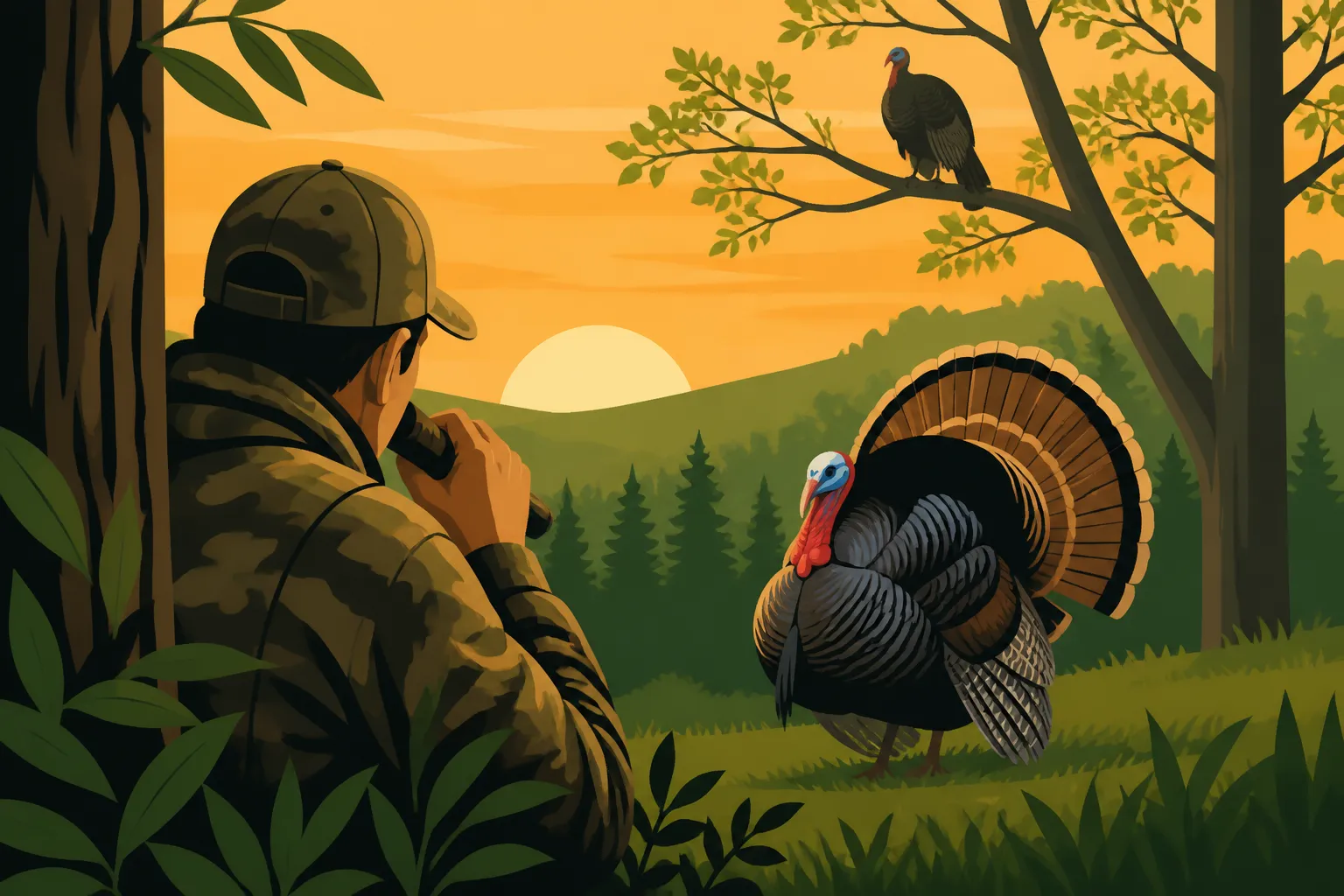
There are few things more frustrating than hearing a booming gobble from a New York longbeard still on the roost, knowing he's just a few hundred yards away, yet despite your best efforts, he refuses to fly down to your setup. This guide is all about turning those frustrating roost talks into successful harvests, diving deep into the art and science of coaxing a gobbler off his perch and into your lap.
Understanding Roosting Behavior and Morning Routines
Before you can effectively call a gobbler off the roost, you've got to understand why he's up there in the first place and what his typical morning looks like. Turkeys are creatures of habit, and knowing those habits is half the battle.
Why Gobblers Roost Where They Do
Turkeys don't just pick any old tree to spend the night in. They're looking for security and a good vantage point, particularly from ground predators like coyotes, foxes, and even black bears. Often, you'll find them in the tallest, strongest trees available, especially those with wide, horizontal limbs that offer comfortable perches. Think towering white pines, massive oaks, or sturdy maples. These trees might be located on a ridge line overlooking a valley, making them less accessible and offering a clear view of any approaching danger. Sometimes, they'll choose trees bordering a field, allowing them to survey potential feeding or strutting areas before committing to fly down. Other times, they might roost over a creek or wetland, creating a natural barrier against predators. Factors like wind direction and shelter from rain can also play a role, as a smart gobbler will seek out the most comfortable and secure spot possible.
The Critical First Hour After Fly-Down
The moments just before and after a gobbler flies down are arguably the most critical of your entire hunt. This is the period when a tom is most vulnerable and often most receptive to calling. He's fresh off the roost, feeling his oats, and eager to locate hens. They'll typically let out a few thunderous gobbles from the limb, often in response to an owl hoot or crow call – these are often called "shock gobbles" and can be a great way to pinpoint their exact location in the pre-dawn dark. Once the sky begins to lighten and they feel safe, they’ll fly down, usually to a pre-determined spot they use for strutting or feeding. This might be an open field edge, a logging road, or a sparse timber flat. The key is to be set up, quiet, and ready before his feet hit the ground. If you miss that critical window, or if he flies down with a flock of real hens, your chances diminish significantly. This early morning ritual is a high-stakes game, and a successful hunter knows to play it aggressively, yet patiently.
Common Mistakes When Calling Off the Roost
It's easy to get excited when that first gobble echoes through the pre-dawn woods, and that excitement can lead to mistakes. One of the most common blunders is calling too loud, too aggressively, or too frequently right off the bat. Imagine waking up to someone shouting in your ear – it's startling and unnatural. Turkeys want to hear a hen waking up naturally, not a frantic siren. Another mistake is moving too much once you've set up. Turkeys have incredible eyesight, and even a slight shift of your head can be enough to spook them, especially in the dim morning light. Not being patient enough is another pitfall; hunters often feel compelled to call constantly, but sometimes silence, punctuated by soft, subtle calls, is far more effective. Setting up too close can be disastrous, as the gobbler might spot you as he flies down or on his approach. Conversely, being too far away means he might lose interest or be intercepted by other hens before he reaches you. Finally, not having a clear shooting lane or a solid ambush point often leads to missed opportunities when he finally does commit. Learning to scout effectively and choose the right location can make all the difference, as covered in a detailed guide on Scouting New York Public Land Before Season.
Effective Calling Strategies for Roosted Toms
Once you understand the gobbler's morning routine, you can tailor your calling to match. This isn't about just making turkey sounds; it's about telling a story that entices that tom off his limb.
Soft Tree Yelps and Purrs to Start
When a gobbler is still on the roost, he’s listening for the first sounds of hens waking up. He’s not expecting a full-blown hen party. Your initial calls should be subtle, soft tree yelps and purrs, mimicking a hen stretching her wings and clucking to herself as the world awakens. Think a few soft yelps on a slate call, maybe a contented purr or two. The goal here is to simply let him know a hen is in the vicinity, not to demand his attention. You’re piquing his curiosity. If he gobbles in response, resist the urge to immediately blast back with loud calls. Instead, offer a few more soft calls, perhaps a cluck or two, then go silent. Let him wonder. Let him think he’s going to have to come find you. This early communication sets the tone for the entire encounter and is a crucial part of Calling a New York Gobbler Off the Roost.
Aggressive Calling Once Birds are on the Ground
The moment those big birds hit the ground, the game changes. Hens on the ground become much more vocal and assertive, and you should too. This is when you can increase the volume and aggression of your calling. Start with more excited yelps, sharper cuts, and a combination of clucks and purrs. You want to sound like a hot hen, possibly even like multiple hens, to create the illusion of a group of eager females. If you have different calls – a box call for loud yelps, a mouth call for clucks and purrs – use them to create varied sounds, mimicking several hens. This can be especially effective if the gobbler has other real hens with him. You're essentially challenging those hens for his attention, or making him believe there's a more exciting party happening elsewhere.
A vital piece of advice for this stage: once he’s on the ground and gobbling, he’s trying to pinpoint your location. Avoid calling when he’s looking directly your way. Instead, call immediately after he gobbles, or while his head is turned. This makes your calls seem more elusive, forcing him to move to find you. Tools like the GoHunt app can be invaluable here, not just for scouting before the season, but for confirming property lines and identifying optimal setup spots where you can best utilize aggressive calling strategies without getting busted. For more on the variety of calls, explore Turkey Calls Worth Carrying in New York.
Strategic Decoy Placement for Roosted Birds
Decoys can be an absolute game-changer, especially for pressured New York gobblers or when hunting public land where birds are wary. The key is strategic placement. For a tom coming off the roost, you want your decoy to be highly visible from his expected fly-down path, but far enough from your actual hide that he has to commit to come into range. A general rule of thumb is to place your decoy 20-30 yards from your position, directly in front of your shooting lane.
Consider using a jake decoy paired with one or two hen decoys. A jake decoy can be incredibly effective at drawing in dominant toms who see the younger bird as a challenge or threat. They often come in strutting, looking for a fight, which presents a perfect shot opportunity. If you're dealing with very wary birds, sometimes a single breeding hen decoy, or even just a fanned tail, can be enough to pique his interest without overdoing it. Remember, safety first: always be aware of other hunters and never carry an exposed decoy while walking. Make sure your setup is clear and you have a solid backdrop for concealment, perhaps utilizing a ground blind or setting up against a large oak. Knowing when and where to set up against a big oak can make all the difference, as detailed in Setting Up Against a Big Oak.
Locating Roosted Birds and Making Your Approach
You can have the best calls and decoys in the world, but if you don't know where the birds are roosting and can't get there undetected, you're out of luck. This part of the hunt begins long before opening day.
Pre-Season Scouting for Roost Trees
Successful roost hunting starts weeks, even months, before the season opens. Pre-season scouting is non-negotiable. Spend your late afternoons and early evenings driving or walking areas where you plan to hunt. Listen for "fly-up cackles" as turkeys go to roost just before dark. A shock gobble locator call, like an owl hooter or crow call, can help you pinpoint specific roost trees. Look for visual clues too: large concentrations of turkey droppings, shed feathers, and disturbed ground beneath mature trees, especially along ridges, near water sources, or on the edges of agricultural fields.
Using mapping tools, whether a physical topographic map or a digital platform like the GoHunt app, is incredibly helpful. These tools allow you to identify potential roosting habitat – high ground, dense timber adjacent to open areas – and mark specific trees or clusters of trees. By having these locations dialed in, you can minimize your guesswork in the dark and ensure you’re setting up in the sweet spot on opening morning. Understanding New York Turkey Population Trends can also give you insight into areas that might hold more birds and thus more potential roosting opportunities.
Silent Approaches in the Dark
The walk in to your roost setup is one of the most critical, and often overlooked, phases of the hunt. Any noise – a crunching leaf, a snapping twig, a loud whisper – can blow your entire setup before it even begins. Your approach must be as silent as a ghost. If possible, scout your exact entry route during daylight hours, noting any obstacles, fallen logs, or noisy ground cover.
Dress for silence. Avoid noisy fabrics like stiff nylon or anything that rustles. Wear soft wool or fleece. Use a headlamp with a red or green light setting to preserve your night vision and minimize your visible signature. Keep the beam pointed at your feet, not shining out into the woods. Walk slowly, deliberately, placing each foot carefully. Take small steps. If you're carrying a decoy, keep it wrapped and secure so it doesn't clank or sway. It's a grueling, tense process, but earning that silent entrance is paramount to a successful roost hunt. The darker it is, the more forgiving the woods are to subtle sounds, but any unnatural noise carries far in the still morning air.
Setting Up Before First Light
Once you've made your silent approach and located your chosen setup spot, it's a race against time to get ready before the first hint of dawn. You need to be completely settled, with your gun shouldered or rested, calls ready, and decoys deployed, before the birds even start to stir. This means arriving at least 45 minutes to an hour before civil twilight, even earlier if you anticipate a long walk or difficult terrain.
Choose a natural blind. A thick oak tree, a dense clump of pines, or a ground blind can work wonders. The key is to break up your silhouette and provide a clear shooting lane towards where you expect the gobbler to fly down and approach. Think about your backdrop – you don't want to be skylined on a ridge. Always face the direction you expect the turkey to come from, and ensure you have minimal movement required to get a shot off. Remember, turkeys can pick out the slightest movement. Your setup should be comfortable enough to remain motionless for an extended period, because patience is absolutely paramount in a roost hunt. For insights on where turkeys might naturally go after leaving the roost, checking out information like Turkey Tactics for Southern Tier Field Edges can help predict movement patterns.
Troubleshooting and Adapting Your Roost Calling
Even with the perfect setup and flawless calling, turkeys can be finicky. Sometimes they just don't want to play along. Knowing how to adapt is crucial.
When the Gobbler Hangs Up
The "hang-up" is a classic scenario for turkey hunters. You've got him gobbling his head off, he's flown down, but he's just sitting out there at 60, 80, or even 100 yards, refusing to come closer. This is incredibly frustrating, and it happens for a variety of reasons. He might have real hens with him that are pulling him in another direction, he might have been pressured before and is wary, or he might have spotted something that just doesn't look quite right in your setup.
When a gobbler hangs up, resist the urge to over-call. Sometimes, the best strategy is to "pull the string" – go completely silent. Let him wonder where those hens went. This can often make him nervous enough to take those last few steps to investigate. If he doesn't budge after 10-15 minutes of silence, try a very soft, subtle cluck or two, mimicking a hen losing interest and walking away. If it's safe and legal, and you have a good fan decoy, sometimes a strategic "fanning" technique where you peek over a rise or around a tree with a tail fan can enrage a dominant tom into closing the distance. Always prioritize safety if considering fanning, especially on public land. Patience, more than any specific call, is often the remedy for a hang-up. Understanding When New York Gobblers Go Quiet can also give you insights into when to back off.
Dealing with Multiple Toms or Hens
Hunting multiple gobblers or dealing with a tom that has real hens by his side adds another layer of complexity. If there are multiple toms, they might compete for attention, but they also might hang up together, relying on safety in numbers. More commonly, if a gobbler has a "harem" of real hens, he's much harder to pull away. Those hens are his prize, and they will often try to lead him in the opposite direction from your calling.
When facing competitive toms, aggressive calling can sometimes work, making it sound like a full flock of eager hens is waiting. If he has real hens, your goal shifts: you need to try to "steal" those hens away. Call aggressively and confidently, making your setup sound more enticing than what the real hens are offering. If the hens start to come in, the gobbler will often follow. Alternatively, you might need to try a strategic repositioning. If the birds are moving away, try to circle ahead of them, using terrain features to screen your movement, and set up again to intercept. This requires careful, stealthy movement and a good understanding of the birds' travel patterns.
The "Run and Gun" Alternative
Sometimes, despite your best efforts, the roost hunt just doesn't pan out. Maybe the birds flew down silently, or they drifted off with real hens, or they just didn't respond to your calls. Don't despair – this is when the "run and gun" strategy comes into play. Instead of staying put and hoping a bird eventually shows up, you actively move through the woods, stopping frequently to call and listen for a gobble.
This approach requires covering ground, calling from different spots, and being ready to set up quickly if you get a response. You'll use loud, excited calls to try to strike a distant gobbler, and if he answers, you move in, using the terrain to your advantage, and set up for an ambush. This strategy is physically demanding but can be incredibly effective when stationary hunting fails. It's often the logical next step after a quiet or unsuccessful roost hunt and a fantastic way to find birds that might be out of earshot from your initial setup. For more detailed tactics on this dynamic approach, check out Run-and-Gun Turkey Tactics on Public Land.
Here's a quick comparison of calling strategies for roosted birds:
| Strategy Aspect | Early Morning (Roost) | Mid-Morning (Fly-Down & Ground) | Considerations |
|---|---|---|---|
| Volume | Soft, subtle | Medium to Aggressive | Don't overdo it; mimic natural progression |
| Frequency | Infrequent, spaced out | More frequent, varied | Listen to the bird; let him wonder |
| Call Type Focus | Tree yelps, purrs, soft clucks | Excited yelps, cuts, clucks, purrs, fighting purrs | Sound like one hen waking up, then multiple hot hens |
| Decoy Use | Set up prior to light, visible from fly-down point | Can be adjusted/added if no success early | Jake decoys for aggressive toms, hen decoys for wary birds |
| Patience Level | Extremely high; wait for fly-down | Moderate; adapt to bird movement | The first hour is critical; don't blow the setup |
| Movement | Zero once set up | Minimal, strategic if repositioning | Turkeys have incredible eyesight; stay still |
Disclaimer
Hunting is an inherently dangerous activity. Always prioritize safety, adhere to all New York State hunting regulations, and ensure you have the necessary licenses and permits. Be aware of your surroundings, properly identify your target, and know your backstop. The advice provided here is for informational purposes only, and safe hunting practices are the responsibility of the individual hunter.