Hunting Grouse and Woodcock Together
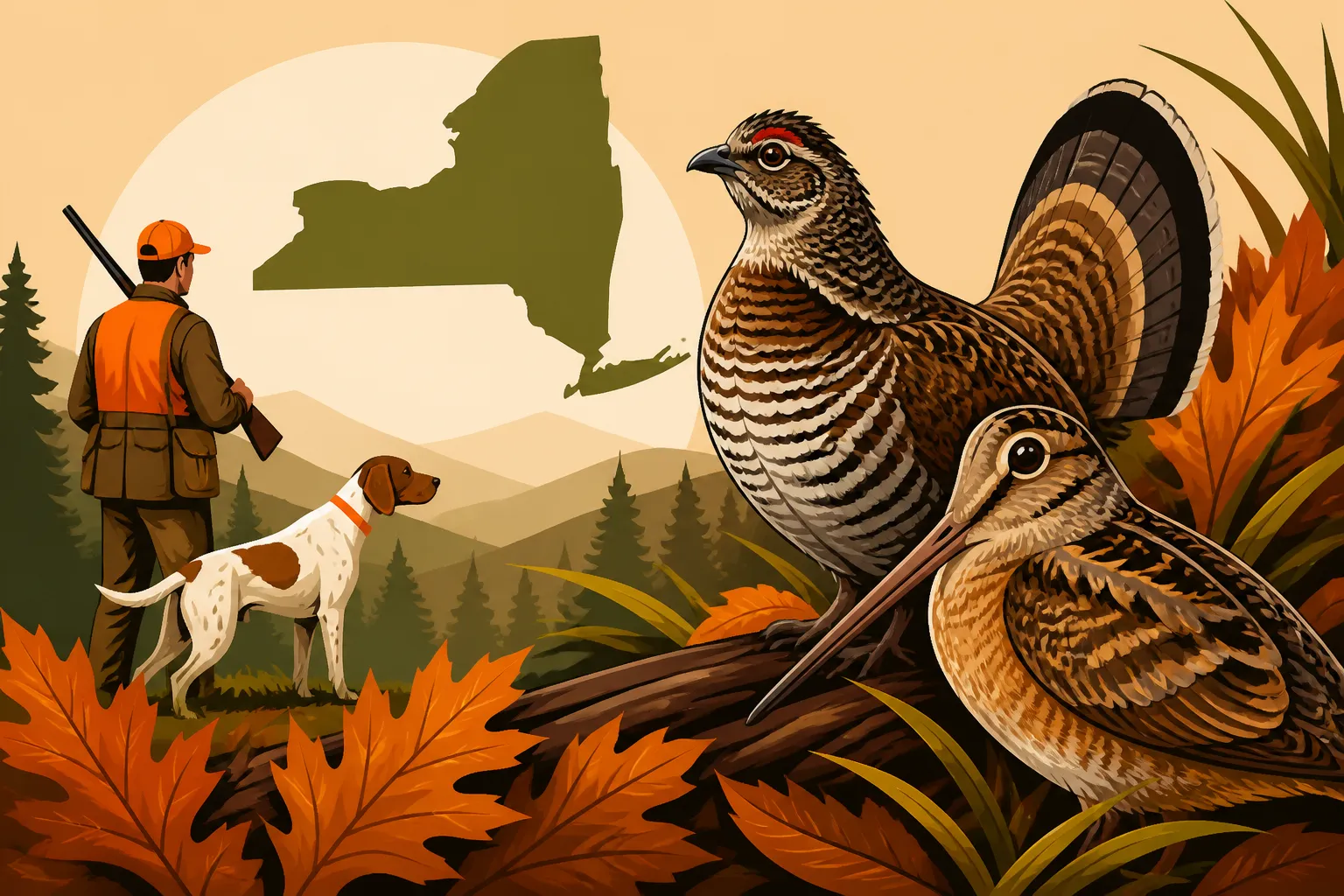
There’s a unique thrill to hunting upland birds in New York, and for many, the ultimate prize isn't just a ruffed grouse or a timberdoodle, but a mixed bag of both. The challenge often lies in the subtle differences in their preferred cover and flight patterns, making a truly successful dual hunt feel like hitting the jackpot. This comprehensive guide will walk you through the overlapping habitats, prime hunting strategies, essential gear, and crucial dog work needed to put both of these fantastic game birds in your vest on the same crisp autumn day.
Understanding the Overlap in Habitat for Grouse and Woodcock
Successfully hunting grouse and woodcock together hinges on understanding that while they have distinct preferences, these often converge in specific types of cover. It's about finding those "sweet spots" where their worlds collide.
The Alder and Aspen Connection
The backbone of successful mixed-bag hunting in New York often comes down to two key tree species: alder and aspen. These aren't just random trees; they represent dynamic, early-successional habitat that provides both food and security for these cherished upland birds.
Ruffed grouse absolutely thrive in young, dense aspen stands. These areas, often regenerating after logging or natural disturbance, offer a smorgasbord of food sources from aspen buds in winter to a variety of insects, berries, and seeds found in the undergrowth during warmer months. More importantly, the thick vertical structure of young aspen provides incredible escape cover from aerial predators like hawks and owls, and ground predators like fox and coyote. A grouse flushing from a dense stand of aspen is a blur of motion, using the woody stems as a shield. In New York, you'll find these areas emerging throughout the Southern Tier, Finger Lakes, and even on the fringes of the Adirondack and Catskill regions where past logging created ideal conditions. When considering a mixed-bag hunt, you're always looking for these "grouse woods" first.
American woodcock, affectionately known as timberdoodles, have a slightly different but often complementary set of needs. They prefer moist, rich soil where they can probe for earthworms, their primary food source, with their long, sensitive bills. This almost always leads them to alder thickets, which typically grow in damp areas along stream bottoms, marsh edges, or beaver flows. These dense, shrubby patches provide shade, moisture, and crucial concealment. It's not uncommon to find a grouse hunkered down in the slightly drier edge of a dense alder bottom while woodcock are scattered throughout the wetter interior. The trick is recognizing where these two habitat types meet and merge, creating a transitional zone that's ideal for both species. Finding areas with both dense, young aspen and nearby alder swales is like discovering a goldmine for upland hunters.
Water Sources and Edge Cover
Beyond the specific tree types, the presence of water and diverse edge cover is paramount for a productive mixed-bag hunt. Woodcock, due to their diet and probing habits, are intrinsically linked to moist ground. This means focusing your scouting efforts on areas adjacent to small streams, springs, seepages, and wetland edges. These are the places where the soil remains soft enough for them to feed effectively, even during drier spells.
For grouse, while they don't need wet ground like woodcock, they certainly benefit from the diverse vegetation that often accompanies these moist areas. More importantly, grouse are masters of edge cover. They love the transition zones where dense, impenetrable thickets meet more open woods, or where a clear-cut abuts a mature forest. These edges provide both food sources and quick escape routes. Imagine a steep Catskill ridge with a small spring seeping out near its base, feeding a patch of alders and creating a slight rise where young aspens and dogwoods flourish. That’s a textbook location for both birds. You might find woodcock probing near the spring, while grouse are dusting or feeding on berries in the denser cover just above. Learning to read the topography and vegetation to pinpoint these subtle transitions is a skill that comes with time afield, but it's crucial for maximizing your chances.
Prime Times and Tactics for a Dual Hunt
Timing and strategy are everything when you're trying to tag both a fast-flushing grouse and a tight-holding woodcock in the same outing. Each bird presents its own set of challenges, and knowing how to approach their preferred haunts will significantly increase your success.
Early Season Advantages (October into Early November)
The sweet spot for hunting grouse and woodcock together in New York often falls from early October through mid-November, particularly before heavy leaf fall and the full swing of the woodcock migration. This period offers several distinct advantages. For starters, the leaves are still mostly on the trees, providing natural concealment for both hunter and bird, but not so thick that shots become impossible. It's a challenging environment, but the cover is less dense than earlier in September. As the weather cools, insects and berries become less abundant, pushing grouse to rely more on buds, making dense young aspen stands even more attractive.
For woodcock, this is often the tail end of their northern migration through New York. While some early migrants might have already passed through, many birds are still present, feeding heavily to fuel their journey south. The cooler, often damp weather of October is also ideal for keeping the ground moist, which is perfect for their earthworm diet. Hunting during this window also means less hunting pressure overall compared to the deer firearm seasons that follow. You'll likely encounter fewer fellow hunters, especially in remote public land spots. Tactics for this time involve systematically working through promising cover, paying close attention to both dense, brushy areas for grouse and moist, alder-filled bottoms for woodcock. Don't be afraid to pause frequently; woodcock especially are known for holding tight, often flushing at your feet, while grouse might explode out of cover 30 or 40 yards ahead.
Strategic Walking and Flushing
Effective tactics for a mixed-bag hunt involve a deliberate approach to covering ground. Unlike deer hunting, where stealth is paramount, upland hunting often relies on making noise and breaking cover to get birds to flush. The key is to do it in a way that maximizes your chances of a shot. When you're in promising habitat, walk with purpose but be ready to stop on a dime. Short bursts of movement followed by a brief pause often make nervous grouse flush, as they interpret the stop as a predator freezing, prompting them to bolt. This is a classic tactic used by seasoned grouse hunters. For woodcock, they tend to hold much tighter, often not flushing until you're nearly stepping on them. This means you need to be prepared for very close-range, quick shots, especially in the thick alders.
If you're hunting without a dog, systematically quartering through cover is crucial. Don't just walk in a straight line; crisscross and weave, hitting every dense pocket and edge. This helps ensure you're not walking past holding birds. When you're moving through a mixed patch of aspen and alder, alternate between pushing the thicker aspen for grouse and then slowly working the alders for woodcock. Remember, grouse often flush with an explosive roar, while woodcock have a distinctive whistling flight. Learning to identify these sounds will help you mentally prepare for the shot. Whether you're trying your hand at Flushing Grouse Without a Dog or you're fortunate enough to have a canine companion, understanding these different flushing behaviors is vital.
Deer drives can be a great way to put deer on the move, but for upland birds, it’s a solo or small-group effort focused on putting pressure on individual pockets of cover. In areas like the Tug Hill Plateau, where snow can come early, later season hunts might require adapting to colder conditions and deeper snow, which can change bird behavior and access.
Essential Gear and Dog Work for Mixed Bag Success
Having the right equipment and, ideally, a well-trained dog, can dramatically improve your chances of success on a mixed-bag hunt for grouse and woodcock in New York's diverse upland covers.
Shotgun and Ammunition Selection
Choosing the right shotgun and ammunition for a mixed-bag hunt is a balance between handling speed and pattern density. Both grouse and woodcock are relatively small, fast-flying birds, but the environments you'll encounter them in are often tight and unforgiving.
For a shotgun, a lightweight 20-gauge or 28-gauge is often preferred over a heavier 12-gauge. These smaller gauges offer faster swings and are less tiring to carry through dense cover all day. A pump-action or semi-automatic can provide quick follow-up shots, which are often necessary in the chaos of a grouse flush. Over-and-under or side-by-side shotguns are also popular for their elegant handling and the ability to choose different chokes for each barrel – a distinct advantage for varying shot distances. Many upland hunters swear by a classic double gun for its balance and quick handling in the alders and aspens.
When it comes to choke selection, a common setup is an Improved Cylinder (IC) in the first barrel (or barrel used for the first shot) and a Modified (MOD) choke in the second. The IC choke provides a wider, faster-spreading pattern, ideal for the close-range, explosive flushes of woodcock and those grouse that jump right underfoot. The MOD choke offers a denser pattern for those grouse that hold a bit longer or fly out a little further before offering a shot. This versatile combination is what many seasoned hunters recommend when discussing Choke Choice for Fast Flushes.
For ammunition, shot size is critical. Most hunters opt for #7.5 or #8 lead shot. #8 shot delivers a dense pattern with plenty of pellets to bring down a small bird like a woodcock, which typically flushes very close. While #8 might seem light for a grouse, the #7.5 shot offers a slightly larger pellet with enough energy to take down a grouse at reasonable ranges in thick cover. Since most shots on these birds are under 30 yards, the pattern density is more important than raw pellet energy. You'll find that these Shotguns for New York Grouse Cover and Upland Guns for Aspen and Alder are perfectly suited for both species.
The Indispensable Bird Dog
While it's certainly possible to hunt grouse and woodcock without a dog (Flushing Grouse Without a Dog is a legitimate tactic), a well-trained bird dog elevates the experience and dramatically increases your success rate. A good dog can find birds you would have walked past, hold them on point, and retrieve them from the thickest tangles. This is especially true for woodcock, which often sit incredibly tight, allowing a dog to lock up on point, giving you time to get into position.
Pointing breeds like English Setters, German Shorthaired Pointers, Brittanys, and Pointers are popular choices for upland hunting due to their keen noses and natural instinct to point. Flushing breeds like Springer Spaniels and Cocker Spaniels also excel, pushing birds into the air for the hunter. The key is a dog that works close, responds to commands, and has the stamina to cover miles of thick New York cover.
In New York's dense aspen and alder, keeping track of your dog can be a real challenge. This is where modern technology, like GPS dog collars, becomes invaluable. These collars, often paired with handheld units or smartphone apps, allow you to see your dog's location, how far it's ranged, and if it's on point, even when it's out of sight in heavy cover. Brands that integrate robust mapping features can be a real lifesaver here, allowing you to mark points and see your dog's track on a detailed topographic map. Tools found via GoHunt's mapping resources or similar mapping applications can help you track your dog's movements and even visualize your path, ensuring you cover ground thoroughly and don't lose your hunting partner. For more specific information on their needs, check out our guide on Bird Dog Gear for New York Cover. Training a dog to handle both grouse and woodcock requires exposing them to both birds and understanding their different scent profiles and behaviors. A dog that honors a point on a woodcock can transition to a grouse that might hold a bit looser, offering a more challenging point. It's a partnership that enriches every moment afield.
Navigating New York's Diverse Upland Terrain
New York offers a remarkable diversity of terrain, from the rolling hills of the Southern Tier to the vast state forests of the Adirondacks and Catskills, all of which hold grouse and woodcock. Knowing how to scout and adapt to changing conditions is crucial for consistent success.
Scouting for Success in New York
Effective scouting is the bedrock of consistent upland hunting success. You can’t just blindly wander into the woods hoping to stumble upon birds; you need to understand where they should be. This means leveraging all available tools and putting in boots-on-the-ground effort.
Start with maps, both online and physical. Detailed topographic maps are invaluable for identifying low-lying, moist areas (perfect for woodcock), and discerning areas with varying forest age and density (prime for grouse). Satellite imagery, easily accessed through online platforms and apps like the New York DEC's Scouting With the New York HuntFishNY App or mapping services from GoHunt, can help you pinpoint clear-cuts, young aspen stands, and alder bottoms. Look for areas showing different shades of green, indicating younger growth, or lines that suggest past logging activity. Old logging roads and trails, even if overgrown, often provide excellent access points and can act as natural travel corridors for birds.
Regionally, keep an eye out for specific indicators. In the Southern Tier, many old dairy farms are slowly reverting to forest, creating fantastic patches of young growth and brushy field edges that can hold both birds. The Finger Lakes region, with its numerous creek bottoms and steep gorges, also offers promising habitat. For deeper dives into habitat, look for discussions around Grouse Hunting New York Aspen Cover and Woodcock Hunting New York Alder Runs to understand specifics.
Once you’ve identified potential areas on a map, it's time for some pre-season legwork. Walk these areas, even without a gun. Look for grouse droppings, often found on logs or stumps, or distinct "dusting bowls" where they've bathed in dry soil. For woodcock, their "splatter" (white, pasty droppings) and probe holes in moist earth are unmistakable signs. The goal is to confirm bird presence and identify the most productive pockets of cover, allowing you to walk directly to the best spots when the season opens.
Weather Considerations and Bird Movement
Weather plays a significant role in how and where grouse and woodcock are found. Understanding these dynamics allows you to adjust your strategy and maximize your chances.
For woodcock, cool, damp weather is their preferred condition. It keeps the ground moist, making it easier for them to probe for earthworms. After a good rain, especially during their fall migration, woodcock can be found in abundance in their preferred alder and willow thickets. Conversely, dry spells can make the ground hard, forcing them to concentrate in the wettest seeps and creek bottoms, or pushing them to migrate sooner. Keep an eye on the forecast, as a series of cool, wet days can mean prime woodcock hunting. When When New York's Woodcock Season Opens, pay close attention to the weather patterns.
Grouse are a bit more adaptable to weather but still have preferences. On crisp, sunny autumn days, they might be found basking on sun-drenched logging roads or the edges of clear-cuts, though they'll quickly dive into thick cover if spooked. During colder, windier weather, they'll often hunker down in dense conifers or the thickest parts of aspen stands for protection. Heavy snow can push them to feed on buds higher in trees, or seek out dense evergreens.
During the migratory period for woodcock, which typically spans October and November, their numbers can fluctuate daily. A strong cold front can push a fresh wave of birds into your area overnight, while warm winds from the south might cause them to push through quickly. Experienced hunters often pay attention to moon phases and cold fronts, knowing that these factors can trigger significant bird movements. Combining your knowledge of habitat with real-time weather conditions and migratory patterns will make you a much more efficient and successful mixed-bag hunter in New York. You can keep tabs on the overall season by checking New York Grouse Season Dates.
| Characteristic | Ruffed Grouse | American Woodcock |
|---|---|---|
| Preferred Habitat | Young aspen stands, dense hardwoods, conifers, brushy clear-cuts | Moist alder thickets, willow swales, creek bottoms, young dogwood |
| Primary Food Source | Buds, catkins, berries, seeds, insects | Earthworms (probed from soft soil) |
| Flight Pattern | Explosive, fast, often zig-zagging, loud wing beats | Whistling wings, slower, more erratic, often short |
| Flushing Behavior | Often flushes 20-40 yards out; can hold tight in dense cover | Holds extremely tight, often flushes at feet or within 5 yards |
| Best Shot Size | #7.5 or #8 lead | #8 or #9 lead |
| Best Choke Choice | Improved Cylinder (first shot), Modified (second) | Improved Cylinder, Skeet, or Cylinder |
| Dog Work | Challenges pointing dogs with wild flushes | Holds tight, ideal for steady points |
| Typical Harvest Range | 20-35 yards | 5-20 yards |
| Key Sign | Droppings on logs, dusting bowls | White "splatter," probe holes in moist ground |
Disclaimer
Hunting is an inherently dangerous activity. Always prioritize safety, understand and follow all New York State hunting regulations, and ensure you have the appropriate licenses and permits. This guide is for informational purposes only and does not supersede official DEC regulations. Be sure to check the current hunting seasons and rules before heading afield.