Which Towns Sit Inside the CWD Containment Area
The reality of hunting in New York often comes with a heap of regulations and concerns, and few are as worrying for deer hunters as Chronic Wasting Disease (CWD). The fear of this devastating neurological disease spreading among our cherished deer herd is a constant backdrop for many, especially when you hear about a confirmed case. Knowing exactly where a CWD containment area exists, and which specific towns are affected, is crucial for any responsible hunter planning their season. This guide will meticulously lay out the details of New York's CWD containment area, focusing on the towns within it and what that means for your hunting plans.
Understanding New York's CWD Containment Area
The news of a CWD detection can send shivers down any hunter's spine. It’s a game-changer, not just for the deer but for how we approach hunting in affected regions. New York has been incredibly diligent in its efforts to keep CWD at bay from its wild herd, but an isolated incident can trigger significant protective measures.
The Initial CWD Detection and Response
New York State has a strong track record of preventing CWD from taking hold in its wild deer population, but the threat is always there. The current CWD containment area in Herkimer County was established as a direct response to a confirmed CWD case in a captive deer facility. This wasn't a wild deer, which is a crucial distinction, but the potential for transmission to wild populations necessitated swift and decisive action from the New York State Department of Environmental Conservation (DEC). The moment CWD is detected, even in a captive herd, a complex set of protocols kicks in to prevent its spread, primarily through controlling deer movement and carcass disposal. This proactive approach is vital because once CWD gets a foothold in wild deer, it's incredibly difficult to eradicate. It underscores why regulations, while sometimes inconvenient, are absolutely essential for the long-term health of our wildlife.
Defining the Containment Area Boundaries
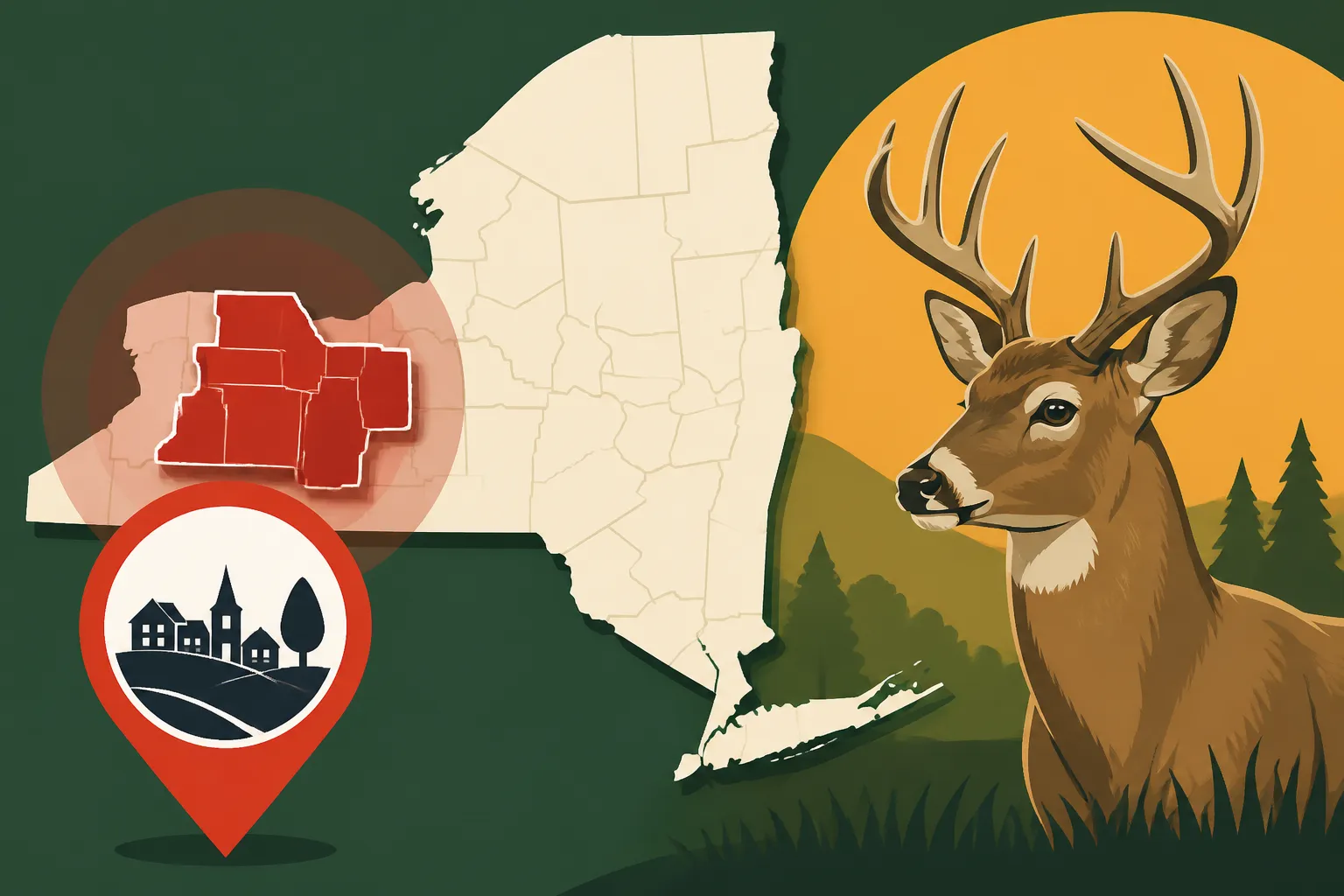
The containment area isn't just a vague "Herkimer County" designation; it's meticulously drawn to encompass the highest-risk zones around the initial detection site. Think of it as a bullseye, with the epicenter being the captive facility where the CWD positive deer was found. The boundaries extend outwards, creating a buffer zone where specific rules apply to both hunters and landowners. This area is defined by distinct geographic markers and road systems, making it a manageable, if not always intuitive, zone for the DEC to monitor and enforce regulations. While the name "Herkimer County" often comes up, it's really about specific towns and even portions of towns within that county, designed to be as precise as possible without being overly broad or ineffective. You can visualize these boundaries using a mapping application like GoHunt, which can layer on DEC data to show you exactly where the lines are drawn.
Specific Towns Within the Herkimer County CWD Zone
When the DEC establishes a CWD containment area, they pinpoint specific municipalities that fall within its boundaries. For hunters, knowing these names is critical because it directly impacts where and how you can hunt, and what you need to do with any harvested deer.
Herkimer County's Designated CWD Towns
The primary towns that sit fully or partially within the Herkimer County CWD Containment Area include:
- Frankfort
- German Flatts
- Little Falls
- Schuyler
In addition to these, certain portions of the towns of Columbia, Danube, Litchfield, Manheim, Newport, Russia, Salisbury, Warren, and Winfield are also included. This level of detail means you can't just assume an entire county is under the same rules. It's imperative to check the official DEC CWD information, often updated annually, to confirm the exact boundaries before you head afield. These towns are not just points on a map; they represent communities where deer hunting traditions run deep, and residents are now grappling with these new realities. Understanding these specific locales is the first step in ensuring you're compliant and contributing to the effort to keep CWD from spreading. You can find detailed maps on the DEC website or through apps like GoHunt that overlay these specific zones.
Adjacent Areas and Vigilance
While the focus is on the towns officially within the CWD containment area, it's wise for hunters in adjacent areas to remain vigilant. CWD doesn't respect town lines, and while the containment area is designed to mitigate risk, vigilance is a collective effort. This means understanding that deer movement can extend beyond these boundaries. If you hunt near the edges of the Frankfort, German Flatts, or Little Falls containment zones, for instance, staying informed about any changes or new advisories from the DEC is always a good idea. This isn't about creating panic, but rather about informed hunting and responsible citizenship. It's also about understanding the broader implications for the deer population in central New York, including areas like the Finger Lakes region where deer densities can be high. Being aware of the "Why New York Has Stayed Free of Wild CWD" effort will help put these local containment measures into perspective.
Why This Containment Area Matters for Hunters
The existence of a CWD containment area isn't just an administrative detail; it has real, tangible impacts on the hunting experience. For those of us who spend countless hours in the woods, these regulations directly affect our practices, from what we can bring into the zone to how we handle a successful harvest.
Special Regulations and Restrictions
Within these specific Herkimer County towns, special regulations are put in place to limit the potential spread of CWD. These aren't suggestions; they are legally binding rules designed to protect the wider deer population. The most common restrictions often involve:
- Carcass Transport: Perhaps the biggest change for many hunters. You usually cannot remove certain high-risk parts of a deer (like the brain, spinal cord, spleen, and lymph nodes) from the containment area unless they are thoroughly processed. This means if you harvest a deer in Frankfort or Schuyler, you'll need to bone out the meat or ensure proper disposal of specified parts within the zone. This measure is crucial because CWD prions, the infectious agents, are concentrated in these tissues. The DEC offers specific guidance on "New York Carcass Transport Restrictions" to help hunters comply.
- Baiting and Feeding Bans: Often, in CWD containment areas, baiting and feeding deer are prohibited. This is because concentrating deer at a single location increases the likelihood of disease transmission through direct contact or contaminated soil. Even if you're just putting out corn for observation, it could unintentionally contribute to the problem.
- Permit Modifications: In some cases, the DEC might issue "Extra DMPs Issued Inside the Containment Area" to reduce deer density, as higher densities can exacerbate disease spread. This means if you're looking to fill multiple tags, these areas might offer additional opportunities, but with strict rules attached.
Ignoring these rules isn't just a minor infraction; it poses a serious risk to the health of New York's wild deer and the future of hunting. Always consult the most current DEC regulations before hunting in or near any CWD containment zone.
Mandatory Reporting and Testing
Another significant aspect of hunting in a CWD containment area is the increased emphasis on reporting and testing. The DEC relies heavily on hunters to provide samples for surveillance, helping them monitor for CWD in the wild deer herd.
- Mandatory Deer Harvest Reporting: While all deer harvested in New York must be reported, the urgency and strictness around this are amplified in a CWD zone. The DEC uses this data to track deer density and harvest locations, which are critical for disease management. You can easily report your harvest online using the "Reporting a New York Deer Harvest Online" system.
- CWD Testing for Hunter-Harvested Deer: In containment areas, the DEC often implements mandatory or highly encouraged CWD testing for deer harvested within the zone. This usually involves dropping off the head (or specific parts) at designated check stations or collection sites. For hunters in towns like Little Falls or German Flatts, this becomes part of the routine. This information is vital for the DEC to understand if CWD has spread to the wild population and to inform future management decisions. The good news is that "Free CWD Testing for Herkimer County Hunters" is often provided by the state, removing any financial barrier to participation. This is a critical partnership between hunters and the DEC to safeguard our shared resource.
Hunting Responsibly in and Around the CWD Zone
Navigating the rules and responsibilities of hunting in a CWD containment area can feel overwhelming, but it boils down to understanding the science behind the regulations and doing your part. Responsible hunting in these areas isn't just about following the law; it's about being a steward of the land and its wildlife.
Carcass Transport Rules and Processing
The carcass transport rules are arguably the most impactful for hunters in CWD zones. The goal is to prevent the movement of CWD-infected tissues out of the containment area and into unaffected parts of the state. If you hunt in any of the specified Herkimer County towns, you need to be prepared to process your deer on-site or at a designated facility within the zone.
Here’s a general breakdown of what this often entails:
| Carcass Part | Allowed to Leave CWD Zone | Restriction Details |
|---|---|---|
| Deboned Meat | Yes | Absolutely. All muscle meat that has been separated from the bone is generally allowed to be transported out of the CWD containment area. This is the safest way to move your venison. |
| Clean Skull Plate | Yes (with conditions) | A skull plate with antlers, if all brain and nervous tissue has been completely removed, can usually leave. This means no brain matter, no eyes, and no spinal cord attachment. Many hunters use power washers or tools to ensure complete removal. |
| Taxidermy Mounts | Yes (with conditions) | Similar to skull plates, taxidermy mounts are generally allowed if the skull has been completely cleaned of all brain and nervous tissue by a licensed taxidermist within the CWD zone or if the skull is transported directly to a taxidermist within the CWD zone who can perform the cleaning. |
| Hides | Yes | Hides are generally allowed to leave the zone, but it's always a good practice to ensure no nervous tissue or significant amounts of muscle tissue are attached. |
| Antlers (sheds) | Yes | Shed antlers found in the CWD zone are generally allowed to be transported out, as they are bone and do not contain the infectious prions. |
| Whole Carcass | No | A whole deer carcass, including the head, spinal column, spleen, and lymph nodes, is strictly prohibited from leaving the CWD containment area. This is the most critical rule. |
| High-Risk Parts | No (unless for CWD testing or proper disposal within zone) | Parts such as the brain, spinal cord, eyes, spleen, and lymph nodes are considered high-risk for CWD prions and must either be left at the kill site, disposed of in an approved landfill within the CWD zone, or submitted to the DEC for CWD testing. |
This means you need to be ready for some serious field dressing if you're not planning to use a local processor. Learning how to properly bone out a deer in the field is a valuable skill for any hunter, but especially so in a CWD area. Always double-check the latest "Moving a Deer Carcass Out of Herkimer County" guidelines on the DEC website, as regulations can change.
Best Practices for Hunters
Beyond the specific rules, there are general best practices that every hunter can adopt to help prevent the spread of CWD, whether they're in a containment area or not. These are habits that contribute to the overall health of our deer herds across the state.
- Stay Informed: The DEC is the primary source for accurate and up-to-date information on CWD. Regularly check their website, especially before the season, for any changes or new advisories. The "New York's Chronic Wasting Disease Risk in New York" page is an excellent resource.
- Cleanliness is Key: Always clean your gear, including knives, saws, and processing tools, thoroughly after handling a deer. CWD prions are incredibly resilient and can persist in the environment. Disinfecting with a bleach solution is often recommended for tools.
- Report Sick Deer: If you observe a deer exhibiting signs of CWD (emaciation, abnormal behavior, drooling, neurological symptoms), report it immediately to the DEC. These observations are crucial for early detection and response.
- Know Your Mapping Tools: Using a robust mapping application like GoHunt can be invaluable for understanding the precise boundaries of the CWD containment area. These tools can help you plan your hunt, identify public access points, and ensure you're aware of any restrictions in your chosen hunting grounds. This is particularly useful when scouting new areas or trying to understand local topography, which might influence deer movement in and around towns like Frankfort or Little Falls. Before heading out, review your chosen hunting area on your app to confirm you're not inadvertently stepping into a restricted zone without realizing it.
- Support Research: Participate in voluntary CWD testing programs even if they aren't mandatory in your area. The more data the DEC collects, the better they can understand and manage the disease.
- Consider Local Processors: If hunting in a CWD zone, consider using a local deer processor within the containment area. They are usually well-versed in the regulations and can handle disposal of high-risk parts appropriately. This also supports local businesses.
- Mind Your "New York Deer Management Permits Explained": In some CWD areas, special antlerless permits might be issued to help manage herd density. Understand how these permits integrate with the CWD strategy.
By being mindful of these practices, you're not just complying with regulations; you're actively participating in the long-term conservation of New York's deer and the hunting opportunities we all cherish. Understanding the big picture, like the ongoing efforts to prevent "How CWD Reached a Captive New York Herd" from becoming a widespread problem, is part of being a truly responsible hunter.
Disclaimer
The information provided in this guide is for general informational purposes only and is subject to change. Hunting regulations, including those related to Chronic Wasting Disease (CWD), are periodically updated by the New York State Department of Environmental Conservation (DEC). It is the hunter's sole responsibility to consult the official DEC regulations and advisories before engaging in any hunting activities. Failure to comply with all applicable laws and regulations may result in penalties.