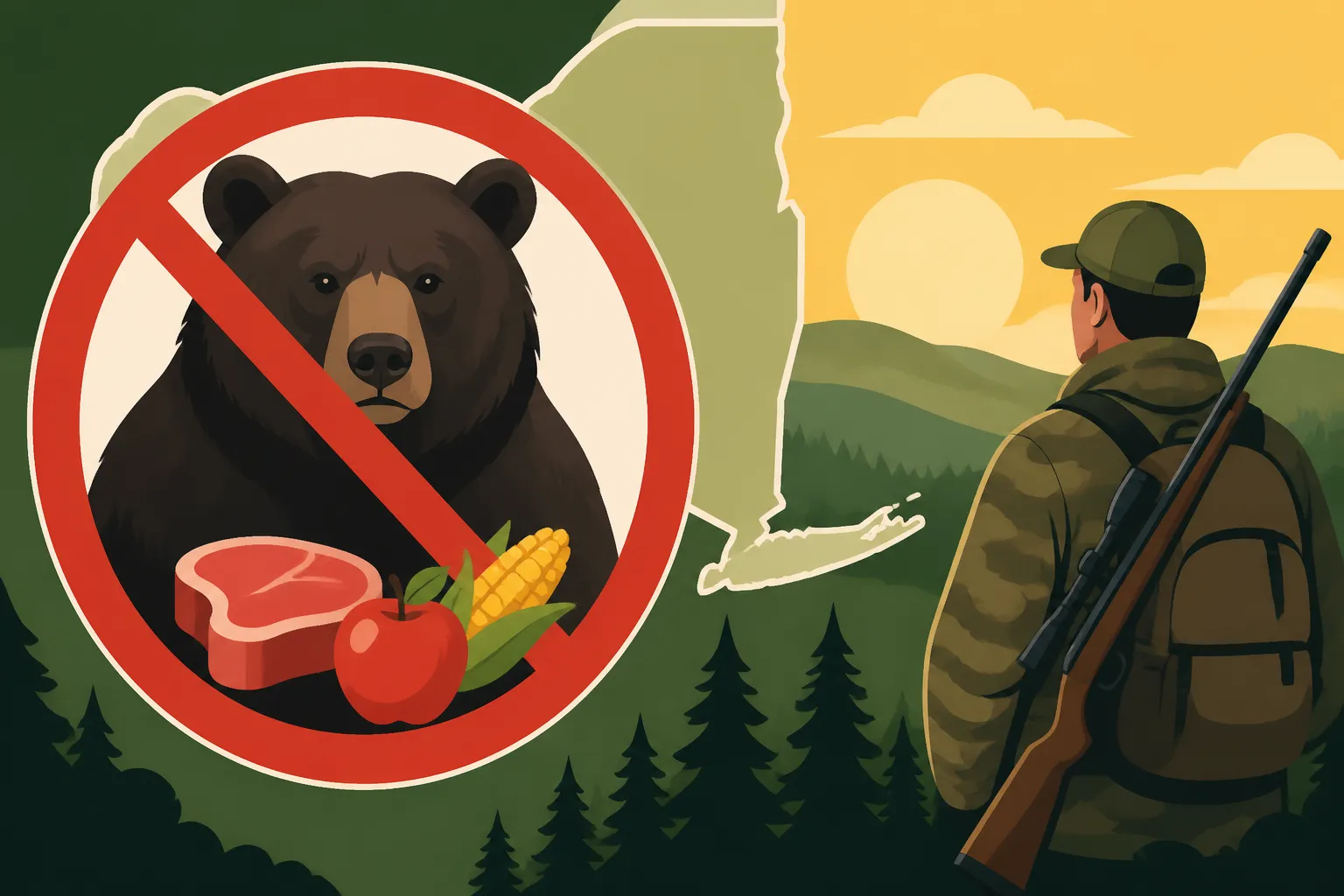
New York’s No-Bait Bear Rule
Hunting black bears in New York without the use of bait can feel like trying to find a needle in a haystack, especially if you're coming from a state where baiting is common practice. It presents a unique set of challenges that can leave even seasoned hunters scratching their heads, wondering how to reliably locate these elusive animals. This comprehensive guide is here to walk you through the ins and outs of New York's no-bait bear rule, delve into effective strategies for scouting and hunting without artificial attractants, and help you find success in the woods.
Understanding New York's No-Bait Rule for Bears
When it comes to bear hunting in New York, one of the most fundamental regulations you need to grasp is the strict prohibition on baiting. It’s not just a suggestion; it’s a firmly enforced rule designed to uphold principles of fair chase and manage human-bear interactions.
The Legal Framework and Why It Exists
New York State, through the Department of Environmental Conservation (DEC), has a long-standing regulation prohibiting the use of bait to hunt bears. This means you cannot place any food, lure, or substance with the intent of attracting bears for the purpose of hunting them. The rationale behind this rule is multifaceted. Primarily, it's rooted in the concept of "fair chase," ensuring that the hunter uses skill and woodsmanship to find and harvest an animal, rather than relying on artificial means to draw it in. It's about maintaining a level playing field between hunter and hunted.
Beyond fair chase, the DEC's stance also considers public safety and wildlife management. Baiting concentrates bears in specific areas, potentially leading to increased human-bear conflicts, habituation to human-provided food, and a higher risk of property damage. It can also disrupt natural foraging patterns and lead to unnatural congregation of bears, which could potentially facilitate disease transmission. While some states like Maine or Wisconsin permit bear baiting, often with strict regulations, New York has chosen a different path to manage its growing bear population.
Defining "Bait" and Common Misconceptions
Understanding what precisely constitutes "bait" under New York law is crucial to avoid accidental violations. Generally, "bait" refers to any food, food product, or any substance that attracts bears. This includes everything from donuts and dog food to apples and corn scattered in the woods. Even certain highly attractive scents derived from food products, if placed with the intent to draw a bear to a specific location for hunting, could be considered baiting. It's a broad definition to prevent any circumvention of the rule.
However, there are important distinctions. Hunting near a natural food source, such as an active apple orchard that you did not plant or maintain, or a natural patch of ripe blueberries, is perfectly legal. You are simply hunting where bears naturally feed. Similarly, using general cover scents or curiosity lures (like certain urine-based deer attractants) that are not food-based and are not designed specifically to draw bears to a stand location, are typically not considered bait. The key is intent and the nature of the attractant. A mineral lick or deer feeder, while potentially drawing deer, could also attract bears; if your intent is clearly for deer and not bears, and no bear-specific attractants are used, it exists in a gray area that requires careful consideration. Hunters should always err on the side of caution and consult the DEC regulations directly, and mapping tools like the GoHunt app can sometimes offer clarity on regulations specific to certain areas, although direct legal advice should always come from the DEC.
Let's consider a couple of hypothetical scenarios: If you're hunting deer and happen to find a bear feeding naturally on acorns near your stand, that's legal. If you brought a bag of apples and spread them out under your stand to attract deer, and a bear comes in, that's illegal baiting. The distinction lies in the deliberate placement of food to attract animals for hunting.
Penalties for Violation
The penalties for violating New York's no-bait rule are significant and are not to be taken lightly. If caught baiting bears, you could face substantial fines, typically ranging from hundreds to even thousands of dollars depending on the severity and number of offenses. Beyond monetary penalties, a conviction can also lead to the suspension or revocation of your hunting license for a period of time, which can be a devastating blow for passionate hunters.
In more egregious cases, or for repeat offenders, there's even the potential for jail time. The long-term impact on your hunting privileges can extend beyond just bear hunting, affecting your ability to pursue other game for years. The DEC takes wildlife violations seriously, and ignorance of the law is generally not considered a valid defense. It’s always better to be overly cautious and ensure all your hunting practices align with the regulations.
The Unique Challenges of No-Bait Bear Hunting
Hunting bears in New York without bait means stepping into a world where traditional methods often fall short. It requires a significant shift in mindset and a deep commitment to understanding bear behavior and the landscape.
Shifting Mindsets from Traditional Bear Hunting
For many hunters, especially those who've hunted in states where baiting is permitted, the idea of hunting bears without it can feel daunting. Baiting often provides a relatively predictable way to draw bears into a specific location, allowing hunters to pattern their movements and set up an ambush. Without that crutch, the hunt transforms. It's no longer about waiting for the bear to come to your prepared spot; it's about going to their natural spots and intercepting them.
This shift demands a more proactive and intuitive approach. You'll need to develop your skills in reading sign, understanding seasonal food preferences, and navigating often challenging terrain. It requires patience, not just in the stand, but in the entire process of scouting and planning. This method often appeals to hunters seeking a more primal, challenging experience, where success feels directly tied to their woodsmanship. It’s about being a hunter, not just a shooter.
Increased Scouting and Field Craft Demands
Without the allure of an artificial food source, your success hinges almost entirely on your ability to find bears where they naturally live, feed, and travel. This means scouting becomes paramount, requiring far more time and effort than if you were simply maintaining a bait station. You're essentially becoming a detective, looking for clues left behind by bears.
Pre-season scouting is absolutely critical. This involves hitting the woods well before the season opens, identifying areas with historical bear activity, and looking for fresh sign. You'll need to understand how weather patterns and natural food cycles influence bear movement. For instance, a bumper crop of beechnuts in one area might pull bears away from a traditional apple orchard in another. Tools like detailed topographical maps and satellite imagery, often available through apps such as GoHunt, become invaluable for identifying potential travel corridors, dense bedding cover, and water sources that bears frequent. The ability to interpret these maps and then verify findings on the ground is a core skill for the New York bear hunter. You’ll be looking for trails, scat, rub trees, and overturned logs – all pieces of the puzzle that tell you where bears are active.
The Role of Natural Food Sources
In a no-bait environment, natural food sources are the lifeblood of your bear hunting strategy. Bears are highly opportunistic omnivores, and their movements are dictated by the availability and abundance of food. Understanding these patterns is key to predicting where bears will be.
During the late summer and early fall, bears are in hyperphagia, a period of intense feeding to pack on fat reserves for hibernation. This is when they are most actively foraging. Key natural food sources in New York include a wide variety of berries, such as blueberries, raspberries, and blackberries, particularly in clear-cuts or open areas. As fall progresses, hard mast crops become dominant. Acorns from oak trees, beechnuts, and hickory nuts are incredibly important. Bears will often concentrate heavily in areas with a good mast crop, sometimes ignoring other food sources entirely. Furthermore, abandoned apple orchards, wild apple trees, and even standing cornfields on agricultural fringes can be magnets for bears, especially in the Catskills or parts of the Southern Tier.
A poor mast crop year, where acorns or beechnuts are scarce, can drastically alter bear patterns. In such years, bears might range wider, seeking out alternative food sources like berries, wild grapes, or even agricultural crops, making them harder to pattern. Conversely, a bumper crop can lead to highly localized concentrations of bears, making scouting in those specific areas incredibly productive. Understanding these dynamics is fundamental to success.
Scouting and Locating Bears Without Bait
Finding bears without the aid of bait demands a keen eye for sign, an understanding of their preferred habitats, and diligent scouting. It's a treasure hunt where the "X" on the map is dictated by nature's bounty and bear behavior.
Identifying Key Bear Habitat and Sign
To consistently find bears, you first need to identify the types of habitat they prefer in New York. Bears thrive in areas with a mix of dense cover for bedding, reliable water sources, and proximity to food. In the vastness of the Adirondack Forest Preserve, this often means deep, mature timber with thick understory, sometimes near swamps or boggy areas. In the Catskill Forest Preserve, bears frequently utilize steep, rugged ridges with rocky outcrops for bedding, often dropping into valleys to feed.
Once you’re in suitable habitat, look for bear sign. Tracks are one of the most obvious indicators—large, distinct footprints often with prominent claw marks. Scat (droppings) can tell you what they’ve been eating and how recently they were in the area. Look for hair on rub trees, which bears use to scratch themselves. Claw marks on trees, especially beech trees, indicate that bears have been climbing to access nuts or rub on the bark. Overturned rocks and torn-up logs are clear signs of a bear foraging for grubs and insects. The freshness of the sign is critical: fresh, moist scat and crisp tracks indicate a bear is currently using the area, while faded tracks or dry, crumbly scat suggest older activity.
Focusing on Natural Food Sources and Travel Corridors
As discussed, natural food sources are paramount. Your scouting efforts should prioritize areas known for consistent hard mast production like oak ridges or beech groves. Early season might see bears targeting berry patches in old logging cuts or regenerating forest. Later in the season, particularly in the Southern Zone, look for standing cornfields bordering dense woods, or wild apple trees that haven’t been picked clean by deer or humans.
Once you've identified feeding areas, the next step is to locate the travel corridors bears use to get between bedding and feeding sites, or between different food sources. Bears often follow the path of least resistance, which can be subtle game trails, old logging roads, or natural funnels created by terrain features like saddles on a ridge or narrow strips of cover between open fields. Using topographic maps and aerial photos, which are readily available through tools like the GoHunt app or the New York DEC's HuntFishNY map tool, can help you identify these potential funnels and pinch points before you even step foot in the woods. By understanding Reading a Ridge for Catskill Deer Movement or Finding Sign in Big Adirondack Timber, you can apply similar principles to bear behavior, often finding that these animals use the same landscape features.
Glassing and Observation Strategies
One of the most underutilized strategies for no-bait bear hunting in New York is disciplined glassing and observation. While often associated with western big game hunting, it can be surprisingly effective in more open sections of New York’s diverse landscapes. This is especially true in early season when bears are still focused on berry patches in clear-cuts, or during the fall around agricultural fields.
Find an elevated position—a hilltop, a ridge overlooking a valley, or a high knoll—that offers a panoramic view of a promising area. Use quality binoculars (8×42 or 10×42 are excellent choices, see Binocular Power for Timber Hunting) or a spotting scope to slowly and meticulously scan for movement during the early morning and late evening hours. Bears, especially when feeding, can be surprisingly visible against the background. Patience is key; spend significant time picking apart every shadow and patch of cover. Repeating this process over several days in promising locations can reveal patterns of bear activity that would otherwise be missed. This strategy works well in areas like the edges of the Adirondacks or the more open country of the Southern Tier where large tracts of forest meet fields or clearings.
Effective Hunting Tactics for No-Bait Situations
Once you’ve done your scouting homework and located areas of bear activity, it’s time to choose the right hunting tactic. Without bait, you're relying on interception, stealth, and sometimes, a bit of calling.
Still-Hunting and Spot-and-Stalk
These active hunting methods are arguably the most challenging but also incredibly rewarding for the no-bait bear hunter. Still-hunting involves moving through the woods at an extremely slow, deliberate pace, taking only a few steps at a time before stopping to scan and listen. The goal isn't to cover ground quickly, but to move so quietly and observe so keenly that you spot the bear before it spots you. This tactic is highly effective in dense cover, along known travel corridors, or through areas of concentrated natural food sources, like a heavy acorn flat. You’re essentially bringing the hunt to the bear.
Spot-and-stalk takes this a step further. After identifying a bear from a distance (perhaps through glassing or spotting fresh sign), the goal is to carefully plan and execute a stalk to get within shooting range. This requires exceptional wind awareness, a silent approach, and the ability to navigate difficult terrain without alerting the animal. While often tough in the thick woods of New York, it can be successful around the edges of large fields, clear-cuts, or in more open timber. Both methods demand absolute focus, excellent woodsmanship, and strict adherence to scent control to avoid giving yourself away. You might also want to read up on general principles of Still-Hunting Catskill Ridges which apply well to bears.
Stand Hunting Over Natural Food Sources
While baiting is illegal, strategically positioning yourself over a natural food source is a classic and highly effective no-bait tactic. This involves identifying areas with abundant natural foods that bears are actively utilizing, such as a wild apple orchard, a productive oak ridge, or a stand of beechnuts. Once an active feeding area is confirmed, you can set up a treestand or a ground blind nearby, ensuring your setup provides concealment and offers a clear shot opportunity.
The key to success here is meticulous scouting to verify current activity. Bears can quickly deplete a food source or move on if disturbed. Consider prevailing winds, access routes to and from your stand, and entry/exit strategies that won't spook bears. Having multiple stand locations ready for different wind directions or shifting food availability can dramatically increase your odds. For those hunting public land, remember to check specific WMA or Forest Preserve rules regarding permanent stands or even temporary setups. For more guidance on specific setups, consider resources like Treestand Setups in Adirondack Hardwoods or Using a Ground Blind on New York Public Land.
Utilizing Bear Calls and Scents Legally
New York's no-bait rule often causes confusion regarding calls and scents. It's crucial to distinguish between legal curiosities or cover scents and illegal food-based attractants. Food-based scents, if designed to lure a bear to a specific spot for hunting, would generally fall under the baiting prohibition. However, non-food-based curiosity scents or cover scents that mask human odor are typically legal. Always read product labels carefully and, when in doubt, consult the DEC.
As for calls, predator distress calls (such as a fawn in distress or a rabbit in distress) can sometimes attract a curious bear. Bears are opportunistic and may investigate such sounds as a potential food source. Bear vocalizations, like cub distress calls, might also pique the interest of a sow or boar. However, the effectiveness of calling for bears in New York is generally lower than in baiting scenarios, and it requires careful timing and understanding of bear behavior. It’s an advanced tactic that can be a secondary tool in your arsenal, rather than a primary method for drawing in a bear.
Regional Considerations for New York Bear Hunting
New York's bear populations are widespread but vary significantly in density and habitat across different regions. Understanding these regional nuances is vital for tailoring your no-bait strategies.
Adirondack Wilderness Bear Hunting
Hunting black bears in the Adirondack Forest Preserve is often considered the ultimate challenge for a New York hunter. This vast wilderness offers expansive tracts of public land and a truly wild experience, but bears here generally have lower densities and larger home ranges compared to other parts of the state. Success in the Adirondacks often comes down to covering vast amounts of ground, focusing on areas away from popular trails, and embracing a backcountry hunting style.
Look for natural funnels created by terrain, saddles between mountain peaks, and areas with concentrated mast crops. Water sources like remote ponds or bogs can be key, especially in drier years. Bears here are truly wild and wary, so extreme stealth, scent control, and a solid understanding of wind and thermals are paramount. A multi-day hunt with a pack full of essential gear, potentially venturing into the deeper wilderness areas, is often required. Hunters will find valuable information in Hunting Bears in the Adirondack Interior and can look at tools like GoHunt for detailed topographical maps which are essential for navigating this expansive terrain.
Catskill Bear Hunting Strategies
The Catskill Mountains, another significant bear habitat, often boast higher bear densities than parts of the Adirondacks, making them a popular destination. The terrain is rugged and steep, characterized by hardwood ridges and deep valleys, but often more accessible with a denser road network. Bears here frequently use the same steep slopes for bedding, often descending to feed in valleys or along agricultural fringes that border the preserve.
Successful Catskill bear hunting often involves focusing on these steep ridges and the transition zones where hardwoods meet hemlock thickets. Look for areas with abundant mast crops like oak and beech, and don't overlook areas near wild apple trees or even unharvested cornfields bordering public land. Spot-and-stalk tactics can be effective when bears are feeding in more open areas, while still-hunting the dense cover along the ridges or in drainage bottoms can yield results. For specific tactics, consider exploring Hunting Bears Without Bait in the Catskills which offers deep dives into regional strategies, or Spot-and-Stalk Tactics for Catskill Bears.
Western New York and Southern Tier Opportunities
While the Adirondacks and Catskills are the traditional strongholds, black bears have been expanding their range significantly into Western New York and parts of the Southern Tier. These areas often feature a mosaic of agricultural lands, woodlots, and state forests. Bear populations here might be less dense than in the core ranges, but opportunities certainly exist, particularly during the early archery and muzzleloader seasons.
In these regions, your strategy should heavily lean on identifying where bears are interacting with agricultural areas. Cornfields, soybean fields, and private orchards can be massive attractants. Public land hunting might involve focusing on larger state forest blocks adjacent to these agricultural zones, looking for bear sign along field edges and within the timber. Building relationships with landowners for access to private land can also open up significant opportunities. Always check with the local DEC offices for specific areas of increasing bear activity. Understanding late-season food sources like Hunting a Standing Cornfield in Farm Country can be highly beneficial here.
Here's a table comparing common no-bait bear hunting tactics:
| Tactic | Terrain Suitability | Required Skill Level | Equipment Considerations | Best Use Cases |
|---|---|---|---|---|
| Still-Hunting | Dense cover, mixed hardwoods, rolling hills | High: Stealth, observation, woodsmanship | Light gear, good boots, quiet clothing, binoculars | Moving through dense cover, along travel corridors |
| Spot-and-Stalk | More open timber, clear-cuts, field edges | High: Glassing, stealth, wind reading, judgment | Quality binoculars/spotting scope, rangefinder, silent gear | Bears feeding in visible areas, distant sightings |
| Stand Hunting | Near natural food sources (mast, apples), travel routes | Moderate: Scouting, patience, scent control | Treestand or ground blind, scent control, binoculars | Intercepting bears at predictable feeding/travel sites |
| Calling | Variable, often best as a secondary tactic | Moderate: Call proficiency, understanding bear response | Bear/predator calls | Drawing curious bears into range, secondary attractant |
Disclaimer
The information provided in this guide is for general informational purposes only and is not a substitute for official regulations. Hunting laws and regulations in New York State are subject to change. Always consult the current New York State Department of Environmental Conservation (DEC) hunting regulations guide and any local ordinances before heading into the field. Ensure you understand and comply with all applicable rules to ensure a safe and legal hunt.