New York Bear Tooth Reporting Rule
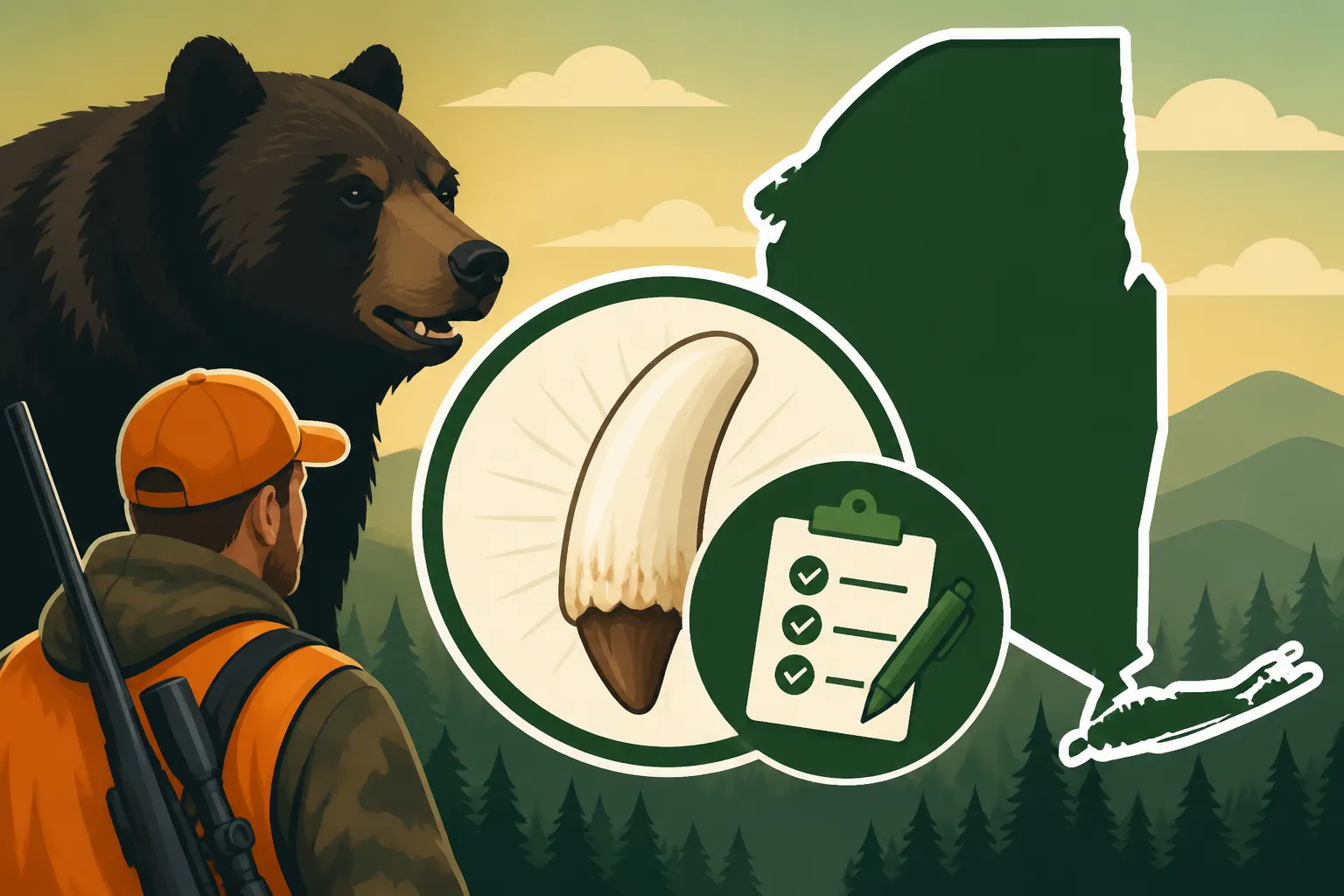
You've just wrapped up a successful bear hunt in New York, the adrenaline is still coursing, and you're already dreaming of that delicious bear roast. But amidst the excitement and the practicalities of field dressing and getting your game home, there's one crucial step often overlooked or misunderstood: the mandatory bear tooth reporting requirement. This guide will walk you through exactly what you need to do, why it's so important for the future of bear hunting in our state, and how to make sure you comply with the New York Department of Environmental Conservation (DEC) regulations.
Understanding New York's Bear Tooth Reporting Requirement
Successfully harvesting a black bear in New York is a huge accomplishment, something many hunters spend years dreaming of. But the hunt doesn't truly end until all the reporting requirements are met, and for bears, that includes submitting a tooth. This isn't just bureaucratic red tape; it's a vital component of how the DEC manages our thriving bear population. Ignoring this step can actually hinder conservation efforts and lead to penalties, so understanding its purpose is the first step toward proper compliance.
Why the DEC Collects Bear Teeth
Imagine trying to manage a forest without knowing how old the trees are, or if they're healthy enough to reproduce. It would be a shot in the dark, right? That's essentially what wildlife biologists would face without the age data derived from bear teeth. The New York DEC mandates tooth collection for every harvested bear because these tiny samples provide a wealth of information critical for sound management decisions.
Each tooth acts like a biological time capsule, offering insights into the bear's age, and by extension, the overall health and structure of the bear population. By analyzing these teeth, biologists can determine the age distribution of harvested bears, understand survival rates, and even get a clearer picture of reproductive success within different regions. This data helps them determine if the bear population is growing, stable, or declining, and whether current hunting seasons and bag limits are sustainable. It's a cornerstone of responsible wildlife management, ensuring that future generations of hunters will also have the opportunity to pursue these incredible animals. Without this input from hunters, managing New York's Black Bear Population would be significantly more challenging, relying on far less precise estimates.
The Mandatory Nature of the Rule
It's easy to think of certain reporting as optional, or perhaps something that only applies if you get a really big bear. Let me be clear: the bear tooth reporting rule in New York is absolutely mandatory for every harvested bear, regardless of size, sex, or where it was taken. This isn't a suggestion or a request; it's a legal requirement that comes with your hunting license.
The DEC includes specific instructions in the annual hunting regulations guide, and it's your responsibility as a hunter to be aware of and follow these rules. Failing to report the tooth, or submitting an incorrect tooth, can result in fines and other penalties, similar to not reporting your harvest online. While no one wants to think about the legal ramifications after a successful hunt, it’s a necessary part of participating in wildlife management. This commitment from hunters is what makes New York's conservation efforts so effective, providing critical data that directly influences how we manage New York Bear Harvest Trends and future opportunities for hunters.
How to Properly Collect a Bear Tooth Sample
So, you've got your bear, you've reported the harvest online via the HuntFishNY app, and now it's time for the tooth. For many new bear hunters, or even seasoned deer hunters venturing into bear territory for the first time, this can feel a bit daunting. Don't worry, it's a straightforward process once you know what to look for and how to approach it. The key is knowing which tooth to extract and having the right (and often improvised) tools on hand.
Locating the Correct Tooth (First Premolar)
The first step is arguably the most crucial: identifying the correct tooth. The DEC specifically requires the first premolar from the upper jaw, on either side. Why this particular tooth? Because the first premolar is generally less subject to wear and tear from chewing compared to the molars, making its cementum annuli (the "growth rings" that determine age) much clearer and easier for biologists to read accurately.
To find it, carefully open the bear's mouth and look along the upper jaw, behind the canine (the large, pointy "fang" tooth) and before the larger grinding molars. There will be a small gap or a very tiny, often somewhat blunt tooth right behind the canine. This is your target – the first premolar. It's important to differentiate it from the large canine, which is unsuitable for aging, and the molars further back. Sometimes, it can be quite small and almost hidden, especially in younger bears, so take your time and examine the jaw carefully.
The Extraction Process: Tools and Technique
Once you've identified the first premolar, it's time for extraction. You don't need fancy dental tools for this. In fact, many hunters successfully use everyday items. Good, sturdy pliers are often the preferred tool. Some hunters also find a flathead screwdriver useful to help gently pry around the base of the tooth before applying leverage with pliers.
Here’s a step-by-step approach:
- Gather Your Tools: A pair of needle-nose or lineman's pliers, and potentially a flathead screwdriver or a sturdy knife.
- Access the Tooth: Open the bear's mouth wide. If the jaw is stiff, you might need to use a stick or a piece of wood to prop it open.
- Loosen the Gum Line: Using a sharp knife, carefully cut around the gum line of the first premolar to help loosen it. Be gentle and work slowly to avoid damaging the tooth or cutting yourself.
- Wiggle and Pry: With the screwdriver or knife, gently try to loosen the tooth in its socket. Wiggle it back and forth slightly to break any remaining connective tissue.
- Extract with Pliers: Once you feel some give, use your pliers to grip the tooth firmly. Apply steady, upward pressure, twisting slightly from side to side. The goal is to extract the tooth cleanly, with as much of the root intact as possible. Patience is key here; don't yank violently, as you could break the tooth. If you're struggling, especially if the bear has been dead for a while and rigor mortis has set in, sometimes warming the jaw (if conditions allow, such as bringing the head indoors for a short period) can make it a bit more pliable.
Once extracted, ensure the tooth is intact, and then set it aside to dry. Do not put it in water or any preservative. You’ll need it clean and dry for submission.
Submitting Your Bear Tooth Sample to the DEC
With the tooth successfully extracted, the next phase is packaging and submitting it to the New York DEC. This part is just as critical as the extraction itself, as incorrect packaging or missed deadlines can invalidate your submission. The DEC provides specific envelopes for this purpose, and knowing where to get them and what information to include is essential.
Acquiring and Completing the Reporting Envelope
The New York DEC provides special postage-paid envelopes specifically for bear tooth submissions. These are usually available at license issuing agents, regional DEC offices, and often at official bear check stations that operate during peak New York Bear Season by Zone. Sometimes, they are even included with your bear tag when you purchase your license. It's a good idea to grab one or two when you get your license, just in case.
On the envelope, you'll find spaces for crucial information. You must fill this out accurately and completely. This typically includes:
- Your hunting license number.
- The date of harvest.
- The Wildlife Management Unit (WMU) where the bear was taken.
- The sex of the bear (male or female).
- Your contact information (name, address, phone number, email) in case the DEC needs to reach you or send you results.
Double-check everything before sealing the envelope. This information directly links the tooth to your specific harvest report and provides context for the biological data. If you can't find an official envelope, or if you're using a digital mapping tool like GoHunt that helps you identify WMUs, you might still need to acquire a physical envelope for mailing. In a pinch, you can sometimes use a plain envelope, but you’ll need to clearly label it and pay for postage yourself, addressing it to the DEC wildlife pathology unit.
Mailing Instructions and Deadlines
Once the tooth is dry and the envelope is fully and accurately completed, it’s ready for submission. The postage-paid envelopes usually have the correct address pre-printed, directing it to the DEC's wildlife pathology lab. If you're using your own envelope, you'll need to address it to:
NYSDEC Wildlife Pathology Unit
108 Game Farm Road
Delmar, NY 12054
The deadline for submission is important. The general rule is to submit the tooth within 10 days of harvest. This ensures the data is collected promptly and helps the DEC compile timely information. Don't procrastinate! Stick the envelope in the mail as soon as possible after cleaning and drying the tooth. Consider sending it from a post office, especially if you're unsure about local collection points. While it's rare, a lost tooth sample is a lost piece of valuable data, so ensuring secure mailing is part of your responsibility as a hunter. This is similar to the care taken when completing New York Deer Reporting Requirements, where timely and accurate information is always best.
Common Challenges and Troubleshooting
Even with the best intentions and preparations, unexpected issues can arise during the tooth extraction and submission process. Perhaps the tooth is incredibly stubborn, or you find yourself without the proper envelope. These are common frustrations, but thankfully, there are usually straightforward solutions that can help you comply with the New York bear tooth reporting rule.
Dealing with Difficult Tooth Extraction
Sometimes, that first premolar can be remarkably difficult to remove. This is especially true if the bear has been down for a while and rigor mortis has fully set in, or if it's an older, tougher bear with deeper-set teeth.
Here are a few tips if you're struggling:
- Patience and Leverage: Don't rush it. Apply steady, increasing pressure rather than quick, violent yanks. Try wiggling the tooth back and forth while applying upward pressure with the pliers. The goal is to break the periodontal ligament that holds the tooth in place.
- Warmth: If the jaw is completely rigid, gently warming the area can sometimes help. This might mean bringing the bear's head indoors for a short period (if practical and hygienic) to let it warm up slightly, or even using a warm, damp cloth if you're still in the field.
- Sharpen Your Knife: A sharp utility knife to score the gum line more deeply can make a big difference. Just be extra careful not to cut yourself or damage the tooth.
- Alternative Tools: While pliers are standard, some hunters have success with vice grips for better purchase, or even a small hammer and chisel (used with extreme care and gentleness to just tap the base of the tooth) to loosen it.
- Seek Assistance: If you've tried everything and the tooth simply won't budge, don't give up! Your local butcher or taxidermist often has specialized tools or more experience with animal anatomy. Many are happy to help a fellow hunter, sometimes for a small fee, to ensure you meet the reporting requirements. It’s always better to get help than to forgo the submission entirely.
Missing or Damaged Envelopes
It happens. You get home, excited, and realize you either never picked up a bear tooth envelope, or the one you had got wet and damaged on your Packs for a Backcountry Adirondack Hunt. Don't let this be an excuse not to submit!
Here's what to do:
- Check DEC Offices/License Agents: Your first stop should be any local DEC regional office or an authorized license issuing agent. They usually have a supply of envelopes.
- Print Online Forms: If you can't get an official envelope quickly, the New York DEC website (www.dec.ny.gov) often has printable forms or instructions on what information to include on a standard envelope. You can print out the relevant details and clearly write them on a plain mailing envelope.
- Create Your Own: If all else fails, take a standard mailing envelope. Clearly write "NYSDEC Bear Tooth Sample" on the outside. Include all the mandatory information (your name, address, license number, harvest date, WMU, sex of bear) on a piece of paper inside the envelope, along with the dried tooth. Make sure to address it to the NYSDEC Wildlife Pathology Unit, 108 Game Farm Road, Delmar, NY 12054, and apply sufficient postage. While the official envelopes are postage-paid, your DIY version will require a stamp. The important thing is that the tooth and its associated data reach the DEC. Tools like GoHunt can help you quickly pull up WMU information if you need to double-check boundaries for your custom envelope.
The Science Behind Bear Age Estimation
You might wonder, how exactly does a tiny tooth tell scientists the age of a massive black bear? It's not magic, but rather a fascinating biological process that mirrors the way we determine the age of trees. Understanding this science helps underscore why your diligent reporting of this small tooth is so vital to wildlife management in New York.
Cementum Annuli Analysis
The secret lies in a material called cementum, which covers the root of a bear's tooth. Throughout a bear's life, layers of cementum are deposited annually, similar to the rings you see in a tree trunk. During periods of active growth (typically spring and summer), a broad, light-colored layer is laid down. During periods of slower growth or dormancy (like winter denning), a thinner, darker, more distinct line forms. These darker lines are called "annuli."
Wildlife biologists at the DEC, or specialized labs, carefully extract the collected premolar, section it into very thin slices, and then stain these slices. Under a powerful microscope, they can count these distinct annuli, with each annulus representing one year of the bear's life. By counting these "growth rings," they can accurately determine the exact age of the bear at the time of harvest. This technique is incredibly reliable and forms the backbone of bear population demographics globally, not just here in New York.
What the Data Tells Wildlife Biologists
The individual age data from each submitted tooth is then compiled into a massive dataset. This collective information allows DEC biologists to paint a detailed picture of New York's Black Bear Population and make informed decisions about its management. For example:
- Population Structure: They can determine the age distribution – are there many young bears, a good mix of adults, or an unusually high number of older animals? This helps them understand the health and stability of the population.
- Reproductive Success: By looking at the age of female bears and harvest data, they can infer at what age sows are typically reproducing and how successful those reproductive cycles are. A consistent lack of younger bears in the harvest might signal issues with cub survival or recruitment.
- Mortality Rates: Comparing age classes allows biologists to estimate annual survival and mortality rates, helping them fine-tune hunting seasons and bag limits to ensure sustainable harvest levels. For instance, if the average age of harvested bears drops too low, it might indicate over-harvesting of younger animals, prompting a review of regulations.
- Regional Differences: Data can be analyzed by WMU or region, revealing localized trends. Perhaps bears in the Catskills are aging differently than those in the Adirondacks, requiring distinct management strategies for areas like Hunting Bears Without Bait in the Catskills versus Hunting Bears in the Adirondack Interior.
This vital feedback loop, fueled by hunter cooperation, is what allows the DEC to manage black bears in New York responsibly, protecting the species while providing continued hunting opportunities.
Beyond the Tooth: Other Bear Reporting Requirements
While the bear tooth is a crucial piece of the puzzle, it's just one part of your overall responsibility as a New York bear hunter. There are other mandatory steps you need to take after harvesting a bear, all designed to contribute to the DEC's comprehensive wildlife management efforts. Think of it as a complete package of ethical and legal obligations that ensure the sustainability of our resources.
Mandatory Online Harvest Reporting
Before you even think about extracting that tooth, the very first thing you must do after harvesting a black bear in New York is report the kill. This is a mandatory requirement for all big game and turkey harvests. You can do this quickly and easily online through the DEC's electronic harvest reporting system, often accessed via the HuntFishNY app or their website.
When reporting, you'll need your license number, the date and time of kill, the Wildlife Management Unit (WMU), and the sex of the bear. This initial report is critical because it provides real-time data on harvest numbers, allowing the DEC to track overall success rates and population trends throughout the season. Failure to report your harvest electronically is a violation and can lead to penalties. So, even if you’re tired after dragging out a bear, make that quick call or online submission. This immediate data helps the DEC monitor New York Bear Harvest Trends and react if necessary.
Hunter Cooperation for Bear Management
Beyond the specific reporting tasks, your role as a hunter extends to a broader partnership in wildlife conservation. Every piece of data you provide, from your initial harvest report to that tiny premolar, contributes to a robust understanding of New York’s black bear population. This spirit of cooperation is foundational to modern wildlife management, recognizing that hunters are not just consumers of wildlife, but active participants in its stewardship.
By diligently following all reporting requirements, you're directly helping to:
- Ensure Sustainable Seasons: The data influences decisions on hunting seasons, bag limits, and specific regulations, guaranteeing that hunting remains a sustainable activity.
- Monitor Population Health: Age structures derived from teeth help identify potential issues like disease outbreaks, habitat changes, or reproductive challenges before they become critical.
- Inform Research: Your submissions aid ongoing research projects, helping biologists learn more about bear behavior, diet, and interactions within their ecosystems.
- Maintain Public Trust: Demonstrating a commitment to responsible hunting and conservation helps maintain public support for hunting as a vital management tool.
So, when you take the time to properly extract that tooth, fill out the envelope, and mail it in, remember you're doing much more than just checking a box. You're actively participating in the long-term health and prosperity of New York's magnificent black bear resource, ensuring that the thrill of a bear hunt will be available for generations to come, much like understanding the value of proper Shot Placement on a New York Black Bear contributes to a humane harvest.
Bear Tooth Reporting Checklist
To make sure you've covered all your bases after harvesting a bear, use this handy checklist.
| Step | Description | Due Date | Notes |
|---|---|---|---|
| 1. Harvest Report | Immediately report your bear harvest online via the NYSDEC HuntFishNY app or website. Provide license number, date/time, WMU, and sex of bear. | Immediately after harvest | Mandatory for all big game. Failure to report is a violation. |
| 2. Locate the Tooth | Identify the first premolar from the upper jaw, located behind the canine and before the molars. (Either side is acceptable). | During field dressing or soon after | Crucial for accurate age determination. Avoid other teeth. |
| 3. Extract the Tooth | Using pliers and a sharp knife (to loosen gum), carefully extract the tooth with as much root intact as possible. Patience is key. | During field dressing or soon after | Can be challenging; get help from a butcher/taxidermist if needed. |
| 4. Dry the Tooth | Allow the extracted tooth to air dry thoroughly. Do not store in water or preservatives. | 1-2 days after extraction | Ensures proper preservation for analysis. |
| 5. Obtain Reporting Envelope | Get an official postage-paid bear tooth envelope from a DEC office, license agent, or bear check station. If unavailable, use a plain envelope. | As soon as possible | Grab a few when you buy your license if possible. |
| 6. Complete Envelope Information | Fill out all required fields on the envelope/paper: License #, Harvest Date, WMU, Sex of Bear, Your Name & Contact Info. | Before mailing | Accuracy is vital. Double-check all details. GoHunt can assist with WMU info. |
| 7. Mail the Tooth | Place the dried tooth in the completed envelope and mail it to the NYSDEC Wildlife Pathology Unit, 108 Game Farm Road, Delmar, NY 12054. | Within 10 days of harvest | Ensure proper postage if using a non-official envelope. |
Disclaimer
The information provided in this guide is for general informational purposes only and is not intended as legal advice. Hunting regulations, including those for New York bear tooth reporting, can change. Always consult the most current New York State Department of Environmental Conservation (DEC) hunting regulations guide or visit the official DEC website for the most accurate and up-to-date information before participating in any hunting activities.