Duck Migration Timing Through New York
There’s nothing quite like standing in a chilly New York marsh, the air crisp with the promise of autumn, only to find the skies eerily quiet when you expected flocks of ducks. It's a common frustration among waterfowlers – the ducks aren't on a fixed schedule, and pinning down their migration timing can feel like trying to nail jelly to a wall. This guide is here to help you unravel the mysteries of duck migration through New York, offering insights into what drives these birds and how you can better anticipate their movements for more successful hunts.
The Atlantic Flyway and New York's Waterfowl Zones
New York isn't just a place where ducks pass through; it's a critical pit stop, a refueling station, and even a wintering ground for countless migratory birds. Understanding our place in the grand scheme of things, alongside the state's specific waterfowl zones, is the first step to cracking the migration code.
New York's Position on the Grand Migration Highway
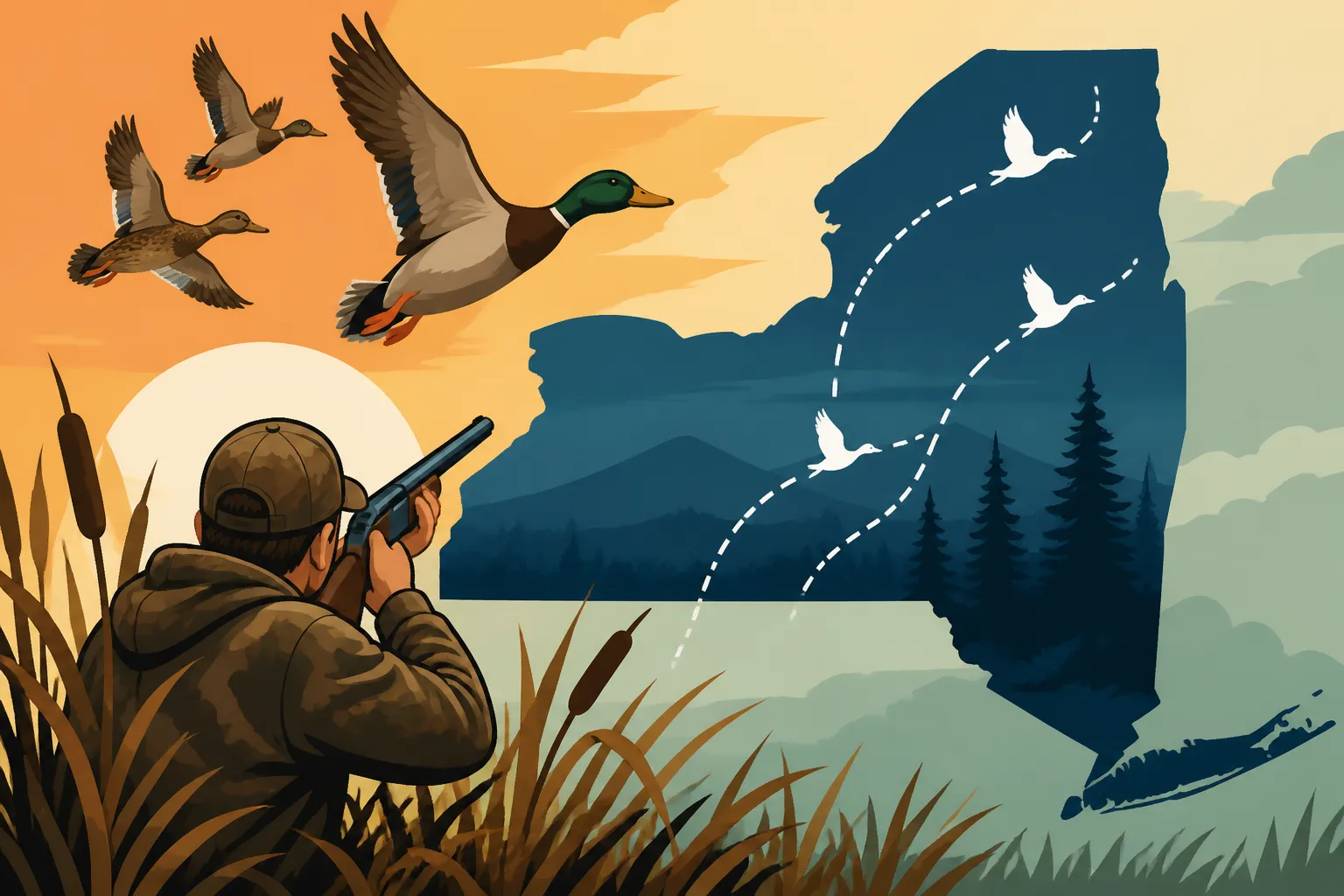
Think of the Atlantic Flyway as a massive, invisible superhighway stretching from the Arctic breeding grounds all the way down to the Caribbean and South America. New York sits right smack in the middle of this incredible migratory route, making us a prime location for witnessing spectacular waterfowl movements. Every fall, millions of ducks, geese, and other waterfowl follow this ancestral path, funneling through our rivers, lakes, and coastal marshes. They're driven by instinct, but also by very real factors like dropping temperatures and diminishing food sources up north. A good understanding of how the flyway functions is crucial, as New York is a vital link in this chain. We're not just waiting for birds; we're part of a much larger natural phenomenon that plays out right above our heads. If you've ever wondered why some years seem better than others, it often comes down to how the overall flyway conditions influence bird movement. You can dive deeper into the broader picture by reading about New York Waterfowl on the Atlantic Flyway.
Understanding New York's Distinct Waterfowl Zones
To manage this complex migration and provide hunting opportunities, New York is divided into several distinct waterfowl zones: the Western Zone, Northeastern Zone, Southeastern Zone, and the Long Island Zone. Each of these zones has its own unique landscape, water bodies, and therefore, its own slightly different migration patterns and hunting seasons. For instance, the large open waters of the Great Lakes and Finger Lakes in the Western Zone will attract different species and hold birds differently than the smaller marshes and agricultural fields of the Northeastern Zone. The Southeastern Zone, with its proximity to urban areas, often sees a mix of resident birds and early migrants, while Long Island's coastal environment offers unique opportunities for sea ducks and diver species later in the season. These zones are not just arbitrary lines on a map; they reflect distinct ecological regions that influence how ducks utilize the landscape. Familiarizing yourself with these boundaries and their specific characteristics is vital for predicting where ducks might be and when. For a comprehensive overview, checking out New York Waterfowl Zones and Seasons can provide the detailed calendar information you need for planning your hunts.
Key Environmental Factors Driving Duck Migration
Ducks aren't checking a calendar when they decide to migrate; they're responding to cues from their environment. Temperature, food, water, and even how much hunting pressure they're feeling all play a role in when and where they choose to move. Understanding these triggers is paramount to predicting their arrival.
The Role of Weather: Cold Fronts and Freeze-Up
The most significant driver of duck migration, without a doubt, is the weather. A strong cold front pushing down from Canada is like a green light for birds to start moving. These fronts bring plummeting temperatures, often followed by ice and snow, which signals to ducks that their northern feeding and resting grounds are becoming inhospitable. When ice begins to form on smaller potholes and shallow marshes, ducks are forced to seek larger, still-open water bodies further south. However, not all cold fronts are created equal. Sometimes, we get "false fronts" – a quick dip in temperature followed by a warm-up – which might move some birds, but the real, sustained pushes happen when the mercury consistently drops and doesn't rebound. Pay close attention to sustained freezing temperatures and broad ice formation forecasts, particularly for those shallower waters that freeze first. This can indicate a major migration event is imminent, pushing waves of ducks into New York and beyond.
Food Availability and Water Conditions
Even with favorable weather, ducks won't stick around if there's nothing to eat or nowhere suitable to rest. Food availability is a huge factor in migration staging and holdover. In New York, this often means agricultural fields, particularly cut corn and bean fields, which provide high-energy fuel for their journey. Ducks will congregate in these areas, feeding heavily before continuing south. Similarly, the condition of local water bodies is crucial. Are the marshes drying up? Is a major river still flowing freely, or is it starting to skim over with ice? Ducks need open water for resting and security, and if their preferred spots freeze over, they'll relocate. Conversely, an abundance of food and open water can hold birds in an area longer, especially during mild periods. This means scouting specific areas for both food sources and water status can give you a leg up, rather than just waiting for the weather to tell you the birds are coming.
Hunting Pressure and Staging Areas
While weather and food are primary drivers, hunting pressure also plays a significant, localized role in duck movement. Areas that experience heavy hunting pressure can quickly become "burnt out," with ducks opting to move on to quieter, more secure locations. This might mean larger open water refuges, less accessible backwaters, or even simply moving further down the flyway. Ducks are smart; they learn quickly where they are safe and where they are not. Many large lakes and rivers in New York, like segments of the St. Lawrence River or Lake Ontario, act as major staging areas where ducks can gather in vast numbers, often venturing out to feed only in low-light conditions or after the main hunting pressure subsides. Understanding these dynamics is key. If your usual spot is hammered every weekend, consider exploring areas with less pressure or trying different tactics like Layout Blind Hunting Finger Lakes Fields on adjacent agricultural fields where birds might be feeding.
Species-Specific Migration Timelines in New York
Not all ducks are created equal when it comes to migration timing. Different species have different tolerances for cold, different food preferences, and therefore, different schedules for their journey through New York. Knowing who to expect and when can greatly improve your chances.
Early Season Arrivals: Teal, Wood Ducks, and Resident Birds
The early archery and duck seasons in New York often kick off with a flurry of activity from our earliest migrants and resident birds. Green-winged teal, blue-winged teal, and wood ducks are typically the first to move through, often arriving in late September and early October. Blue-winged teal are particularly sensitive to cold and will be among the first to bail out if a strong cold front hits. Wood ducks, with their preference for wooded swamps and creeks, also tend to migrate relatively early, though some will stick around until ice pushes them out. Alongside these migrants, our local, resident mallards and black ducks are active. They haven't made a long journey yet, but they're already wise to hunting pressure. This early window is fantastic for fast-paced action on smaller waters. You'll often find these birds in shallow marshes, beaver ponds, and slow-moving rivers, feeding on emergent vegetation and seeds. Keep an eye on local water levels and acorn crops; these can be huge draws for wood ducks in particular.
Mid-Season Push: Mallards, Black Ducks, and a Mix of Divers
As October gives way to November, New York really starts to see the bulk of the duck migration. This is when the hardy mallards and black ducks from further north begin to pour into the state. They're more tolerant of colder temperatures and can be found in a wider variety of habitats, from agricultural fields to large lakes and rivers. November is often considered the prime time for mallard hunting in many parts of New York, especially as the acorns are gone and they turn their attention to cornfields. Simultaneously, a variety of diver ducks also start making their appearance. Ring-necked ducks, buffleheads, and canvasbacks begin arriving, often favoring larger, deeper bodies of water like the Great Lakes or the Finger Lakes. Scaup, often called bluebills, will follow, especially in significant numbers on Diver Ducks on Eastern Lake Ontario. These birds are fast, challenging targets, and understanding their preferred habitats—often wide-open water where they can dive for food—is essential. This mid-season window offers incredible diversity for hunters willing to adapt their tactics.
Late Season Opportunities: Hardier Species
By late November and December, things get serious. Smaller, shallower waters have likely frozen solid, pushing almost all the remaining ducks onto larger rivers, lakes, and coastal areas that remain open. This is when you'll find the toughest, most cold-hardy species. Black ducks, still present in good numbers, become even more wary. Goldeneyes and common mergansers become more prevalent, often thriving in the coldest conditions. These birds are less pressured in many areas simply because fewer hunters are willing to brave the bitter cold. This late season can be incredibly rewarding, but it demands dedication and tough gear. It's also the time when significant numbers of migrating Canada geese, in addition to our resident birds, are moving through, offering a different kind of challenge. While this article focuses on ducks, understanding the movements of geese is also part of the late-season waterfowl picture; exploring topics like Canada Geese on Long Island can provide context for these larger birds. Look for areas with consistent open water, flowing currents, and accessible food sources, as these will be the last refuges for ducks trying to brave the New York winter.
Strategies for Tracking and Adapting to Migration Patterns
You can't control the weather or the ducks, but you can control your preparation and adaptability. Being flexible and using the tools at your disposal will make you a more successful waterfowler in the ever-changing world of duck migration.
Local Observation and Pattern Recognition
One of the most valuable tools in a waterfowler's arsenal isn't found in a catalog – it's your eyes, your experience, and your notebook. Spending time observing the local conditions, even when you're not hunting, is incredibly valuable. How are the water levels? What food sources are abundant? Where are the birds resting, and what routes are they taking to feed? Keep a journal, noting weather conditions, wind direction, time of day, and what species you saw and where. Over time, you'll start to recognize patterns specific to your hunting grounds. Maybe a certain wind direction always brings birds off the big lake into a sheltered cove. Perhaps a particular field is only used after a heavy rain. Local knowledge, gained through countless hours in the field, is truly irreplaceable and will always be your most reliable asset.
Leveraging Technology and Resources
While local observation is king, modern technology and resources can certainly give you an edge. Weather apps with radar and detailed forecasts are essential for predicting incoming cold fronts and wind shifts. Regional waterfowl reports, often provided by state agencies or local hunting clubs, can offer insights into what other hunters are seeing across broader areas of New York. Websites and apps like GoHunt can provide valuable mapping layers, property boundaries, and even historical weather data that might help you identify potential staging areas or feeding locations. While not specifically for waterfowl, the general mapping capabilities are useful. These tools, when combined with your on-the-ground scouting, can help you make more informed decisions about where to hunt and when. Don't forget the official state resources either; the Using the New York HuntFishNY Map Tool can be a great way to identify public access points and WMA boundaries that might hold birds.
Flexibility in Your Hunting Approach
The most successful duck hunters are rarely one-trick ponies. They understand that migration is dynamic, and what worked last week might not work today, or even tomorrow. This means being flexible with your hunting approach. If the ducks are showing a preference for small, sheltered potholes, don't insist on hunting the big lake. If they're not responding to loud calling, try a subtler approach. Be prepared to change your decoy spread, your calling cadence, or even your hunting location entirely based on what the birds are telling you. This adaptability might mean hauling your gear into a different marsh, setting up in a standing cornfield instead of a pothole, or even shifting your focus to different species as the migration progresses. Whether it’s Hunting the Lake Champlain Marshes or chasing geese in a cut field, being open to new strategies is key. The ducks are on their schedule, not ours, and the more we can adjust to their movements and preferences, the more consistently we'll find success.
Disclaimer
This article is for general informational purposes only and does not constitute professional advice. Laws, prices and regulations vary by location and change over time. Consult a qualified professional for guidance on your specific situation.