Reporting a Poacher in New York
Few things get a New York hunter's blood boiling quite like witnessing someone disrespecting our shared wildlife resources. Poaching isn't just breaking the law; it's a slap in the face to every ethical hunter who buys a license, follows regulations, and works to conserve our game. If you've ever seen suspicious activity and wondered what to do, this guide is for you. We'll walk through exactly how to report a poacher in New York and ensure our wild places remain healthy and fair for all.
The Far-Reaching Impact of Poaching in New York
When we talk about poaching, it's not just about one deer taken out of season or a turkey shot from the road. It's a systemic issue that chips away at the foundation of wildlife management and the reputation of responsible hunters. Every illegal act impacts the delicate balance we strive to maintain in New York's diverse ecosystems.
Undermining Conservation Efforts and Wildlife Health
Think about all the effort that goes into managing New York's deer herd, turkey populations, and other game species. The DEC (Department of Environmental Conservation) relies on scientific data, harvest reports, and careful planning to set season dates, bag limits, and allocate "New York Deer Management Permits Explained". Poaching throws a wrench into this entire system. When animals are taken illegally, it skews population data, making it harder for biologists to accurately assess herd health and growth. For instance, if a poacher takes several does during a closed season, it directly impacts the reproductive potential of that local deer population, meaning fewer fawns are born the following spring.
Beyond just numbers, poaching often involves methods that are inherently unsustainable and unethical. Shooting animals from vehicles, hunting at night with spotlights outside of legal "New York Legal Shooting Hours" for predator hunting, or exceeding bag limits directly depletes resources that legal hunters depend on. The money generated from hunting licenses and tags directly funds these crucial conservation initiatives, from habitat improvement to wildlife research. When individuals poach, they're essentially stealing from this funding pool, leaving less for the programs that benefit all wildlife. It's a double whammy: they're taking animals unlawfully and denying funds that would help those same animals thrive.
Threatening Fair Chase and Ethical Hunting Principles
For many of us, hunting is more than just harvesting an animal; it's about connecting with nature, challenging ourselves, and adhering to a strict code of ethics and fair chase. This philosophy is deeply ingrained in what we learn through "New York Hunter Education Requirements". When news of poaching breaks, it casts a shadow over the entire hunting community, fueling negative stereotypes and providing ammunition for anti-hunting narratives. It's incredibly frustrating to spend countless hours "Scouting New York Public Land Before Season", perfecting your technique, and following every rule, only to see someone else cheat the system.
Imagine waking up early, sitting in a freezing treestand in December, only to find out a trophy buck you've been watching was spotlighted and left to rot down the road by a poacher. This kind of disrespect for the game and for the rules we all agree to abide by is infuriating. It makes it harder for legal hunters to find success, and it erodes public trust in hunting as a legitimate and ethical conservation tool. Reporting these violations isn't just about upholding the law; it's about protecting the integrity of our passion and ensuring a future for ethical hunting in New York. We must stand together as a community to condemn these illegal acts and ensure that those who violate the law are held accountable.
Direct Steps to Reporting a Poacher
So, you've witnessed something suspicious, or you've found evidence of illegal activity. What's the very first thing you should do? Your safety is always paramount, but once you're out of harm's way, knowing the right channels to report can make all the difference.
Contacting the DEC Environmental Conservation Police (ECOs)
The Environmental Conservation Police Officers (ECOs) are the dedicated law enforcement arm of the New York State Department of Environmental Conservation (DEC). These are the men and women specifically trained to investigate and enforce environmental and wildlife laws. For most poaching incidents that are not an immediate threat to life or property, your primary contact should be the DEC's 24/7 Dispatch and Law Enforcement Hotline.
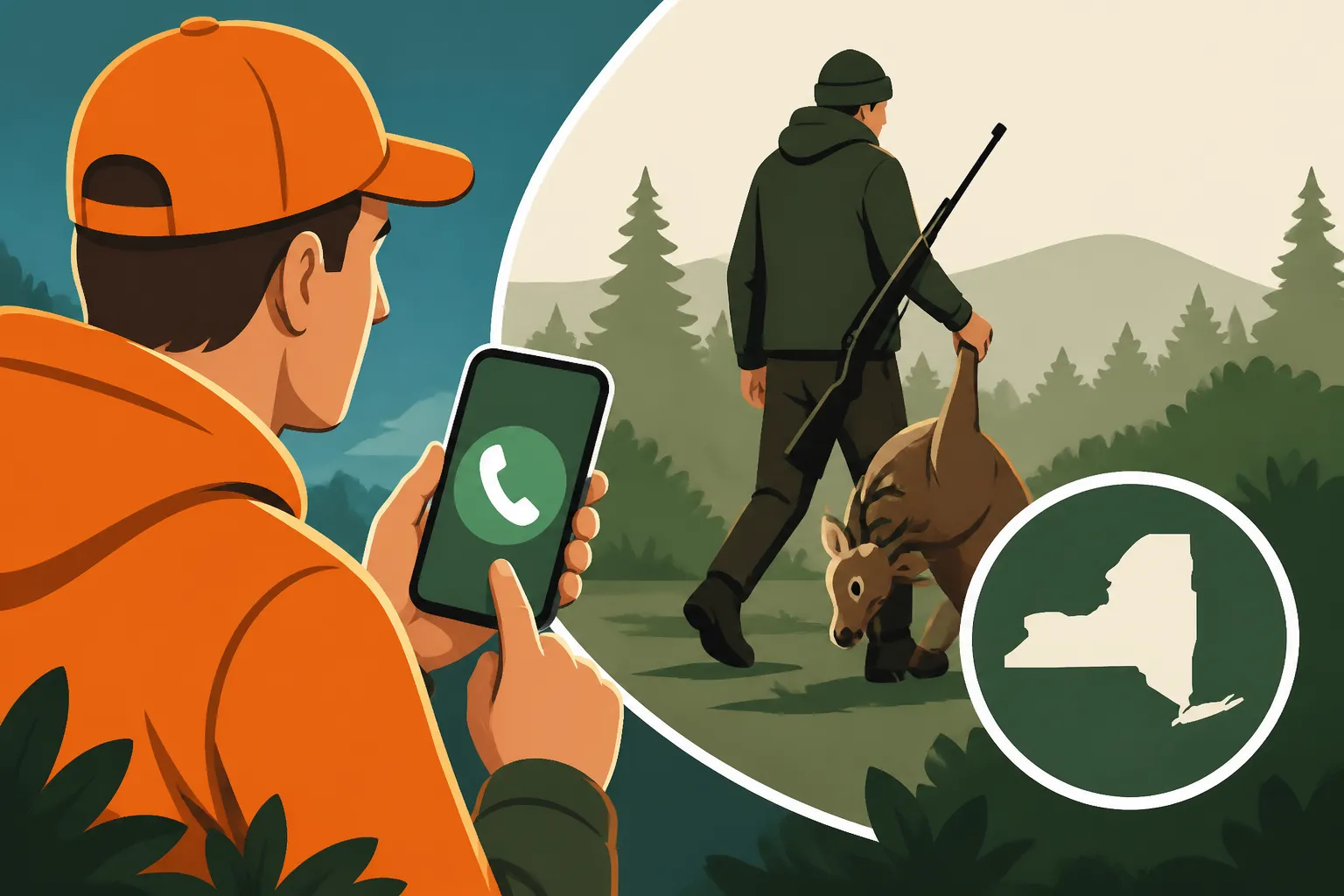
The statewide hotline for reporting environmental and natural resource law violations, including poaching, is 1-844-DEC-ECOS (1-844-332-3267). This number is staffed around the clock, meaning you can call any time of day or night. When you call, you'll be connected to a dispatcher who will gather the essential information and then relay it to the nearest available ECO. Don't worry if you don't have every single detail perfect; the dispatcher will guide you through the questions. Be prepared to provide the location, what you observed, and any identifying features. Even if you're not 100% sure it's a violation, but something just feels wrong, it's better to make the call. ECOs would rather investigate a false alarm than miss a genuine violation.
When to Call 911 for Urgent Situations
While the DEC hotline is your go-to for most wildlife violations, there are specific, critical situations where calling 911 is absolutely necessary and should be your first action. You should call 911 if:
- There is an immediate threat to public safety: For example, you see someone recklessly discharging a firearm near homes, hikers, or other vehicles, or you encounter an armed individual acting aggressively.
- A crime other than poaching is actively occurring: Such as assault, theft, or property damage in conjunction with the suspected poaching.
- The individuals involved appear dangerous or confrontational: Never put yourself in harm's way by trying to intervene. Let trained law enforcement handle potentially violent situations.
- A major accident or emergency is involved: If you witness a serious vehicle collision related to the poaching incident, or someone appears injured.
In these scenarios, 911 will dispatch the most appropriate emergency services, whether that's local police, sheriff's deputies, State Police, or ECOs, depending on the nature of the emergency and jurisdiction. Always prioritize your personal safety and the safety of others over getting detailed information about the poachers.
The Role of the DEC "Report a Violation" Online Form
For less urgent reports, or situations where you've discovered evidence of a past violation and don't need an immediate response, the DEC also offers an online "Report a Violation" form. This form is accessible through the DEC's website and allows you to provide a detailed written account of what you observed. This might be useful if you find a dumped deer carcass out of season days after the fact, or if you have photographic evidence of a past incident.
While this online form is a convenient way to submit information, understand that it's not for emergencies and typically doesn't generate an immediate response. It's more for data collection and for ECOs to follow up on when their schedules allow. You might not receive a direct call back, but rest assured that the information you provide is reviewed and can contribute to ongoing investigations or help identify patterns of illegal activity in certain areas. It's a valuable tool for sharing information when a direct phone call isn't feasible or necessary.
What Information Helps Law Enforcement
When you're making that call or filling out a form, the more specific and accurate information you can provide, the better. ECOs are skilled investigators, but they rely heavily on witness accounts to build a case. You don't need to be a detective, but knowing what details are most useful can significantly aid their efforts.
Key Details to Observe and Record Safely
Your personal safety should always be your first priority. Never confront suspected poachers or put yourself in a situation where you might be identified or harmed. Observe from a safe distance and try to collect the following information:
- Vehicle Description: This is often the most crucial piece of evidence.
- License Plate Number: This is gold. Get the full plate number, state, and any partials if you can't get the whole thing.
- Make, Model, Color: "Dark colored pickup" isn't as helpful as "Black Ford F-150, late 2010s model."
- Distinguishing Features: Dents, custom rims, bumper stickers, toolboxes, specific lights (e.g., a spotlight being used), or any other unique characteristics that make the vehicle stand out.
- Direction of Travel: Which way did they go? What road were they on?
- Individual Descriptions: Again, from a safe distance, try to note:
- Number of People: How many individuals were involved?
- Physical Characteristics: Gender, approximate age, height, build, hair color, facial hair.
- Clothing: What were they wearing? Camo, bright colors, specific hats?
- Actions: What exactly were they doing? Shooting, loading an animal, spotlighting, driving off-road?
- Location, Date, and Time: Be as precise as possible.
- Specific Location: Road names, nearest intersection, mile markers, landmarks (e.g., "just north of the old red barn on County Road 27," or "near the big oak tree on the edge of the cornfield"). If you use a mapping app like GoHunt or the "Scouting With the New York HuntFishNY App", getting precise GPS coordinates is incredibly helpful.
- Date and Time: Exactly when did you observe the incident? Even a range (e.g., "between 6:15 PM and 6:30 PM last Tuesday") is better than nothing.
- Type of Violation: What do you suspect is happening?
- Taking game out of season (e.g., a deer in July).
- Exceeding bag limits.
- Using illegal methods (e.g., spotlighting, illegal traps).
- Hunting on posted land without permission.
- Shooting from a public road.
Gathering these details will give ECOs a strong starting point for their investigation.
Evidence Collection Without Risk
While your primary role is to observe and report, if you can safely collect evidence without confronting anyone or putting yourself at risk, that can be incredibly valuable. Remember, safety first.
- Photographs and Videos: If you can discreetly and safely take photos or videos from a distance using your phone, do so. This visual evidence can be incredibly powerful. Capture vehicles, individuals (if possible without compromising your safety), and the scene of the violation. Make sure the timestamp on your phone is accurate.
- Physical Evidence (Do NOT Touch): If you find physical evidence after the poachers have left, such as spent shell casings, blood trails, or a dumped carcass, note its exact location. Do not touch or disturb anything. ECOs are trained to process crime scenes, and disturbing evidence can compromise their investigation. Simply describe what you see and where it is. For example, if you find a deer carcass, note if it appears to have been gutted, how recently it might have been killed, and any specific wounds you can see from a distance.
- Witness Accounts: If you are with other people, encourage them to observe and note details as well. Separate accounts can corroborate details and strengthen the report. However, remember to keep personal safety paramount for everyone involved.
By acting as a vigilant observer and providing accurate, detailed information, you become an invaluable partner to the DEC in protecting New York's wildlife.
The Reporting Process and Beyond
Once you've made the report, it's natural to wonder what happens next. The process might not always be immediately visible to you, but rest assured that your information is taken seriously by the dedicated ECOs working to uphold wildlife laws.
Anonymity and Follow-Up Expectations
One of the most common questions people have when reporting a poacher is about anonymity. You absolutely can choose to remain anonymous when you call the DEC hotline or use the online form. The dispatcher or the form will typically ask if you wish to provide your name and contact information. If you prefer to stay anonymous, simply state that. ECOs are trained to handle anonymous tips and will still investigate based on the information provided. However, sometimes providing contact information can be helpful if an ECO needs to clarify a detail or ask a follow-up question. If you provide your contact information, you might receive a call for more details, but the ECO will typically keep your identity confidential during the investigation unless specific legal circumstances require otherwise (which is rare for a tipster).
It's important to manage your expectations regarding follow-up. Due to the sensitive nature of law enforcement investigations, ECOs generally cannot provide regular updates on the progress of a case. They won't call you back to say "We caught them!" every time. This isn't a lack of interest; it's to protect the integrity of their investigation and comply with privacy laws. An ongoing investigation might involve surveillance, interviewing suspects, and collecting further evidence, and sharing details could jeopardize those efforts. Even if you don't hear back, know that your report contributes to their intelligence gathering and enforcement efforts. Many successful poaching busts start with a single, crucial tip from an observant hunter or citizen.
Penalties for Wildlife Violations and Law Enforcement's Role
When a poacher is caught and charged, they face a range of penalties, depending on the severity and type of violation. These can include significant fines, restitution for the value of the poached animal, loss of hunting privileges for a period (or even for life), and in some cases, jail time. You can learn more about these consequences in our guide on "New York Wildlife Violation Penalties". For instance, taking a deer out of season can result in fines up to several thousand dollars and revocation of hunting licenses. Repeat offenders face even harsher penalties.
The role of the Environmental Conservation Police Officers is crucial here. They are trained not only in wildlife biology and hunting regulations but also in criminal investigation techniques. When they receive a report, they'll often:
- Assess the Information: Determine the urgency and potential for investigation.
- Conduct Surveillance: If possible, observe the area or suspects to gather more evidence.
- Interview Witnesses: If contact information was provided, they might reach out to clarify details.
- Process Crime Scenes: Collect physical evidence, such as spent casings, blood samples, or tire tracks.
- Identify and Interview Suspects: Use the information gathered to identify individuals and conduct interviews.
- Make Arrests and Issue Tickets: If sufficient evidence is found, they will charge the individuals involved.
- Prepare for Court: Build a case to present to prosecutors and judges.
ECOs often work long hours, sometimes alone in remote areas, to protect our resources. Your report empowers them to do their job effectively. By standing up for ethical hunting and reporting those who break the law, you're directly contributing to the health of New York's wildlife and ensuring that our cherished hunting traditions can continue for generations to come.
Here's a quick reference table to help you decide how and what to report:
| Reporting Method | Best for | Key Information to Collect (Safely!) | Important Considerations |
|---|---|---|---|
| DEC Law Enforcement Hotline 1-844-DEC-ECOS (1-844-332-3267) |
Non-emergency poaching Suspicious activity Recent violations |
Vehicle details (plate, make, model, color, features) Individual descriptions Precise location, date, time Type of violation |
Available 24/7. Can report anonymously. ECOs will investigate. |
| 911 | Immediate danger Public safety threat Active serious crime Injuries/Accidents |
Exact location Nature of threat Suspect descriptions (if safe) |
PRIORITIZE YOUR SAFETY. Do not confront. Dispatch to local emergency. |
| DEC "Report a Violation" Online Form | Historical violations Less urgent tips Detailed narratives Supporting photos (non-urgent) |
Detailed written account Any photos/videos (attached) Location, date, time |
No immediate response. Information contributes to broader efforts. |
Disclaimer
Always prioritize your personal safety when encountering potentially illegal activity. Do not attempt to confront or intervene with suspected poachers. This article provides general information and guidance. Always refer to the most current New York State Department of Environmental Conservation (DEC) regulations and guidelines for the most accurate and up-to-date information regarding reporting violations and hunting laws.