New York Wildlife Violation Penalties
It’s an unfortunate reality that sometimes, in the excitement of the hunt or the complexity of regulations, hunters can find themselves on the wrong side of the law in New York State. Whether it's an honest mistake or a blatant disregard for the rules, the consequences of a wildlife violation can be far more severe than many realize, impacting not just your wallet, but your ability to hunt for years to come. This guide aims to pull back the curtain on these penalties, helping you understand the gravity of various offenses and, more importantly, how to avoid them entirely.
Understanding the True Weight of a Wildlife Violation in New York
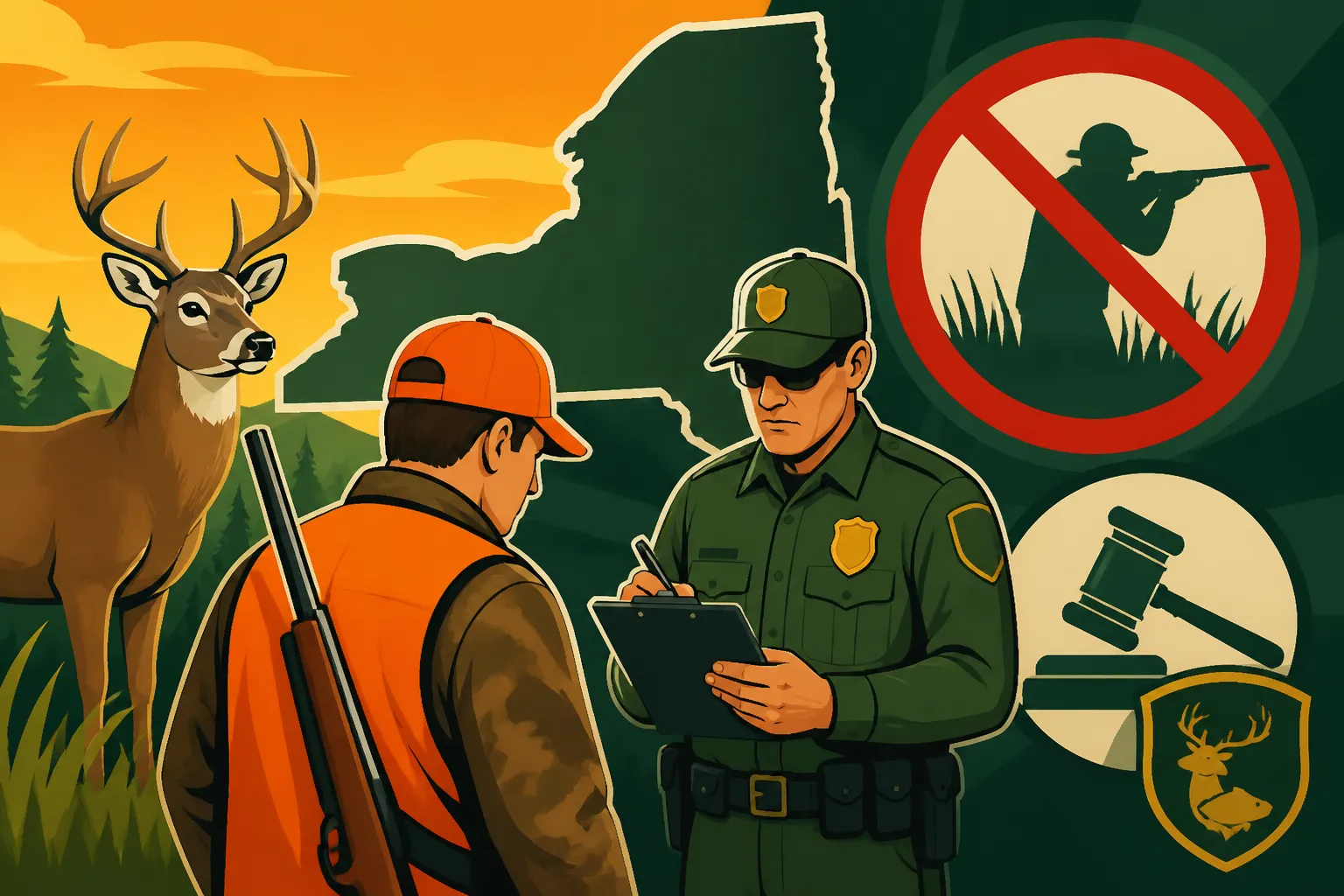
When you think of a hunting violation, your mind might jump straight to a small fine. But in New York, the repercussions can extend much further, touching upon your hunting privileges, potentially leading to civil penalties, and in severe cases, even jail time. The Department of Environmental Conservation (DEC) takes its role in protecting wildlife seriously, and their Environmental Conservation Officers (ECOs) are vigilant. A conviction for a wildlife violation isn't just a minor inconvenience; it's a mark on your record that can follow you.
The frustration often stems from the sheer volume and intricacy of hunting laws. You might think you're doing everything right, only to find out a seemingly minor detail, like not having your license physically on your person or misidentifying a legal shooting hour, can land you in hot water. For instance, New York's legal shooting hours are specific and can change based on the date, so relying on general daylight can be a costly error. This complexity is exactly why staying informed is paramount. It’s not about being a legal expert, but understanding the basics and knowing where to find definitive answers. Tools like the GoHunt app can be incredibly useful for quickly checking regulations, boundaries, and seasons right from your phone, minimizing those "I didn't know" moments.
The Immediate and Long-Term Impact
A violation often begins with an ECO contact, which can be an intimidating experience. What follows is a summons to court, a process that can be time-consuming and emotionally draining. The immediate impact is the stress and uncertainty, but the long-term consequences are what truly sting for a dedicated hunter. Losing your hunting privileges, even for a short period, means missing out on seasons you’ve anticipated all year. Imagine planning your whole year around hunting the New York rut in November, only to have your license suspended due to an oversight. That's a gut punch.
Beyond the personal impact, these penalties serve a critical purpose: deterring illegal activities that threaten New York's wildlife populations. Poaching, for example, isn't just someone taking a deer; it undermines conservation efforts, steals opportunities from legal hunters, and can decimate local herds. Every fine and license revocation contributes to the broader goal of responsible wildlife management.
Common Violations and Their Specific Consequences
New York State categorizes wildlife violations, and the penalties reflect the severity and nature of the offense. Understanding these categories and what falls into them can help you grasp the potential repercussions. It’s not just deer hunting; violations can occur across all game species, from waterfowl to wild turkeys.
License and Permit Related Offenses
One of the most common mistakes, often due to oversight, involves licensing and permits. This includes hunting without a valid license, failing to carry your license, or misusing permits like Deer Management Permits (DMPs).
- Hunting Without a Valid License: This is a pretty straightforward violation. If you’re caught hunting any species without the appropriate New York Hunting Licenses and What They Cost, you're looking at a significant fine. Generally, fines for hunting without a license can range from $100 to $250, plus a mandatory surcharge, and can also lead to the revocation of your hunting privileges for a period.
- Failing to Carry Your License: Even if you bought your license, if you don't have it on you while hunting, you could be cited. The fine is usually less severe than hunting without one, perhaps $50-$100, but it’s still an avoidable hassle. Always ensure you have your physical license and tags or proper digital proof, readily available, especially if you're venturing into remote areas where cell service is spotty.
- Misuse of Deer Management Permits (DMPs): New York Deer Management Permits Explained are crucial for managing deer populations. Applying for more DMPs than allowed, failing to properly tag a deer with a DMP, or using a DMP in a Wildlife Management Unit (WMU) where it's not valid are serious offenses. These can result in fines typically ranging from $200 to $2,000, along with potential license revocation and civil penalties for the illegally taken deer.
Season and Bag Limit Violations
These offenses deal with hunting out of season, hunting before or after legal hours, or exceeding bag limits. These are often seen as more impactful on wildlife populations and thus carry heavier penalties.
- Hunting Out of Season: Taking game outside of its designated season, for example, shooting a deer during the closed period or hunting the rut in the Northern Zone too early, is a severe violation. Fines for out-of-season hunting can range from $200 to $2,000, plus mandatory surcharges. Additionally, your hunting license will almost certainly be revoked for a minimum of five years, and civil penalties for the value of the animal will be assessed.
- Hunting During Prohibited Hours: This refers to shooting game outside of the legal shooting hours. While it might seem minor, it's a critical safety and fair-chase regulation. Penalties typically involve fines from $100 to $500, plus surcharges, and potential short-term license suspension.
- Exceeding Bag Limits: Whether it's an extra deer, an overage on turkeys during New York Spring Turkey Season Rules, or too many ducks during New York Waterfowl Hunting by Zone, exceeding the bag limit is a violation. Fines can range from $100 to $1,000 per animal over the limit, with license revocation a strong possibility. For specific species, such as over-bagging migratory birds, federal penalties can also apply, compounding the issue.
Method and Manner Violations
These violations pertain to how you hunt, including illegal weapons, prohibited hunting techniques, or failing to follow safety protocols.
- Illegal Weapons or Ammunition: Using an illegal firearm (e.g., a rifle in a shotgun-only zone), an illegal crossbow setup, or non-toxic shot where lead is required (like for waterfowl) falls under this category. Given the specifics of New York Crossbow and Bow Regulations, ensure your equipment meets all legal standards. Penalties range from $100 to $500, with potential confiscation of the illegal equipment and license suspension.
- Spotlighting Deer: Using artificial lights to locate or hunt deer at night is a serious poaching offense. This carries hefty fines, starting at $200 and going up to $2,000, mandatory license revocation for five years or more, and potentially a misdemeanor charge.
- Failure to Wear Blaze Orange: While not always required for all hunting seasons or methods, like during early archery, failing to wear sufficient New York Blaze Orange Requirements when mandated can result in a fine, typically $50-$100, and is a safety concern taken seriously by ECOs.
Here's a simplified table outlining some common violations and their potential penalties. Please remember these are general guidelines, and actual penalties can vary based on specific circumstances, county, and judicial discretion.
| Violation Type | Example Offense | Minimum Fine (Approx.) | Maximum Fine (Approx.) | License Revocation | Other Penalties (e.g., Civil Penalties, Jail) |
|---|---|---|---|---|---|
| License/Permit | Hunting without a valid license | $100 | $250 | Yes (1-5 years) | Surcharges |
| Failing to carry license | $50 | $100 | Possible | Surcharges | |
| Misuse of DMP (e.g., improper tagging) | $200 | $2,000 | Yes (2-5 years) | Civil penalty for illegally taken deer | |
| Season/Bag Limit | Hunting deer out of season | $200 | $2,000 | Yes (5+ years) | Civil penalty for illegally taken deer, Misdemeanor |
| Hunting before/after legal hours | $100 | $500 | Possible (short-term) | Surcharges | |
| Exceeding deer bag limit | $200 per deer | $2,000 per deer | Yes (2-5 years) | Civil penalty for illegally taken deer, Misdemeanor | |
| Method/Manner | Illegal firearm for deer hunting | $100 | $500 | Possible (short-term) | Confiscation of equipment |
| Spotlighting deer (attempt or take) | $200 | $2,000 | Yes (5+ years) | Misdemeanor, potential jail time, civil penalty for deer | |
| Failure to wear blaze orange (when required) | $50 | $100 | No | Surcharges | |
| Reporting/Transport | Failing to report a New York deer harvest online | $50 | $200 | Possible | Surcharges |
| Transporting untagged/unreported deer | $100 | $500 | Possible | Civil penalty for deer |
Beyond the Fine: License Revocation and Civil Penalties
While the monetary fines are certainly impactful, for many hunters, the deepest cut comes from the potential loss of their hunting privileges. New York’s DEC has broad authority to revoke licenses, and these revocations are often reciprocal with other states, meaning a suspension in New York could prevent you from hunting elsewhere.
Understanding License Revocation
License revocation isn't just a temporary ban; it’s a serious consequence that reflects the gravity of certain offenses.
- Mandatory Revocation: For severe violations like poaching, hunting while intoxicated, or repeated offenses, license revocation is mandatory and often lasts for several years, sometimes even permanently. This means you cannot legally purchase a hunting license or participate in any hunting activities during that period. The decision to revoke your license is made by the DEC, often after a conviction in court.
- Points System: While not explicitly a "points system" like a driver's license, the DEC does track prior violations. Repeat offenders or those with multiple minor infractions can find themselves facing much harsher penalties, including longer revocations, than a first-time offender for the same initial infraction. This underscores the importance of rectifying any issues and being extra careful if you've had a past run-in with an ECO.
- Reciprocity: One of the most critical aspects for avid hunters is that New York is part of the Interstate Wildlife Violator Compact (IWVC). This compact means that if your hunting privileges are suspended in New York, they are likely to be suspended in most other member states as well. So, that week-long pheasant hunt in South Dakota or a deer trip to Maine? Forget about it if you're suspended in New York. This broad reach makes understanding and avoiding violations even more crucial.
Civil Penalties: Paying for the Resource
Beyond fines and license suspensions, New York law also imposes civil penalties for the unlawful taking of certain game. These are separate from criminal fines and are meant to compensate the state for the loss of wildlife resources.
- Valuation of Game: The DEC has set values for different species. For example, the civil penalty for taking an antlered deer illegally is typically $500, while an antlerless deer might be $250. Taking a bear illegally, however, can result in a civil penalty of $1,000 to $2,000, reflecting the species' conservation status and value. These civil penalties are an additional cost on top of any fines or surcharges imposed by the court.
- Damages and Restitution: In some cases, particularly for serious environmental crimes, restitution may be ordered to cover damages to habitats or costs associated with enforcement. This is less common for typical hunting violations but can occur in scenarios involving significant damage or widespread poaching rings.
Avoiding a Costly Mistake: Staying Compliant
Nobody wants to face these penalties. The best offense is a good defense, and in hunting, that means being meticulously informed and proactive. It can be overwhelming to keep up with every single rule, especially when seasons, bag limits, and specific regulations can vary between zones or WMUs, as highlighted by resources like How New York's Two Deer Zones Split the Calendar.
The Power of Knowledge and Preparation
Before you even step foot in the woods, make sure you've done your homework.
- Read the Regulations Guide: This sounds obvious, but many hunters skim or rely on outdated information. The annual New York State Hunting & Trapping Regulations Guide is your bible. Read it front to back, paying close attention to the sections relevant to the species, zone, and method you'll be using. Don’t just rely on what you "heard" from a buddy.
- Utilize Digital Tools: Digital resources are invaluable. The New York DEC's website is a treasure trove of information. Additionally, apps like GoHunt offer detailed maps with public land boundaries, parcel data, and often have integrated regulation summaries. Using the Scouting With the New York HuntFishNY App alongside other mapping tools can provide layers of critical information, from property lines to specific WMA rules, helping you navigate complex landscapes legally.
- Know Your Zone and Dates: New York's hunting calendar is complex, with different opening and closing dates for various species across the Northern and Southern Zones. Know precisely which zone you are in and cross-reference all relevant dates, especially for New York Deer Seasons by Zone. If you're hunting bears, you need to know the New York Bear Season by Zone dates too. Missing a day can turn a legal hunt into an illegal one.
Best Practices in the Field
Even with preparation, vigilance in the field is crucial.
- Positive Identification: Always be 100% certain of your target. Is it a legal buck? Is it a gobbler? Are you sure it's a legal bird and not a hen during spring turkey? Mistakes happen, but they are still violations.
- Tagging and Reporting: Once you’ve legally harvested an animal, the clock starts ticking. Properly tagging your game immediately after the kill and ensuring you meet the New York Deer Reporting Deadline are non-negotiable. For big game like deer, you must report your harvest within seven days. Failing to do so can lead to fines and even license suspension. Always carry an extra tag or two in case one gets damaged.
- Be Aware of Your Surroundings: This goes beyond just knowing if a deer is there. It means knowing if you're on public land, private land, or a posted cooperator farm. It also means understanding setbacks from dwellings and roads. Finding New York Property Lines can be tricky in dense cover, so having accurate maps and GPS is essential.
- Don't Transport Untagged Game: Never transport game that hasn't been properly tagged and reported according to New York law. This can lead to charges of unlawful possession of game. If you're leaving a deer at camp for a few days, ensure it's tagged and easily identifiable as legally harvested.
When in Doubt, Ask!
If you ever find yourself uncertain about a regulation, don't guess. Reach out to the DEC directly. Their regional offices can clarify rules, or you can often find answers on their comprehensive website. Remember, ignorance of the law is rarely accepted as a defense. Reporting a Poacher in New York is also a crucial part of protecting our resources; if you see something suspicious, say something. It's everyone's responsibility to uphold ethical and legal hunting practices.
Disclaimer
This guide is intended for informational purposes only and does not constitute legal advice. New York State hunting and wildlife laws are complex and subject to change. Always consult the most current official New York State Department of Environmental Conservation (DEC) hunting and trapping regulations guide or contact the DEC directly for specific legal questions and the most up-to-date information.