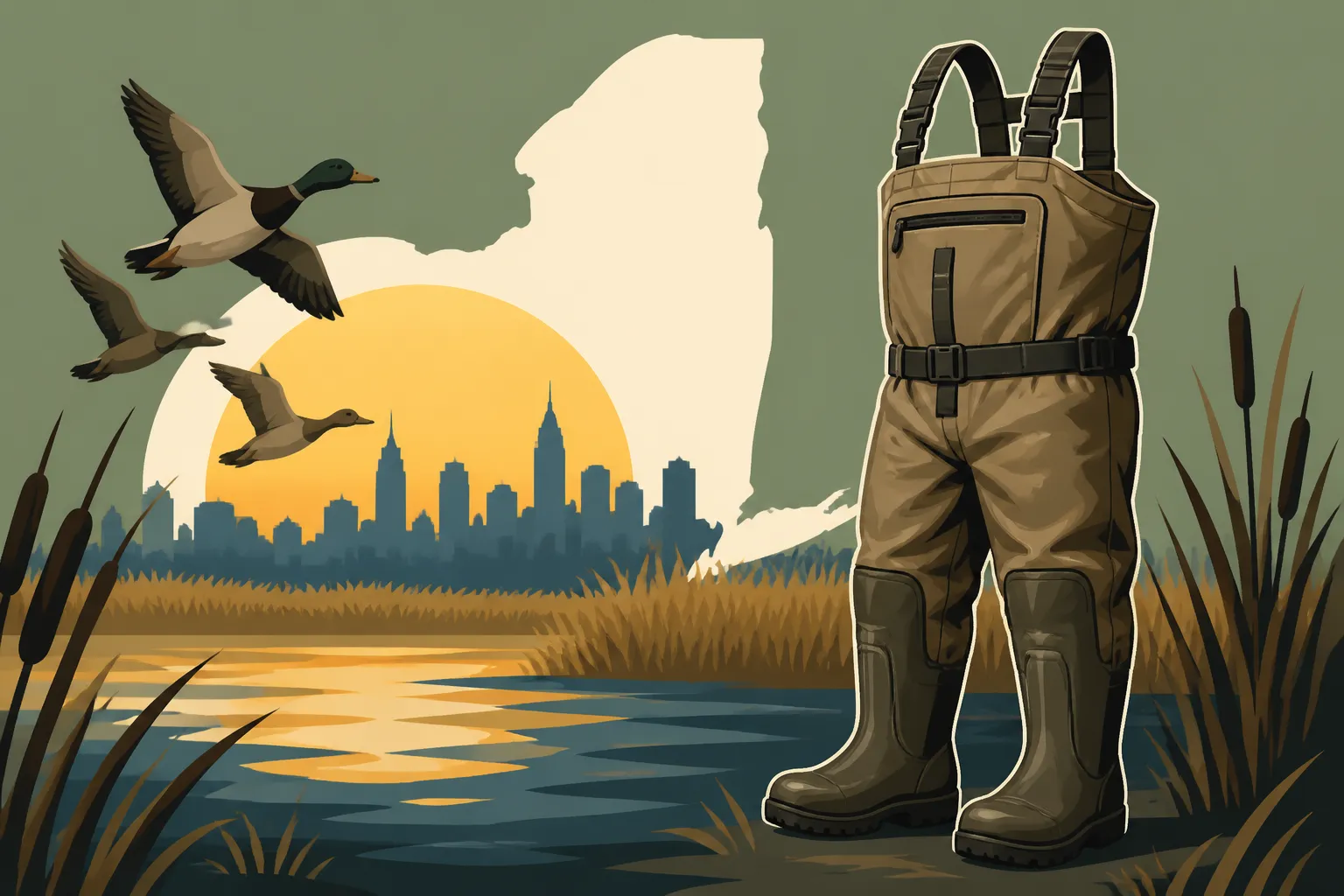
Waders for New York Marsh Hunting
There's nothing quite like the thrill of a morning flight over a New York marsh, but the harsh reality is that cold, wet feet can quickly turn an epic hunt into a miserable ordeal. Trying to focus on calling ducks or geese when your toes are numb or your lower half is soaked is a battle no waterfowler wants to fight. This guide is all about helping you navigate the sometimes overwhelming world of waders, ensuring you choose the right pair to keep you dry, warm, and comfortable, no matter what New York's unpredictable marsh conditions throw your way.
Understanding New York's Marsh Hunting Environment
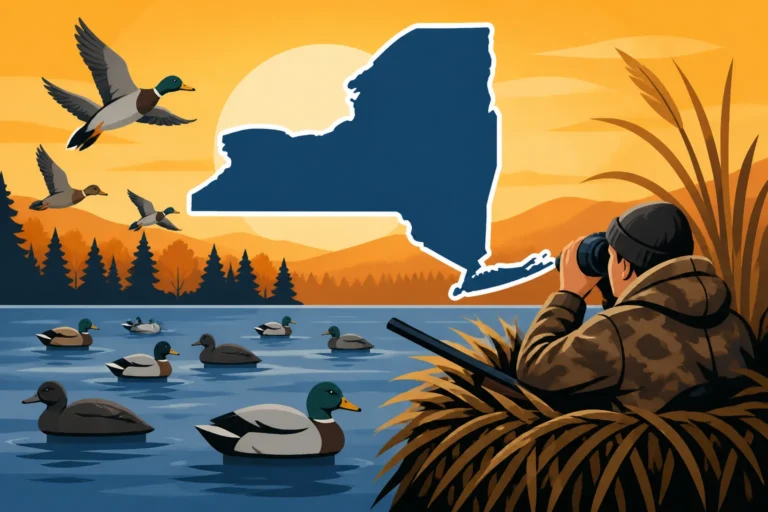
New York State offers an incredible array of waterfowl hunting opportunities, from the expansive Great Lakes shoreline to the smaller, more secluded inland marshes. Each of these environments presents its own unique challenges, and a wader that performs perfectly in one spot might be totally inadequate in another. It's crucial to consider where and when you'll be hunting most often before you even start looking at specific wader features.
The Diverse Habitats of New York Marshes
Our state's marshes are far from uniform. You might be slogging through knee-deep muck and thick cattails one weekend, then hunkering down in chest-deep open water with scattered emergent vegetation the next. Along the Great Lakes, you're often dealing with big water and potentially rough conditions, while inland, a Finger Lakes marsh might mean navigating tangled brush and softer, silty bottoms. Hunting the St. Lawrence River Marshes presents its own set of challenges with strong currents and vast expanses. The kind of cover you'll be breaking through, the depth of the water, and the consistency of the bottom all play a huge role in determining what kind of durability and mobility your waders need to offer.
Consider, for example, the difference between hunting a shallow, cattail-choked slough in the Southern Tier versus wading out into the deeper, rockier bottom of a Lake Ontario bay for divers. In the slough, you might be pushing through dense vegetation, requiring robust, puncture-resistant material and good knee protection. Out on the big lake, you'll need waders that offer excellent insulation against colder water and a secure, non-slip grip on slick rocks or muddy shelves. No single wader is truly "perfect" for every scenario, but understanding your primary hunting grounds will help you prioritize features.
Weather Challenges and Water Temperatures
New York's waterfowl seasons span a wide range of weather conditions, from relatively mild early-season days in September and October to the bitter cold, ice, and biting winds of late November and December. New York Waterfowl Hunting by Zone details just how diverse these seasons can be. Early in the season, water temperatures might still be quite tolerable, but as winter approaches, those same waters become frigid, posing a real risk of hypothermia if you're not adequately insulated. You could start your morning hunt with a crisp autumn chill and end it with sunshine, or begin under clear skies and suddenly find yourself in a squall of lake-effect snow.
This variability means your waders need to be versatile. You might choose a less insulated, breathable pair for early teal season, but you'll certainly want a heavily insulated set for those late-season mallards when skim ice is forming around your decoys. Wind chill, too, plays a massive role; even if the water isn't dangerously cold, a biting north wind can cut right through inadequate gear. Thinking about the coldest conditions you might encounter, rather than just the average, is a smart move when investing in waders.
Key Wader Features for New York Waterfowlers
Once you've got a clear picture of the environments you'll be hunting, it's time to dive into the nitty-gritty of wader features. There are so many options out there, and sometimes it feels like information overload. But breaking it down into material, foot type, and overall construction can really simplify the decision-making process.
Material Matters: Neoprene vs. Breathable
This is often the first big decision point for waterfowlers. Neoprene waders have long been the traditional choice, and for good reason. They offer excellent insulation, which is a huge plus when standing in cold water for hours. However, they can also be bulky, heavy, and extremely warm, especially if you're doing a lot of walking or hunting on milder days. Breathable waders, typically made from multiple layers of synthetic materials, are lighter and allow perspiration to escape, preventing that clammy feeling that neoprene can sometimes cause. They aren't inherently warm, requiring you to layer underneath, but they offer incredible versatility.
For much of New York's waterfowl season, especially in the colder zones or during late hunts, neoprene's insulating properties are a major advantage. If you're primarily hunting fixed blinds or doing minimal wading in cold temperatures, neoprene in 3.5mm or 5mm thickness is often preferred. However, if you're a run-and-gun hunter, covering a lot of ground between spots, or find yourself hunting in warmer early-season conditions, breathable waders can be a game-changer for comfort. Many hunters opt for a hybrid approach, using neoprene for truly frigid weather and breathable waders for milder days. GoHunt often has detailed reviews and comparisons on their platform that can help you weigh the pros and cons of different material types in real-world hunting scenarios.
Bootfoot vs. Stockingfoot: Traction and Comfort
Another critical choice is whether to go with bootfoot or stockingfoot waders. Bootfoot waders have the boots permanently attached, making them incredibly convenient for quick on and off. They're usually well-insulated, which adds to warmth, and they eliminate the need for separate wading boots. However, the fit of the integrated boot can sometimes be a compromise, and if the boot fails, the entire wader is often compromised. Stockingfoot waders, on the other hand, have neoprene "socks" or booties, and you wear separate wading boots over them. This allows for a more customized fit in your boots, often providing superior ankle support and much better traction on slippery, muddy, or rocky bottoms—a common challenge in many New York marshes.
If you're primarily hunting from a boat or a fixed blind where minimal walking is involved, bootfoot waders are often the most convenient and comfortable choice. Their integrated insulation is also a big plus for warmth. However, for those long walks into remote marshes, busting through thick ice, or navigating treacherous shorelines, the added stability and customizable fit of stockingfoot waders paired with quality wading boots can be invaluable. It also allows you to replace just the boots if they wear out. Think about the terrain you'll be traversing to reach your hunting spot, not just the water itself.
| Feature | Bootfoot Waders | Stockingfoot Waders |
|---|---|---|
| Convenience | Quick on/off, integrated boot | Requires separate wading boots |
| Fit | Fixed boot size, can be less precise | Customizable boot fit, better ankle support |
| Traction | Varies, generally good but can be less specialized | Often superior with specialized wading boots |
| Warmth | Integrated insulation often substantial | Relies more on layering within the boots and wader |
| Durability | Boot failure can compromise entire wader | Boots are replaceable, wader can last longer |
| Mobility | Can be bulky, less flexible for long walks | Lighter, more flexible, better for long treks |
| Cost | Often a single purchase | Wader + boots = higher initial cost |
Construction and Durability
Waders, by their very nature, are put through the wringer. Pushing through thorny brush, navigating fallen logs, and scraping against ice can quickly turn a new pair into a sieve if they aren't built tough. Look for waders with reinforced knees and seat areas, as these are typically the first points of wear. Multi-layer construction in critical zones adds significant longevity. The quality of the seams is also paramount; glued, stitched, and taped seams offer the best protection against leaks. Double-stitched seams, especially, indicate a higher level of craftsmanship and resistance to failure.
It’s an unfortunate reality that even the best waders can develop leaks over time. However, paying attention to the initial construction quality can dramatically extend their life. Think about the density of the cover you hunt: thick cattail stands found in many New York marshes, or the abrasive ice that often forms along shorelines. These environments demand waders that can withstand repeated abuse without developing pinholes or seam failures. Investing in a well-constructed pair from a reputable brand usually pays off in the long run by reducing frustrating leaks and mid-season replacements.
Insulation and Layering for New York's Seasons
One of the biggest mistakes new waterfowlers make is not dressing appropriately under their waders. It's not just about the waders themselves; it's about a complete system that manages moisture and retains warmth. New York's weather swings mean you need a strategy for both warmer and truly frigid conditions.
Adapting to Early Season Comfort
When the early goose and teal seasons kick off in New York, the weather can still be quite pleasant, sometimes even warm. Air temperatures might be in the 50s or 60s, and the water hasn't had time to cool down significantly. In these conditions, heavily insulated waders can quickly lead to overheating, which in turn leads to sweating. Sweat, even in cold weather, will make you feel colder once you stop moving, and can compromise your comfort and safety. For early season, you're better off with lighter, breathable waders that allow moisture to escape.
Underneath, focus on a good moisture-wicking base layer. This pulls sweat away from your skin, helping to regulate your body temperature. You might only need a thin mid-layer or even just your base layer, depending on how active you'll be. The goal is to avoid over-dressing and sweating excessively, as it will inevitably make you cold later in the hunt. Remember, you can always add layers, but it's much harder to remove them once you're already in the marsh.
Staying Warm in Late Season's Chill
Late season in New York is a whole different ballgame. By November and December, water temperatures plummet, and air temperatures often hover around freezing, or even dip well below it. This is where heavily insulated waders really shine. Look for waders with at least 5mm neoprene or breathable waders designed with significant built-in insulation, often in the form of Thinsulate or similar synthetic fills. The colder the water and air, the more insulation you'll need.
But even the best-insulated waders aren't a magic bullet without proper layering underneath. A robust system starting with a warm, moisture-wicking base layer is critical. Avoid cotton at all costs; once it gets wet, it loses all insulating properties and stays wet forever, a recipe for hypothermia. Think about thermal base layers made from synthetic materials or merino wool, followed by insulating mid-layers like fleece or heavy wool. Your feet, especially, need attention: thick, quality wool socks are non-negotiable, and a second pair might be wise on the coldest days. If you're Hunting Western Zone Diver Ducks in December, you'll thank yourself for planning ahead.
Layering Strategies Under Waders
Effective layering under your waders is a fundamental principle of staying warm and dry in any cold-weather hunting scenario. It's a three-tiered approach that addresses moisture management, insulation, and adaptability. First, a good base layer. This layer, worn directly against your skin, should be made of a material like merino wool or synthetic blends that actively wicks sweat away. This prevents moisture from chilling your body when you stop moving.
Next, you need one or two insulating mid-layers. Fleece pants, insulated soft-shell pants, or even sweatpants (non-cotton!) work well here. The amount of insulation depends on the outside temperature and the insulation level of your waders. This layer traps warm air close to your body. Finally, your waders act as your outer shell, providing a waterproof and windproof barrier. The beauty of this system is that you can adjust your mid-layers based on the forecast and your activity level. For more on material choices, check out Wool Versus Synthetics in Wet Snow – it offers great insights into what fabrics perform best in challenging conditions.
Practical Considerations and Essential Accessories
Beyond the core features, there are several practical elements and accessories that can significantly impact your comfort, safety, and overall success in the New York marsh. Don't overlook these details, as they often make the difference between a good day and a frustrating one.
Fit and Mobility in the Marsh
Having waders that fit correctly is more important than many hunters realize. Waders that are too tight will restrict movement, making it hard to walk, climb into a boat, or even squat down comfortably. They also compress insulating layers, reducing their effectiveness. On the other hand, waders that are too baggy can create excess material that bunches up, chafes, and hinders mobility, especially when pushing through thick cover or slogging through deep mud. They can also fill with water if you fall, becoming dangerous.
When trying on waders, wear the layers you anticipate hunting in. You should be able to comfortably squat, raise your knees high, and swing your legs without feeling constricted. Ensure there's enough room in the boot for thick socks, but not so much that your foot slides around. Good mobility is crucial when navigating the often-treacherous footing of New York marshes. It allows you to move quietly, set decoys efficiently, and respond quickly to incoming birds.
Pockets, D-rings, and Storage
While the primary job of waders is to keep you dry, well-designed storage features can greatly enhance your hunting experience. External waterproof pockets are incredibly useful for keeping essential items like your phone, wallet, or truck keys safe and dry. Chest pockets, especially those with magnetic closures or waterproof zippers, are perfect for quick access to shotgun shells, calls, or even a small snack. Inner pockets can provide additional secure storage.
D-rings and other attachment points are also incredibly handy. You can use them to clip on call lanyards, dog training whistles, or even a small Blind Bags and Cold-Weather Gear for quick retrieves. Having these items easily accessible and organized means less fumbling in the cold and more focus on the hunt. Think about your typical gear setup and choose waders that offer the kind of integrated storage that will make your life easier in the field.
Wader Maintenance and Longevity
Waders are an investment, and like any good piece of gear, they'll last longer with proper care. The biggest enemy of waders is improper drying and storage. After each hunt, especially if they've been submerged in dirty water, hose them off to remove mud, silt, and any corrosive marsh debris. Then, hang them upside down or inside out (depending on the type) in a well-ventilated area to dry completely. Never store them crumpled in a heap or in a damp environment, as this can lead to mildew, material degradation, and ultimately, leaks.
Even with the best care, leaks can happen. Minor punctures or seam failures can often be repaired with a wader repair kit, extending the life of your expensive gear. Many brands offer patch kits, or you can find universal sealants. Taking the time to properly clean, dry, and store your waders, and promptly addressing any small repairs, will ensure they perform season after season, keeping you dry and comfortable for countless future hunts in New York's marshes.
Top Wader Brands and Where to Look
Choosing a wader from a reputable brand can offer peace of mind, knowing you're getting a product designed for the demands of waterfowl hunting. While specific pricing and availability fluctuate, understanding the landscape of quality manufacturers is key.
Reputable Wader Manufacturers
The waterfowl hunting market is robust, with several brands consistently delivering high-quality waders. Companies like Sitka, LaCrosse, Banded, Drake Waterfowl, and Cabela's (under their house brand) are well-known for producing durable, feature-rich waders catering to a range of hunter needs. Each brand often has its unique take on materials, insulation, and feature sets, from ultra-durable options designed for abusive conditions to lighter, more athletic models.
When researching, it's worth checking out user reviews and detailed product specifications. Platforms like GoHunt can be an excellent resource for comparing different models side-by-side, reading expert opinions, and seeing how specific waders perform for other hunters in various conditions. They often aggregate feedback that can highlight common issues or exceptional performance traits, helping you narrow down your choices to models that truly stand up to the rigors of New York marsh hunting.
Balancing Cost and Performance
Waders can represent a significant investment, with prices ranging from more budget-friendly options to high-end models that cost a small fortune. It's natural to want to save money, but with waders, you often get what you pay for. Cheaper waders might skimp on seam sealing, use less durable materials, or have less comfortable boot designs, leading to early failures and frustration. There's nothing worse than a leaky wader cutting a hunt short.
That said, you don't necessarily need the absolute most expensive waders on the market to stay dry and comfortable. The key is to find the sweet spot where quality and features meet your budget. Consider how frequently you hunt and the severity of the conditions you face. A casual hunter might get by with a mid-range option, while someone who spends dozens of days Hunting the Lake Champlain Marshes or Hunting Western Zone Diver Ducks in harsh conditions will likely benefit from investing in a more premium, durable pair. Remember, the cost of replacing leaky waders every other season quickly adds up, often surpassing the initial investment in a higher-quality pair.
Finding the Right Pair for Your Hunt
Ultimately, the "best" waders are the ones that best suit your individual hunting style, the specific environments you frequent, and your personal comfort preferences. Don't be swayed solely by brand name or price tag. Take the time to consider the factors we've discussed: material, foot type, insulation needs, and fit. Think about the distances you walk, the type of cover you push through, and the average temperatures you'll encounter during New York Waterfowl Zones and Seasons.
Visit a reputable outdoor retailer if possible to try on different models, ensuring a proper fit with your intended layering. If shopping online, utilize detailed sizing charts and read customer reviews, especially those from hunters who operate in similar climates to New York. Resources like GoHunt can offer fantastic filters and comparison tools to help you sift through the myriad options and find a wader that will reliably keep you warm and dry, allowing you to fully enjoy every minute of your New York marsh hunting adventures. It's about making an informed decision so you can focus on the birds, not your discomfort.
Disclaimer
This article is for general informational purposes only and does not constitute professional advice. Laws, prices and regulations vary by location and change over time. Consult a qualified professional for guidance on your specific situation.