Sleds and Drags for Snow Country
There's nothing quite like the feeling of success after a long, cold hunt in New York's snow country. You've braved the elements, matched wits with a wily whitetail, and now you're standing over your hard-earned deer. But that triumphant feeling can quickly turn to dread when you realize the real work is about to begin: getting that animal out of the woods, especially when the snow is deep and unforgiving. Pulling a heavy deer through drifts, over fallen logs, and across icy patches can be an absolute soul-crcrusher, draining every last ounce of energy. This guide is here to walk you through the essential gear and smart tactics that will transform your game recovery from a brutal ordeal into a manageable, albeit still strenuous, task.
The Challenges of Snow Country Game Recovery
Let's be honest, hunting in New York often means dealing with snow. Whether you're in the heart of the Adirondacks or a southern tier woodlot, that pristine white blanket can add a whole new layer of difficulty to getting your game back to the truck. Ignoring these challenges is a surefire way to end up exhausted, frustrated, and potentially even risking your hard-won venison.
Snow Depth and Terrain Obstacles
Dragging a deer when the snow is knee-deep is a whole different beast than pulling it over frozen ground or bare leaves. You're not just fighting the deer's weight; you're also fighting the resistance of the snow itself. Picture yourself trying to pull a dead weight through several inches of fresh, fluffy powder in the Adirondacks, where every step sinks and strains. It feels like moving through quicksand, zapping your energy with every yard. It’s a battle against friction you simply don't face in bare-ground conditions.
Then there are the hidden obstacles. That downed log you could easily step over in October is now buried under a foot of white, becoming a treacherous trip hazard. Frozen stream crossings turn into icy death traps, and those gradual slopes you barely noticed on the way in suddenly feel like mountains when you’re hauling a buck. The dense undergrowth of a hemlock thicket or the tangled mess of a blowdown, all made invisible by snow, can turn a simple drag into an exhausting wrestling match with the forest. It’s enough to make you wish deer weighed nothing.
And don't forget the infamous "tree wells" around evergreens, especially when you're deep in the Adirondack Forest Preserve. One wrong step and you could find yourself chest-deep in snow, tangled in branches, all while still trying to manage your deer. These challenges aren't just frustrating; they're physically demanding and can turn what should be a triumphant walk out into a grueling marathon. That's why having the right gear, designed to minimize these specific frictions and snags, is so critical for a successful, less painful recovery.
Fatigue and Muscle Strain
Let's be honest, hunting is already physically demanding. You've walked miles, climbed hills, sat still in the cold, and then the adrenaline of the shot kicks in. Now, imagine adding the intense physical labor of dragging a deer through snow to that already tired body. It's a recipe for exhaustion. Every single step through deep snow while pulling a heavy load taxes your back, shoulders, legs, and core in ways you might not expect. Your muscles are already screaming, and the unique resistance of snow amplifies that strain tenfold.
I've seen seasoned hunters, strong as oxen, utterly wiped out after dragging a doe a mere half-mile through slushy snow in the Southern Tier. The constant, uneven strain can lead to pulled muscles, lower back pain, and just a general feeling of being completely spent. This isn't just about being uncomfortable; it can impact your safety, making you more prone to slips, falls, or even dropping essential gear when your focus is solely on the next agonizing pull. Dehydration and hypothermia can become real risks when you're overexerted in cold weather, far from warmth.
This isn't just a concern for those of us who might be a little out of shape; even the most physically fit hunters feel the burn. The unique resistance of snow, combined with the often-awkward position of pulling a large animal, can create strains that traditional dragging methods simply can't alleviate. It's crucial to acknowledge this reality and prepare accordingly with gear that helps distribute the load and minimize physical stress, allowing you to conserve your energy for the long haul.
Protecting Your Harvest
You've put in the effort, made the shot, and now you have a magnificent animal. The last thing you want is for that hard-earned venison to be compromised on the way out. Dragging a deer directly on the snow or rough terrain without a protective barrier can lead to a host of problems. Snow can pack into the body cavity, making field dressing more difficult and potentially contaminating the meat. Twigs, leaves, and debris can also get embedded in the hide and meat, requiring extra cleaning later and potentially affecting flavor or presentation.
Beyond cleanliness, there's the risk of physical damage. A bare deer carcass, especially a big buck with a nice rack, can get scraped, torn, or otherwise damaged by sharp rocks, frozen stumps, or abrasive ice. Antlers can get broken, capes can get torn, diminishing the trophy value if you're planning to mount it. A torn hide might not seem like a big deal, but it can make skinning a real chore and reduce the quality of the hide if you planned to tan it, adding insult to injury after a difficult recovery.
Furthermore, in certain conditions, extreme cold can cause parts of the animal to freeze to the ground or to the sled if not properly managed. While New York winters offer natural refrigeration, direct contact with ice and snow can sometimes lead to superficial freezer burn or uneven cooling, especially if parts are exposed to wind during transport. A good sled or drag helps lift the carcass off the immediate ground, providing a crucial buffer and making the entire recovery process cleaner and more respectful of the animal you've harvested.
Understanding Your Options: Sleds vs. Drags
When it comes to moving a harvested deer through the snow, hunters typically gravitate towards two main categories: traditional drags (often just a rope or harness) and game sleds (which come in various forms). Each has its place, its pros, and its cons, and understanding these differences is key to making an informed choice for your specific hunting scenario in New York. There's no one-size-fits-all answer, so let's dig into what makes each option unique and when it might be the right tool for the job.
The Classic Deer Dragging Harness
Ah, the classic drag. For generations, hunters have simply used a length of rope or a rudimentary harness to pull their deer out of the woods. It's the simplest, most lightweight, and often the most affordable option. A good quality dragging harness, perhaps one that goes over your shoulders and waist, can certainly make a difference compared to just grabbing the antlers, distributing the strain more effectively across your body. This direct pull approach means you're almost always feeling the full weight and resistance of the animal, plus whatever friction the snow provides.
The biggest "pro" here is portability. A drag rope or harness easily stuffs into your pack, adding minimal weight and bulk. It’s perfect for those unexpected opportunities or for hunters who prioritize a light load, especially if you’re covering significant ground in the Adirondack Forest Preserve or on a Multi-Day Backcountry Hunt. You'll barely notice it until you need it, and it won't impede your movement through dense cover.
However, the "con" is that the deer is still directly on the ground. This means maximum friction from the snow, potential for debris contamination, and a much higher physical toll on you. Every bump, every hidden root, every drift becomes a direct battle. While effective in a pinch or over very short distances on relatively flat, hard-packed snow, relying solely on a classic drag in deep, soft New York snow can be utterly brutal. It's a testament to a hunter's grit, perhaps, but not always the smartest or most efficient way to manage your hard-earned venison. If you're going to use one, invest in a comfortable harness that distributes the load across your body, not just your arms.
Hard-Sided Hunting Sleds
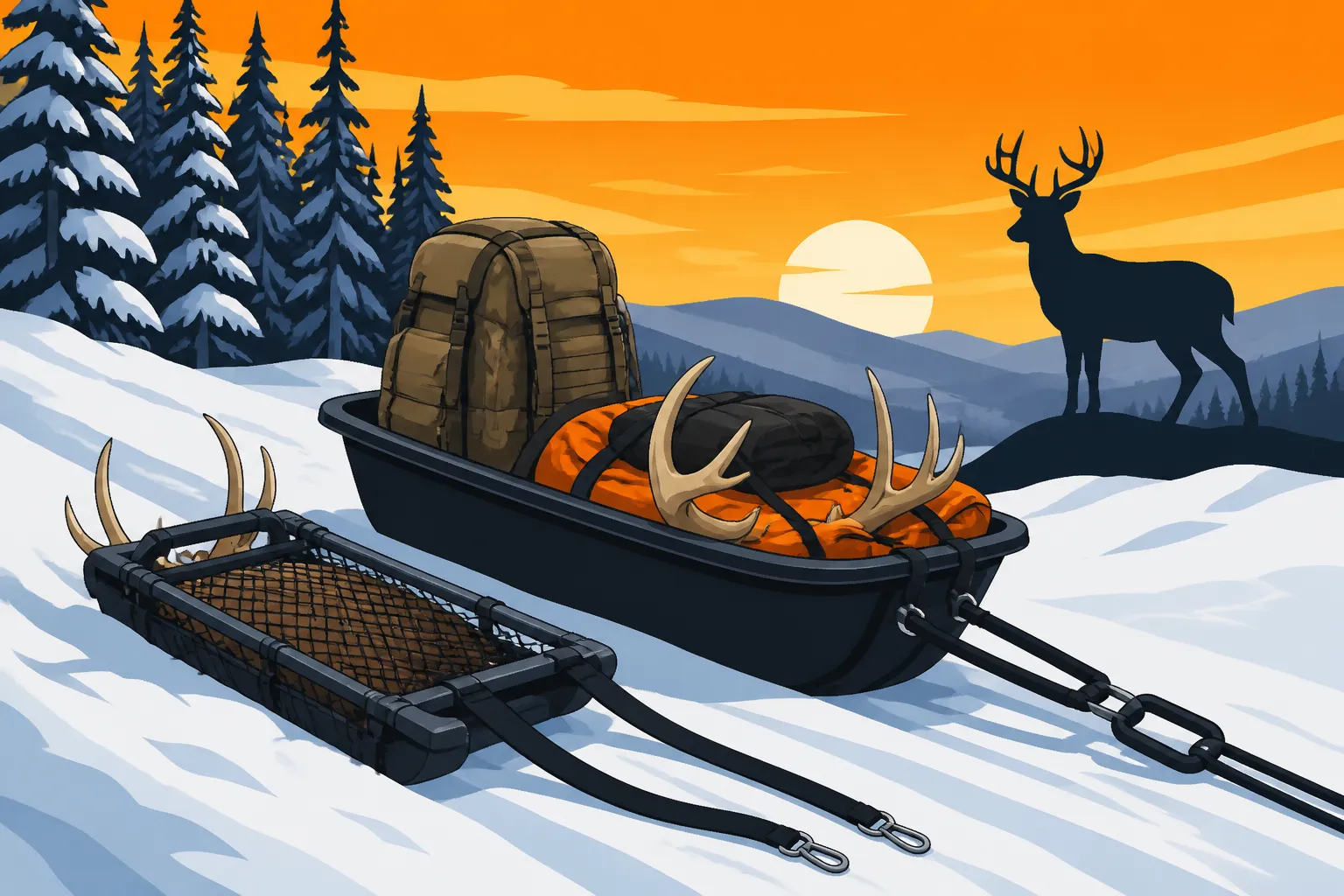
Hard-sided hunting sleds are what many envision when they think of moving a deer in the snow. These are typically made from durable, rigid plastic, designed with a shallow, scooped shape to glide over snow and obstacles. They vary in size, from compact models suitable for a smaller deer or bear cub to larger versions capable of hauling a mature Adirondack buck or even multiple animals. Their primary advantage is drastically reducing friction; the smooth, low-profile bottom slides much more easily than a deer's hide directly on the snow.
One of the key benefits of a hard-sided sled is the protection it offers your harvest. The deer is contained within the sled, keeping it clean and minimizing contact with snow, dirt, and sharp debris. This is especially important if you're working through areas with crusty snow or sharp ice, which can easily damage hide and antlers. They also often come with integrated tie-down points, allowing you to secure your animal firmly, preventing it from shifting or falling out on uneven terrain. This stability is invaluable, particularly when navigating tricky sections.
However, hard-sided sleds aren't without their drawbacks. Their rigidity means they can be awkward to carry into the woods, especially through dense brush or up steep inclines. If you're packing one in, you need to factor in its size and weight, and it can be noisy bumping against trees. They also tend to be louder than flexible drags, which can be a minor concern if you're trying to remain stealthy even after a shot. Despite these challenges, for sheer efficiency in snow country, especially where a longer drag is anticipated over relatively open ground, a good hard-sided sled can be a game-changer, making the trek out significantly less punishing.
Flexible, Roll-Up Game Drags
Sitting somewhere between the simplicity of a rope drag and the bulk of a hard-sided sled are the flexible, roll-up game drags. These ingenious tools are essentially heavy-duty tarps or sheets of ultra-durable, slick material, often high-density polyethylene, designed to be laid flat, loaded with your game, and then rolled or folded up around the animal before being pulled. The material is incredibly tough, often featuring reinforced edges and strong grommets or handles for attaching a pull rope or harness.
The beauty of these flexible drags lies in their versatility and portability. When empty, they can be rolled or folded into a compact package that easily fits into a daypack, making them an excellent choice for hunters who prefer to travel light but still want the advantage of reduced friction and protection for their harvest. Imagine hiking deep into a remote section of the Tug Hill Plateau; you wouldn't want to carry a rigid sled, but a roll-up drag is barely noticeable until you need it, weighing just a few pounds.
Once deployed, they offer many of the benefits of a hard-sided sled: they lift the animal off the ground, reducing friction and keeping the carcass clean. The material is slick, allowing the deer to glide over snow, brush, and small obstacles with far less effort than a direct drag. While they might not offer the same rigid protection as a hard-sided sled for antlers, their ability to conform to the terrain can actually be an advantage in extremely uneven or brushy areas, allowing them to flex and slide through tight spots. For many New York hunters, particularly those venturing into truly rugged or remote areas, a flexible drag provides a perfect balance of effectiveness and practical portability.
Table: Comparing Game Recovery Tools for Snow Country
| Feature | Classic Deer Dragging Harness | Hard-Sided Hunting Sled | Flexible, Roll-Up Game Drag |
|---|---|---|---|
| Portability (Empty) | Excellent (fits in pocket) | Poor (bulky, rigid) | Excellent (rolls up small) |
| Friction Reduction | Poor | Excellent | Good |
| Carcass Protection | Poor | Excellent | Good |
| Ease of Use (Solo) | Moderate | Good | Good |
| Durability | Moderate (rope wear) | Excellent | Excellent |
| Terrain Versatility | Good (can lift/maneuver) | Good (glides over) | Excellent (conforms) |
| Best For | Short, unexpected drags | Long drags, open snow | Remote hunts, varied terrain |
| Initial Cost | Low | Moderate to High | Moderate |
Key Features to Look For in Snow Country Recovery Gear
Choosing the right gear isn't just about picking a sled or a drag; it's about understanding what makes these tools truly effective when you're facing deep snow, freezing temperatures, and tired muscles. There are specific design elements and material considerations that can dramatically impact your experience, transforming a potentially brutal recovery into a manageable task. Let's delve into what truly matters when you're looking for that perfect partner to help you haul out your New York venison.
Material Durability and Weight
When you’re pulling hundreds of pounds of deer, meat, bone, and antlers over frozen ground, sharp ice, buried rocks, and abrasive snow, the material of your sled or drag needs to be absolutely bombproof. Thin, flimsy plastic will crack, tear, or wear through faster than you can say "venison stew." Look for high-density polyethylene (HDPE) or other similarly tough, cold-weather resistant polymers. These materials are designed to remain flexible and strong even in sub-zero temperatures, resisting brittleness that can lead to catastrophic failure when you're miles from the truck.
Beyond sheer toughness, consider the material's slickness. The smoother the bottom surface, the less friction it will create against the snow, which directly translates to less effort on your part. Some advanced sleds and drags incorporate specialized coatings or surface treatments to enhance this glide factor, which can make a noticeable difference on a long drag. Think about how a hockey puck slides on ice; you want that kind of low-friction performance to minimize the energy you expend.
However, durability often comes with a trade-off: weight. While you want robust construction, you also don't want to add unnecessary pounds to your pack on the way in. This is where the flexible drags truly shine, offering incredible durability in a lightweight, packable form. Hard-sided sleds, by nature, will be heavier, so evaluate the balance between their superior protection and glide versus the effort of packing them to your hunting location. It’s a crucial calculation, especially if you anticipate long walks into areas like the Catskill Forest Preserve where every pound feels like ten.
Ergonomics and User Comfort
Dragging a heavy animal is a physical ordeal, no matter how good your equipment is. But poor ergonomics in your pulling system can turn it into an injury waiting to happen. The way you attach yourself to the sled or drag is paramount. Avoid simply tying a rope to the front and holding it with your hands; this puts immense strain on your arms, shoulders, and lower back, quickly leading to fatigue and potential injury. Instead, look for a system that allows you to use your entire body weight and leg muscles for the pull, leveraging your strongest muscle groups.
Harness systems are by far the most comfortable and efficient. These often wrap around your waist, hips, and shoulders, distributing the pulling force across your strongest muscle groups. Some even feature padded shoulder straps, waist belts, and quick-release buckles for safety and convenience, allowing you to quickly detach if you stumble. When choosing, consider adjustability; you need a harness that fits snugly and securely over your winter clothing, allowing for a full range of motion without chafing or digging in.
For sleds, the attachment points for your pull ropes are also critical. They should be robustly reinforced and positioned to provide a balanced pull, preventing the sled from tipping or veering off course. Integrated handles on the sled itself can also be incredibly useful for maneuvering over obstacles or assisting in lifting the sled in tricky spots, especially if you have a partner. Even subtle design choices can significantly improve the overall user experience, recognizing that comfort directly impacts your endurance and safety on a tough recovery.
Maneuverability and Control
Getting your deer out of the woods isn't just about pulling in a straight line; it involves navigating tight turns, weaving through trees, getting over logs, and potentially traversing steep or uneven ground. The design of your sled or drag significantly impacts how well you can control your load in these situations. A wider, flatter sled might float better over deep snow, but it can be a nightmare to maneuver through dense timber or around sharp bends in a logging road, constantly snagging on trees.
Look for a design that balances stability with agility. Some sleds feature a slightly narrower front profile or a V-shaped bow to help them cut through snow and steer around obstacles more easily, acting almost like a boat's hull. The depth of the sled is also a factor; a deeper sled might hold more, but a shallower one can be easier to lift and pivot when you need to change direction quickly. For flexible drags, their ability to conform to the terrain can actually enhance maneuverability, as they can "squish" through tighter gaps that a rigid sled might snag on.
The length of your pull ropes is also key. Too short, and the sled is constantly bumping your heels, making it hard to walk naturally; too long, and you lose precise control, especially on side slopes or when navigating obstacles. A good length allows for a comfortable distance between you and the sled, giving you leverage for steering while keeping the load close enough for responsive control. If you often hunt in areas like the Hunting Steep Finger Lakes Gorges or dense Adirondack hardwoods, prioritizing maneuverability will save you a lot of frustration and effort in the long run.
Choosing the Right Tool for Your New York Hunt
New York is a big state with incredibly diverse terrain, and what works perfectly for a flat field edge in the Southern Tier might be a nightmare in the rocky, steep Adirondacks. There’s no single "best" sled or drag; the ideal choice is highly dependent on where and how you hunt. Thinking through your typical hunting scenarios will guide you to the equipment that genuinely enhances your game recovery efforts.
Adirondack Backcountry vs. Southern Tier Woodlots
Let's consider the extremes. If you're planning a deep woods hunt in the Adirondack Forest Preserve, miles from the nearest road, every ounce of gear you carry matters. In this scenario, a bulky, rigid hard-sided sled might be too cumbersome to pack in. You're likely to encounter dense spruce thickets, steep, rocky inclines, and deep, unbroken snow. Here, a lightweight, roll-up flexible drag is often the superior choice. It can be folded or rolled into your pack, barely adding to your load, and once you've made your kill, it can conform to the uneven terrain, sliding over logs and rocks that a rigid sled might hang up on.
Now, shift your focus to the rolling hills and agricultural lands of the Southern Tier. Many hunters here are working smaller woodlots adjacent to fields, or perhaps state forests with well-maintained logging roads. The distances might still be significant, but the terrain is generally less extreme, and access might allow for easier packing of larger gear. In these situations, a hard-sided sled truly shines. Its superior glide over packed snow, open fields, or even plowed trails makes the recovery much faster and less physically demanding, providing a smooth journey out.
The key is to match your gear to the ground you typically cover. If you're primarily hunting areas with vehicle access or relatively short drags, a hard-sided sled is fantastic. If you're venturing deep into remote, rugged wilderness, the packability and adaptability of a flexible drag are probably more important. Using a mapping application like GoHunt or Scouting With the New York HuntFishNY App can be a fantastic way to analyze the terrain and potential exit routes before you even head out, helping you anticipate the kind of recovery you might face and plan your gear accordingly.
Solo Hunts vs. Group Efforts
The number of people involved in the recovery effort dramatically influences your equipment needs. If you're a dedicated solo hunter, which many New Yorkers are, then the ease of a one-person operation is paramount. A good dragging harness paired with either a flexible drag or a manageable hard-sided sled is essential. You need a system that minimizes friction and allows you to leverage your entire body, distributing the load effectively without requiring a second set of hands. Solo hunters especially appreciate the lighter weight and packability of roll-up drags, as they don't have anyone to help carry a bulky sled in.
However, if you typically hunt with a group, a larger, more robust hard-sided sled becomes a much more viable and often preferred option. With two or more hunters pulling, even a big buck or bear can be moved efficiently. The extra hands can help navigate obstacles, lift the sled, and maintain momentum, making the collective effort much smoother. The larger capacity of some hard-sided sleds means you could potentially even combine game if multiple hunters tag out in the same area, making one less trip back to the truck and saving time.
Consider the dynamics of your hunting party. Does everyone always hunt together, or do you sometimes split up? If you frequently hunt solo but occasionally join a group, a versatile flexible drag might be the best all-around choice. If you’re consistently hunting with a crew, especially during the New York's Southern Zone Firearm Season when groups are common, then investing in a sturdy hard-sided sled for group recoveries could be a smart move, sharing the cost and the hauling duties.
Multi-Purpose Use Beyond Deer
While we often think of these tools primarily for deer, their utility extends far beyond. A good game sled or drag can be incredibly useful for other types of game recovery in New York's snow country. Harvest a black bear during Bear Hunting Without Bait in New York? A sturdy sled will make hauling that heavy hide and meat considerably easier, especially if you're boning out in the field and need to transport large sections of meat. What about a big tom turkey during the late fall season when there's an early snow? A flexible drag keeps it clean and makes the walk back less tiring.
Beyond game, these tools are fantastic for general winter utility. Need to haul firewood to a remote cabin or ice fishing shack across a frozen lake? A hard-sided sled is perfect for stacking logs or gear. Going on a winter camping trip in the Adirondacks and need to move heavy equipment like tents, stoves, or extra clothing? Load up a sled. Some hunters even use smaller, more compact sleds to transport their ice fishing equipment across frozen lakes, or to carry traps during Trapping New York Furbearers, making those trips more efficient.
Thinking about the multiple ways you might use a sled or drag can help justify the investment and guide your choice. If you're solely focused on deer and value ultimate packability, a flexible drag wins. If you see yourself needing a heavy-duty hauler for various winter tasks and have easier access to your hunting grounds, a robust hard-sided sled might be the more versatile long-term investment that serves you throughout the colder months, not just during deer season.
Tactics for Efficient Snow Drags and Sledding
Even with the best equipment, there's an art and science to efficiently moving a heavy animal through snow. It's not just about brute strength; it's about smart planning, proper technique, and working with the environment, not against it. Mastering these tactics can save you significant time, energy, and potential injury, ensuring you and your venison make it back to the truck safely and efficiently, ready to enjoy the fruits of your labor.
Preparing Your Game for Transport
Before you even think about attaching your drag or loading your sled, take the time to properly prepare your deer. This starts with field dressing. Not only does this lighten the load considerably by removing internal organs (a mature buck can lose 30-50 pounds this way!), but it also helps cool the carcass more rapidly, which is crucial for meat quality, even in cold New York weather. Make sure the cavity is as clean as possible, and if you have game bags or a thin layer of cheesecloth, consider inserting it to keep snow and debris out during transport. This prevents snow from packing into the cavity and freezing, which can be a real mess later on.
Next, manage the antlers. If you've shot a buck, those antlers can be your best friend or your worst enemy. They provide natural handles, but they can also snag on every tree, bush, and obstacle if not managed. For a direct drag, sometimes tying the head back along the body can help streamline the profile and prevent the antlers from getting caught. With a sled, orient the deer so the antlers are tucked as much as possible within the sled, or facing forward to prevent snagging on brush. If you're pulling through very dense brush, some hunters even consider removing the antlers to make the drag easier, though this is often a last resort for trophy bucks.
Finally, ensure the deer is secured. Whether it's tied down in a sled or bundled into a flexible drag, you want minimal movement. A shifting load creates more work and can cause the sled to tip unexpectedly, sending your hard-won game tumbling. Use sturdy ropes or straps, ensuring they are tight but not cutting into the hide. If using a flexible drag, wrapping the material tightly around the deer creates a more aerodynamic and less snag-prone package, effectively turning your deer into a streamlined torpedo for snow travel.
Optimizing Your Pulling Strategy
Don't just yank! Think about how you’re applying force. The most efficient way to pull a heavy load is to use your legs and core muscles, not just your back and arms. A good harness that distributes the load to your hips and shoulders is key here. Keep your back straight, bend your knees, and lean into the pull. Take short, steady steps, maintaining a consistent pace rather than trying to power through with big, jerky movements that will quickly wear you out. Conserve your energy, thinking of it as a marathon, not a sprint.
Consider your route. While going straight might seem fastest, it often isn't if it means fighting through thick brush, steep terrain, or deep snow drifts. Look for paths of least resistance: old logging roads, game trails, or areas of more open timber. Sometimes a slightly longer route that avoids major obstacles will be faster and less exhausting in the long run, even if it adds a little distance. If you used an app like GoHunt or Scouting With the New York HuntFishNY App to scout your hunting area, you might have already identified potential egress routes, like old two-tracks or ridges with less dense cover.
Pace yourself. It's not a race. Take frequent, short breaks. Five minutes of rest can prevent 30 minutes of complete exhaustion later. Use these breaks to adjust your harness, check your load, and rehydrate. It’s easy to get dehydrated in the cold, so keep sipping water. If you’re with a partner, alternate pulling every few hundred yards. This not only shares the workload but also allows each person to recover while the other is pulling, maintaining a more consistent pace overall and ensuring neither of you completely burns out.
Navigating Obstacles and Steep Terrain
Navigating obstacles is where the "art" of game recovery truly comes into play. When encountering a downed log, instead of trying to pull the sled straight over it, try to angle the sled so one edge goes over first, then the rest follows. This "pivot" method reduces the amount of upward force required and prevents the sled from getting completely stuck. For larger obstacles, you might need to briefly lift the front of the sled or even lift the entire deer over. This is where extra hands, if you have them, are invaluable, allowing for a coordinated lift and push.
Steep terrain, especially icy slopes, requires caution. When going downhill, avoid letting the sled gain too much momentum, which can cause it to overtake you or veer out of control, leading to a dangerous situation. Use a "zig-zag" pattern on steep descents, which naturally slows the sled and keeps it more manageable. If the terrain is particularly treacherous, one person can pull from the front while another acts as a "brake" from the back, guiding the sled and preventing it from sliding too fast, using a rope to control its descent.
When going uphill, it's all about small gains. Don't try to pull the deer all the way up a long, steep slope in one go. Instead, pull a few yards, secure the sled so it doesn't slide back (you can do this by digging the back edge into the snow or propping it against a tree), rest, and repeat. This "stair-stepping" approach conserves energy and maintains control. Remember, safety first – a fallen hunter with a heavy sled sliding on top of them is a dangerous situation, especially when you are Tracking a Deer in Fresh New York Snow. Always assess the conditions and choose the safest, even if slightly slower, approach. Your goal is to get your deer out, not set a speed record.
Disclaimer
This article is for general informational purposes only and does not constitute professional advice. Laws, prices and regulations vary by location and change over time. Consult a qualified professional for guidance on your specific situation.