New York’s Southern Zone Firearm Season
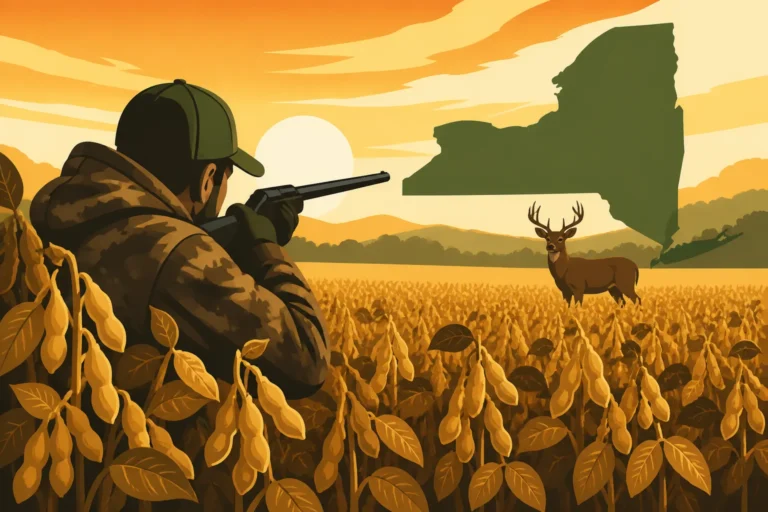
The crisp air of November in New York brings with it an unparalleled excitement for countless hunters. The Southern Zone firearm season is a highly anticipated time, offering some of the best opportunities to pursue whitetail deer across a diverse landscape, from rolling farmlands to sprawling state forests. However, navigating the specific regulations, understanding deer behavior during this intense period, and employing the right tactics can be daunting for even seasoned hunters. This comprehensive guide is designed to equip you with the knowledge needed to maximize your success and experience the thrill of the hunt responsibly and effectively.
Understanding the Southern Zone's Unique Landscape and Regulations
Hunting in New York's Southern Zone during the firearm season is a distinctly different experience than its Northern Zone counterpart. The population density, habitat types, and deer behavior are all influenced by the unique characteristics of this vast region, making a deep understanding of its rules and terrain absolutely crucial.
Defining the Southern Zone Boundaries and Why it Matters
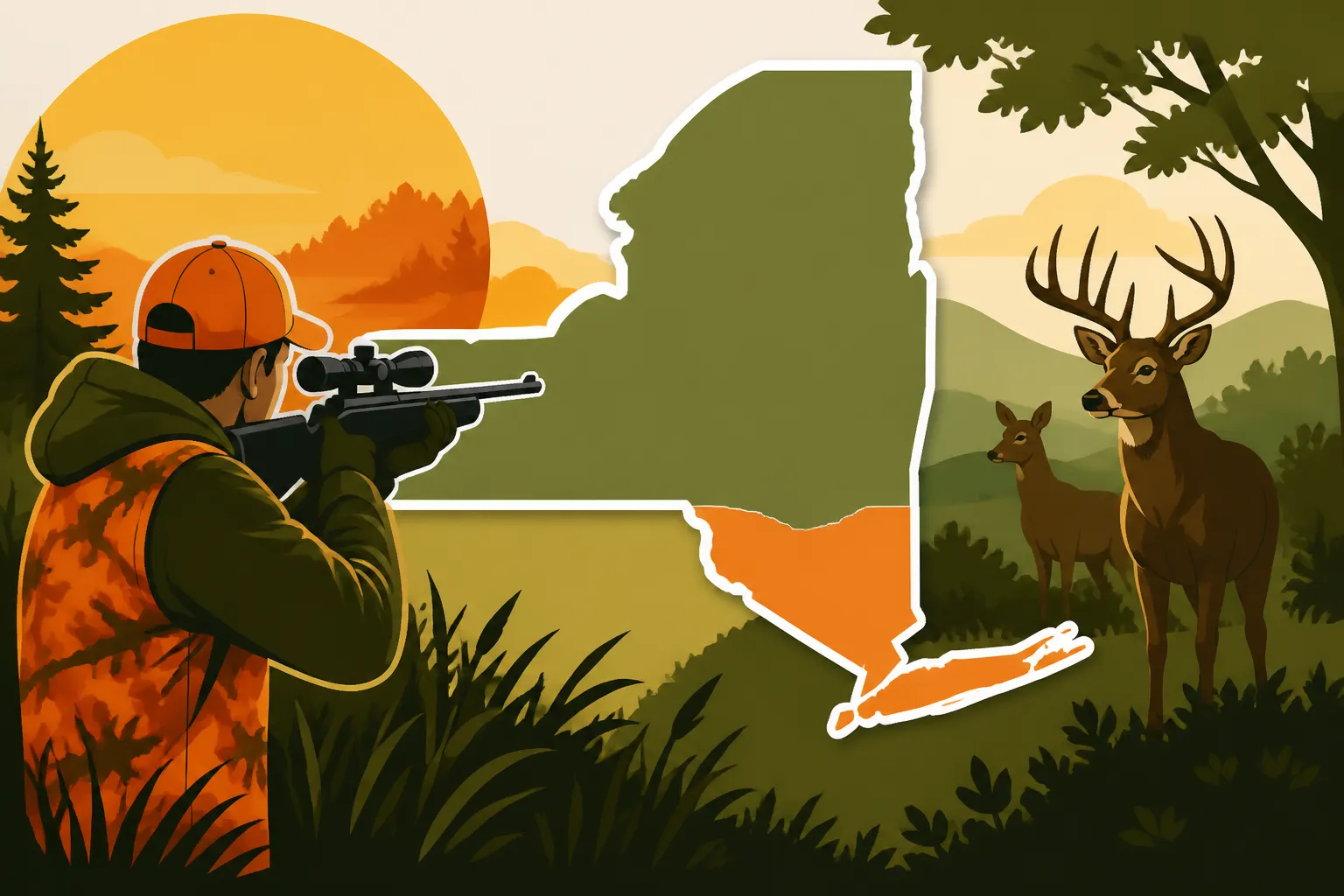
The Southern Zone encompasses the majority of New York State, generally lying south of the Adirondack Park and stretching down to the Pennsylvania border and out to Long Island. This massive area includes diverse landscapes such as the Finger Lakes region, the Catskill Mountains, the Hudson Valley, and the Southern Tier. Unlike the vast, rugged wilderness of the Northern Zone, the Southern Zone is characterized by a mix of agricultural lands, smaller woodlots, suburban fringes, and extensive state forests.
This geographical distinction is vital because it directly impacts deer populations, hunting pressure, and, most importantly, the regulatory framework. Deer densities are typically higher in much of the Southern Zone, especially in agricultural areas where food is abundant. This leads to longer seasons, often higher antlerless deer allocations through Deer Management Permits (DMPs), and specific rules tailored to managing these robust populations. Understanding which side of the invisible line you're hunting on is the first step in ensuring legal compliance and strategic planning. The different zones also dictate when New York's Two Deer Zones Split the Calendar, affecting everything from opening day to holiday hunts.
Key Dates and Permit Requirements for the Southern Zone Firearm Season
The Southern Zone firearm season is the cornerstone of deer hunting for many New Yorkers. Historically, it kicks off in mid-November and runs for three weeks, including a crucial segment of the rut. While specific dates can shift slightly year to year, this timeframe is consistent, capitalizing on deer activity during the breeding season.
Hunters in the Southern Zone typically start with their basic hunting license and a single regular season deer tag, usually for an antlered buck. However, to help manage deer populations and provide additional harvest opportunities, the New York Department of Environmental Conservation (DEC) offers Deer Management Permits (DMPs), often referred to as antlerless tags. These permits allow hunters to take antlerless deer (does and fawns) in specific Wildlife Management Units (WMUs). The availability and allocation of DMPs vary by WMU based on local deer population goals. It's imperative to apply for DMPs during the summer application period, as many WMUs have limited quotas. You can find comprehensive details about this crucial aspect in our guide on New York Deer Management Permits Explained. Being prepared with the right permits is just as important as having the right gear.
Legal Firearms and Ammunition for Southern Zone Hunters
New York State has specific regulations regarding the types of firearms and ammunition permitted for deer hunting, and these can vary slightly within the Southern Zone itself. Generally, rifles, shotguns, handguns, and muzzleloaders are legal during the firearm season. However, there are some critical nuances.
For instance, certain areas, particularly those with higher human population densities or smaller land parcels, might be "shotgun-only" zones where rifles are prohibited. Always verify the specific rules for your WMU before heading afield. When rifles are permitted, common calibers like .243, .270, .30-06, and .308 are popular and effective. For shotgun zones, hunters typically use 12 or 20 gauge shotguns loaded with slugs. These slug guns have become increasingly accurate with rifled barrels and saboted slugs. Handgun hunters must also adhere to specific caliber and barrel length requirements. Understanding these rules is not just about compliance, but also about safety, ensuring you're using appropriate firearms for the terrain and population density. For a deeper dive into the specifics, check out our article on Legal Rifle Rules in New York's Deer Zones.
Scouting and Pre-Season Preparation for Southern Zone Success
Success during the Southern Zone firearm season isn't just about showing up when the leaves fall. It's built on a foundation of diligent scouting and preparation long before opening day. Understanding the terrain, identifying key deer sign, and knowing where deer feed and bed are crucial pieces of the puzzle.
Interpreting Aerial Maps and Topography for Deer Movement
Before you even set foot in the woods, the best scouting begins from above, using aerial maps and topographic data. In the Southern Zone's varied landscape, deer movement is heavily dictated by topography, cover, and human disturbance. Look for natural funnels like saddles between ridges, narrow strips of woods connecting larger blocks of cover, or pinch points where terrain features force deer into predictable travel corridors. These are prime locations for ambush sites.
Pay close attention to changes in elevation, creek bottoms, and thickets that provide bedding cover. For example, a hidden bench on a hillside might serve as a bedding area, with trails leading down to a lower field where deer feed. Many hunters find tools like GoHunt invaluable for this initial phase, allowing them to mark potential stand locations, identify access routes, and analyze terrain features without disturbing the hunting area. The New York HuntFishNY Map Tool also offers excellent resources for identifying public land boundaries and features. By understanding how deer navigate their environment, you can predict their movements and place yourself in the best position for an encounter.
Locating Food Sources and Water in Diverse Southern Zone Habitats
Deer are creatures of habit, and those habits are often centered around food and water. In the Southern Zone, food sources can be incredibly diverse, ranging from natural mast crops to extensive agricultural fields. During the firearm season in late fall, deer are intensely focused on caloric intake to prepare for winter and recover from the rut.
Hard mast, primarily acorns from oak trees, is a highly preferred food source. Find a stand of producing oak trees, especially red oaks which retain acorns longer, and you've found a hotspot. Soft mast like apples or wild grapes can also be attractive if available. However, in many parts of the Southern Zone, agriculture plays a huge role. Standing corn, cut cornfields with scattered kernels, soybean fields, and alfalfa plots are all magnets for deer. Identifying which fields are actively being grazed or which timber stands have a good acorn crop is paramount. Don't forget water sources; while less critical in late fall with ample moisture, a secluded pond, creek, or spring can still draw deer, especially those on a bedding-to-feed pattern. For insights into what deer seek when natural foods are scarce, read about Late-Season Food Sources for New York Whitetails.
Reading Deer Sign: Scrapes, Rubs, and Trails
Once you've done your map scouting, it's time to hit the woods and confirm your theories by reading the actual sign left by deer. This is where the story of local deer activity truly unfolds. Look for well-worn deer trails, which indicate consistent travel. Pay attention to the size and freshness of tracks, distinguishing between bucks, does, and fawns.
During the firearm season, especially in the earlier weeks when the rut is still active or just winding down, scrapes and rubs are powerful indicators. Scrapes, areas where a buck paws the ground and urinates, often under an overhanging branch, are communication hubs. Fresh scrapes with moist earth and a distinct odor tell you a buck is actively working that area. Rubs, where bucks strip bark from saplings with their antlers, signal their presence and dominance. Larger rubs on bigger trees often point to more mature bucks. A line of scrapes or a cluster of rubs, like those described in Scrape Lines Along a Logging Road, can reveal a buck's preferred travel corridor and give you valuable clues about where to set up. Combining this ground-level intel with your aerial map analysis creates a formidable scouting strategy.
Effective Hunting Tactics for Southern Zone Firearm Season
With the Southern Zone firearm season opening, it's time to put all that scouting and preparation into action. The tactics you employ will depend heavily on the specific habitat you're hunting, the time of day, and how deer are moving in response to hunting pressure and the rut.
Stand Hunting Strategies in Varying Terrains
Stand hunting, whether from a treestand or a ground blind, is a cornerstone tactic for many Southern Zone deer hunters. The key is strategic placement. In agricultural areas, positioning your stand along a field edge, especially where a finger of woods extends into the field or where deer enter from thick cover, can be highly effective during evening hours as deer move to feed. On public land or in larger woodlots, focus on travel corridors between bedding and feeding areas, such as saddles, ridge lines, or creek bottoms. Funnels created by changes in habitat, like the edge of a pine plantation meeting hardwoods, are also excellent choices.
Treestands offer a clear advantage in terms of visibility and scent dispersal, getting you above a deer's primary line of sight and smell. Make sure your treestand is safely secured and use a full-body harness every time. Ground blinds, on the other hand, offer excellent concealment and warmth, making them perfect for all-day sits, especially in open country or on field edges. Just ensure they are brushed in naturally to blend with the surroundings. While our guide on Treestand Setups in Adirondack Hardwoods focuses on a different zone, the fundamental principles of wind direction, cover, and approach apply across New York's timbered landscapes.
Still-Hunting and Tracking in Southern Zone Woods
For hunters who prefer to be more mobile, still-hunting and tracking are highly rewarding tactics, particularly in the diverse woodlots and rolling hills of the Southern Zone. Still-hunting involves moving incredibly slowly and deliberately through the woods, taking one or two steps, then stopping to scan and listen for several minutes. The goal is to blend with the environment, becoming part of the landscape rather than an intruder.
Focus on subtle movements, the flick of a deer's ear, a horizontal line in a vertical world, or the rustle of leaves that isn't the wind. Use your binoculars constantly to pick apart cover. Wind direction is critical; always hunt into the wind or with a slight crosswind to keep your scent from preceding you. In areas with fresh snow, tracking becomes an option. Following fresh deer tracks, especially those of a larger buck, can be an exhilarating experience. The key is patience, moving slowly, and anticipating where the deer might be headed or where it might be bedded. Our insights on Still-Hunting Catskill Ridges offer valuable lessons that can be applied to similar terrain throughout the Southern Zone. This method demands focus and a deep understanding of deer behavior, but it can lead to close-range encounters.
Strategic Deer Drives for Southern Zone Private and Public Lands
Deer drives, when executed safely and strategically, can be an incredibly effective tactic in the Southern Zone, especially on larger tracts of both private and public land. This method involves a coordinated effort where a group of hunters (drivers) pushes deer towards other hunters (standers) positioned on escape routes or natural funnels.
The success of a deer drive hinges on meticulous planning and clear communication. First, define your drive area, considering terrain, wind direction, and known deer escape routes. Position standers in locations that offer clear shooting lanes and safety. Drivers then move through the designated area, making enough noise to encourage deer to move, but not so much as to panic them into reckless flight. Safety is paramount: always know where every hunter is located, wear plenty of blaze orange, and never take a shot without a clear understanding of your target and what's beyond it. Drives can be particularly effective in thickets or swamps where deer often hide. For smaller groups, Deer Drives With Three or Four Hunters can be surprisingly effective, especially on private woodlots that haven't seen much pressure. This communal approach to hunting can be a great way to put venison in the freezer, but responsibility is key.
| Tactic | Best for Terrain | Ideal Conditions | Hunter Count | Notes |
|---|---|---|---|---|
| Treestand | Woodlots, Ridge Lines, Field Edges | Mid-Day to Evening, Low Wind | 1-2 | Maximize elevation, scent control. |
| Ground Blind | Field Edges, Thickets, Brush Piles | All Day, Cold/Wet Weather | 1-2 | Excellent concealment, less scent dispersal. |
| Still-Hunting | Rolling Hills, Varied Timber | Anytime, Light Wind, Snow | 1 | Requires immense patience and observation. |
| Deer Drive | Thickets, Swamps, Large Woodlots | Mid-Day, Any Weather | 3-8+ | Safety first, meticulous planning critical. |
Navigating the Rut in the Southern Zone Firearm Season
The Southern Zone firearm season often coincides with the peak of the whitetail rut, transforming deer behavior and presenting unique opportunities and challenges for hunters. Understanding this biological imperative is key to predicting buck movement and increasing your chances of success.
Peak Rut Timing and Associated Deer Behavior
In New York's Southern Zone, the primary rut typically peaks in mid-November, which, conveniently, aligns perfectly with the opening and prime weeks of the firearm season. During this intense period, bucks are actively seeking out receptive does, throwing caution to the wind in their pursuit. This means bucks that were once highly nocturnal or reclusive can be seen moving at all hours of the day, covering significant ground.
Expect to see increased chasing, sparring between bucks, and a general restlessness among the deer herd. Does become more active, moving around more, which in turn draws bucks to them. This is the time when mature bucks, otherwise difficult to pattern, become vulnerable as their instincts override their usual wariness. Hunters often refer to this as the "lockdown" phase, where a buck might be with a single doe for 24-48 hours, making him seem to disappear, only to reappear intensely searching once again. For a detailed breakdown of this critical time, be sure to read our guide on Hunting the Rut in the Southern Zone.
Calling and Decoying Strategies During the Rut
The rut's heightened activity makes it the prime time to incorporate calling and decoying into your Southern Zone firearm hunting strategy. Bucks are vocal and territorial, and they are constantly on the lookout for other deer, making them susceptible to these tactics.
Grunt calls are incredibly effective during the rut. A tending grunt can simulate a buck pursuing a doe, while a social grunt might simply attract curiosity. Rattling, using real or synthetic antlers, can mimic two bucks fighting over a doe, often bringing an inquisitive buck charging in to investigate or challenge. Vary the intensity and duration of your rattling sequences. Doe bleats, especially an estrus bleat, can signal to a buck that a receptive doe is nearby. When it comes to decoying, a single doe decoy or a small buck decoy placed within clear view of your stand can work wonders. Ensure the decoy is positioned to draw a buck into a safe shooting lane. Combine your calls and decoys with scent wicks placed strategically to create a full sensory experience for passing deer. Mastering the art of vocalizations is explained further in our article on Rattling and Grunting in New York. Patience and timing are critical when using these methods, as a buck might take a while to commit.
Post-Shot Procedures and Meat Care
The moment of truth is just the beginning. After the shot, responsible hunters shift their focus to ethical recovery and proper meat care, ensuring a respectful end to the hunt and high-quality venison for the table.
Ethical Tracking and Recovery of Deer
An ethical hunter's responsibility extends far beyond the shot itself. Recovering your deer efficiently and respectfully is paramount. If you make a good shot, especially on a calm deer, consider waiting 30 minutes to an hour before beginning the track, allowing the deer to expire or bed down. For less-than-ideal shots (e.g., gut shot), extend that wait to 4-6 hours, or even overnight if conditions allow, to give the animal time to succumb and stiffen up.
Start at the point of impact, marking it carefully. Look for blood, hair, bone fragments, or internal organs. Note the color and consistency of the blood, as it can indicate where the deer was hit. A bright red, frothy blood suggests a lung hit, while dark, thick blood often points to a liver or muscle hit. Move slowly, marking the last known sign, and grid-search the area if the blood trail becomes sparse. Utilize tools like GoHunt to mark your trail and the last sign found, helping you stay oriented. If you lose the trail, back out and return later, or enlist the help of a tracking dog if legal in your area. For hunting later in the year, our guide on Tracking a Deer in Fresh New York Snow provides excellent, specific advice. Always keep looking, and never give up on a responsible recovery.
Field Dressing and Transporting Your Harvest
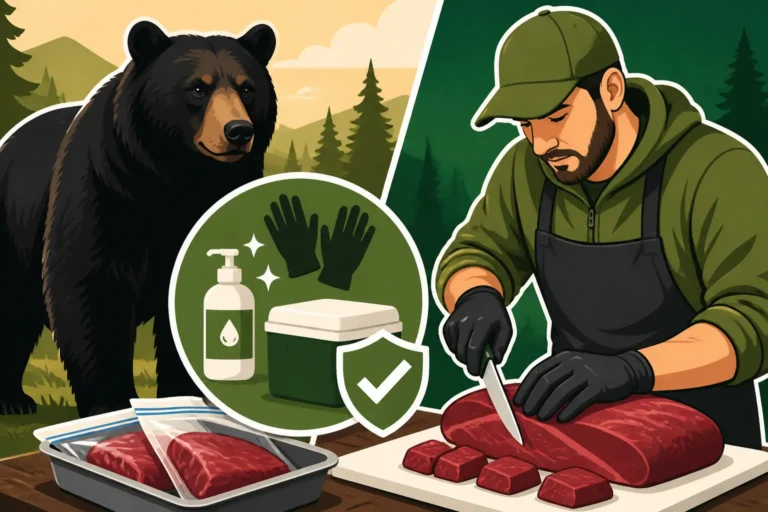
Once your deer is recovered, swift and proper field dressing is essential, especially in warmer early-season conditions, to cool the meat and prevent spoilage. First, tag your deer immediately with your carcass tag, as required by New York State law. Then, begin the field dressing process: make an incision from the breastbone to the pelvis, carefully cutting around the anus. Sever the trachea and esophagus, then roll the deer onto its side to allow the entrails to spill out. Remove all internal organs, taking care not to rupture the stomach or intestines.
After field dressing, wipe out the body cavity with a clean cloth or paper towels. If possible, rinse the cavity with water, though this isn't always feasible in the field. The goal is to cool the carcass as quickly as possible. Prop the cavity open or hang the deer to allow air circulation. For transportation, avoid dragging the deer over rough terrain for long distances if possible, as this can damage meat. Consider using a deer cart or sled, especially in snowy conditions. Remember to follow all reporting requirements; Reporting a New York Deer Harvest Online through the DEC's HuntFishNY system is mandatory and crucial for wildlife management.
Safety, Ethics, and Community in New York Deer Hunting
Hunting in the Southern Zone is a privilege, and with that privilege comes a responsibility to uphold the highest standards of safety, ethics, and community spirit. These aren't just rules; they're the foundation of a sustainable hunting culture in New York.
Adhering to Blaze Orange Requirements and Other Safety Rules
Safety is paramount, and New York State mandates specific blaze orange or blaze pink requirements during the firearm season to ensure hunters are visible to one another. All hunters must wear a minimum of 250 square inches of solid or patterned fluorescent orange or pink material, or a cap of the same material, visible from all directions. This rule applies even if you're hunting private land. Our article on New York Blaze Orange Requirements goes into further detail about what's needed.
Beyond visibility, adhere to the cardinal rules of firearm safety: treat every firearm as if it's loaded, always point the muzzle in a safe direction, be sure of your target and what is beyond it, and keep your finger off the trigger until ready to shoot. If hunting from an elevated stand, always use a full-body harness and a safety line. These practices aren't just about avoiding accidents; they're about fostering a safe environment for everyone who enjoys New York's outdoors.
Respecting Landowners and Fellow Hunters
A significant portion of hunting in the Southern Zone occurs on private land, making positive landowner relations absolutely vital. Always secure explicit permission before hunting on private property, and respect any specific requests the landowner may have. A written permission slip, although not always legally required, is always a good idea. Be courteous, leave gates as you found them, and offer to share some of your harvest. Building trust with landowners ensures future access not just for you, but for other hunters as well. For tips on navigating these conversations, check out Getting Private Land Permission in New York.
On public lands, be mindful of other hunters. Many areas, especially during the firearm season opener, can experience significant pressure. Space yourselves out, avoid setting up too close to another hunter's vehicle or stand, and communicate clearly if you encounter others. Remember that everyone is out there to enjoy the experience, and a little courtesy goes a long way. The Southern Zone offers vast tracts of state forest and Wildlife Management Areas, but crowded trailheads can be a reality on opening weekend.
Contributing to Deer Management and Conservation
Every hunter plays a direct role in New York's deer management and conservation efforts. Your adherence to regulations and your participation in data collection are crucial for maintaining healthy deer populations and sustainable hunting seasons. The most direct contribution is through accurate harvest reporting, which is mandatory for all deer taken in New York. When you report your harvest through the HuntFishNY app or website, you provide valuable data on deer numbers, sex ratios, and harvest locations, which the DEC uses to make informed management decisions.
Furthermore, hunters are on the front lines of detecting and preventing the spread of diseases like Chronic Wasting Disease (CWD). New York has strict regulations on carcass transport, especially if you're hunting in a designated CWD Containment Area like parts of Herkimer County. Familiarize yourself with these rules to prevent inadvertently spreading disease. Our guide on New York's Chronic Wasting Disease Containment Area provides critical information on this important topic. By being a responsible and informed hunter, you're not just pursuing game; you're actively contributing to the health of New York's wildlife for generations to come.
Disclaimer
Please remember that hunting regulations can change. While this guide aims to be comprehensive and current, it is essential to consult the official New York State Department of Environmental Conservation (DEC) hunting regulations guide annually before heading afield. This content is for informational purposes only and does not constitute legal advice. Always prioritize safety and ethical hunting practices.