Boots for New York Swamps and Snow
Oh, the age-old dilemma for every New York hunter: what in the world do you put on your feet to stay comfortable and effective in our incredibly diverse, and often downright challenging, terrain and weather? From the early season boggy lowlands to the late-season Adirondack blizzards, your feet take a beating. This guide is all about helping you understand the specific demands New York puts on your footwear and how to choose the right boots to keep you warm, dry, and on the hunt, no matter what Mother Nature throws your way.
The Unique Challenges of New York's Terrain and Seasons
New York isn't just one type of hunting ground; it's a tapestry of environments, each demanding something a little different from your gear, especially your boots. One weekend you could be slogging through muddy fields, and the next you're navigating ice-covered rocks on a Catskill ridge. Understanding these shifts is the first step to making smart choices.
Dealing with Early Season Swamps and Dew
When September rolls around and archery season opens, many hunters are thinking about mild temperatures, but they often forget about the lingering moisture. Early mornings are drenched in dew, fields are still holding onto moisture from summer rains, and those low-lying areas near creeks and swamps can be absolutely saturated. You might not need heavy insulation, but waterproofing is paramount. Imagine sneaking through a cattail marsh, trying to get to that perfect stand location, only to feel your socks getting squishy within the first ten minutes. It’s a miserable feeling, and it sets the tone for a potentially short hunt. Even if the air temperature feels nice, wet feet will quickly turn cold and uncomfortable. This is where those forgotten puddles and hidden seepages become your worst enemy.
Navigating Mid-Season Mud and Rocky Ground
As we push deeper into October and November, particularly during New York's Southern Zone Firearm Season, the landscape transforms. The leaves fall, revealing a myriad of hidden obstacles. Rain turns dirt roads and logging trails into thick, greasy mud pits. This isn't just an inconvenience; it's a traction hazard. One slip on a steep, muddy incline can lead to a twisted ankle or a ruined hunt. Beyond the mud, you’ve got rocky outcroppings, slippery roots, and uneven terrain, especially in places like the Catskills or Finger Lakes regions. You need a boot that can shed mud effectively, offer ankle support to prevent rolls, and provide a tenacious grip on varied surfaces. The ground might not be frozen solid yet, but the moisture combined with the exposed earth creates a whole new set of challenges that can make a long walk feel even longer.
Conquering Late Season Snow and Ice
Then comes the deep chill of late season, particularly during the Hunting the Southern Zone Holiday Hunt or New York's Muzzleloader-Only Weeks. The swamps have frozen over (or are at least crusty), and the mud has turned to hard, unforgiving ground, often covered in snow and ice. This is where insulation becomes king. You're sitting for long hours, often in a treestand, with minimal movement to generate body heat. Your feet are directly exposed to the cold ground or stand platform. Cold penetration from below is a serious concern. Furthermore, navigating crusty snow, icy rocks, or frozen creek crossings demands specialized traction to prevent dangerous falls. Keeping a Muzzleloader Dry in Lake-Effect Snow is one thing, but keeping your feet warm and secure in those same conditions is a daily battle. You need a boot that can stand up to extreme cold and provide reliable footing on treacherous surfaces, otherwise, your late-season dreams can quickly turn into a frostbitten nightmare.
Essential Boot Features for New York Hunting
When you're out in the New York woods, your boots are more than just footwear; they're critical tools that protect your feet and enable you to hunt effectively. You need specific features to combat the unique challenges our state presents.
Waterproofing: Your First Line of Defense
This is non-negotiable for New York hunting. Seriously, don't skimp here. Our seasons are riddled with rain, snow, dew, creek crossings, and just generally soggy ground. A boot that isn't truly waterproof will lead to cold, miserable feet, and eventually, force you out of the woods. Look for boots with a high-quality waterproof membrane, such as Gore-Tex or similar proprietary technologies. It's not just about the material, but how it's constructed. Seams need to be sealed, and the waterproofing should extend high enough on the boot to handle reasonable depths of water or snow.
Think about the unexpected. You might step in a deceptively deep puddle while Hunting Southern Tier Farmland Deer, or find yourself tracking a deer through a wet lowland marsh. If your waterproofing fails, that's it. Your feet get cold, circulation dwindles, and suddenly, you're not focusing on the hunt, you're just counting the minutes until you can go home. Good waterproofing means peace of mind, allowing you to focus on the game, not your soggy toes.
Insulation: Staying Warm in the Cold
Once the temperatures start to drop, insulation becomes just as vital as waterproofing. New York winters, especially in the Northern Zone or even during late Southern Zone firearm seasons, can be brutal. If you plan on sitting still for hours, especially in a treestand, you're going to need a good amount of insulation. This is typically measured in grams (e.g., 400g, 800g, 1200g, 2000g). The more grams, the warmer the boot, but also usually the bulkier and heavier.
Your choice of insulation should directly relate to your activity level and the expected temperatures. For early season active hunting, less insulation is needed. But for a cold December sit during Muzzleloader Tactics in December Cold, you'll want something much more substantial. Remember that insulation works by trapping warm air, so wearing appropriate socks (like wool, which retains warmth even when damp, as discussed in Wool Versus Synthetics in Wet Snow) is crucial to maximizing its effectiveness. Don't forget that if you tend to run cold, or if you're primarily stand hunting, it's almost always better to err on the side of more insulation, as you can always shed layers elsewhere, but it's hard to warm up cold feet once they're chilled.
Traction: Grip for Every Surface
New York's hunting grounds are a mixed bag of surfaces, and your boot's outsole needs to be ready for all of them. Good traction is critical for safety and efficiency, especially when carrying a pack or a harvested animal. Look for aggressive lug patterns on the sole that are designed to grip mud, loose soil, wet leaves, rocks, and snow.
Deep, multi-directional lugs are excellent for digging into soft terrain, while wider spacing between lugs helps prevent mud and debris from caking up and reducing grip. Rubber compounds also play a role; some are designed to remain flexible and grippy even in freezing temperatures, which is essential when you're Tracking a Deer in Fresh New York Snow. Slick, worn-out soles are an accident waiting to happen, particularly when you're navigating steep terrain or trying to make a quiet approach. A reliable sole will give you the confidence to move stealthily and safely, no matter how challenging the footing. It's not just about not falling; it's about being able to confidently traverse the landscape without conscious thought, allowing you to concentrate on the hunt.
Types of Boots for Specific New York Conditions
Choosing the right boot isn't a one-size-fits-all situation in New York. Our varied landscapes and seasons mean you'll likely want different types of footwear for different hunts.
Rubber Boots for Wet and Mucky Environments
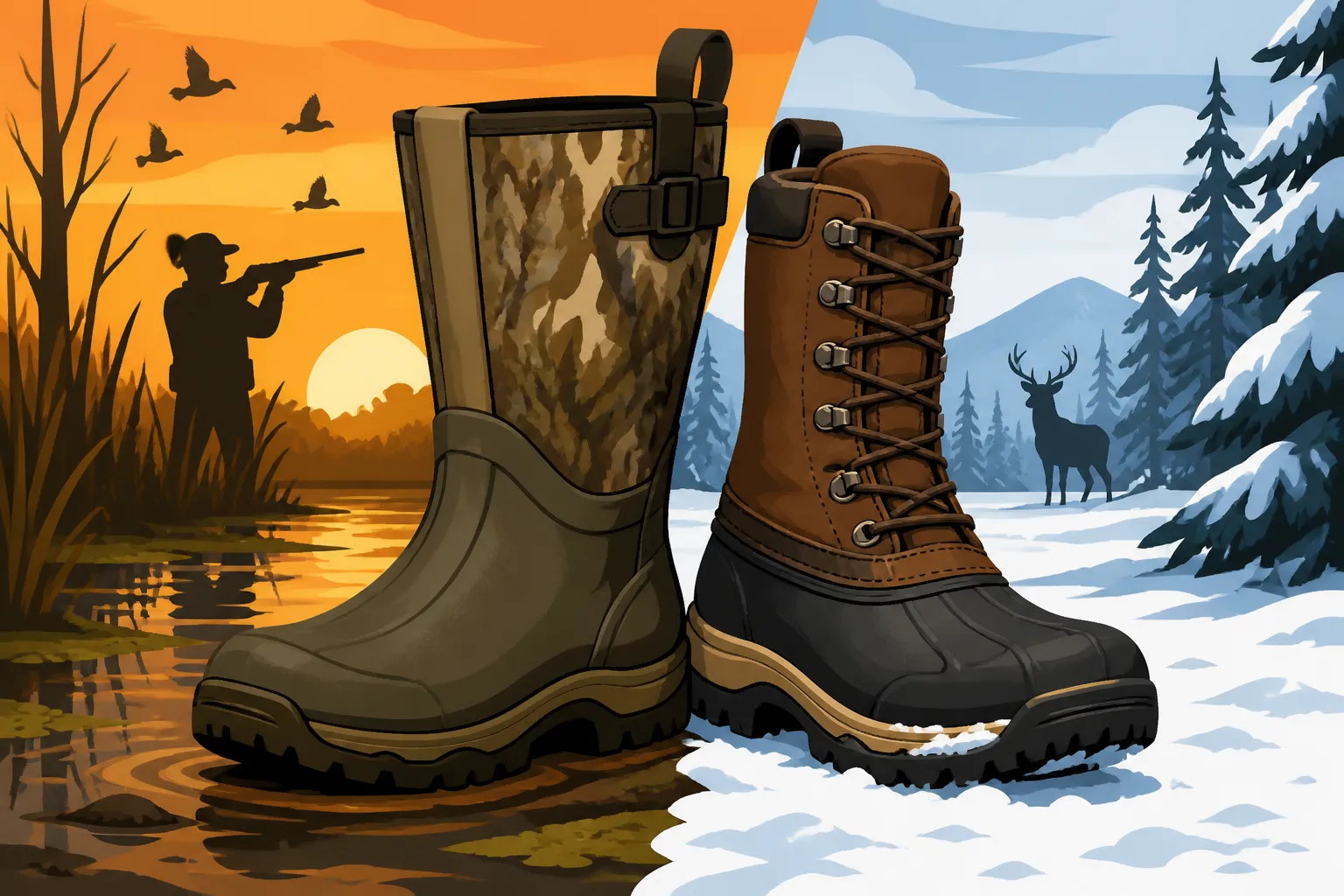
Ah, the classic rubber boot. For much of New York's early and mid-season hunting, especially if you're frequenting swamps, creek bottoms, or agricultural fields that get notoriously muddy, a good pair of rubber boots is practically essential. Brands like Lacrosse or Muck Boots are popular for a reason; they excel at keeping water out. Their seamless construction means there are no stitching holes to eventually leak, and the rubber material is naturally impervious to water. This makes them ideal for situations where you're truly slogging through muck and water deeper than just puddles.
Beyond just being waterproof, many modern rubber boots come with varying levels of insulation, making them suitable for cooler temperatures while still providing that crucial waterproof barrier. They're also often easier to clean than leather or synthetic boots after a particularly messy hunt. The key trade-off, however, is often breathability. Rubber doesn't breathe as well as other materials, so in warmer weather, your feet might get a bit sweaty. Despite this, for those specific, super wet conditions, there's really no substitute. Having a pair of Rubber Boots for Swamp Walking in your gear locker is a smart move for any New York hunter, ensuring you can tackle those watery lowlands without a second thought.
Insulated Leather/Synthetic Boots for Cold and Varied Terrain
When you need serious support, durability, and warmth for extended periods in colder, dryer (or at least less swampy) conditions, traditional insulated hunting boots made of leather or advanced synthetics are your go-to. These boots typically feature a robust construction with ample ankle support, making them perfect for navigating uneven, rocky, or steep terrain, such as the Adirondack or Catskill mountains. They'll generally have a waterproof membrane, as discussed earlier, but their primary advantage over rubber boots often lies in their structure and breathability.
The insulation levels can range from light (200-400g) for active cold-weather hunts to very heavy (1200g-2000g) for static late-season stand hunting in frigid conditions. Leather offers exceptional durability and molds to your foot over time, while synthetics can be lighter and quicker-drying. These are the boots you'll want for long hikes to a remote treestand, or for all-day sits in December. When you're out there for the duration, comfort and support are paramount. Many hunters pair these with quality wool socks for maximum warmth, similar to the advice in Insulated Boots for All-Day Sits.
Hybrid Options for All-Around Performance
For many New York hunters, a true "do-it-all" boot doesn't quite exist, but hybrid options come pretty close. These often blend the best features of rubber and traditional boots to offer a versatile solution. You might find boots with a waterproof rubber lower section that transitions into a more breathable, supportive synthetic or leather upper, complete with insulation. These designs aim to provide excellent waterproofing where it's most needed (around the foot and lower ankle) while offering better breathability and ankle support in the upper than a full rubber boot.
These hybrids are particularly useful for hunters who encounter a wide range of conditions on a single hunt or throughout the season. Perhaps you walk a wet field edge to get to a wooded ridge, or you need to cross a small stream before climbing a snowy hillside. A hybrid boot can offer a solid compromise, performing admirably in various scenarios without forcing you to switch footwear constantly. While they might not be the absolute best for extreme swamp slogging or extreme mountaineering, they are often a fantastic choice for the majority of situations encountered across New York Deer Seasons by Zone, offering a balanced approach to comfort, protection, and performance.
Sizing, Fit, and Comfort: The Often-Overlooked Factors
You can buy the most expensive, technically advanced boots on the market, but if they don't fit well, they're useless. In fact, they'll actively hinder your hunt and cause misery. Proper sizing, fit, and ongoing comfort are paramount for any serious hunter.
The Importance of Proper Fit and Sock Choice
This is absolutely critical. A boot that's too tight will restrict circulation, making your feet colder and more prone to numbness. A boot that's too loose will cause rubbing, leading to blisters and discomfort. When trying on boots, always wear the type of socks you plan to hunt in – typically thicker wool or synthetic blends. Consider how much room you'll need for varying sock thickness, especially if you plan to layer socks for colder weather. Many hunters find that going up half a size from their regular shoe size can provide the necessary room for thick socks and natural foot swell during long days afield.
A good fit allows your foot to be secure without feeling cramped. Your heel shouldn't slip excessively, and your toes should have enough room to wiggle without hitting the end of the boot. It's often helpful to try boots on in the afternoon or evening when your feet are slightly swollen, mimicking the conditions after a long day of walking. Don't be afraid to walk around the store, or even on an incline if possible, to truly test the fit. Remember, a comfortable foot is a happy hunter, and a happy hunter is a more effective hunter.
Breaking in New Boots for the Field
New boots, especially those made of leather or with stiff soles, almost always require a break-in period. This isn't just about making them comfortable for you; it's about conditioning the boot materials to flex with your foot and ensuring there are no unexpected pressure points that will cause issues once you're miles into the backcountry. Never, ever wear brand new boots on opening day for a multi-mile hike. That's a recipe for disaster and painful blisters.
Start by wearing them around the house, then for short walks in your neighborhood or local park. Gradually increase the duration and difficulty of your walks. Pay close attention to any hot spots or areas of rubbing, and address them with moleskin or appropriate lacing adjustments. The goal is to get the boots to conform to your feet and the materials to soften up before they face the rigors of a real hunt. This break-in period is an investment in your comfort and success in the field, so don't rush it. You'll thank yourself when you're effortlessly navigating uneven ground with perfectly molded footwear.
Maintaining Your Boots for Longevity
Hunting boots are an investment, and like any good investment, they need care to last. Proper maintenance extends their lifespan and ensures they perform season after season. After each hunt, clean your boots. Remove any mud, dirt, or debris from the uppers and soles. For leather boots, consider periodic conditioning to prevent the leather from drying out and cracking, which can compromise waterproofing. For all types of boots, ensure they dry thoroughly before storing them. Never dry them directly next to a high heat source, as this can damage materials and adhesives.
Use boot dryers if possible, or stuff them with newspaper to absorb moisture. Store them in a cool, dry place. Regularly inspect seams, soles, and lacing systems for wear and tear. Small repairs, like re-gluing a minor sole separation, can prevent larger, more expensive problems down the line. A well-maintained pair of boots will serve you faithfully for many seasons, making the initial investment even more worthwhile. Think of it as preparing your tools; just as you'd clean and care for your firearm, you need to do the same for the gear that gets you to the game.
Making Your Boot Selection: What to Consider
With so many options out there, choosing the right hunting boots for New York can feel overwhelming. It boils down to a few key considerations that balance performance with your personal needs and budget.
Balancing Weight and Durability
There's often a trade-off between how light a boot is and how durable it proves to be over rocky, abrasive terrain. Lighter boots are fantastic for covering a lot of ground quickly, reducing fatigue on long hikes, especially if you're carrying a pack for a Packs for a Day on Public Land type of outing. However, ultra-light options might sacrifice some ruggedness or ankle support, making them less ideal for brutal, uneven terrain like talus slopes or steep, root-covered ascents.
Heavier, more robust boots, often with thicker leather and stiffer soles, offer superior durability and protection against sharp rocks, thorns, and general wear and tear. They also tend to provide better ankle support, which is invaluable when you're traversing unstable ground or carrying a heavy load. The decision here should be guided by the type of terrain you primarily hunt and your personal fitness level. If you're primarily hunting flat, open fields, a lighter boot might suffice. If you're a dedicated mountain hunter in the Adirondacks, investing in a more durable, supportive, albeit heavier, boot is likely the wiser choice. This is where researching reviews and specs, perhaps on platforms like GoHunt, can really help you weigh these factors.
Budgeting for Quality Footwear
Hunting boots can range significantly in price, and it's easy to get sticker shock. However, remember that this is one piece of gear where skimping can lead to profound misery and even safety risks. Consider your boots an investment in your hunting success and comfort. While you don't necessarily need the most expensive boots on the market, choosing a reputable brand with proven waterproofing, insulation, and durability features is crucial.
Think about how often you hunt and in what conditions. A casual hunter making a few trips a year in mild weather might get away with a less expensive option. But if you're out every weekend, from early archery through late muzzleloader season, enduring all the varied conditions New York throws at you, then a higher-end, more durable boot will pay for itself in comfort, longevity, and saved frustration. Look for sales, but prioritize quality over the lowest price. A miserable day afield due to cold, wet feet is a powerful teacher. Investing in good boots is investing in more enjoyable, more successful hunts.
Reading Reviews and Hunter Experiences
Before making a final decision, dive deep into reviews and seek out opinions from other hunters, especially those who hunt in similar conditions to New York. Online forums, specialized hunting communities, and gear review sites (which might include detailed analysis from platforms like GoHunt) can be invaluable resources. Pay attention to comments about true-to-size fit, waterproofing performance after extended use, sole durability, and warmth in specific temperature ranges.
Remember that a boot that works perfectly for a hunter in Georgia might not hold up to a New York winter. Focus on reviews that speak to mud, snow, ice, and rocky terrain. Don't just read the glowing five-star reviews; pay close attention to the three-star reviews that often highlight specific quirks or minor issues that could be deal-breakers for you. This collective wisdom from other hunters can help you anticipate potential problems and make a much more informed decision, saving you from trial and error and ensuring you get a pair of boots that are truly ready for the challenges of New York hunting. Consider asking fellow hunters in your local club or community about their go-to footwear for different parts of New York's Southern Zone Firearm Season or the deep cold up north.
Disclaimer
This article is for general informational purposes only and does not constitute professional advice. Laws, prices and regulations vary by location and change over time. Consult a qualified professional for guidance on your specific situation.