Dog Vests for Cold Water Retrieves
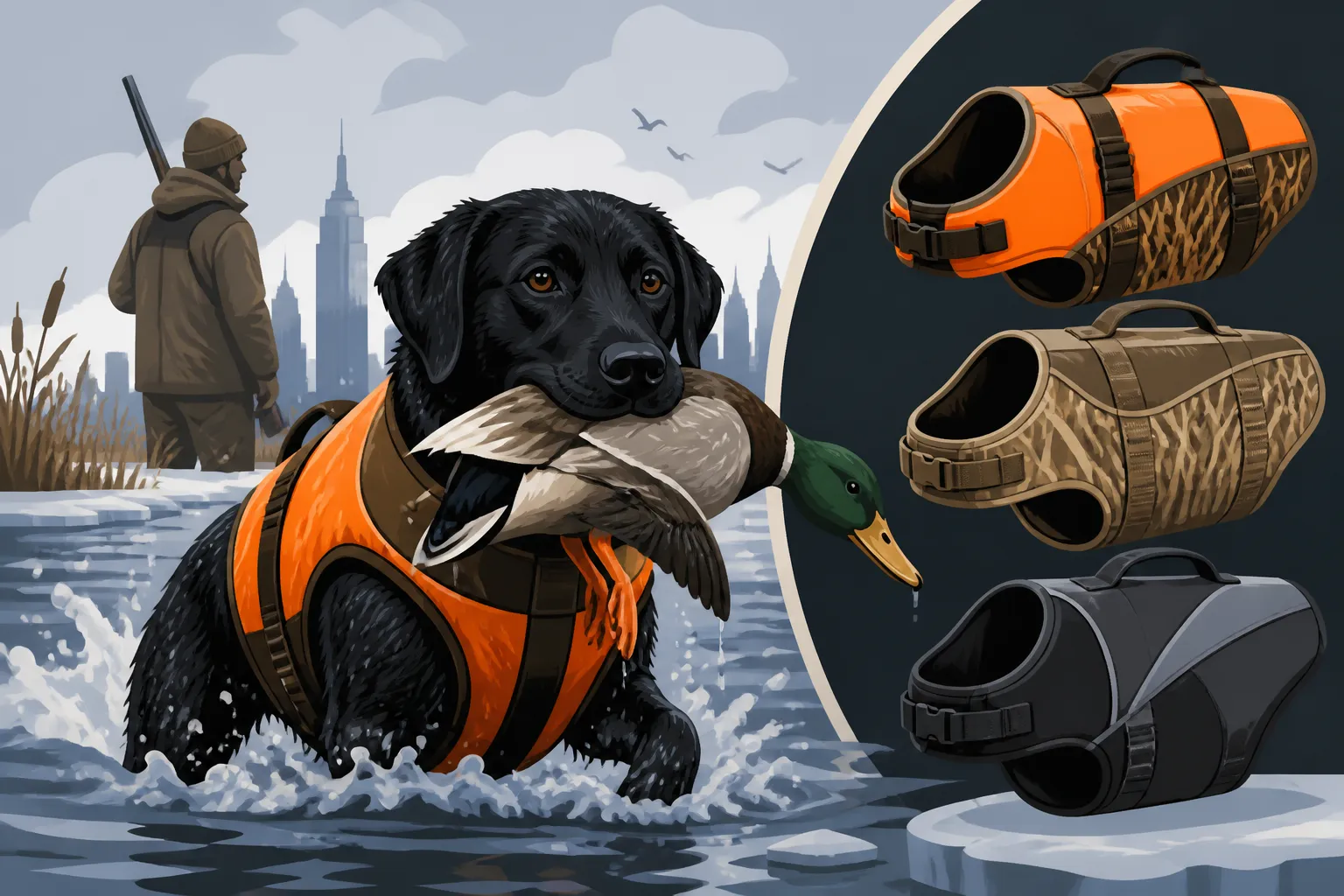
There's nothing quite like the sight of your retriever busting through ice and choppy water to bring back a downed duck or goose. It's a testament to their dedication and training, but it's also a stark reminder of the harsh conditions they often face in New York's waterfowl seasons. Too many times, I've seen hunters underestimate the brutal cold of our lakes, rivers, and marshes, putting their faithful companions at risk. This guide is all about ensuring your dog stays safe, warm, and ready for action with the right cold water vest, making every retrieve a success without compromising their well-being.
The Non-Negotiable Necessity of a Dog Vest in New York's Cold Waters
Let's be real, New York waterfowling isn't for the faint of heart, and that goes double for our canine partners. Whether you're hunkered down in a layout blind on the frigid shores of Lake Ontario, navigating the icy flows of a major river, or setting up in the wind-swept marshes of Lake Champlain, the water is cold. It can quickly become dangerous for a dog, no matter how tough they seem. A good dog vest isn't just an accessory; it's a critical piece of safety gear that can literally be a lifesaver.
Beyond Warmth: Protection from the Elements
While insulation is paramount, a well-designed dog vest does so much more than just keep your retriever warm. Think about the obstacles your dog might encounter: jagged ice shelves along the edge of a frozen pothole, submerged branches in a Finger Lakes creek, or sharp stubble in a cut cornfield where a duck fell. Without protection, these can cause painful cuts, abrasions, or even punctures. A durable vest acts as a second skin, providing a crucial barrier against these unseen hazards.
Imagine a retrieve on a blustery November morning near a shallow bay off the St. Lawrence River. Your dog plunges in, excited, but unbeknownst to you, there's a submerged log with a broken branch just below the surface. A bare chest and belly could easily be gored, ending your hunt—and potentially leading to a costly vet visit or worse. A good vest, especially one with reinforced chest panels, can deflect or absorb much of that impact, letting your dog complete the retrieve unscathed. It's about proactive safety, ensuring they come back to the blind ready for the next call, not limping from an injury.
Understanding Hypothermia Risk for Retrievers
Many hunters believe their retrievers are naturally built for cold water, and in many ways, they are. Breeds like Labradors and Chesapeakes have dense double coats that offer some insulation. However, prolonged exposure to freezing water, especially with repeated retrieves, will still sap their body heat at an alarming rate. Water conducts heat away from the body far more efficiently than air, and even a thick coat becomes less effective once fully saturated and exposed to cold winds.
Hypothermia is a serious threat. A dog's normal body temperature is higher than a human's, around 101-102.5°F. When it drops even a few degrees below that, they can start showing signs of shivering, lethargy, muscle stiffness, and even disorientation. In severe cases, it can lead to organ failure and death. A neoprene vest, specifically designed for insulation, creates an insulating layer of warm water next to their body, significantly slowing heat loss. It means your dog can stay in the game longer, retrieve more efficiently, and most importantly, remain safe and healthy, rather than shivering uncontrollably in the blind after just a few retrieves.
Deciphering Dog Vest Types and Their Specialized Features
Just like hunting coats for us, dog vests come in a variety of styles and materials, each suited for different conditions and retriever needs. Choosing the right one means understanding the nuances of insulation, durability, and functionality. We want our dogs to be comfortable and efficient, not weighed down or restricted.
The Workhorse: Neoprene Vests
When you think "dog vest for cold water," a neoprene vest is usually the first thing that comes to mind. And for good reason – neoprene is the gold standard for insulation in wet environments. It's the same material used in wetsuits, creating a thin layer of water between the material and the body that quickly warms up and acts as an insulator. For waterfowl hunters in New York, a good neoprene vest is indispensable. They are flexible, allowing for a full range of motion, and durable enough to withstand brush, ice, and constant use.
Most neoprene vests are either 3mm or 5mm thick. A 3mm vest is generally sufficient for brisk fall days or waters that aren't quite freezing solid, perhaps early season hunts in the Hudson Valley or warmer days on smaller ponds. However, when those true New York winter conditions hit—think diver hunting on Eastern Lake Ontario in December or pushing into the icy marshes of the Genesee River—a 5mm vest offers significantly more thermal protection. Some vests even feature an open-cell interior for better grip and reduced water absorption, while others have a smooth exterior to shed water faster. Look for vests with strong stitching and robust closures, often Velcro or zippers, that won't give out when wet and cold.
Enhanced Buoyancy and Protection: Hybrid Vests
While neoprene offers natural buoyancy, some vests take it a step further by incorporating additional flotation panels, often made from closed-cell foam. These are often called hybrid vests because they combine the thermal properties of neoprene with enhanced floatation. This can be a huge advantage for dogs, especially younger or older dogs, or those with less stamina in heavy currents or choppy waves. If you're frequently hunting big water, like the Great Lakes or the larger Finger Lakes, where long swims are common and strong winds can churn up whitecaps, that extra buoyancy can make a world of difference in reducing fatigue and improving safety.
Beyond floatation, many hybrid vests are designed with ultra-durable outer shells, sometimes made from Cordura or similar abrasion-resistant fabrics. This layered approach provides superior protection against punctures and tears from sharp ice, broken cattails, or any other abrasive surfaces your dog might encounter during a retrieve. Some even feature reinforced chest and belly panels, giving your dog armor against the nastiest snags. If your hunting grounds are particularly dense with cover, or if you find yourself breaking ice often, a hybrid vest offers that extra peace of mind that your dog is as protected as possible. They might be a bit bulkier, but the trade-off in safety and reduced fatigue is often well worth it.
Specialized Features for the New York Hunter
Modern dog vests offer a range of features designed to enhance performance and convenience, catering to the specific needs of waterfowl hunters.
Consider a vest with a sturdy grab handle on the back. This might seem minor, but it's incredibly useful for helping your dog back into a boat, over an icy bank, or simply controlling them in tight quarters, especially when they're wet and heavy. Many vests also include D-rings for attaching leashes or even GPS trackers, which can be invaluable when working in dense cover or large bodies of water where a dog might drift with the current. Knowing your dog's exact location, especially if they lose sight of the blind in fog or heavy cover, is a huge benefit. Some vests even come with small pockets for carrying dummy launchers or other training tools.
Camouflage patterns are another key consideration. While dogs don't perceive color in the same way we do, breaking up their silhouette against the background is still important, especially for wary ducks and geese. Vests are available in a variety of waterfowl patterns, allowing you to match your blind or the natural vegetation of your hunting area, whether it's the mottled browns of a cattail marsh or the muted grays of a snowy field. When planning out your hunting season, a tool like GoHunt can help you visualize the terrain and choose camouflage that blends seamlessly with the specific zones you'll be hunting, ensuring your dog is as concealed as you are. Remember, a camouflaged dog means less chance of birds flaring at the last second.
Sizing, Fit, and Material: Ensuring Optimal Performance and Comfort
Getting a dog vest isn't a one-size-fits-all proposition. A poorly fitting vest can be just as detrimental as no vest at all, causing chafing, restricting movement, or failing to provide adequate insulation. Just like you wouldn't wear ill-fitting waders, your dog shouldn't wear a vest that doesn't fit properly.
The Goldilocks Fit: Not Too Tight, Not Too Loose
The key to an effective dog vest is a "Goldilocks" fit: not too tight, not too loose, but just right. A vest that's too snug can restrict your dog's movement, especially around the chest and front legs, leading to discomfort and hindering their ability to swim freely. It can also cause chafing, which, after a long day of wet retrieves, can result in raw skin and pain. On the flip side, a vest that's too loose will allow cold water to flush through constantly, defeating the purpose of insulation. It might also shift during retrieves, creating drag and becoming a distraction.
To get the right fit, you'll need to accurately measure your dog. The most critical measurement is typically around the deepest part of their chest, just behind the front legs. You'll also want to measure their neck circumference and the length of their back, from the base of the neck to the base of the tail. Compare these measurements to the manufacturer's sizing chart. When trying on a vest, ensure you can comfortably slide two fingers under all straps and along the vest's edges. Check for any rubbing points, especially in the armpit area. Have your dog move around, sit, and lie down to ensure the vest doesn't bunch up or restrict natural movement. A comfortable dog is a focused and efficient retriever.
Material Matters: Neoprene Thickness and Durability
We touched on neoprene thickness, but it bears repeating: it's a critical factor in insulation. For most of New York's waterfowl season, especially from late October through December, a 5mm neoprene vest is typically the best choice. This thickness provides a robust thermal barrier against the truly brutal cold of our waters, whether you're hunting mallards in a flooded timber patch or chasing diver ducks on a Finger Lakes open water spread. A 3mm vest might suffice for milder early season hunts, but you'll appreciate the extra warmth when the mercury truly drops.
Beyond thickness, consider the overall construction and durability of the material. Look for vests made from high-quality neoprene that resists punctures and tears. Reinforced stitching, especially at seams and around stress points like grab handles, indicates a vest built to last. Some vests feature additional chest protection with tougher external materials, perfect for dogs that are constantly crashing through heavy cover or ice. Even the closure system matters; strong Velcro that holds up to repeated wetting and freezing, or heavy-duty zippers, will ensure the vest stays securely on your dog, retrieve after retrieve. Investing in quality here means your vest will withstand the rigors of many New York hunting seasons.
| Feature | 3mm Neoprene Vest | 5mm Neoprene Vest | Hybrid Vest (Neoprene + Foam/Durable Shell) |
|---|---|---|---|
| Primary Benefit | Moderate insulation, lighter, more flexible | Excellent insulation, highly protective | Superior buoyancy, maximum protection & insulation |
| Ideal Conditions | Early-mid season, mild cold, less extreme water | Mid-late season, freezing water, ice, harsh winds | Big water, strong currents, ice, heavy cover |
| Flexibility | High | Moderate | Moderate (can be bulkier in some areas) |
| Buoyancy | Natural neoprene buoyancy | Natural neoprene buoyancy | Enhanced buoyancy from added foam panels |
| Durability | Good, but less resistant to sharp punctures | Very Good, holds up well against abrasion and ice | Excellent, often with reinforced outer shell |
| Typical Use | Jump shooting creeks, smaller ponds, early season marsh | Layout blind hunting, river hunting, late season divers | Ocean hunting, large lakes, long retrieves in chop |
Trial Runs and Acclimation
You wouldn't head out on opening day with brand new, untested gear for yourself, and the same applies to your dog. It's crucial to get your retriever accustomed to wearing their vest before the season starts. Start with short periods in and around the house, rewarding them with praise and treats. Gradually increase the time they wear it, eventually introducing it during training sessions.
Take your dog on several training retrieves with the vest on. This allows you to observe how they move, swim, and whether the vest causes any discomfort or chafing. Pay close attention to their gait when running and their stroke when swimming. Is the vest creating drag? Is it rubbing anywhere? Are the closures holding securely? These trial runs are particularly important if you're exploring new public hunting land or trying out new tactics like Layout Blind Hunting Finger Lakes Fields. You'll want your dog to be completely comfortable and focused on the retrieve, not distracted by unfamiliar gear. This acclimation period ensures that when the real ducks start flying, your dog is confident, unhindered, and ready to perform at their best.
Care and Maintenance for Years of Reliable Retrieves
A quality dog vest is an investment in your dog's safety and your hunting success. Proper care and maintenance are essential to ensure that investment lasts for many seasons, continuing to protect your dog from New York's unforgiving elements. Neglecting your vest can lead to material breakdown, odors, and reduced effectiveness.
Post-Hunt Rituals: Cleaning and Drying
After a long day of New York Waterfowl Hunting by Zone, especially if you've been in salty coastal marshes or muddy river bottoms, your dog's vest will be covered in mud, grime, and potentially some unpleasant odors. It's tempting to just toss it in a corner, but that's a recipe for mildew and material degradation. As soon as you can, give the vest a thorough cleaning.
Rinse the vest thoroughly with fresh, cool water, paying special attention to any Velcro closures to remove mud, sand, and debris that can compromise their grip. If the vest is particularly dirty or starting to develop an odor, a mild soap or a specialized wetsuit cleaner can be used. Avoid harsh detergents or bleach, as these can break down the neoprene. Gently scrub any soiled areas, then rinse completely. Once clean, hang the vest to dry completely in a well-ventilated area, out of direct sunlight. Sunlight can degrade neoprene over time, making it brittle. Never put a neoprene vest in a dryer; the heat will damage the material beyond repair. Ensuring it's bone-dry before storage will prevent mold and mildew from forming, which not only smells terrible but can also weaken the material.
Storage Solutions: Keeping Vests Ready for Action
How you store your dog's vest between hunts and especially during the off-season can significantly impact its lifespan. Improper storage can lead to creases, cracks, and general wear and tear that compromise its insulating and protective properties.
Once the vest is thoroughly cleaned and dried, store it flat or hang it on a wide, padded hanger to prevent creasing. Avoid folding it tightly or stuffing it into a small bag, as this can create permanent creases in the neoprene, which are weak points that can eventually lead to tears. Keep it in a cool, dry place, away from extreme temperatures and direct sunlight. A dedicated gear tote or a spot in your hunting shed is ideal. If you're using a planning tool like GoHunt to scout new areas for the upcoming season, take a moment to also check on your gear. Just as you’d inspect your shotgun or calls, give the dog vest a quick once-over before the next hunting opportunity, ensuring it's free of damage and ready for action. By taking these simple steps, you'll ensure that your dog's vest remains in top condition, ready to provide comfort and protection for every cold water retrieve, whether you're Hunting Western Zone Diver Ducks or exploring the New York Waterfowl Zones and Seasons.
Disclaimer
This article is for general informational purposes only and does not constitute professional advice. Laws, prices and regulations vary by location and change over time. Consult a qualified professional for guidance on your specific situation.