Using a Ground Blind on New York Public Land
Hunting public land in New York can be an incredible experience, but let's be honest, it often comes with its own set of frustrations. Whether you're dealing with crowded access points, sparse natural cover, or unpredictable weather, trying to stay hidden and comfortable while waiting for that perfect shot can feel like a losing battle. This guide is all about turning those frustrations into success by showing you exactly how to effectively use a ground blind on New York's public lands, giving you an edge where others might struggle.
Why a Ground Blind Makes Sense for New York Public Land
When you picture hunting in New York, you might immediately think of treestands silhouetted against bare trees, or still-hunting through thick brush. And while those methods certainly have their place, a ground blind offers a unique set of advantages, especially on public land where conditions can be less than ideal. It's not just about hiding; it's about comfort, concealment, and adaptability in environments that often challenge traditional hunting techniques.
Overcoming Hunting Pressure
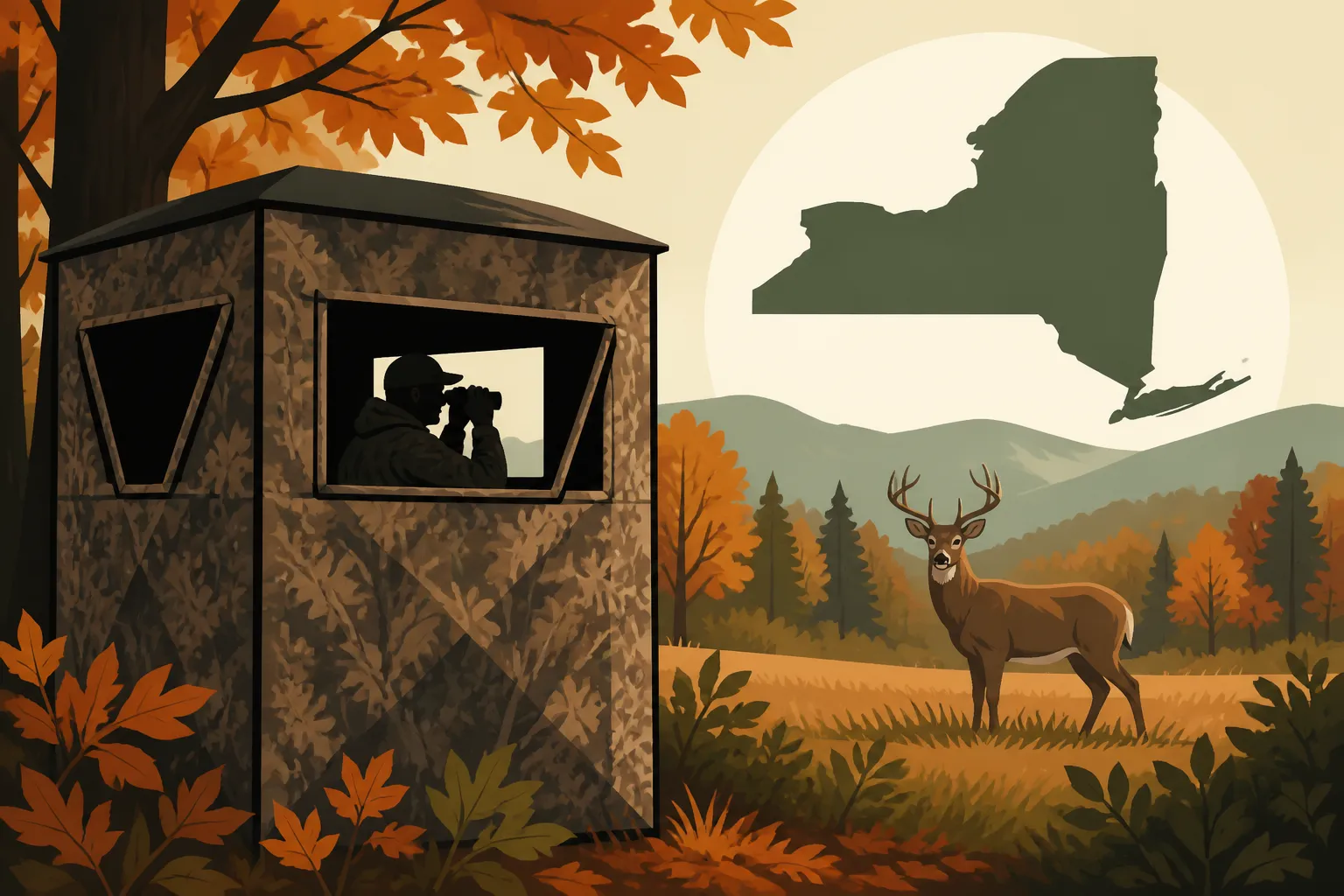
One of the biggest headaches on New York public land is hunting pressure. You've scouted a killer spot, you're set up, and then you hear another hunter stomping through the woods, or worse, see them walk right past your location. Deer on public land are notoriously skittish, and any movement, even subtle adjustments in a treestand, can send them running. This is where a ground blind truly shines. When properly brushed in, a blind becomes part of the landscape, a non-threatening dark blob that deer are less likely to perceive as a human threat.
Think about it: deer are used to seeing blow-downs, rock formations, and dense thickets. A well-placed, camouflaged blind mimics these features, allowing you to move, stretch, or even check your phone (quietly, of course!) without exposing yourself. This static concealment can be a game-changer when you're dealing with the constant ebb and flow of other hunters pushing deer around. You can essentially disappear into the woods, letting the deer come to you, even if they're being pushed by someone else's activity.
Maximizing Limited Cover
New York's public lands are incredibly diverse. You might find yourself in the dense timber of the Adirondacks, the rolling hills and agricultural edges of the Southern Tier, or the mixed forests of the Finger Lakes region. Not all these areas offer perfect natural cover for a treestand, or even enough brush for a natural ground hide. Imagine a situation where the ideal deer travel corridor runs along the edge of an old, overgrown field, but the only trees are sparse, immature saplings that offer no high vantage point or suitable cover.
In these scenarios, a ground blind is your best friend. It provides instant, portable cover in places where Mother Nature has been a bit stingy. You can tuck it into a fencerow, at the base of a lone pine on a field edge, or even within a sparse patch of briars. This allows you to hunt those prime locations that might otherwise be unworkable. For instance, in an area you identified through tools like GoHunt as a key transition zone between bedding and feeding, but found completely devoid of good treestand trees, a blind provides the solution. It's about being able to hunt where the deer are, not just where the cover allows.
Weather Protection and Comfort
Let's face it, hunting in New York often means dealing with unpredictable weather. Early archery season can bring sweltering heat and swarms of mosquitoes, while late firearm or muzzleloader seasons can dump rain, sleet, or heavy snow on you. Sitting in a treestand or behind a flimsy natural blind in these conditions can be downright miserable, cutting your hunt short and making you less effective.
A modern hub-style ground blind offers legitimate protection from the elements. The durable fabric shields you from biting winds, pouring rain, and even light snow. This comfort is more than just a luxury; it directly impacts your success. When you're warm, dry, and not shivering, you can sit longer, remain more focused, and ultimately increase your odds of encountering game. Plus, that solid roof provides a welcome respite from the sun on hot days or keeps you dry during an unexpected shower, allowing you to concentrate on the hunt instead of fighting the weather. Remember, a comfortable hunter is a patient hunter, and patience is often key on pressured public land.
Choosing the Right Ground Blind for New York's Diverse Terrain
Just like you wouldn't use a waterfowl shotgun for grouse hunting, you need to select the right ground blind for the specific challenges and opportunities presented by New York's public lands. There's a wide range of options out there, and understanding their features will help you pick one that truly enhances your hunting experience.
Size and Portability Considerations
When you're hoofing it into a remote corner of a State Forest, or traversing a long trail to a WMA, portability is paramount. You can't just drive your truck to every spot. A huge, heavy blind might offer maximum comfort and space, but if it takes two trips or leaves you exhausted before you even get set up, it defeats the purpose.
Consider the classic hub-style blinds. They offer a good balance of quick setup and solid construction. For solo hunters who cover a lot of ground, a one-person blind or a compact two-person blind is often the best choice. Brands like Primos or Barronett make models that pack down relatively small and weigh around 15-20 pounds, which is manageable for a decent walk. If you're planning to hunt with a buddy, or if you prefer more space for gear, a larger two- or three-person blind might be necessary, but be prepared for the added weight and bulk. Some even offer backpacking straps to make the trek easier. Think about your average hike to a stand, and choose accordingly. A good pack can make a world of difference for carrying your blind and other gear, especially if you're hiking deep into areas like the Connecticut Hill Wildlife Management Area.
Camouflage and Material Durability
New York's diverse landscapes require versatile camouflage. While a basic green or brown pattern might suffice in some timber, consider patterns that break up your outline effectively across varied terrain. For example, a pattern with a mix of dark and light elements, mimicking tree bark, shadows, and open sky, will blend better than a single-tone green. Specific patterns like Mossy Oak Bottomland or Realtree Edge are popular for their effectiveness in various forest environments.
Durability is another non-negotiable factor. Public land hunting means your gear will take a beating from briars, rocks, and transport. Look for blinds made from heavier-denier fabrics (e.g., 150D or 300D polyester) that resist tears and punctures. The fabric should also be treated for waterproofing and UV resistance to prevent fading and deterioration from sun exposure. Additionally, pay attention to the frame poles – fiberglass poles are common, but look for robust hubs and connectors. A quiet fabric is also essential; cheaper blinds often make a rustling sound with every breeze or movement, which can easily alert wary deer.
Window Configurations and Shooting Lanes
The windows on your ground blind are critical. You need to be able to see clearly and shoot accurately without giving away your position. Most blinds offer various window designs:
- Mesh windows: These are common, allowing you to see out while keeping you concealed from the outside. Some feature "shoot-through" mesh for archery, but practice is crucial as broadheads can be deflected.
- Silent slide windows: These allow you to open and close sections of the blind quietly, offering more control over your viewing and shooting lanes. They're excellent for adapting to deer movement or changing conditions.
- Vertical/horizontal shooting slots: Some blinds have narrow, strategically placed openings that are great for rifle or shotgun hunters, providing a clear line of sight without exposing much of the interior.
Consider the type of hunting you'll be doing. If you're primarily bowhunting, make sure the windows open wide enough to allow for a full draw without hitting the blind's frame. If you're using a shotgun during New York's Southern Zone Firearm Season, you might prioritize different window shapes. Also, think about the number and placement of windows. Having multiple viewing angles is a huge advantage, letting you scan for approaching game without constantly shifting your body. A good configuration ensures you have clear shooting lanes at various distances, whether you're taking a close-range archery shot or a longer rifle shot across a field.
Strategic Placement and Setup on Public Land
Setting up a ground blind isn't just about popping it open and climbing in. On public land, where deer are often more alert and human scent is a constant threat, strategic placement and meticulous setup can make or break your hunt.
Scouting for Ideal Locations
Pre-season scouting is absolutely non-negotiable when it comes to ground blind success on public land. You can't just randomly plop a blind down and expect deer to walk by. You need to identify key deer movement patterns. Look for:
- Pinch points: Narrow corridors that funnel deer naturally, like a strip of woods between two fields, a saddle on a ridge, or a thicket bordering a swamp.
- Field edges: Deer often use the edges of agricultural fields or overgrown clearings, especially in areas like the Finger Lakes Region. A blind placed here can intercept deer moving to feed.
- Funnels: Areas where dense cover forces deer into a predictable travel path. These might be subtle, like a small stream crossing or a depression in the landscape.
- Transition zones: The areas where different types of cover meet, such as where thick pines meet open hardwoods. Deer often stage in these areas before moving into more open feeding grounds.
Tools like the New York HuntFishNY app or private land mapping software like GoHunt are invaluable for this. You can overlay aerial photos with public land boundaries to identify potential hotspots, access points, and terrain features that might concentrate deer movement. Look for areas away from easily accessible trails, where other hunters might not venture as often. Don't be afraid to walk a few extra miles; often, the best spots are found off the beaten path. Remember, understanding how deer move on New York public land is key to a successful setup.
Blending In and Minimizing Disturbance
Once you've identified a prime spot, how you set up your blind is critical. A brand-new, brightly colored blind sticking out like a sore thumb will alert every deer in the county.
- Brush it in: This is perhaps the most important step. Don't just rely on the blind's camouflage pattern. Gather natural materials from the immediate surroundings – branches, leaves, tall grass, cornstalks – and weave them into the blind's mesh loops or tuck them around its base. Break up the hard edges of the blind to make it look like part of the natural vegetation. The goal is to make it disappear into the background.
- Set up early (if possible): If you can get your blind out a week or two before you plan to hunt, even better. This gives deer time to get used to its presence and view it as a non-threat. If early setup isn't an option, focus even more on brushing it in thoroughly on the day of the hunt.
- Scent management: A new blind often has a strong fabric smell. Set it up at home for a few days to air out, or spray it down with a scent-eliminating spray. On the day of the hunt, always approach your blind quietly and take a roundabout route to avoid leaving a scent trail directly to your setup. Consider your entry routes on steep Catskill ground to minimize disturbance.
- Clear shooting lanes: Before you settle in, make sure you have clear, unobstructed shooting lanes to all likely deer approaches. Trim any small branches or weeds that might deflect an arrow or bullet.
Legalities and Regulations
Always, always double-check the specific regulations for the public land you're hunting in New York. While ground blinds are generally permitted, there can be nuances. For example, some Wildlife Management Areas (WMAs) may have rules about how long a temporary structure can remain, or if it needs to be clearly marked with your name and address. On areas managed by the Department of Environmental Conservation (DEC), you're typically allowed to use portable ground blinds, but they must be removed at the end of the season. No permanent structures are allowed. It's also wise to check for specific rules on Ground Blind Rules on New York WMAs or other public hunting areas. Don't assume; verify on the DEC website or with a local ranger. Ignorance of the rules is no excuse, and a citation can ruin your season.
Hunting Effectively from a Ground Blind
Once your blind is set up, the real work begins. Hunting from a blind requires a slightly different approach than hunting from a treestand, especially concerning scent, movement, and how you interact with your surroundings.
Managing Scent and Movement
Despite being enclosed, scent and movement are still critical considerations in a ground blind. The wind can still carry your scent, and deer can pick up on subtle cues.
- Scent control: Treat your blind like an extension of your body for scent control. Use scent-free detergents for your hunting clothes. Shower with scent-free soap. Utilize scent-control sprays on your blind's interior and exterior, especially around openings. A small, portable carbon filter can also help reduce scent within the blind, though it's not a foolproof solution. Always play the wind; even in a blind, if the wind is blowing your scent directly toward where you expect deer, your chances are diminished.
- Minimize movement: While a blind allows more flexibility than a treestand, excessive movement can still spook deer. When a deer is approaching, freeze. Use the mesh windows to watch their approach. If you need to adjust your position, do it slowly and deliberately when the deer's head is down or when it's behind a thick tree. Practice your draw or gun lift beforehand so it's a fluid, minimal motion. Avoid wearing bright colors inside the blind that could be seen through the mesh.
- Gear organization: Keep your gear organized and accessible. Fumbling for your rangefinder, release, or calls can lead to unnecessary movement and noise. Have everything within arm's reach, quietly laid out on a small stool or shelf.
Shooting from a Blind
Shooting from a ground blind is different from an open-air shot. You have confined spaces, and angles can be tricky.
- Practice, practice, practice: Before hunting, practice shooting your bow or firearm from inside your blind. Sit in the chair you'll use. Draw your bow and ensure your cams or stabilizers don't hit the blind's frame. If using a rifle or shotgun, ensure you have enough swing radius. Pay attention to the height of your shooting window relative to your seated position. Many hunters find that a short bi-pod or shooting stick can be incredibly helpful for steadying a rifle shot from a ground blind.
- Arrow/bullet clearance: For bowhunters, ensure your broadhead has plenty of clearance. A slight deflection from the mesh or fabric can send your arrow off course. Some hunters prefer to cut out sections of the mesh for a completely clear shot, especially with fixed-blade broadheads, while others rely on shoot-through mesh. Know your equipment and its capabilities.
- Shot angles: From a ground blind, you're shooting at ground level. This means your shot angle will be flatter, potentially increasing the risk of hitting the opposite leg or shoulder on a deer if your aiming point isn't precise. Always aim for the vitals, understanding the animal's anatomy from your eye level.
Dealing with Public Land Pressure
Public land, by its very nature, means you'll likely encounter other hunters. Instead of letting this frustrate you, use your ground blind as an asset.
- Stay longer: While other hunters might pack up when they don't see anything for an hour, your comfort in the blind allows you to sit for extended periods, especially during prime times like early morning and late evening. Often, deer pushed by other hunters will eventually settle into quieter areas, which could be right where your blind is located. This patient approach is often rewarded, particularly during the peak of Hunting the New York Rut in November.
- Hunt less obvious spots: Utilize your GoHunt mapping tools to find pockets of public land that might be harder to access or seem less appealing to casual hunters. These often hold deer that have learned to avoid the pressure. A ground blind allows you to make a comfortable setup in these overlooked areas.
- Use the blind as a mobile hide: Don't think of your blind as a permanent fixture. If scouting reveals a new deer pattern, or if pressure shifts, you can pack it up and move it to a more promising spot. Its portability is one of its greatest strengths. However, when doing so, remember to follow all rules about setting up a blind on New York public land, and be mindful of New York Public Land Hunting Hours.
| Feature | Best Use Case | Pros | Cons |
|---|---|---|---|
| Hub-Style Blind | Versatile, most common | Quick setup, good weather protection, decent space | Can be bulky/heavy, visibility sometimes limited by mesh |
| Pop-Up Blind | Lightweight, highly portable | Extremely light, easy to carry for long treks, quick deployment | Less durable, minimal weather protection, often smaller/less stable |
| Brush Blind | Ultimate concealment, natural feel | Blends seamlessly, very quiet | Time-consuming to build, zero weather protection, limited movement |
| Panel Blind | Semi-permanent, specific shooting lanes | Very stable, excellent shooting rests, custom concealment | Not portable, requires specific setup, limited viewing angles |
Disclaimer
Please remember that hunting regulations and land access rules can change. Always consult the official New York State Department of Environmental Conservation (DEC) website or relevant land management agency for the most current information before heading into the field. This guide offers general advice and should not replace official regulations or proper hunter education.