Hunting the New York Rut in November
The November rut in New York is often heralded as the most exciting time to be in the deer woods, but let's be honest, it can also be incredibly frustrating. One day you see bucks running wild, the next it's dead quiet, leaving you scratching your head. This comprehensive guide is here to demystify the complexities of hunting the New York rut, helping you understand deer behavior, adapt your tactics, and increase your odds of success when those big bucks are finally on the move.
Understanding the November Rut in New York
The rut is a magical time, but it’s not a single event; it's a progression of phases where deer behavior shifts dramatically. In New York, November is undeniably the peak, but understanding why and how it unfolds can make all the difference between a frustrating sit and a successful hunt.
The Three Phases of the Rut in New York
While the exact timing can fluctuate a bit each year based on photoperiod (daylight length) and, to some extent, individual deer cycles, the general progression remains pretty consistent. Think of it as a play with three distinct acts: the pre-rut, the breeding phase, and the post-rut.
The pre-rut, usually kicking off in late October and extending into early November, is characterized by increased buck activity. They're feeling frisky, testing the waters, and actively laying down sign. You'll see more rubs and scrapes appearing, and bucks will start checking doe groups with greater frequency. This is often an excellent time to be in the woods because bucks are still somewhat predictable in their movements, often following established travel corridors in search of the first receptive does. They're burning energy, establishing dominance, and generally becoming more visible during daylight hours. Hunters who focus on traditional funnels, pinch points, and food sources during this time often have great encounters.
Then comes the breeding phase, typically mid-November, which many consider the "lockdown" period. This is when the majority of does come into estrus, and bucks will often "lock down" with a single doe, tending her for 24-48 hours. This can be infuriating for hunters because it often leads to a sudden drop in visible buck movement. You might spend a day or two seeing nothing, leading you to believe the rut is over. But trust me, it’s far from it! The bucks are simply preoccupied. Persistence is key during this time, as those tending bucks might still move short distances or be pushed by other bucks. This is also when some of the biggest, oldest bucks that have been nocturnal all season might finally show themselves during daylight, driven by the intense urge to breed.
Finally, the post-rut starts to appear towards late November and into early December. The primary breeding has subsided, but there are still late-cycling does and fawns that come into estrus. Bucks, while tired and depleted from the breeding phase, will still be searching for any remaining receptive does. Their focus also shifts back to recovering lost body weight, meaning they'll hit reliable food sources hard. This phase can offer a second window of opportunity, especially if you can locate late-season food plots or unpressured agricultural fields. Don't write off November entirely if you miss the peak; those weary bucks are still out there.
Regional Differences in Rut Timing
New York is a big state, and while the photoperiod is the primary driver, local conditions can subtly influence how the rut plays out. You'll find different dynamics whether you're hunting New York's Southern Zone Firearm Season or New York's Northern Zone Firearm Season.
In the Southern Zone, which includes most of the agricultural land, rolling hills, and denser human populations, the rut tends to be fairly consistent year after year, peaking squarely in mid-November. The higher deer densities in many Southern Zone WMUs mean more interactions and often more visible chasing during the pre-rut and breeding phases. Hunters in areas like the Finger Lakes or the Catskill foothills will likely see intense activity around the 10th-20th of November. The abundance of food sources, whether natural mast crops or agricultural fields, will often dictate where deer concentrate, even during the rut. Using an app like GoHunt to scout aerial photos of these areas can help pinpoint key travel corridors between bedding and feeding, which become highways during the rut.
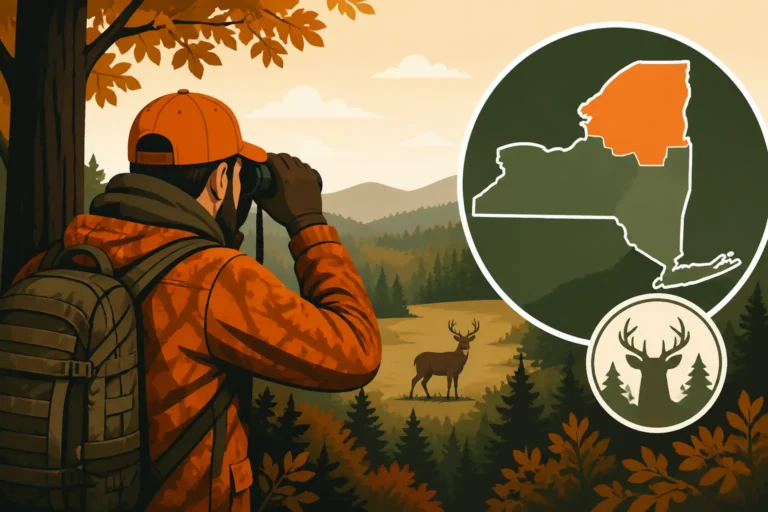
Up in the Northern Zone, encompassing the vast Adirondack wilderness, the rut might feel a bit more spread out or less intense in terms of visible chasing. This is largely due to lower deer densities and the rugged, expansive terrain. While the biological peak is still mid-November, the sheer scale of the woods means bucks have to cover more ground to find does. This often translates into more "cruising" behavior rather than concentrated chasing. Weather also plays a more significant role here; early snows can impact deer movement and visibility. If you're hunting the Adirondacks, expect less frantic activity but a higher chance of encountering a solitary, mature buck moving purposefully. Understanding Where Adirondack Bucks Bed can be especially crucial here, as they may only travel short distances from their core areas.
Key Rut Behaviors and What They Mean for Hunters
To effectively hunt the rut, you need to understand the language deer speak through their actions. Bucks and does exhibit distinct behaviors during this period, and recognizing these cues will help you adjust your strategy on the fly.
Scrapes, Rubs, and Communication Hubs
During the pre-rut and even into the breeding phase, bucks become sign-making machines. Rubs are created when a buck scrapes his antlers against a small tree or sapling, peeling off the bark. These are visual markers and often used to deposit scent from glands on their forehead. You'll find them along trails, on ridge lines, and sometimes clustered in areas of heavy buck traffic. A fresh rub, especially a large one, indicates a buck has recently passed through and is actively asserting dominance. Following a line of fresh rubs can sometimes lead you to a buck's core area or a primary travel route.
Scrapes, however, are arguably even more important communication tools. A scrape is a patch of bare earth, typically under a low-hanging branch, where a buck paws away the leaves, often urinates, and licks/chews the overhead branch. These are essentially calling cards, announcing a buck's presence and readiness to breed. Active scrapes, especially large "primary scrapes" that are revisited repeatedly by multiple deer, are hotspots of activity. They are essentially bulletin boards where deer check in and leave messages. I've found that setting up within sight of an active scrape, particularly during the pre-rut, can be incredibly productive. Bucks will often cruise by, check the scrape, and move on, so you need to be ready. Knowing how to read a Scrape Lines Along a Logging Road can provide prime ambush points.
| Rut Phase | Primary Buck Behavior | Hunter Strategy |
|---|---|---|
| Pre-Rut | Increased rub/scrape activity, cruising, sparring | Hunt travel corridors, food edges, call sparingly |
| Breeding Peak | Tending does, "lockdown," nocturnal movement of older bucks | All-day sits, dense cover, grunt/rattle less |
| Post-Rut | Seeking remaining does, heavy feeding, recovering | Focus on food sources, late-cycling does, patience |
Cruising, Chasing, and Tending
These three behaviors define buck movement during the rut and understanding them helps you know where to focus your efforts.
Cruising is what bucks do when they're actively searching for does that are nearing or in estrus. This can happen throughout all phases of the rut but is most common during the pre-rut and post-rut. Bucks will walk defined travel routes – ridge lines, saddles, creek bottoms, edges of thick cover – scent-checking for does. They might cover significant ground, often moving with purpose, nose to the wind. During this phase, good stand placement on funnels or pinch points that connect bedding areas to feeding zones is absolutely crucial. A buck on a mission to find a doe isn't dilly-dallying, so you need to be in his travel path.
Chasing is perhaps the most iconic image of the rut. This occurs when a buck encounters a doe that is receptive but not yet ready to stand for breeding, or when multiple bucks are vying for the same doe. It’s often fast-paced, sometimes noisy, and can be incredibly exciting to witness. Chasing can happen anytime during the breeding phase, but it might be brief. The challenge for hunters is that chasing deer are often moving erratically and quickly, making a shot opportunity difficult. However, the noise can draw in other curious bucks. This is where calling tactics like Rattling and Grunting in New York can be very effective, mimicking the sounds of a rival encounter and drawing in an interested buck.
Tending is the "lockdown" phase. When a buck finds a doe ready to breed, he will often stay with her for 24-48 hours, keeping other bucks away and waiting for her to be completely receptive. During this time, the pair might move very little, often holing up in thick cover. This is why you might experience those frustrating "dead" days during the peak of the rut. While you might not see much movement, these bucks are still there, usually just a stone's throw away in a thicket. This is the time for all-day sits, focusing on dense bedding areas or thick draws where a buck might sequester a doe. Don't assume the woods are empty just because you don't see deer running; they're just being very discreet.
Prime Rut Hunting Strategies for New York Hunters
Hunting the rut requires a dynamic approach. What works one day might not the next. You need a mix of strategic thinking, patience, and aggressive tactics to capitalize on buck movement.
Strategic Stand Placement on Travel Routes
No matter what phase of the rut you're in, understanding and intercepting deer movement is paramount. During the rut, bucks often abandon their typical patterns and focus almost exclusively on finding does. This means their travel routes change.
Look for natural funnels and pinch points. These are geographical features that concentrate deer movement into a smaller area. This could be a narrow strip of timber between two open fields, a saddle on a ridge line, a creek bottom lined with thick brush, or a transition zone where different types of habitat meet (e.g., hardwoods meeting a pine plantation). During the rut, bucks will use these pathways intensely as they cruise for does. Using mapping tools, like those found on GoHunt, can help you identify these natural constrictions on public and private land well before the season.
Additionally, don't overlook doe bedding and feeding areas. During the pre-rut, bucks will actively check these locations. As the rut progresses, a buck might bed down close to a doe group, waiting for a doe to come into estrus. Setting up downwind of a known doe bedding area, or on a trail leading from bedding to a food source, can put you in a prime ambush position. Remember, bucks go where the does are. For example, if you're Hunting Southern Tier Farmland Deer, a stand on a field edge near a wooded draw could be deadly, especially if does are feeding there.
Effective Calling and Decoy Techniques
Calling and using decoys can be incredibly effective during the rut, but timing and technique are crucial. You don't want to overdo it or use the wrong call at the wrong time.
Grunts are perhaps the most versatile calls. A simple tending grunt can imitate a buck with a hot doe, often drawing in curious or challenging bucks. A series of aggressive grunts can simulate a fight, especially when combined with rattling. During the pre-rut and early breeding phases, grunts can be very effective for stopping a cruising buck or drawing one closer. If you see a buck at a distance that isn't responding to a subtle grunt, don't be afraid to get a little more aggressive.
Rattling works best during the pre-rut and early breeding phase when bucks are establishing dominance and sparring. Simulating a buck fight can bring in aggressive bucks looking for a piece of the action or curious bucks wanting to see who's winning. Use actual shed antlers for a more realistic sound. Start with light sparring, then escalate to more aggressive clashing, breaking branches, and grunting, just like a real fight. After a sequence, wait patiently, as bucks might approach cautiously. Knowing Rattling Volume in Thick Cover is key; in dense woods, you don't need to be as loud as in open country.
Decoys can be a game-changer, especially a buck decoy during the pre-rut or early breeding. The visual stimulus can often seal the deal when a buck is hesitant to commit to calling alone. Position your buck decoy facing away from you, simulating a buck tending a doe (even if no doe decoy is present), or looking into your stand location. Always set up your decoy downwind of your position, so any approaching buck that circles to scent-check the decoy will present a broadside shot opportunity. A doe decoy can also work, especially if you're trying to lure a cruising buck into range. Be mindful of hunting pressure; in heavily hunted areas, decoys might spook wary deer.
Adapting to Specific New York Terrains During the Rut
New York's diverse landscape means rut hunting tactics need to be flexible. The strategies you employ in the Adirondack High Peaks will be vastly different from those in the rolling farmlands of Western New York.
Adirondack and Catskill Mountains: Big Woods Tactics
Hunting the rut in New York's vast public lands, particularly the Adirondack and Catskill Forest Preserves, demands a different approach than smaller, private parcels. These big woods environments mean lower deer densities, and bucks often have expansive home ranges.
In the Adirondacks, deer movement is often tied to terrain features like ridge lines, saddles, and drainages. Bucks will use these natural highways to cover ground efficiently while cruising for does. Focus on identifying and hunting these travel corridors. Scouting with mapping tools to find remote saddles or benches between thick bedding areas can be incredibly productive. All-day sits are often the key here, as bucks might move at any time, covering large distances. Patience and perseverance are paramount when Hunting Bears in the Adirondack Interior or deer in these big woods. Also, be aware of weather patterns; early snow can drastically alter deer behavior and make tracking easier.
The Catskills, while still rugged, often have slightly higher deer densities than the Adirondacks and more defined food sources (oak ridges, old apple orchards). Bucks here will still use ridgelines and saddles, but they might also concentrate their efforts around specific mast crops. Knowing Reading a Ridge for Catskill Deer Movement is crucial. During the rut, don't just hunt the food; hunt the approaches to the food. Bucks will skirt around known food sources, scent-checking for does before committing. Look for benches, subtle draws, or natural funnels that lead to oak flats or clear cuts. Still-hunting slowly through promising areas, especially during the breeding phase, can also be effective as you might jump a tending buck in thick cover.
Southern Tier and Farmland: Leveraging Food and Cover
The Southern Tier and other agricultural regions of New York offer a different set of challenges and opportunities. Here, deer densities are generally higher, and deer movement is often heavily influenced by food sources and the patchwork of woods and fields.
In these areas, the rut often revolves around doe groups. Bucks will actively cruise field edges, woodlot boundaries, and hedgerows, scent-checking for does. Setting up a stand on a major travel corridor between a known bedding thicket and an active food source (like a standing cornfield, soybean field, or winter wheat) can be deadly. Pay close attention to corners of fields where two different cover types meet; these are often high-traffic areas.
Also, don't underestimate the power of small, overlooked woodlots or brushy draws. Bucks will often push does into these dense cover pockets for tending. These seemingly insignificant patches can become hotspots during the lockdown phase. Using an app like GoHunt to analyze property lines and identify these "secret" spots on private ground or small public parcels can give you a significant advantage. Remember, even in farmland, deer need sanctuary, and bucks will leverage that during the rut.
Weather's Impact on the Rut and Your Hunt
While the rut is primarily driven by photoperiod, weather can significantly influence deer activity and your hunting success. Paying attention to forecasts and adapting your plans accordingly is a smart move.
Cold Fronts and Increased Activity
There's an old hunter's adage that deer move best when the weather is miserable for humans. While not always true, cold fronts certainly seem to ignite deer activity during the rut. A sudden drop in temperature, especially after a warm spell, often kicks deer movement into high gear.
When a cold front moves in, deer, especially bucks, tend to become more active. They'll be on their feet cruising, chasing, and feeding more aggressively to fuel their bodies and find receptive does. The crisp, clean air that often accompanies a cold front is also excellent for scent dispersal, which is crucial for deer communication during the rut. This means bucks can detect the scent of does and other bucks from further away, leading to more encounters. If you see a strong cold front approaching during November, clear your calendar and get into the woods. These are prime conditions for all-day sits, and your chances of seeing a mature buck increase dramatically.
Rain and Snow Considerations
Rain and snow can present both challenges and opportunities. Light rain, especially a misty drizzle, can actually be a great time to hunt. It dampens sound, making it easier for you to move quietly (if still-hunting) and for deer to move undetected. It also washes away human scent, which can be an advantage. However, heavy, driving rain will often put deer movement at a standstill, prompting them to seek the thickest cover. If you choose to hunt in heavy rain, focus on these dense bedding areas, as deer won't move far.
Snow, especially fresh snow, can be a game-changer. Fresh snow makes tracking deer incredibly easy, allowing you to identify active travel routes, scrape lines, and even follow the tracks of a cruising buck. It also makes deer more visible against the white background. Tracking a Deer in Fresh New York Snow can be a highly effective tactic during the rut, especially in the big woods. However, deep, heavy snow can hinder deer movement, causing them to yard up in protected areas. Pay attention to snow depth; a few inches can be beneficial, but feet of snow might mean reduced activity, especially in the Northern Zone. Keeping your Keeping a Muzzleloader Dry in Lake-Effect Snow is also a critical consideration.
Gear and Tactics for All-Day Rut Hunting
Hunting the rut means committing to longer hours in the stand. Bucks can move at any time of day, so being persistent is key. This requires specialized gear and mental fortitude.
Layering for Comfort and Scent Control
All-day sits in November in New York mean experiencing a wide range of temperatures. Mornings can be freezing, midday can be surprisingly warm, and evenings can get cold again. Proper layering is essential for comfort and staying focused.
Start with a good base layer made of merino wool or a synthetic moisture-wicking fabric. This will pull sweat away from your body, keeping you dry. Next, add an insulating layer, like a fleece or down jacket, depending on how cold it is. Finally, your outer layer should be quiet, warm, and offer some weather protection. Many hunters swear by merino wool or high-quality synthetics for their quietness and warmth even when wet. Brands like Sitka and Kuiu are popular for their technical hunting clothing, but even more affordable options can work if layered correctly. Remember, scent control is always crucial, but especially during the rut. Wear clean, scent-free clothes, and store them in a scent-proof bag until you reach your hunting area. Even a slight human odor can alert a rutting buck.
Consider using a portable heater in your ground blind or a hand warmer in your treestand during those frigid mornings. Keeping your core warm, along with your hands and feet, is vital for enduring long sits. Nothing ends a hunt faster than being uncomfortably cold. Read up on a Cold-Weather Sitting Strategy in New York for more tips.
Essential Gear for Extended Stays
Beyond your weapon and basic clothing, a few key items will make your all-day rut sits more productive and comfortable.
A good pack is crucial. It needs to be large enough to carry extra layers, food, water, and your calls, but also comfortable enough for long walks in and out. Pack plenty of snacks and water. Staying hydrated and fueled will keep your energy levels up and your mind sharp. High-protein snacks, nuts, and fruit are great choices. Don't forget a thermos of hot coffee or soup on cold days; it's amazing what a warm drink can do for morale.
Optics are always important, but during the rut, they help you scan for subtle movements. A good pair of binoculars (8x or 10x) will help you pick apart distant cover and identify deer before they spot you. A rangefinder is essential for accurate shot placement, especially if you're hunting in varied terrain where distances can be deceiving. Many hunters, including myself, find a good GPS or mapping app like GoHunt on their phone invaluable for navigating public lands, marking stand locations, and identifying escape routes.
Finally, patience is the most important tool in your arsenal. The rut can be feast or famine. You might sit for hours and see nothing, only for a monster buck to appear out of nowhere. Trust your instincts, stay positive, and remember that every minute in the stand during November is a minute closer to encountering the buck of a lifetime.
Disclaimer
Hunting is an activity with inherent risks. Always prioritize safety, understand and obey all New York State hunting regulations, and ensure you have proper training and licensing. This guide provides general information and recommendations; local conditions and regulations may vary.