New York Public Land Hunting Hours
One of the most common headaches for any hunter in New York, especially those new to public lands, is figuring out when you can actually pull the trigger. It’s not always as simple as "daylight hours," and the exact times can shift based on the specific game you’re pursuing, the season, and even the type of public land you're on. This guide is here to untangle those rules and give you a clear understanding of New York's public land hunting hours, helping you plan your hunts with confidence and stay on the right side of the law.
Understanding New York's Legal Shooting Hours
Before we dive into the nuances of various public lands, it’s crucial to grasp the foundational rules that dictate when you can legally discharge a firearm or bow in New York State. These general guidelines apply across the board for most big game and small game hunting, providing a framework for more specific regulations.
Defining Legal Shooting Hours
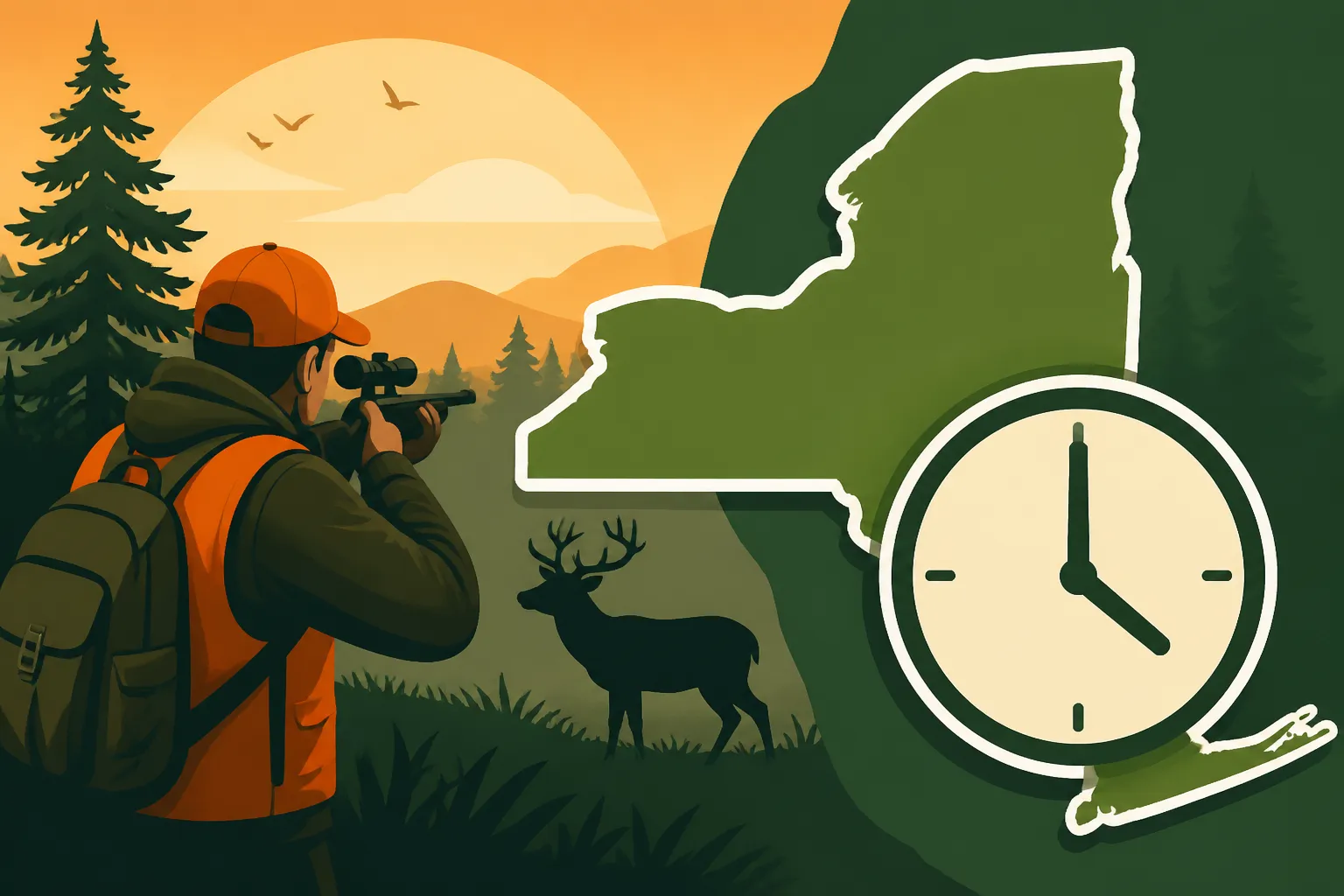
For most species in New York, legal shooting hours are defined in relation to sunrise and sunset. Specifically, you can hunt from one half-hour before sunrise until one half-hour after sunset. This window is critical and applies to deer, bear, turkey (outside of spring), small game, and upland birds. It's not just about when the sun feels like it's up or down; it's about the official times provided by the Department of Environmental Conservation (DEC) or other reliable sources. Failing to adhere to this can lead to violations, even if you were just a few minutes off. Think about those early morning walks to your stand or late evening retrieves—you need to be sure you're not loading or shooting before or after this window.
Tracking Official Sunrise and Sunset Times
Knowing the exact sunrise and sunset times for your specific location on any given day is paramount. These times aren't static; they change daily and vary depending on your longitude and latitude within the state. A hunter in Buffalo will have different sunrise/sunset times than one hunting in Plattsburgh or on Long Island. Thankfully, there are several reliable ways to get this information. The DEC provides official tables, and many modern hunting apps like GoHunt integrate this data directly, often using your phone's GPS to pinpoint the precise times for your location. Always double-check these times before heading out, especially during the fringes of the day when light conditions can be deceiving. Don't just rely on a general weather report; seek out the official astronomical data.
Public Land Specifics for Hunting Hours
While the general legal shooting hours provide the foundation, New York's diverse public lands sometimes have specific rules or practical considerations that can affect your hunting window. Understanding these distinctions is key to a successful and legal hunt.
State Forests and Wildlife Management Areas
New York State Forests and Wildlife Management Areas (WMAs) are generally managed by the DEC and adhere to the standard legal shooting hours of one half-hour before sunrise to one half-hour after sunset. These areas are specifically designated for public recreation, including hunting. Whether you're chasing whitetails in a Southern Tier State Forest or pheasants in a WMA in Western New York Farmland, the primary rule holds. However, access within these areas can indirectly influence your effective hunting time. Long walks from parking areas, especially in denser State Forests like those around Allegany State Park, mean you might need to leave your vehicle well before legal shooting time and be back at it long after sunset. Planning your entry and exit routes, perhaps with a tool like the Using the New York HuntFishNY Map Tool to check terrain and distances, becomes crucial here to avoid accidentally being in the woods with a loaded firearm or bow outside the legal window.
Adirondack and Catskill Forest Preserves
The Adirondack and Catskill Forest Preserves, often referred to as "Forever Wild" lands, operate under the same legal shooting hours as other state lands for most game. You can hunt deer, bear, and other species from half an hour before sunrise to half an hour after sunset. What sets these vast wilderness areas apart are the practical implications of their sheer size and rugged terrain. If you're planning a backcountry hunt deep in the Adirondack Forest Preserve or Still-Hunting Catskill Ridges, the time it takes to get to your hunting spot and back can be significant. It's not uncommon for hunters to be hiking in the dark, well before legal shooting hours, or hiking out long after. In these scenarios, while you might be physically present in the woods, your firearm or bow must be unloaded and encased (or in the case of a bow, uncocked if a crossbow, or with an arrow removed from the string) during non-shooting hours. This isn't just about safety; it's about adhering to the letter of the law in challenging conditions. Always carry a reliable headlamp and familiarize yourself with the terrain using maps, perhaps even Scouting New York Public Land Before Season if you can.
State Parks and Other Public Access Sites
Hunting in New York State Parks is a bit more complicated, as many parks have specific regulations, and some prohibit hunting entirely. For those State Parks that do allow hunting, they generally follow the same legal shooting hours. However, these areas often have additional rules regarding access, parking, and specific zones where hunting is permitted. For example, Allegany State Park has archery-only zones or specific firearm seasons that might not align perfectly with the statewide calendar. Always check the individual park's rules and regulations before planning a hunt, as they can supersede general DEC guidelines in certain aspects. Likewise, other smaller public access sites, like town or county-owned lands, might have their own local ordinances regarding hunting hours or even prohibit hunting entirely. The key takeaway here is: never assume. Always verify the rules for any specific public land you intend to hunt. Information from the DEC's website or directly from park offices is your best resource.
Exceptions and Special Considerations
While the "half-hour before sunrise to half-hour after sunset" rule covers the vast majority of hunting in New York, there are important exceptions and special scenarios that hunters need to be aware of. These often involve specific game species or hunting methods.
Waterfowl and Migratory Bird Specifics
This is where things get a little different. For waterfowl and other migratory game birds like rails, coots, and snipe, legal shooting hours generally begin at sunrise and end at sunset. This is a departure from the half-hour before/after rule for big game and small game. It’s a federal regulation that New York enforces, primarily due to concerns about proper species identification and safety in low light conditions when birds are rapidly moving. So, if you're planning on New York Waterfowl Hunting by Zone or hunting the Lake Champlain Marshes, make sure your watch is set to sunrise, not half an hour before. This distinction is crucial, and it’s a common mistake for hunters who typically target deer or upland birds. Always consult the current migratory bird hunting guide, which is updated annually by the DEC and the U.S. Fish and Wildlife Service, for the most accurate and up-to-date information. Apps like GoHunt will also usually highlight these specific migratory bird hours.
Predator and Furbearer Night Hunting
New York does permit hunting for certain predators and furbearers at night, but under very specific conditions. Species like coyotes, foxes, skunks, raccoons, and opossums can be hunted at night. However, this isn't a free-for-all. There are strict rules about weapon type, use of lights, and sometimes even specific seasons. For instance, while you can hunt coyotes at night in some areas during their open season, you typically can't use a rifle after sunset in a rifle-restricted zone. Shotguns or rimfire rifles are often the only legal firearms for night hunting. Additionally, you need to be extremely careful about target identification, as mistaking a domestic animal or even another hunter for a predator in the dark could have severe consequences. Always consult the Predator and Furbearer Hunting in New York guide for precise rules on night hunting, including specific regulations on light sources, firearm types, and areas where night hunting is permitted. The use of artificial lights is often regulated, and some areas may have local ordinances prohibiting the discharge of firearms at night.
Youth Hunting and Supervision
New York has special youth hunting seasons, such as the New York Youth Deer Hunt Rules weekend, which allow junior hunters to participate in hunting activities under the supervision of an experienced adult mentor. For these special seasons, the legal shooting hours typically align with the general "one half-hour before sunrise to one half-hour after sunset" rule. The emphasis for youth hunts is less on altered hours and more on the mandatory supervision requirements. A mentor must be licensed and adhere to specific proximity rules, ensuring the junior hunter's safety and ethical conduct. For example, under New York Mentored Youth Hunting Rules, the mentor must be within specific distances and able to maintain direct control. While the shooting hours themselves don't usually change for these youth-specific windows, the overall rules of engagement place a higher burden on the supervising adult to ensure all regulations, including hunting hours, are strictly followed. This is a fantastic opportunity to introduce the next generation to hunting, but it comes with added responsibilities.
Summary of New York Public Land Hunting Hours
To help visualize these differences, here's a quick comparison of common hunting scenarios and their typical legal shooting hours on New York public lands.
| Hunting Scenario | Legal Shooting Hours | Notes |
|---|---|---|
| Deer, Bear, Small Game, Upland Birds | 1/2 hour before sunrise to 1/2 hour after sunset | Applies to most state forests, WMAs, and Forest Preserves. |
| Wild Turkeys (Fall Season) | 1/2 hour before sunrise to 1/2 hour after sunset | Specific rules apply for spring turkey, often sunrise to noon. |
| Wild Turkeys (Spring Season) | Sunrise to Noon (12:00 PM) | This is a major exception for spring turkey hunting! |
| Waterfowl (Ducks, Geese) | Sunrise to Sunset | Federal regulation, check specific migratory bird guides. |
| Coyotes (Daylight Hunting) | 1/2 hour before sunrise to 1/2 hour after sunset | General rules apply. |
| Coyotes, Fox, Raccoon (Night Hunting) | After sunset, sometimes until sunrise | Highly regulated. Weapon restrictions, light rules, check specific New York Coyote Hunting Season Rules. |
| State Parks (If Hunting Permitted) | Typically 1/2 hour before sunrise to 1/2 hour after sunset | Always check individual park rules, as exceptions apply. |
Planning Your Hunt Around Legal Shooting Hours
Beyond just knowing the times, successfully integrating these regulations into your hunting strategy requires proactive planning and a good dose of common sense.
Tools and Resources for Daily Times
Modern technology has made it easier than ever to track official sunrise and sunset times. Most smartphone weather apps will show these, but for hunters, dedicated hunting apps are invaluable. GoHunt, for instance, often includes a hunting hours calculator that automatically adjusts based on your GPS location, giving you precise times down to the minute. Physical copies of the DEC Hunting & Trapping Guide also contain tables, usually in a condensed format, but remember these are generalized and might not be exact for your micro-location. A good rule of thumb is to always cross-reference. Check your preferred app, then maybe a reputable online source like timeanddate.com, just to be sure. This habit ensures you're never guessing, especially when those crucial first and last minutes of legal shooting light can make all the difference.
Planning Your Entry and Exit Routes
This is where the rubber meets the road. Knowing that you can't legally hunt until 6:00 AM doesn't mean you should be pulling into the parking lot at 5:55 AM. Successful hunting, especially on public land, often involves being in your stand or blind well before shooting light, letting the woods settle, and being prepared. This means planning your walk-in to allow ample time to get to your spot, get settled, and be ready when the clock hits legal shooting time. Similarly, at the end of the day, you need to account for the time it takes to pack up and walk out of the woods after the last legal minute of shooting light. On rugged public land like the Adirondack Forest Preserve, a half-mile walk can take 20-30 minutes in the dark, especially if you're dragging a deer.
Consider the terrain. A leisurely stroll across a flat field is different from navigating Entry Routes on Steep Catskill Ground. Factor in potential game recovery. If you make a shot near last light, you might be tracking after legal shooting hours. In such cases, your firearm or bow must be unloaded and secured. Always carry a reliable headlamp with fresh batteries and consider a backup. Furthermore, communicating your plans with a friend or family member who knows your intended hunting area and expected return time is a crucial safety measure, especially when venturing deep into remote public lands.
Safety First: Beyond the Clock
While adherence to legal shooting hours is a legal requirement, it's also a critical safety measure. Hunting in low light conditions, even within the legal window, demands heightened awareness. Positive target identification is paramount. Never assume. Make sure you can clearly identify your target and what lies beyond it. This is particularly true during that pre-sunrise and post-sunset half-hour, when shadows are long and visibility can be tricky. Always wear your New York Blaze Orange Requirements during open firearm seasons, even when walking in or out, to ensure you're visible to other hunters. Beyond the legalities, a good hunter prioritizes safety, and knowing exactly when it's safe and legal to shoot is a fundamental part of that commitment.
Disclaimer
Please remember that hunting regulations, including those pertaining to hunting hours, can change. While every effort has been made to provide accurate and up-to-date information, it is the hunter's responsibility to consult the most current New York State DEC Hunting & Trapping Guide and any applicable local ordinances before heading into the field.