Rattling Volume in Thick Cover
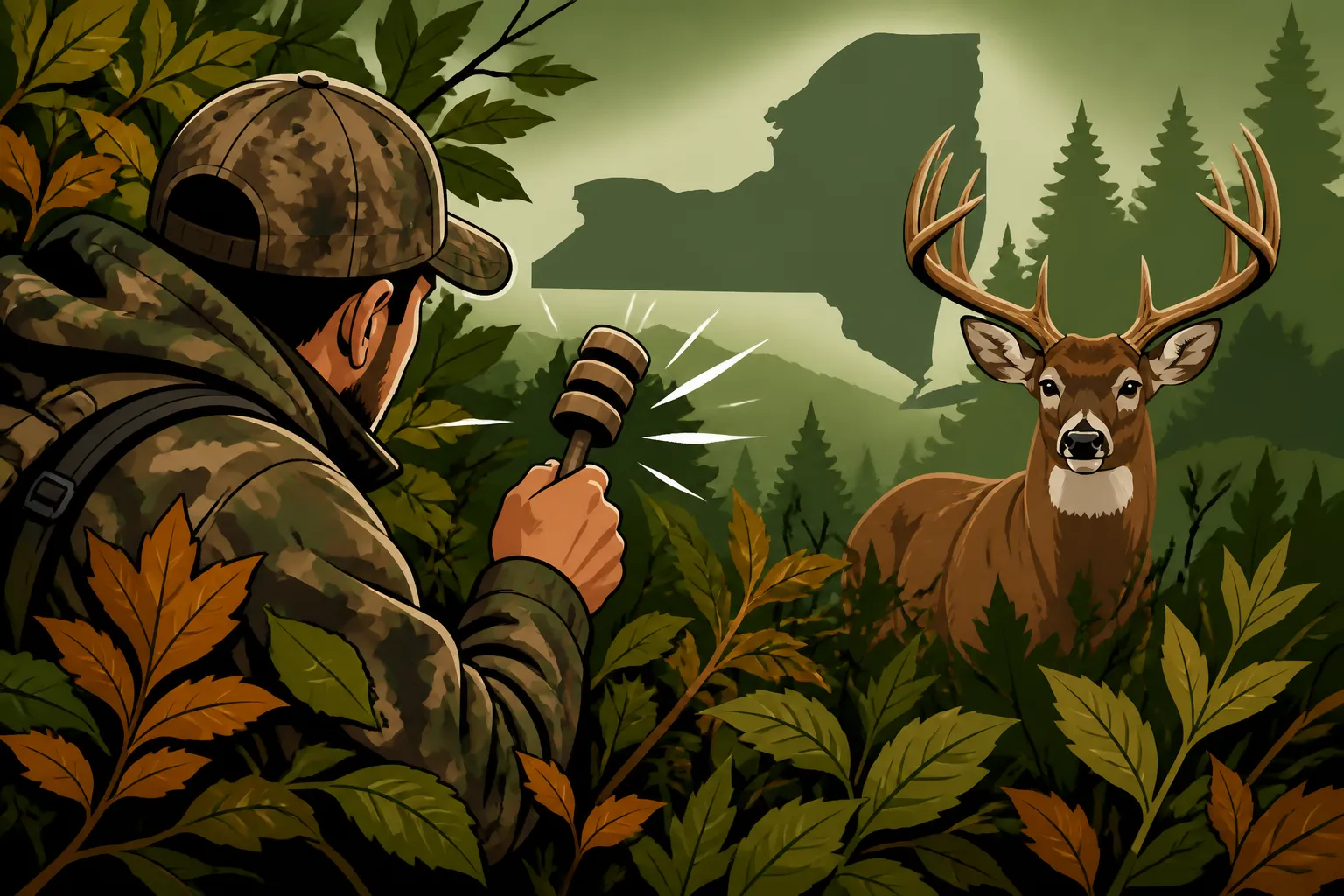
One of the most frustrating aspects of hunting in New York's incredibly diverse and often dense cover is trying to get a buck's attention with rattling antlers, only to wonder if your efforts are just disappearing into the woods. It's a common struggle: you know rattling can work, but how do you adjust your volume when you're hunting thick stands of hemlock, brushy clearcuts, or the deep hardwoods of the Catskills? This guide is all about mastering the art of rattling volume, ensuring your calls cut through the clutter and reach those elusive whitetails.
Understanding the Acoustic Challenges of Thick Cover
The sheer density of New York's forests, whether it's the sprawling Adirondack timber or the tangled thickets of the Southern Tier, creates a unique acoustic environment that can easily swallow your rattling efforts. It’s not like hunting open agricultural fields where sound travels for what feels like miles. Here, every tree, every bush, and every roll in the terrain acts as a sound dampener, scattering and absorbing your carefully crafted buck fight.
How Habitat Type Affects Sound Transmission
Different types of thick cover will impact your rattling volume in distinct ways. Imagine the difference between a dense pine plantation and an open hardwood ridge. In a pine plantation, the needles and tightly packed branches absorb a tremendous amount of sound. You might be making a fierce ruckus, but it sounds like a whisper just fifty yards away. Conversely, a mature hardwood forest, even when thick, can allow sound to carry a bit further, especially if the canopy is open and there's less undergrowth directly around you.
Consider hunting areas like the Connecticut Hill Wildlife Management Area in the Southern Tier, known for its mix of dense conifer stands and regenerating clearcuts. These areas are fantastic for deer, but they’re also challenging for sound. Your rattling needs to be adapted specifically for these conditions. If you're near a swampy area with a lot of heavy cattails and tag alders, the sound will be choked even further. It's not just about how loud you are, but how the sound waves interact with the environment around you.
Why Deer Behavior Demands Volume Adjustments
Deer, especially mature bucks, are incredibly sensitive to sound, but they're also masters of discernment. They’ll interpret the volume and intensity of your rattling to gauge the perceived urgency and size of the fight. A soft, subtle tickle of antlers might mimic two young bucks sparing, which might attract a curious younger deer but likely won't pull in a dominant breeder. On the other hand, an all-out crashing battle might signify a serious confrontation, something a territorial buck might want to investigate or, conversely, avoid if he's not feeling dominant or secure.
The key frustration is that a buck might hear a faint sound and dismiss it as insignificant, or worse, perceive it as being too far away to bother with. In thick cover, what sounds "loud" to you might barely register as a "tink" to a buck 100 yards away. This is why just hitting the antlers together isn't enough; you need to consider the acoustics from the deer's perspective. Are they bedded down in a thick bedding area, or are they slowly moving through a food plot on the edge of the cover? Their current activity and the immediate surroundings dictate how much sound you need to generate to pique their interest.
Masterful Rattling Techniques for Dense New York Woods
Successfully rattling in New York's dense cover requires a nuanced approach, blending sound intensity with realism. It's not about making noise for noise's sake, but about creating an illusion that travels effectively through the challenging terrain.
Aggressive Rattling: When and How to Employ It
Aggressive rattling is your go-to when you're convinced there's a mature buck nearby, especially during the peak rut. This isn't a gentle sparring match; you're trying to emulate a full-blown brawl between two dominant deer. This strategy is particularly effective in cover so thick that deer movement is restricted, or when you suspect bucks are holding tight in bedding areas. Think about hunting a thick cedar swamp or a brushy clearcut in the Southern Zone during early November – that's when you might want to consider going full-throttle.
To achieve aggressive rattling, don't be afraid to really lay into those antlers. Crash them together with force, grind them, and make a lot of noise. Incorporate stomping your feet (lightly, to mimic deer movement) and even raking a nearby sapling with your antlers to simulate a buck thrashing brush. The goal is to create a symphony of chaos that sounds like a legitimate fight happening right there. Pause for 30-60 seconds after your initial sequence, then repeat, mimicking the ebb and flow of a real confrontation. A powerful, dominant buck often won't tolerate another fight on his turf, and this aggressive approach aims to draw him in for a look.
Subtle Rattling: The Art of the Soft Sell
Sometimes, a full-on battle is too much, especially if deer are heavily pressured or it's outside the peak rut. In these scenarios, subtle rattling can be incredibly effective. This technique is about mimicking light sparring or a buck just rubbing antlers on a tree, creating a sound that suggests deer activity without signaling an intense threat. It's often best used when you're trying to pull a curious deer closer in moderately thick cover or when you're hunting along a field edge where deer might be feeding calmly.
For subtle rattling, gently tickle the tines together, perhaps scraping the bases lightly. Don't use a lot of force. Imagine two young bucks just feeling each other out, or a lone buck polishing his antlers on a sapling. This soft approach can often be used in conjunction with a few quiet grunts. The idea is to sound natural and non-threatening. When scouting New York Public Land Before Season, you might find areas where bucks are less aggressive, making subtle tactics more appropriate. This can be especially useful if you’re trying to coax a deer out of a dense bedding area without spooking it entirely with an overly loud demonstration.
Incorporating Volume into Calling Sequences
Rattling is rarely a standalone tactic. To truly maximize its effectiveness in New York's varied terrain, you need to think about integrating it seamlessly into a broader calling sequence, adjusting volume as you go.
For instance, you might start with a few soft grunts to get attention, then introduce subtle rattling, gradually increasing the intensity if you don't get a response. Or, if you're going aggressive, you might follow a loud rattling sequence with some deep, guttural grunts to really sell the illusion of a dominant buck. Remember to pause and listen intently after each sequence. A buck might come in silent, and you don't want to be clanging antlers when he's just twenty yards away.
Reading Deer Reactions and Adjusting Your Approach
Deer are masters of body language, and their reactions (or lack thereof) to your rattling should be your primary guide for adjusting your volume and technique. This isn't a one-size-fits-all game; every deer and every situation is different.
What to Look For: Ears, Stance, and Movement
When you rattle, especially in thick cover, keep your eyes peeled for any sign of a deer's reaction. It's easy to get tunnel vision on where you think the deer will come from, but they rarely read the script.
- Ears: The most immediate tell-tale sign is ear movement. If a deer's ears swivel and lock onto your position, even subtly, you know they've heard you. A buck might initially just flick an ear, then slowly turn his head, trying to pinpoint the source of the sound. This is your cue that your volume is cutting through.
- Stance: Watch their overall body posture. A deer that’s merely curious might pause, head up, trying to process the sound. If you’ve hit the right note, you might see them lower their head slightly, flatten their ears, and take a step or two in your direction, indicating an active interest. On the other hand, a deer that’s alarmed might stiffen, flag its tail, or even stomp a foot, telling you that your volume or intensity was too much, too fast.
- Movement: Ideally, you want to see them begin to work their way towards you. They might move slowly, cautiously, using whatever cover is available. Pay close attention to how they move through terrain, especially if you're set up for a shot. Sometimes, a buck will circle downwind, so be ready to adjust your body position or have a hunting partner covering that angle. If they bolt, you know you overdid it or they smelled you.
For example, if you're hunting a ridge line in the Catskills, where deer often skirt the edges of thick laurel patches, and you hear some subtle rattling, you might see a buck peek his head out, trying to get a visual. If he hesitates, a slightly louder, but still natural, sequence might be enough to convince him to commit. Using a map tool like GoHunt can help you understand the topography and likely approach routes deer will take when investigating sounds, allowing you to anticipate their movement even in thick areas.
When to Increase or Decrease Volume
The real skill comes in knowing when to pump up the volume and when to back off.
- Increasing Volume: If you rattle subtly and get a slight ear flick or a hesitant pause, but no committed movement, that's often the time to ramp it up a notch. Try a slightly more aggressive sequence, adding more force and duration to your antler crashes. If you're rattling in the thick Adirondack timber, and you suspect a buck is holed up in a thick blowdown area, you'll need significant volume to penetrate that cover and get his attention. Similarly, if you've done some Scouting With the New York HuntFishNY App and know a large clearcut holds a big buck, don't be afraid to go loud. Another scenario for increasing volume is when the wind picks up significantly; a strong breeze can carry scent, but it also disperses sound, requiring a louder call to be heard.
- Decreasing Volume: Conversely, if you get a strong, immediate reaction—ears pinned, head down, body language indicating an aggressive approach—it's time to ease off. Continuing to crash antlers might spook a buck that's already committed, making him think the "fight" is still too far, or worse, making him uncomfortable when he realizes he can't see the source. If a deer is approaching rapidly, often stopping rattling entirely and getting ready for the shot is the best course of action. If you're hunting along a quiet creek bottom where sound carries well, and you notice deer are more skittish, a much softer, more controlled approach will be necessary.
Dealing with Unseen Deer and "Hang-Ups"
Perhaps the most frustrating situation in thick New York cover is when you rattle, get a strong reaction, but the buck hangs up just out of sight. This is incredibly common. They heard you, they're interested, but they're too smart to just charge in blindly. They're trying to circle downwind, or they're waiting for you to make the next move, or perhaps they're just surveying the scene from behind a thick curtain of pines.
When this happens, patience is key. Resist the urge to rattle again immediately with the same intensity. Instead, try these tactics:
- Go Silent: Sometimes, the best call is no call. A sudden silence can make a hung-up buck nervous. He might wonder why the fight stopped, prompting him to move in for a closer look.
- Subtle Sounds: After a few minutes of silence, try a very light tickle of the antlers, or a soft grunt call. This might be just enough to convince him the "deer" are still there, but perhaps just moved into even thicker cover. This works well if you're using Grunt Calls in Mature New York Timber.
- Adjust Your Position (Carefully): If you're able to subtly shift your position to get a better vantage point without making noise, it might give you the edge. However, this is risky in thick cover.
- Wait It Out: Often, the most effective strategy is simply to wait. A curious buck, especially during the rut, will frequently give in to his instincts and eventually move into view, provided he doesn't scent you.
Remember, every rattling sequence is a conversation. Listen to what the deer are telling you with their reactions, and don't be afraid to adjust your volume, intensity, and timing to keep that conversation going.
| Rattling Volume Level | Best Cover Type | Deer Behavior Mimicked | Ideal Timing |
|---|---|---|---|
| Soft/Subtle | Moderately thick woods, edges of fields, quiet | Young bucks sparring, solitary buck rubbing antlers | Non-rut, early season, pressured areas, light curiosity |
| Medium/Standard | Mixed hardwoods, varied cover | Two bucks actively sparring | Pre-rut, general curiosity, mid-range interest |
| Aggressive/Loud | Dense conifer thickets, clearcuts, heavy brush | Full-blown buck fight, dominance challenge | Peak rut, high competition, deep cover, demanding attention |
Integrating Rattling with Other Deer Hunting Methods
Rattling is a powerful tool, but it's most effective when used as part of a larger strategy. In New York's diverse hunting landscapes, combining rattling with other methods can significantly increase your success, especially when you're thinking about how your sound will travel and what it will entice.
Pairing Rattling with Grunt Calls
Grunt calls are like the perfect complement to rattling. While rattling draws attention to a perceived fight, a grunt call adds a vocal element, often making the situation sound more immediate and real. In thick cover, the two together can be incredibly convincing.
Imagine you're set up in a dense section of a State Forest, maybe a place known for its excellent deer habitat, like those found in the Southern Tier State Forest Blocks. You start with an aggressive rattling sequence to cut through the heavy timber. After a minute or so, as the "fight" dies down, you immediately follow up with a few deep, guttural grunts. This makes it sound like a dominant buck just broke off from the fight and is now communicating or trying to gather himself. This can often be the final nudge needed to pull in a hesitant buck who was listening to the rattling. Conversely, if you start with a few soft grunts and don't get a response, a subtle rattling sequence might be the next step, suggesting deer activity that eventually draws the grunter in. Don't underestimate the power of combining these sounds, especially during the peak of the rut when bucks are most vocal and aggressive.
Strategic Treestand and Ground Blind Setups
Your setup is crucial for effective rattling, especially regarding how far your sound can travel and where you expect deer to approach from. In thick cover, you need to be mindful of sightlines and wind direction.
- Treestands: When using a treestand, you're gaining elevation, which can help your sound carry further over low-lying brush and small hills. A good treestand setup, like those detailed in Treestand Setups in Adirondack Hardwoods, focuses on natural travel corridors, funnels, and pinch points. Set up your stand overlooking a thick bedding area or a transition zone between bedding and feeding. When rattling from above, the sound can disperse more effectively. Be ready for deer to come in cautiously, often circling downwind. Using GoHunt can help identify these prime locations and understand the wind for your planned rattling sequence.
- Ground Blinds: Ground blinds offer incredible concealment in thick cover, allowing you to move and rattle more freely without being easily spotted. If you're hunting a dense cedar swamp or a thick fencerow, a well-brushed-in ground blind can be perfect. The challenge here is that your sound might not carry as far at ground level compared to a treestand. This means you often need to increase your rattling volume, but also be prepared for closer encounters. Ensure your blind offers shooting lanes in key directions, especially downwind. Consider your Entry Routes on Steep Catskill Ground to minimize disturbance as you get to your blind.
Rattling During Key Periods Like the Rut
Rattling's effectiveness peaks during specific times, especially the rut. Knowing the nuances of the New York rut can make your rattling efforts exponentially more successful.
During the pre-rut, bucks are actively seeking does and are generally more responsive to calls as they establish dominance hierarchies. This is a great time for aggressive rattling to challenge rival bucks. As the rut progresses into its chase phase, bucks are often running ragged, covering a lot of ground. Both aggressive and subtle rattling can work, depending on the individual buck's mood and the pressure in the area. A dominant buck might still charge in, while a more cautious one might just peek around the corner. If you're hunting the Rut in the Southern Zone or the Rut in the Northern Zone, understanding these different phases is paramount.
Even outside the rut, during early archery season or the late season, a soft, subtle tickle of antlers might occasionally draw in a curious young buck or even an older buck checking out late-season food sources. It's less reliable, but it’s always worth trying if conditions allow.
Practical Considerations for Rattling in New York
Beyond technique, there are several practical aspects to consider to ensure your rattling efforts are safe, realistic, and effective in the New York woods.
Gear Choices: Real Antlers vs. Synthetics
The choice between real antlers and synthetic rattling devices is a common debate among hunters. Both have their pros and cons, particularly concerning volume and realism in thick cover.
- Real Antlers: Nothing truly replicates the sound of real antlers crashing together. The density, natural acoustics, and varying tines create a rich, authentic sound that can be hard to mimic. For aggressive rattling, real antlers allow you to generate significant volume and the true "crackle" of bone-on-bone contact. The downside is they can be bulky, heavy, and noisy to carry through thick brush. If you're walking miles into the Adirondack Forest Preserve, adding extra weight and bulk can be a concern. However, for maximum realism and volume, especially when you need to cut through a lot of cover, real antlers are often preferred.
- Synthetic Rattling Devices: Products like the Rattle Bag or various rattling "horns" are designed for convenience and ease of use. They are generally lighter, quieter to carry, and can produce a good range of sounds. While some hunters argue they lack the raw authenticity of real bone, many modern synthetic options do a remarkable job of simulating a buck fight. These can be excellent for subtle rattling or when you need to be mobile and reduce bulk, such as when you’re still-hunting Catskill Ridges. For hunters looking to minimize gear or those concerned about spooking deer with a noisy approach, synthetics are a viable option. Experiment with both to see which you prefer and which generates the best results in your specific hunting areas.
Safety First: Blaze Orange and Visibility
Whenever you are actively hunting in New York, especially during firearm seasons, safety must be your top priority. Rattling can draw in other hunters just as easily as it draws in deer, so wearing the legally required amount of blaze orange (or blaze pink) is non-negotiable.
New York requires hunters to wear a minimum of 250 square inches of solid or patterned blaze orange or pink (visible from all directions) when hunting deer or bear with a firearm, or when hunting small game or upland birds during firearm deer season. Even if you're bowhunting during an archery-only season, if other hunters are in the woods (e.g., small game hunters), wearing some orange is a smart move.
When rattling, you are making yourself a potential target if another hunter mistakes your movement or sound for a deer. Position yourself so you have a good backdrop and know exactly what's beyond your rattling zone. Never rattle near roads or trails where non-hunters might be present. Always assume there are other hunters in the woods, especially on public land. It's better to be safe than sorry; a deer isn't worth a potential accident.
When to Quit: Overcalling and Deer Pressure
One of the hardest lessons to learn in hunting is knowing when to quit, and this applies particularly to rattling. There's a fine line between persistent calling and overcalling, which can actually educate or spook deer.
- Overcalling: If you rattle too frequently, too loudly, or for too long, deer might become suspicious. They are incredibly wary animals, and if a "fight" seems to go on endlessly without resolution, or if it doesn't sound natural, they'll often ignore it or flee. This is particularly true in areas with high hunting pressure. If you're seeing signs of pressured deer, like increased nocturnal movement or heightened skittishness, a less-is-more approach to rattling is often best.
- Deer Pressure: In heavily hunted areas, bucks become very cautious. They've heard it all before. If you're hunting public land, especially around Opening Weekend Crowds in the Southern Zone, deer might have heard multiple rattling sequences already. In these situations, your rattling needs to be more subtle, more precise, and perhaps less frequent. Sometimes, waiting an hour or two in silence after a single, well-executed sequence is more effective than continuous calling. Learn to adapt to the specific pressure in your hunting area, and don't be afraid to try different tactics if your rattling isn't producing results. Patience, observation, and adaptability are your greatest allies.
Always remember that every time you call, you're giving away your position, and in thick cover, that might be a risk you need to weigh carefully.
Disclaimer
Always consult the latest New York State Department of Environmental Conservation (DEC) hunting regulations before heading afield. Hunting laws and seasons can change, and it is the hunter's responsibility to stay informed and compliant. The information provided here is for educational and informational purposes only and should not be considered legal advice.