Early Goose Season Tactics in New York
The crisp mornings of early fall, the distant honk echoing across fields and marshes – for many New York hunters, there's nothing quite like the start of goose season. But if you’ve spent an early September morning tucked into a hedgerow, watching flock after flock ignore your best efforts, you know resident geese aren't always easy. This guide will take a deep dive into proven tactics and strategies specifically designed to help you connect with early season Canada geese across New York State.
Decoding Early Season Goose Behavior
Hunting early season geese in New York is a different beast compared to the late-season migrations. You’re primarily targeting resident Canada geese, birds that have spent their entire lives in the area, often hatched and raised right here. These aren't the weary, storm-battered migrants pushing south; they're local birds, with local habits, and understanding those nuances is key to success.
Resident Goose Habits and Patterns
Unlike their migratory cousins who might be more accustomed to encountering hunters along their journey, New York's resident geese often exhibit distinct patterns. They typically operate in smaller family groups or loose flocks, not the massive V-formations you see later in the year. Their daily routine usually revolves around a consistent cycle: flying from a safe roosting area to a preferred feeding spot, loafing during the mid-day, and then returning to the roost. This predictable behavior, while seemingly simple, is exactly what you need to exploit.
These birds are accustomed to certain fields, certain ponds, and specific flight paths. They’ve grown up seeing combines cutting corn and tractors working fields, but they might not have faced intense hunting pressure for months. Their wariness is more about avoiding perceived threats in their familiar environment than it is about having been shot at extensively. They'll often feed in cut corn, soybean, or wheat fields, but don't overlook lush green pastures or even manicured lawns in suburban fringes where legal hunting is permitted. Identifying these routine movements is where your early season success truly begins, allowing you to intercept them along their established routes.
Understanding Roosting and Feeding Areas
The cornerstone of early season goose hunting lies in identifying these critical locations. Roosting areas are typically large, open bodies of water where geese feel safe from predators, such as larger lakes, wide rivers, or even sizeable farm ponds. They'll spend the night here, congregating in numbers. As dawn breaks, they'll leave these roosts to fly directly to their chosen feeding grounds.
Feeding areas are just as crucial. Early season often finds geese gorging on waste grain in recently harvested fields. Cut corn, specifically, is a magnet, but they'll also hit fields of soybeans, wheat stubble, or even new growth alfalfa. During the middle of the day, after their initial morning feed, geese will often move to a loafing area. This might be a nearby pasture, a sandbar in a river, or a quiet corner of a pond. They rest, preen, and digest before potentially flying out for another late afternoon feed. The trick is that these locations are often consistent day after day, week after week, until food sources change or hunting pressure disrupts their routine. By understanding these specific, localized movements, you can pinpoint the exact fields or waterways where you have the best chance of encountering them.
The Indispensable Role of Scouting
You've heard it a thousand times, but for early season geese in New York, scouting isn't just a good idea – it's absolutely non-negotiable. These birds are creatures of habit, and those habits are intensely local. Without putting in the legwork beforehand, you're essentially throwing darts in the dark. Don't expect to just show up to a random field and have geese pour in; it just doesn't work that way with early season residents.
Pre-Season Reconnaissance and E-Scouting
Your scouting efforts should start well before the season opener. Begin by utilizing online mapping tools to identify potential feeding fields and roosting water bodies. Look for large agricultural areas, particularly those with a history of corn or soybean production. Pinpoint sizable ponds, lakes, or wide river bends that could offer safe roosting. Platforms like GoHunt, or even the basic satellite imagery on the New York HuntFishNY App, can be invaluable here. You can mark potential spots, measure distances, and even identify common flight corridors that might funnel birds between water and feed. Remember to cross-reference with public land boundaries, as knowing New York Public Hunting Land in New York is essential.
Once you have a few promising locations on your map, it's time for some old-fashioned windshield time. Drive the backroads at dawn and dusk. Watch for geese lifting off water or pitching down into fields. Pay close attention to exactly where they land in a field, as they often prefer a specific corner or rise. Note their flight paths. Do they follow a creek? Fly over a particular wood line? The more you observe, the more predictable their behavior becomes. This reconnaissance helps you narrow down your physical scouting to the most active spots, saving you precious time and increasing your odds of a successful hunt.
Gaining Access and Reading the Land
Finding where the geese are feeding is only half the battle; the other half is securing permission to hunt those fields. Many of the best early season spots are on private agricultural land. Don't be shy – knock on doors, introduce yourself, and respectfully ask for permission. Farmers are often busy, so be courteous and brief. Offer to share some of the harvested geese. Knowing Getting Private Land Permission in New York rules, and showing you respect the land, goes a long way.
When you're in the field, learn to read the signs. Look for scattered feathers, droppings, and "cleaned out" areas where geese have been feeding heavily. These are unmistakable indicators of recent activity. Pay attention to the wind direction, as geese almost always land and take off into the wind. This knowledge will dictate your blind placement and decoy spread. Consider the sun's position – you generally want it at your back, not shining directly into the geese's eyes as they approach. Think about natural cover, like fencerows, standing crops, or brush lines, that can help conceal your blind and your approach. Even subtle changes in elevation can offer crucial concealment. The more you immerse yourself in reading the landscape, the better you’ll become at predicting goose movements and setting up effectively.
Decoy Spreads and Concealment
Once you've done your scouting and secured your spot, the next critical step is setting up an effective decoy spread and making sure you're completely hidden. Early season geese, while less pressured than their late-season counterparts, are still wary birds with excellent eyesight. A poor spread or visible hunters will quickly send them looking for greener, safer pastures.
Crafting Realistic Decoy Spreads
For early season resident geese, less is often more. You're not typically dealing with massive flocks of migrants. Focus on creating a realistic portrayal of a small, contented family group. A spread of a dozen to two dozen full-body or shell decoys is usually ample. Arrange them to mimic natural feeding and loafing behaviors.
- Feeding Pockets: Place groups of decoys with heads down, appearing to feed. Create small "pockets" or openings within your spread. Geese like to land among other geese, so these open areas act as landing zones.
- Sentinels: Position a few decoys with alert, upright heads on the fringes of your spread, mimicking birds on watch.
- Family Groups: Place pairs or trios of decoys close together. These birds often travel as family units.
- Motion Decoys: Even a single "flapper" or a few windsock decoys can add crucial realism. The slightest movement on a still morning can make your spread look alive and draw attention.
- Landing Zone: Crucially, always ensure there’s a clear, open landing zone directly in front of your blind, downwind of your decoys. Geese will cup their wings and aim for this spot.
Table: Early Season Decoy Spreads by Location
| Location Type | Recommended Decoy Count | Decoy Types | Key Placement Strategy |
|---|---|---|---|
| Cut Grain Field | 12-24 | Full-bodies, Shells | Small feeding groups, clear downwind landing zone. |
| Green Pasture | 6-12 (less is more) | Full-bodies (loafing) | Loosely scattered, a few sentinels, minimal motion. |
| Small Pond/Waterway | 6-18 floaters | Floaters (sleepers, sentinels) | Upwind from blind, leaving open water for landing. |
| Large Lake Shoreline | 18-36 (mix) | Full-bodies on shore, floaters in water | Blend land/water decoys, create natural flight path. |
Remember, the goal is not just numbers, but believability. A few well-placed, natural-looking decoys are far more effective than dozens haphazardly scattered.
Effective Concealment Strategies
Concealment is perhaps the single most important factor. If geese see you, they're gone. Early season foliage can still be thick in many parts of New York, offering some natural advantages, but you often need to augment it.
- Layout Blinds: For field hunting, a quality layout blind is your best friend. Choose one that you can brush in extensively with natural vegetation from the field you're hunting. Corn stalks, soybean plants, or grass clippings from the immediate area will make it disappear. This is especially true if you're Layout Blind Hunting Finger Lakes Fields where open agricultural ground is common.
- A-Frame Blinds: If hunting along a fencerow or field edge with some standing cover, an A-frame blind can work well. Again, brush it in until it becomes part of the landscape. Don't leave any gaps.
- Natural Cover: Ditching the blind altogether and using natural features can sometimes be best. A thick hedgerow, a standing corn strip, or a deep ditch can offer incredible concealment if you stay absolutely still. Make sure you're not silhouetted against the skyline. Even small details matter, like wearing a face mask and gloves to cover exposed skin.
- Approach and Exit: Think about how you'll get to and from your blind without spooking birds. Arrive well before shooting light, and use terrain features to stay out of sight. A good general rule is that if you're not confident you're completely hidden, you're not hidden enough. These birds have an eagle's eye.
Calling Techniques and Setup for Early Geese
Calling can be the cherry on top of a well-scouted, well-concealed setup, but it’s crucial to understand how to use it effectively with early season resident geese. They're often less responsive to aggressive, competition-style calling that might work on weary migrants. Your goal isn't to draw them from miles away, but to reassure them and guide them into your spread once they're already in sight.
Subtle Calling for Resident Birds
Early season resident geese are often more receptive to subtle, natural-sounding calls. Think about replicating the sounds of a small group of contented geese feeding and communicating with each other.
- Greeting Calls: When you first see a flock approaching, a soft, inviting greeting call can get their attention. It's not a loud, pleading hail, but a calm "hah-onk" or "onkk-onkk" that says, "Hey, over here, everything's good."
- Clucks and Murmurs: As birds get closer, switch to softer clucks, murmurs, and feeding calls. These are short, sharp "tuk-tuk" sounds or low "mmmnn" noises that convey a sense of safety and contentment. Imagine the sound of a flock actively feeding, not screaming at each other.
- Lay-down Calls: Sometimes, as geese are directly overhead and appear to be working the spread, a series of short, choppy "honk-it, honk-it" calls can give them the final nudge to commit. The key is to sound like an entire flock, not just one loud caller.
- Less is More: This cannot be stressed enough for early season. If geese are locked onto your decoys and coming in, put the call down. Overcalling can quickly make them suspicious. Let your realistic spread do the work. The New York Canada Goose Bag Limit typically allows a generous harvest, so you'll have plenty of opportunities if you don't spook them.
Strategic Setup and Wind Considerations
Your calling strategy also needs to align with your setup, especially considering the wind. As mentioned, geese almost always land and take off into the wind.
- Caller Position: Position yourself within the blind so you can see approaching birds and call effectively without exposing yourself. If hunting with multiple people, consider having one primary caller and one or two others making soft clucks or murmurs to create a more realistic "flock" sound.
- Wind Direction: Place your blind downwind of your decoy spread, facing into the wind. This puts the approaching geese directly in front of you as they come in to land. It also means their eyes are often focused on the landing zone and decoys, rather than directly at your blind.
- Volume Control: Practice controlling your call's volume. A loud call on a quiet, still morning can sound unnatural and alarm birds. In windy conditions, you might need a bit more volume to carry the sound. Remember that New York Resident Population Goose Zone Rules might mean these birds have encountered calls before, so subtlety is key.
Successfully calling early season geese is about playing the role of a trusted member of their flock. You're not trying to convince them of something far away, but rather inviting them to join a safe, feeding group they've already identified.
Gear and Legalities for New York Early Goose Season
Beyond scouting and calling, having the right gear and understanding the specific legal requirements are critical for a successful and legal early goose hunt in New York. Don't let a technicality or a missing piece of equipment ruin your day.
Essential Gear for the Field
Your gear needs to be up to the task, durable, and appropriate for the conditions you'll face.
- Shotgun and Ammo: A 12-gauge shotgun is the standard, though a 20-gauge can be effective at closer ranges. The most common shot sizes for geese are BB, #1, #2, and #3 steel shot. Remember, lead shot is prohibited for all migratory waterfowl in New York, so ensure you have plenty of non-toxic steel, bismuth, or tungsten shot shells. Consider patterning your shotgun beforehand to know its effective range with your chosen load.
- Decoys: As discussed, a quality spread of full-body or shell decoys, ideally with some motion, is essential.
- Blind: A well-brushed-in layout blind or A-frame blind is crucial for concealment.
- Camouflage: Wear appropriate camouflage that matches your surroundings. A full face mask and gloves are often overlooked but critical to hide exposed skin.
- Waders/Waterproof Boots: If hunting near water or in potentially muddy fields, quality waterproof boots or chest waders are a must. They’ll keep you dry and comfortable during long sits, especially if you're trying to hide in a ditch or a Reading a Champlain Marsh for a Morning Flight scenario.
- Calls: A reliable short-reed goose call is standard. Consider carrying a backup or a flute-style call as well.
- GPS/Mapping Tool: Even if you've scouted extensively, a GPS unit or a reliable mapping app like GoHunt on your phone (with downloaded offline maps) can help you navigate in the dark and mark key spots.
- Safety Gear: Always carry a first-aid kit, and if hunting alone, let someone know your plans and expected return time. A headlamp with a red light setting is invaluable for setting up in the dark without spooking birds.
Understanding New York Waterfowl Regulations
Navigating hunting regulations can be complex, but it's your responsibility as a hunter to know and follow them meticulously.
- Licenses and Permits: You'll need a valid New York State hunting license. For waterfowl, you'll also need a valid federal duck stamp, signed across the face, and be Harvest Information Program (HIP) certified. Your New York Hunter Education Requirements are a prerequisite for your initial license.
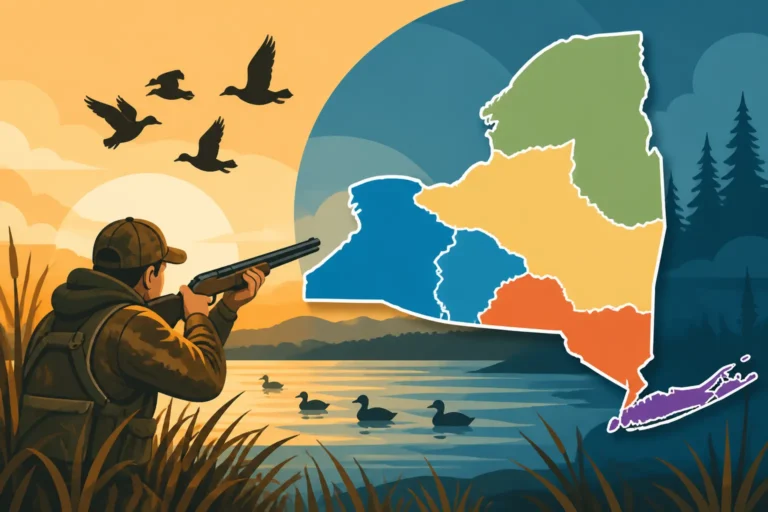
- Season Dates and Zones: New York is divided into specific waterfowl zones, each with its own season dates for Canada geese. Early goose season typically opens well before the regular duck and goose seasons. Always consult the current New York State DEC Waterfowl Hunting Guide for precise dates, shooting hours, and bag limits for your specific zone. Don't assume; verify.
- Bag Limits: Pay close attention to the daily bag limit for Canada geese during the early season. It's often more liberal than the regular season to help manage resident populations. Once you've reached your limit, unload your firearm and call it a day.
- Non-Toxic Shot: As a reminder, only non-toxic shot is allowed for hunting waterfowl. This includes steel, bismuth, and other approved alloys.
- Reporting: Remember your New York Deer Reporting Requirements also apply to migratory birds like geese. You must be HIP-certified and report your harvest as required by federal regulations.
- Blaze Orange: While not required for waterfowl hunting when concealed within a blind, it's always wise to wear some blaze orange when traveling to and from your hunting spot, especially on public land during concurrent big game seasons.
By being fully prepared with the right gear and a complete understanding of the regulations, you're setting yourself up for a safe, successful, and legal early goose season in New York.
Disclaimer
This guide is intended for informational purposes only and does not constitute legal advice. Hunting regulations in New York State can change frequently. It is the responsibility of every hunter to consult the most current New York State Department of Environmental Conservation (DEC) hunting regulations guide, federal regulations, and local ordinances before participating in any hunting activity. Always prioritize safety and ethical hunting practices.