Hunting Small Woodlots Near Suburban Sprawl
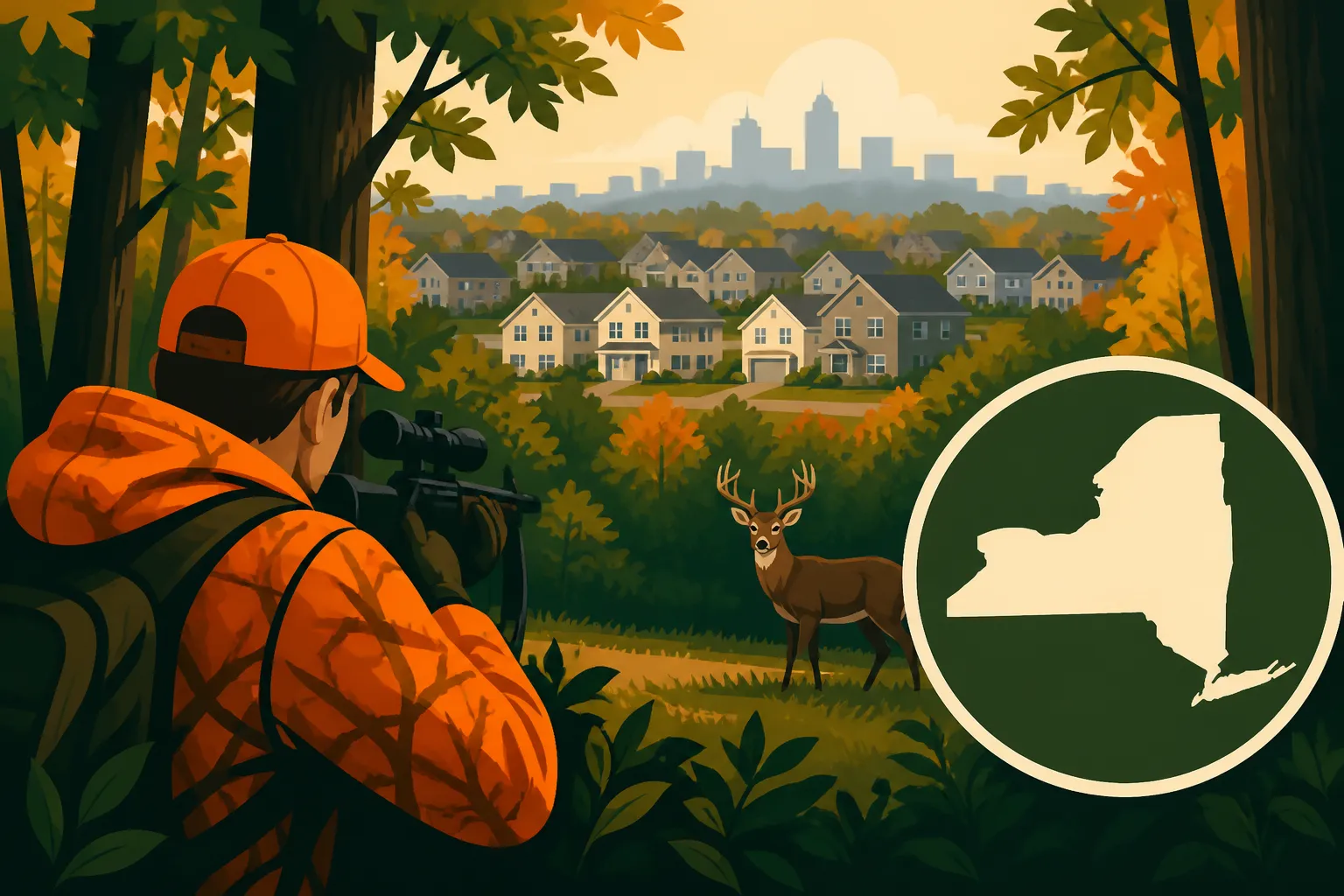
It's a familiar frustration for many New York hunters: you see deer signs everywhere, sometimes right in your backyard, but finding a legitimate, safe place to hunt feels impossible. Suburban sprawl often pushes hunters further and further into remote public lands, leaving countless small, overlooked woodlots teeming with whitetails sitting untouched. This guide will walk you through how to successfully and respectfully hunt these smaller, often pressured pockets of cover near populated areas in New York.
Understanding the Unique Challenges of Suburban Woodlots
Hunting small woodlots near suburban areas isn't like heading into the vastness of the Adirondack Forest Preserve or a large State Forest. These patches of timber, even just a few acres, come with their own distinct set of rules, challenges, and opportunities. You're dealing with a different kind of deer, a different kind of pressure, and often a different kind of landowner.
Increased Pressure and Human Presence
Let's be honest, those small woodlots are rarely truly "wild." They're often bordered by homes, roads, and walking trails. This means the deer living there are incredibly accustomed to human activity, but also highly sensitive to direct hunting pressure. A casual stroll by a dog walker might not bother them, but an unstealthy hunter can send them packing for days.
Think about it from the deer's perspective: their entire existence is often played out within a few square miles. They know every dog that walks at 7 AM, every car that passes at 5 PM, and every kid's shortcut through the woods. When a new scent or sight enters their world – a hunter stomping through the leaves at dawn – it immediately triggers their alarm bells. This doesn't mean you can't hunt them, but it means your approach needs to be incredibly subtle. You can't just barge in. You have to consider prevailing winds not just for deer scent, but for carrying human sounds. You might even find that deer use the cover of human activity, like a busy road during rush hour, to make movements they wouldn't otherwise. They've learned to coexist, and often, their survival depends on being incredibly wary of unusual human activity.
Navigating Access and Permission
This is often the biggest hurdle for suburban woodlot hunting. These small parcels are almost exclusively private land, and that means you absolutely, unequivocally need permission. Showing up with a bow or gun without prior consent is trespassing, and in New York, that's not just illegal, it burns bridges for all hunters. Landowners in suburban areas might be more hesitant than their rural counterparts to grant access due to liability concerns, perceived danger, or simply not understanding hunting culture.
The key is respectful, clear communication and building trust. Don't just knock on a door and ask, "Can I hunt your land?" Start by introducing yourself as a responsible, ethical hunter. Explain how you hunt – emphasizing quiet, low-impact methods like bowhunting or still-hunting, rather than noisy deer drives. Offer to share venison, help with property maintenance, or even just be an extra set of eyes on their property. Be prepared to show proof of your hunting license and insurance. Websites like GoHunt (and the DEC's own mapping tools) can help you identify property owners, but the conversation still needs to be face-to-face, or at least a polite letter. Remember, it's not a transaction, it's a relationship. For more on the legal aspects, understanding the nuances of New York Trespass and Permission Law is absolutely critical before you ever step foot on private property.
Safety Considerations and Legalities
When hunting near homes and roads, safety isn't just a suggestion; it's paramount. New York has strict regulations regarding firearm discharge setbacks – generally, you cannot discharge a firearm within 500 feet of a dwelling, school, or other occupied building without the owner's permission. For bows, that distance is typically 150 feet. These aren't suggestions; they're the law, and violating them can have severe consequences, not to mention endangering others.
Beyond state law, local town or village ordinances might have even stricter rules, or prohibit hunting altogether within certain boundaries. Always check with local authorities before you even consider hunting. Knowing exactly where property lines are is non-negotiable. Use mapping apps like GoHunt, or the Scouting With the New York HuntFishNY App to precisely delineate boundaries. Consider hunting only with a bow or crossbow, even if firearms are technically legal, as it often eases landowner concerns and reduces the sound impact on neighbors. Your shot selection needs to be absolutely perfect, with a clear understanding of what's beyond your target. Always assume there's a home, a person, or a pet just out of sight.
Scouting Strategies for Overlooked Suburban Patches
The beauty of these small woodlots is that they often hold deer that are incredibly familiar with their tiny territories. Successful scouting here isn't about covering miles; it's about dissecting every acre with a magnifying glass. You're looking for subtle cues that indicate a deer's comfortable routine, rather than just transient movement.
Reading the Landscape for Cover and Travel Routes
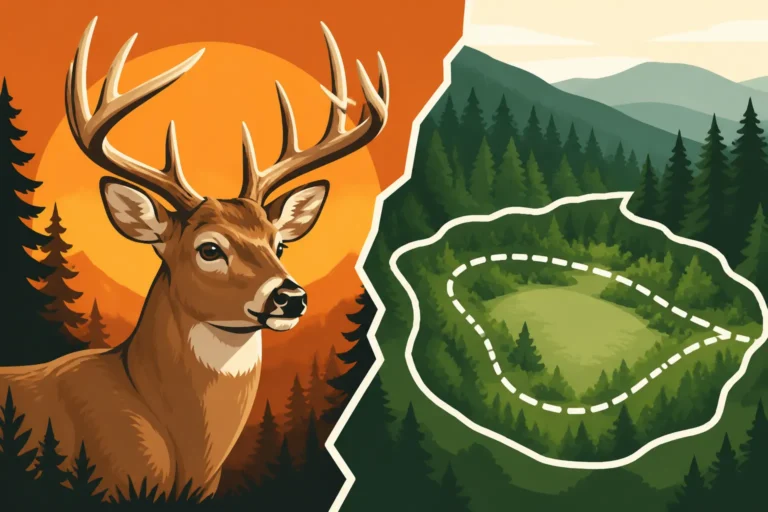
Deer in suburban settings are masters of using the smallest pockets of cover for security. This means you need to look beyond the obvious "big woods" mentality. Overlooked thickets, overgrown creek bottoms, stands of thorny multiflora rose, or even just a dense patch of evergreens can serve as crucial bedding areas. These deer might bed down incredibly close to homes if that's where the thickest, most impenetrable cover is.
Focus on pinch points, funnels, and natural barriers that concentrate deer movement. A small drainage ditch, a fenceline, or the edge of a property where one type of cover transitions to another can create a natural funnel. Pay close attention to how deer navigate human-made obstacles too – underpasses, culverts, or even gaps in landscaping. They'll use the path of least resistance or greatest concealment. For instance, if you're Reading Aerial Photos for Southern Tier Deer, you might notice how a strip of woods between two housing developments acts as a safe corridor, even if it seems too narrow. Deer will often stick to the darkest, thickest cover during daylight hours, only venturing out into more open areas under the cloak of darkness. Your job is to find those hidden highways and hangouts.
Identifying Food Sources and Water
While deer on large land tracts might rely on vast stands of acorns or alfalfa fields, suburban deer have a more varied, and often more accessible, buffet. Don't underestimate ornamental shrubs, garden leftovers, fruit trees in old orchards, or even forgotten apple trees near abandoned homesteads. These can be prime attractants.
Water sources can be as simple as a small retention pond, a flowing ditch, or even a homeowner's leaky spigot creating a muddy seep. During dry periods, these small, consistent water sources can be magnets. Look for browse lines on landscaping plants, tracks in garden beds, or rub signs on small ornamental trees – clear indicators that deer are actively feeding and living in the area. Often, deer here are less dependent on agricultural fields and more reliant on a mosaic of diverse, smaller food options provided by human habitation. Finding these often-overlooked food sources is key to understanding their daily patterns.
Using Technology for Smart Scouting
Modern technology is your best friend when dissecting these smaller, more complex landscapes. Digital mapping apps like GoHunt or the official HuntFishNY App allow you to layer satellite imagery, topographic maps, and property lines. This is invaluable for understanding the lay of the land without physically disturbing it.
Before you even step foot on a property, use these tools to identify potential bedding areas (dense cover), travel corridors (fencelines, creek bottoms, edges), and food sources (old orchards, field edges, even garden plots if you zoom in enough). You can also use them to pinpoint potential stand locations that offer good shot angles while maintaining safety setbacks. Mark known human activity areas – dog walking trails, noisy roads, neighbor's picnic spots – so you can plan your approach and exit routes to avoid detection. When scouting on foot, use your GPS to mark rubs, scrapes, and bedding areas. This data, combined with real-time observations, will paint a much clearer picture of deer movement. It's especially useful for Finding Property Lines to ensure you're always within legal boundaries.
Effective Hunting Tactics for Small, Pressured Woodlots
The deer in these small woodlots are often hyper-aware and educated. They've dodged cars, seen people, and heard strange noises their entire lives. Your tactics need to reflect this reality, prioritizing stealth, low impact, and precision. You won't be still-hunting vast tracts of timber; instead, you'll be executing surgical strikes.
Low-Impact Entry and Exit Strategies
Getting in and out of a small woodlot undetected is paramount. These deer know when something is amiss. Your entry and exit routes should be chosen with the utmost care, preferably utilizing existing cover, natural topography, or even periods of high human activity (like traffic noise) to mask your approach. Avoid walking through bedding areas or along primary travel corridors unless absolutely necessary, and if so, do it silently and quickly under the cover of darkness.
Consider parking a good distance away and walking in along a fenceline or ditch, rather than driving right up to the property line. Use the wind, not just for deer scent, but for masking your own sounds. Sometimes, the best entry is not the most direct, but the one that keeps you hidden and unheard. For instance, if you're Setting Up on a Southern Tier Field Edge, consider circling around a low spot or a hedgerow to approach your stand from behind, rather than walking straight across an open field. Plan your exit the same way, minimizing disturbance so the deer don't associate that area with danger for subsequent hunts. The goal is to be a ghost – present, but unseen and unheard.
Stand Placement and Concealment
Given the small size of these hunting areas, your stand placement needs to be exceptionally thoughtful. Elevated treestands are often ideal, getting you above the deer's primary line of sight and helping to dissipate your scent. Focus on pinch points, funnels, or areas where two types of cover meet. Look for trees that offer good natural concealment, like evergreens or hardwoods with dense canopy, ensuring you have clear shooting lanes without excessive trimming.
If treestands aren't feasible or permitted, a well-brushed-in ground blind can be incredibly effective, especially if it's set up weeks in advance to allow deer to get used to its presence. For tips on deployment, consider tactics detailed in Using a Ground Blind on New York Public Land. Remember, the deer are likely accustomed to seeing human structures like sheds or fences, so a static, camouflaged blind might not alarm them as much as a new, unfamiliar scent trail from a hastily placed treestand. Your concealment is key, not just from the deer, but potentially from curious neighbors or passersby who might not realize hunting is occurring.
Patience and Timing for Success
Hunting small, suburban woodlots often calls for a more patient, opportunistic approach. These aren't all-day sits in a big woods. Often, the deer activity will be concentrated during specific windows – early morning, late evening, or during the peak of the rut. If you're Hunting the Rut in the Southern Zone, even a small woodlot can become a hotbed of activity as bucks cruise for does. Focus your efforts on these prime times, making your hunts shorter and more strategic.
Capitalize on weather changes: a sudden cold front, a light rain, or heavy fog can increase deer movement and provide excellent cover for your entry and exit. Don't overhunt a small area; if you disturb it too much, the deer will simply shift their patterns to avoid you. One or two well-executed hunts a week might be far more productive than daily pressure. These deer are often creatures of habit, and by observing their patterns (even through trail camera photos if permitted), you can learn to time your hunts for when they are most likely to be moving in the daylight.
Respecting Landowners and Community Relations
Successful hunting in suburban woodlots isn't just about bagging a deer; it's fundamentally about maintaining positive relationships with landowners and the broader community. Your actions, good or bad, reflect on all hunters, and especially on your ability to retain access to these precious parcels of private land.
Building Trust and Maintaining Access
Once you've secured permission, your work isn't over – it's just beginning. Being a good steward of the land and a respectful guest is paramount. Always close gates, don't litter, and avoid damaging property. If you make a mess, clean it up. If you find a broken fence, offer to fix it. Beyond the basics, offering a landowner a share of your venison or helping with a task around their property can go a long way in solidifying that relationship.
Regular, polite communication is also key. Let them know when you plan to hunt and when you've finished. If you encounter any issues (like trespassers on their land), report it to the landowner immediately. Transparency builds trust. Remember, they are doing you a favor by allowing you to hunt. Show appreciation. This kind of goodwill is what secures long-term access, not just for you, but potentially for other responsible hunters down the line.
Handling Post-Harvest Logistics Discreetly
Successfully harvesting a deer in a suburban setting requires discreet and efficient post-harvest handling. The last thing you want is to alarm neighbors with a dramatic scene. If possible, plan to field dress the deer away from obvious view, perhaps deep in the woodlot or back at your vehicle if you can get it there quickly. For more remote situations, especially if you've harvested a large animal, tactics like those for Dragging a Deer Off a Catskill Ridge might need to be adapted, perhaps using a deer cart or sled for easier, quieter transport on flatter ground.
Have a plan for immediate transport. A tarp or large game bag can help keep the animal clean and out of sight in your vehicle. Once harvested, you still need to report your deer, as outlined in guides like Reporting a New York Deer Harvest Online. Doing so promptly and accurately is part of being a responsible hunter. Consider the perception of non-hunting neighbors and act accordingly. The goal is to be invisible in your success, just as you were in your hunt.
Pros and Cons of Hunting Suburban Woodlots
Hunting these smaller, pressured areas comes with its own set of advantages and disadvantages compared to more traditional hunting grounds.
| Aspect | Pros | Cons |
|---|---|---|
| Deer Quality | Often holds older, smarter deer; less overall hunting pressure | Lower deer density in some areas; specific antler restrictions |
| Accessibility | Often close to home, less travel time, easier scouting | Difficult to get permission; limited number of huntable parcels |
| Hunting Experience | Challenging, rewarding, high-skill hunting, often solitary | High human disturbance; strict safety requirements; ethical dilemmas |
| Success Rates | Can be good due to resident deer, but requires precision | Requires extreme stealth; small windows of opportunity |
| Community Impact | Can build positive hunter-landowner relations | Risk of negative public perception if not handled discreetly |
Disclaimer
Hunting is an activity that carries inherent risks. Always prioritize safety, adhere to all New York State Department of Environmental Conservation (DEC) regulations, and respect private property rights. The information provided here is for educational purposes and should not replace official hunting education courses or legal counsel. Always double-check local ordinances and state laws before heading afield.