Turkey Tactics for Southern Tier Field Edges
Hunting turkeys along Southern Tier field edges can be both exhilarating and incredibly frustrating. You scouted, you roosted a bird, you set up perfectly, and then he just hangs up at 70 yards, strutting and gobbling his heart out but refusing to step into range. It's a common story that can make you want to pull your hair out. This guide will dive deep into why New York's Southern Tier turkeys act this way around fields and offer proven tactics to finally close the distance.
Understanding Southern Tier Turkey Behavior Around Fields
Turkeys are creatures of habit, and their reliance on open fields, especially in the agricultural rich Southern Tier, dictates a lot of their daily movements. These birds utilize fields for everything from feeding on insects and waste grain to dusting, loafing, and even strutting for hens. Recognizing these patterns is the first step to intercepting them.
Early Morning Field Edge Strategies
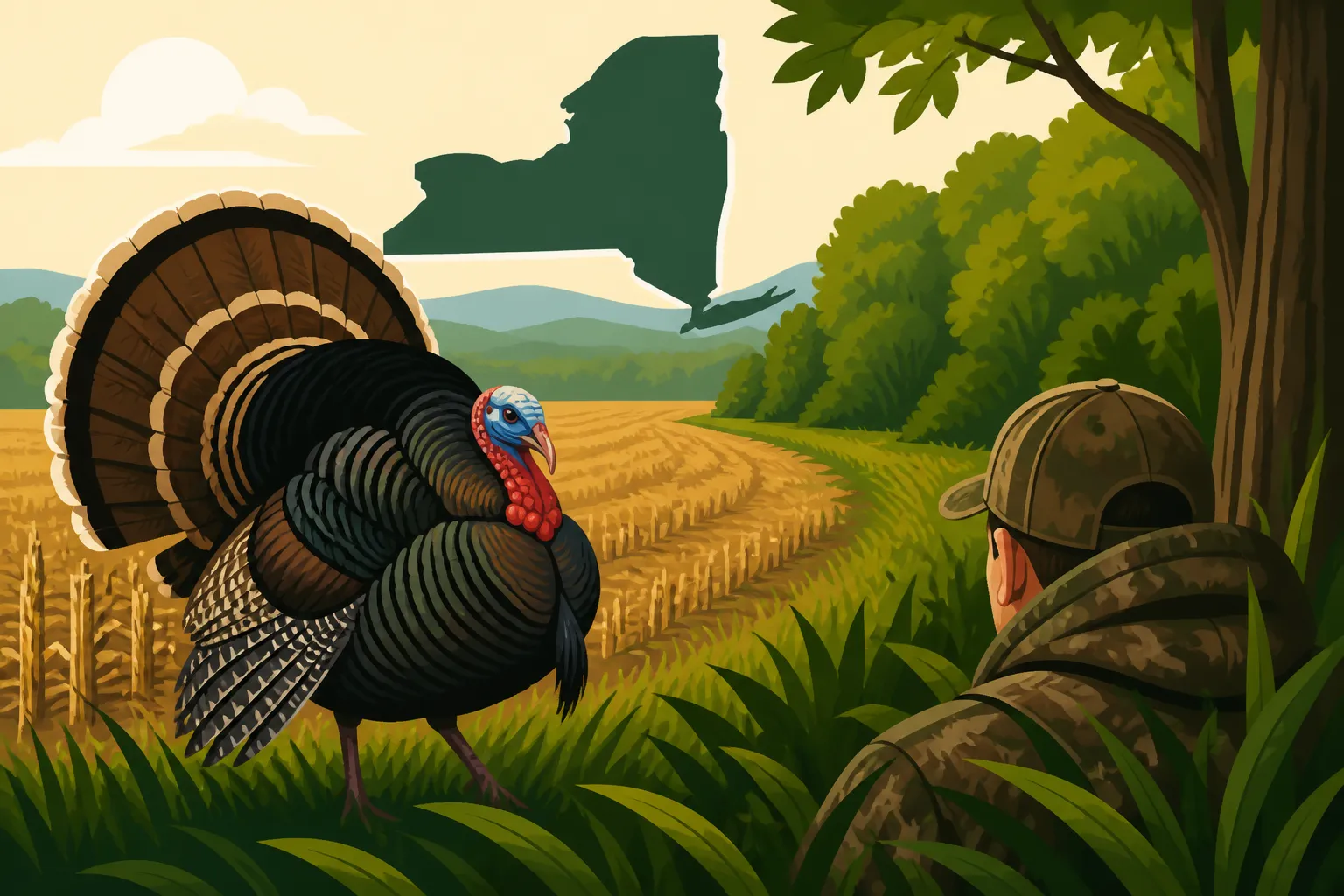
When the first rays of dawn pierce the horizon, turkeys are usually still on the roost. But as soon as they pitch down, often into a nearby field, their daily routine begins. In the Southern Tier, this often means they'll hit cut corn, hayfields, or pastures to feed and warm up. Your best bet for an early morning encounter is to get in well before light, positioning yourself along a known travel corridor or where you believe they'll pitch down. This might be a subtle dip in the terrain leading into a field, a fence line, or a strip of timber that offers them cover as they approach.
The challenge here is anticipating their exact landing spot. Often, a gobbler will fly down into the field and start strutting immediately, waiting for hens to join him. If you're too far into the timber, he might never see your decoys. If you're too exposed on the field edge, he might spot you before you can even get settled. It’s a delicate balance. Many hunters find success by setting up just inside the tree line, where they have a clear view of the field but are still concealed. This allows you to call to birds flying down or those already in the field, giving them the illusion that a hen is waiting just out of sight. Remember, the Southern Zone firearm dates often coincide with later sunrises, so getting in early means navigating the dark for a good bit.
Mid-Day Roaming and Loafing Areas
Once the initial morning flurry of feeding and gobbling subsides, turkeys shift gears. They might move deeper into the field to continue foraging, or they might retreat to the shade and cover of nearby timber for loafing, dusting, and bugging. These mid-day hours are often overlooked by hunters, but they can be incredibly productive if you understand where birds go. Look for areas where fields meet thick cover – briar patches, regenerating timber, or dense hedgerows. Turkeys will often use these transitions for security and to escape the heat of the day.
Scouting these loafing areas is crucial. You might find dusting bowls, abandoned strut zones, or fresh scratchings where they've been feeding on acorns or other forage. Don't be afraid to move and call aggressively during these mid-day hours, especially if your initial morning setup didn't pan out. A subtle series of yelps and clucks might pique a tom's interest as he's leisurely working his way through a woodlot adjacent to a field. These are the times when a solo bird, perhaps one that was with hens earlier, might be more responsive to your calls. Remember that sometimes the best option for a persistent bird is to try and move to them, rather than waiting for them to move to you.
Evening Roosting Near Fields
Just as turkeys use fields to start their day, they often return to them in the evening before flying up to roost. They'll feed one last time, gather in groups, and then fly into large, sturdy trees that offer security for the night. Identifying these evening staging areas and roost trees is paramount for setting up a successful morning hunt, or even for an evening hunt if the season allows. In the Southern Tier, large oaks or pines on a ridge overlooking a field are prime candidates.
Sitting an evening roost hunt can be tricky, as you don't want to spook the birds. Your goal isn't necessarily to call a bird in, but to confirm their roost location for the next morning. If you do decide to hunt in the evening, set up far enough away that your presence isn't detected. As the sun begins to set, listen for fly-up cackles and soft tree yelps as birds settle in. This intel is priceless. Many experienced hunters will use mapping apps, like those available on GoHunt, to mark potential roost trees during their pre-season scouting. Knowing Where New York Gobblers Roost can give you an incredible advantage, allowing you to plan a quiet, dark approach for opening light.
Setting Up for Success on Field Edges
Hunting field edges requires precise setup, a keen understanding of calling, and meticulous attention to concealment. Turkeys in open areas have incredible eyesight, and any slight movement or unnatural silhouette can send them running.
Effective Decoy Placement for Field Edges
Decoys are invaluable tools for field edge hunting, but their placement is key. The general rule of thumb is to set them up so an incoming gobbler will approach with his head facing you, giving you an ethical shot. This usually means placing hen decoys roughly 15-20 yards from your setup, slightly quartering away. If you're using a jake or full-strut gobbler decoy, position it so the tom will come in to challenge it, presenting his broadside for a shot.
One common mistake is placing decoys too far into the field. This might draw a gobbler out, but if he's wary, he might just strut at the decoys from a distance, staying out of range of your shotgun or bow. Consider placing your decoys closer to the field edge, or even just inside the timber if the cover allows for visibility. This forces the gobbler to commit closer to your position. For particularly pressured birds, sometimes a single submissive hen or even no decoy at all works best. When considering Decoy Placement for Pressured Birds, remember that less can often be more, especially on public land where birds have seen it all.
Mastering Your Calling Sequence
Calling on a field edge hunt is a delicate dance. You want to be loud enough to get a gobbler's attention across an open expanse, but not so loud or aggressive that you spook him. Start with softer calls – a few tree yelps, some soft clucks and purrs – to mimic a hen just waking up. Once you hear a gobble, you can increase your volume and urgency slightly.
The key is to listen and respond. If the gobbler is coming hard, often less calling is better. Let his curiosity and the visual of your decoys do the work. If he hangs up or seems hesitant, try a fly-down cackle followed by some excited yelps to suggest a hen is eager to meet him. Experiment with different calls; a good selection of Turkey Calls Worth Carrying in New York will give you options. Sometimes a box call, slate call, or even a mouth call works better depending on the bird's mood. For those stubborn toms that just won't commit, a technique called "soft calling" can sometimes seal the deal. It involves making very quiet, seductive hen noises, forcing the gobbler to come looking for the source, rather than you chasing him with loud yelps. This can be particularly effective when trying to lure a gobbler off the roost.
Concealment and Shot Angles
Concealment is non-negotiable when hunting field edges. Turkeys will spot any unnatural movement or silhouette. Whether you're in a ground blind or sitting against a tree, ensure you break up your outline completely. Brush in your blind extensively, using natural vegetation from the area. If sitting, pick a tree wider than your shoulders and position yourself so the sun is not directly in your eyes, which also helps obscure your face from incoming birds.
When sitting in the timber bordering a field, always consider your shot angles. You need clear lines of sight to your decoys and the anticipated approach lanes of a gobbler. Clear any small branches or obstructions that might impede your shot. Remember, shotguns have a limited effective range, generally 40-50 yards with modern turkey loads. If you're bowhunting, that range shrinks considerably, typically to 20-30 yards. Practicing with your chosen weapon and knowing its limitations is vital. A perfect setup might be sitting with your back to a large oak, offering natural cover and a stable shooting position, as discussed in Setting Up Against a Big Oak.
Adapting to Pressure and Changing Conditions
New York's turkey populations are healthy, but that also means birds, especially on public land or heavily hunted private ground in the Southern Tier, can be very wary. Adapting your tactics to pressure and unpredictable weather is essential for consistent success.
Dealing with Call-Shy or Field-Shy Turkeys
Some gobblers seem to have a Ph.D. in avoiding hunters. They might gobble their heads off from the roost, fly down, and then go completely silent or actively move away from calls. These "call-shy" birds are common, particularly later in the New York Spring Turkey Season Rules. For these birds, less is often more. Try minimal calling – soft clucks, purrs, and maybe a few quiet yelps. Sometimes, setting up completely silently and just waiting for a gobbler to naturally enter a field can work.
"Field-shy" turkeys are another challenge. These are birds that will stick to the timber or skirt the field edges, refusing to step out into the open, even if there are decoys. This behavior often comes from past negative experiences. For these birds, consider moving your setup deeper into the timber, perhaps 20-30 yards back from the actual field edge, along a known game trail or subtle funnel that leads to the field. This way, you're intercepting them before they hit the open, offering them a more secure feeling. Aggressive, run-and-gun tactics in the timber, trying to cut off a bird that's moving, can also be effective when they refuse to commit to the open.
Public Land Considerations on Field Edges
Hunting Southern Tier field edges on public land brings its own set of challenges, primarily increased hunting pressure. You might encounter other hunters, or the birds themselves might be exceptionally wary due to constant human presence. One of the biggest mistakes is setting up right on the most obvious field corner or access point. These are often the first spots other hunters check.
To find success on public land, you need to think like a turkey and, perhaps more importantly, like a hunter. Walk further, go deeper, or find less obvious access points to fields. Look for fields that are smaller, tucked away, or require more effort to reach. Consider using a ground blind, as outlined in Using a Ground Blind on New York Public Land, which offers better concealment from wary birds and potentially other hunters. Being respectful of other hunters is also crucial; if you hear another hunter calling or see their vehicle, find another spot. Communication is key, and some hunters even use two-way radios to coordinate.
Weather's Impact on Field Edge Hunts
New York weather is notoriously unpredictable, and it can significantly impact turkey behavior. Rainy or windy days often make turkeys less vocal and more prone to sticking to sheltered areas. On a rainy morning, birds might stay on the roost longer or pitch down into thick cover rather than directly into an open field. For these conditions, you might need to adjust your setup to hunt closer to dense timber or switch to a more mobile, aggressive hunting style, covering ground and trying to jump-flush birds.
During cold snaps or unexpected snow, which can happen even in late spring in the Southern Tier, turkeys will prioritize finding food and shelter. Fields with waste grain, like cut corn, become even more attractive. On bright, sunny days, especially after a cold front, turkeys often become more active and vocal. They'll use fields to warm up and soak in the sun's rays. Always check the forecast and dress in layers appropriate for a New York spring. Staying comfortable and dry will help you remain focused and patient, critical traits for any turkey hunter.
Scouting and Technology for Field Edge Turkeys
Successful field edge hunting starts long before opening day. Effective scouting, combined with modern technology, can give you a significant edge in locating and understanding the patterns of Southern Tier gobblers.
Pre-Season Scouting for Key Field Locations
Pre-season scouting is absolutely critical for field edge success. Before the season even opens, spend time driving or walking around potential hunting areas, especially focusing on fields adjacent to timber. Look for signs of turkey activity: tracks in soft dirt, droppings, dusting bowls, and shed feathers. Pay close attention to any areas where fields funnel into timber or narrow into strips between woodlots, as these are natural travel corridors.
Use binoculars from a distance to observe fields in the early morning or late evening. Watch for birds pitching down or flying up to roost. Identify specific trees that birds use for roosting – these are goldmines for an opening morning setup. Don't be afraid to knock on doors if you're on private land or consult DEC maps for public access. Knowing the Best New York Counties for Turkeys can give you a head start on where to focus your scouting efforts. The more time you spend scouting, the better your understanding of how the local turkeys use the landscape, and the more precise your setup can be.
Leveraging Mapping Tools like GoHunt
Modern technology has revolutionized scouting, and mapping tools are now indispensable for turkey hunters. Platforms like GoHunt, or the official Scouting With the New York HuntFishNY App, allow you to pour over satellite imagery, topo maps, and land ownership data right from your phone or computer. Before you even set foot in the woods, you can identify potential field edges, timber stands, creek bottoms, and other features that turkeys love.
Use these apps to pinpoint likely roosting areas on ridges overlooking fields, identify pinch points where birds might enter or exit a field, and even mark potential setup locations. You can drop pins for areas where you've heard gobbling, seen sign, or observed birds. This creates a digital record of your scouting efforts, allowing you to build a comprehensive plan. For instance, if you're looking for new areas, GoHunt can help you quickly identify public land parcels with significant field components in the Southern Tier, saving you valuable time on the ground. When season opens, having your planned routes and setup spots marked on your phone can save you precious minutes in the dark and ensure you get to your chosen location quietly and efficiently.
| Scenario | Recommended Calling Strategy | Recommended Decoy Setup | Notes |
|---|---|---|---|
| Early Morning Fly Down | Soft tree yelps, clucks. Increase volume slightly post-pitch. | 1-2 receptive hens, 15-20 yds from hunter, facing away. | Position for clear shot on landing birds. |
| Gobbler Hung Up (70+ yds) | Minimal, soft purrs & clucks. Maybe a subtle fly-down cackle. | 1 submissive hen or jake/gobbler facing away to draw him closer. | If he won't commit, consider repositioning deeper in timber. |
| Mid-Day Loafing | Aggressive yelps, clucks, cuts to locate. Soften as he responds. | 1-2 hens in loafing position, maybe 1 jake. | Be mobile. Find them in shade/cover adjacent to fields. |
| Wary Public Land Bird | Very subtle clucks/purrs. Only yelp if he's moving away. | 1 submissive hen, or no decoys if extreme pressure. | Focus on concealment and unconventional entry points. |
| Rainy/Windy Conditions | Louder, sharper calls to cut through wind. Call less frequently. | Use decoys with good visibility. Anchor well in wind. | Birds may stick to cover; adjust setup deeper in timber. |
Disclaimer
The information provided in this article is for educational and entertainment purposes only. Hunting regulations and best practices can change, and it is the responsibility of the individual hunter to stay informed of current New York State Department of Environmental Conservation (DEC) rules and safety guidelines. Always prioritize safety, ethical hunting practices, and respect for wildlife and private landowners.