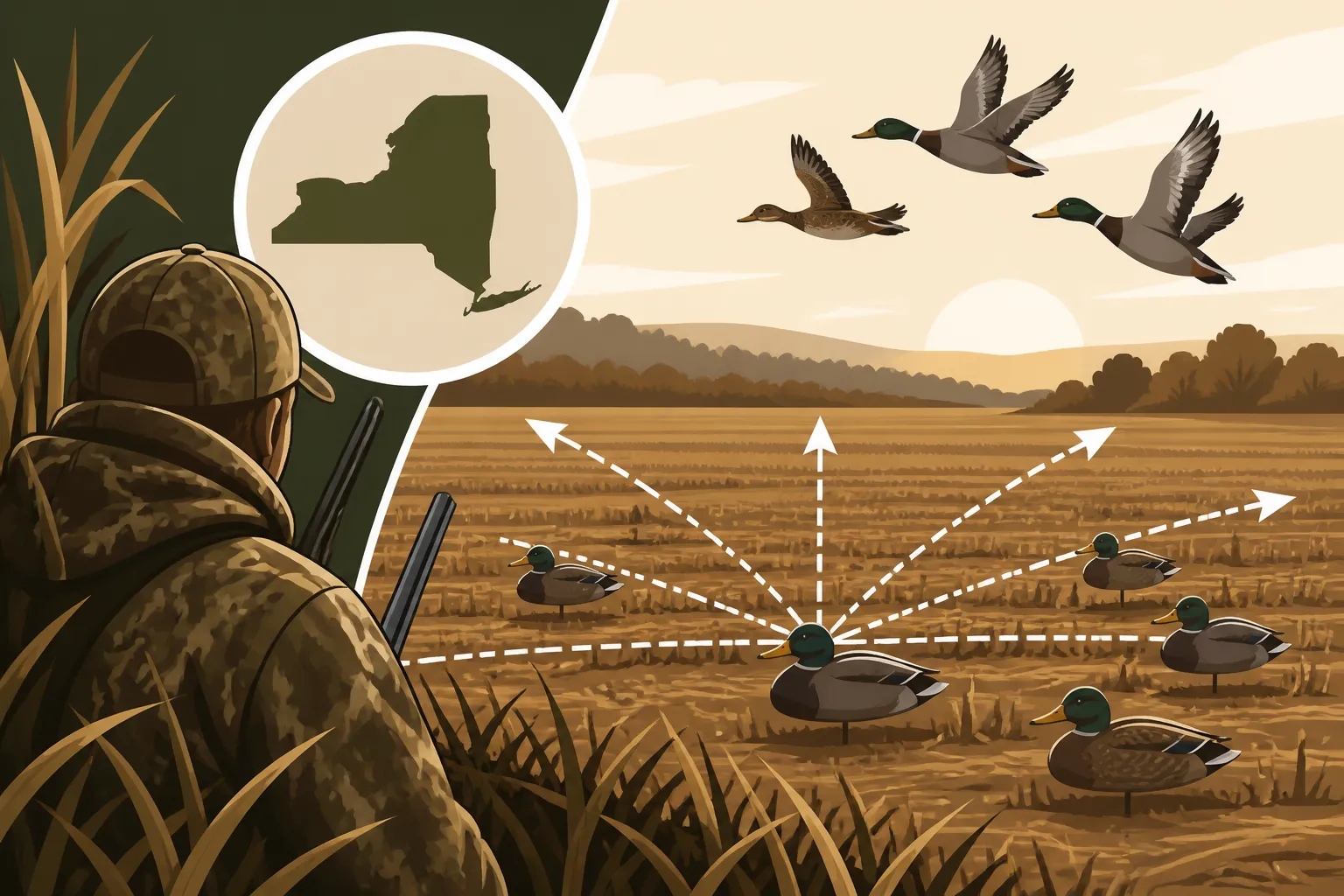
Decoy Placement for Pressured Birds
It's incredibly frustrating when you've done all your scouting, picked the perfect spot, and the birds just aren't committing. You watch them work the edges, maybe even come close, but they hang up just out of range, wary and suspicious. This often happens because those birds have seen it all before; they've been hunted, called at, and shot over, making them incredibly pressured and smart. This guide is dedicated to helping you master decoy placement, turning those wary birds into birds in hand by understanding their cautious nature and setting your spread to overcome their skepticism.
Understanding the Mindset of Pressured Game Birds
Hunting in New York, especially on public land or heavily hunted private parcels, means you're almost guaranteed to encounter birds that have a master's degree in evasion. These aren't naive juveniles; they're seasoned survivors who've learned to associate certain sights and sounds with danger. Their behavior is fundamentally different from unpressured birds, and recognizing this shift is the first step in successful decoy placement.
How Birds Learn to Be Wary
Think about it from their perspective. A flock of Canada geese might have flown over countless fields, seen dozens of decoy spreads, and perhaps even had a few close calls with hunters in layout blinds. The same goes for a tom turkey that's been called in only to have a hunter miss or spook his hens. They pick up on subtle cues: an unnatural shine on a decoy, a spread that’s too symmetrical, a caller that's too aggressive, or decoys placed too close to a visible blind. Each negative encounter reinforces their suspicion, teaching them to hang back, circle wide, and scrutinize every detail. They become excellent at pattern recognition, instantly flagging anything that seems "off." This learned caution is why the old, straightforward decoy setups often fail spectacularly.
Common Behaviors of Pressured Birds
Wary birds don't come charging in. Instead, you'll observe a few tell-tale signs:
- Circling Wide: Waterfowl will often circle multiple times, gaining altitude, trying to get an overhead view of the spread and the surrounding area before even considering committing. Turkeys might gobble from a distance but refuse to close the gap, especially if they can't see the "hen" they're responding to.
- Hanging Up: This is perhaps the most infuriating behavior. Ducks and geese will land short, often 60-80 yards out, or even farther, just beyond your effective range. Turkeys will often stop in a natural "safe zone" like a fence line, creek bottom, or thick brush, gobbling and strutting, but never entering the open shooting lane.
- Visual Scrutiny: These birds are constantly scanning. They're looking for movement, unnatural colors, or any hint of a threat. A glossy decoy that reflects too much sunlight or a blind that stands out against the cover can be an instant red flag. They will often key in on the most visible part of your setup, whether it's an exposed head or a poorly brushed-in blind.
- Silent Approaches: While unpressured birds might chatter or call confidently, wary birds often become quiet, slipping in cautiously. A dominant tom, for instance, might come in completely silent, expecting the hen to come to him.
Key Principles of Decoy Placement for Wary Birds
Successfully decoying pressured birds requires a complete shift in strategy, moving away from large, flashy spreads toward subtle, realistic, and highly strategic placements. The goal is to mimic nature so perfectly that even the most skeptical bird can't find a reason to doubt.
Realism Over Quantity
Forget the idea that more is always better. For pressured birds, a smaller, more realistic spread often outperforms a massive one. One or two ultra-realistic full-body decoys can be far more convincing than a dozen cheap, shiny shells.
- Quality Decoys: Invest in decoys that have natural postures, matte finishes, and accurate paint schemes. Birds are incredibly observant. A cheap decoy with faded paint or an unnatural sheen will be instantly dismissed. Consider brands that prioritize realism, like Avian-X or Dakota Decoy, for their lifelike details and postures.
- Fewer is More: For turkeys, sometimes just a single, non-committal hen or a jake decoy is enough to pique a tom's interest without triggering his suspicion. For waterfowl, particularly resident geese, a small family group of 4-6 full-body decoys positioned naturally can be far more effective than a spread of 50 less-realistic ones. This also ties into minimizing your footprint and making your setup less obvious.
Natural Poses and Spacing
Birds in the wild rarely stand in perfectly symmetrical lines or tight clusters. They feed, preen, and rest in varied, natural ways.
- Varying Poses: Use a mix of feeder, sentry, and resting poses. For ducks, include some preeners and sleepers. For geese, a couple of feeders with one or two sentries scanning the horizon look incredibly natural. Avoid having all decoys facing the same direction or standing at attention.
- Asymmetrical Spreads: Instead of a V-shape, think about loose J-hooks, U-shapes, or random clusters. Leave a clear landing zone where you want the birds to commit. This landing zone should ideally be downwind of your blind, allowing birds to cup their wings and float in.
- Proper Spacing: Don't crowd your decoys. Birds, especially wary ones, need their personal space. Overcrowding can signal stress or danger. For waterfowl, give them plenty of room, typically 3-5 feet between each decoy, to make the spread appear relaxed and inviting.
Incorporating Subtle Movement
Movement is a powerful attractant, but for pressured birds, it needs to be subtle and natural, not erratic or mechanical.
- Motion Decoys: A spinning-wing decoy (SWD) can be a magnet for ducks, but on pressured birds, it can often be a deterrent if overused or placed incorrectly. Try using them sparingly, turning them off when birds commit, or opting for more subtle motion like a feeding wobbler or a jerk string. For turkeys, a fanning decoy or a subtle flapping wing can draw in a curious tom, but again, ensure it looks natural and not robotic.
- Flagging and Ripplers: A goose flag can be incredibly effective for grabbing distant birds' attention. For ducks, a simple jerk string rig that creates ripples on the water and slight decoy movement can simulate actively feeding birds without the unnatural flash of an SWD.
- Wind Integration: Whenever possible, use the wind to your advantage. Most motion decoys are designed to move naturally with the breeze. Always remember that birds land into the wind, so position your landing zone accordingly.
Tactical Decoy Placement in New York Hunting Scenarios
New York's diverse landscapes offer a variety of hunting environments, from vast agricultural fields to dense Adirondack timber and expansive wetlands. Each scenario demands a slightly different approach to decoy placement for pressured birds.
Field Edge Tactics for Turkeys
When hunting turkeys near a field edge, whether it's a harvested cornfield in the Southern Tier or a clover strip bordering a woodlot, pressured birds will often hang up just inside the timber or along a fenceline.
- The Lone Hen or Jake: Instead of a full harem, try a single, non-committal hen decoy placed about 15-20 yards from your blind, slightly quartering away. This mimics a hen feeding naturally and doesn't present a challenge to a dominant tom. Alternatively, a single jake decoy can draw in a dominant tom looking for a fight, but place it strategically to ensure the tom approaches from your preferred shooting lane.
- Positioning for Approach: Turkeys prefer to approach from above or at least on level ground. If you're on a slight rise overlooking a field, place your decoy where a tom can see it from a distance but still has to walk a little to get to it. Never place your decoy directly at the top of a hill or in a position where a bird has to walk down into a depression to reach it.
- Concealment is Key: Your blind or cover must be impeccable. If you're in a ground blind, ensure it's well-brushed in. If you're setting up against a tree, choose one with a wide trunk for maximum concealment. Turkeys have incredible eyesight. If they spot you, the game is over. For more on setting up for gobblers, check out our guide on Calling a New York Gobbler Off the Roost.
Waterfowl Spreads for Wary Ducks and Geese
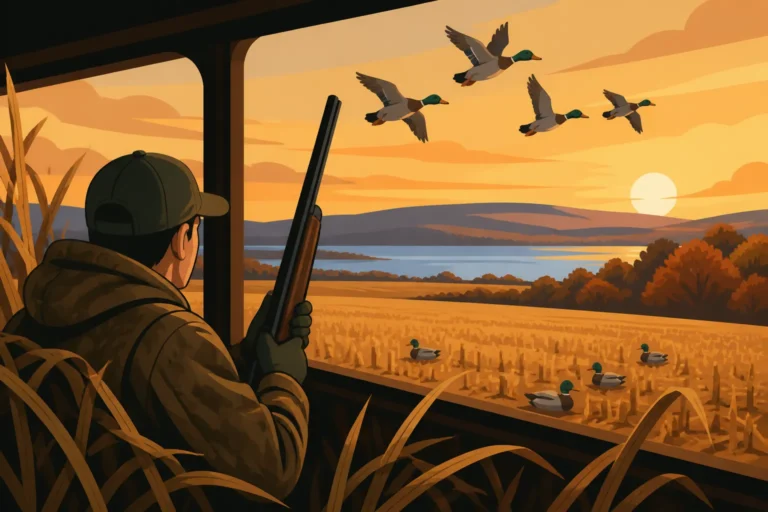
Waterfowl, particularly big Canada geese and mallards, become incredibly educated throughout the season. They know every trick in the book.
- Small, Loose Family Groups: For geese, consider a spread of 6-12 full-body decoys. Arrange them in small family clusters (2-4 birds each), spaced 10-15 yards apart. Place these clusters upwind of your hidden position, leaving a wide, inviting landing zone directly in front of or slightly downwind of your blinds.
- Species-Specific Spreads: If you're hunting mallards, use mallard decoys. If you're targeting pintails, add a few pintail decoys. A mixed-species spread can be effective, but make sure the ratios are realistic for the area and time of year. Don't use a bunch of teal decoys if you're trying to attract big honkers.
- Water Spacing: On water, give ducks plenty of room. A common mistake is crowding decoys too tightly. Ducks naturally spread out when feeding or resting. Leave ample landing space, and ensure your decoys are oriented to face into the wind, as that's how live ducks sit. For those serious about puddle ducks, a guide like Hunting the Western Zone Diver Ducks offers insights into different water setups.
- Strategic Placement for Divers: When hunting divers on large bodies of water like Eastern Lake Ontario or the Finger Lakes, smaller lines or V-formations that suggest active feeding can work. Place decoys closer together, as divers tend to raft up more than dabblers. Always consider the current and wind, as divers will naturally orient themselves accordingly. For more on these birds, explore Diver Hunting on Eastern Lake Ontario.
- Edge Work for Field Geese: For geese working agricultural fields, the layout of your decoys matters immensely. Place your blinds within the spread, not outside it. This breaks up your outline. Use the GoHunt app to scout aerial photos for subtle elevation changes or depressions in fields where you can hide your layout blinds. Arrange decoys in a sparse, natural feeding pattern, with a clear pocket directly in front of your blinds. Our article on Layout Blind Hunting a Cut Cornfield provides more specific tips for this scenario.
Wooded & Brushy Cover for Upland Birds
While typically not decoyed in the same way, pheasants, grouse, and woodcock can sometimes be drawn to realistic bird models, especially if you're trying to concentrate them.
- Pheasant Figures: In areas where pheasants are known to hold, especially during late season, a full-body pheasant decoy can sometimes hold their attention long enough for a flush or shot, particularly when combined with an effective push. Place it near a known travel corridor or heavy cover.
- Subtle Grouse Decoys: Though less common, a single, realistic ruffed grouse decoy placed on a log in a known drumming or dusting area might pique the curiosity of another grouse, or at least slow it down as it investigates. This is less about luring and more about pausing for a shot.
Advanced Decoy Tactics and Avoiding Common Mistakes
Beyond the basic principles, there are nuances that can make or break your success with pressured birds. Paying attention to these details can turn a tough hunt into a memorable one.
Utilizing Terrain and Cover
The landscape itself is your most valuable asset when placing decoys for wary birds.
- Natural Funnels: Place decoys where birds are naturally funneled by terrain features. For turkeys, this might be a subtle dip in a field or a pinch point between two woodlots. For waterfowl, a point of land jutting into a marsh or a natural bend in a river can guide birds right into your spread. Use the GoHunt mapping tools to identify these natural choke points and plan your ambush.
- Hide in Plain Sight: Don't just set up your decoys and hope. Integrate them with your cover. For field hunting, your layout blind should look like another hump in the field. For turkeys, your ground blind should blend seamlessly into the brush line.
- Shadow Play: When possible, use shadows to your advantage. Early morning or late afternoon sun can cast long shadows, which can help break up the outline of your decoys and blinds, especially if birds are approaching from above.
The Role of Calling
Calling is intrinsically linked to decoy placement. For pressured birds, less is often more.
- Subtle and Sparse: Aggressive, continuous calling will often spook wary birds. Use soft, subtle calls, mimicking contented feeding or quiet contentment. For turkeys, soft clucks and purrs are often more effective than loud yelps. For waterfowl, soft greeting calls and clucks are better than a blaring hail call.
- Let Decoys Do the Work: If your decoy spread is realistic and well-placed, let it do most of the talking. Your calls should just be a gentle nudge, a reassurance, not a demanding siren.
- Call Timing: Only call when birds are looking away or have passed your position slightly. If they are looking directly at your position, they will pinpoint your location.
Decoy Maintenance and Realism Check
Even the best decoys lose their effectiveness if not maintained.
- Cleanliness: Keep your decoys clean. Dirt, mud, and water stains can make them look unnatural.
- Matte Finish: Decoys often get shiny with use. A quick spray of a flat, non-reflective clear coat can work wonders.
- Regular Inspection: Before each hunt, inspect your decoys for broken parts, faded paint, or unnatural shine. A decoy that looks like a cheap plastic toy won't fool a pressured bird.
Here's a quick comparison of decoy strategies for pressured birds:
| Scenario | Bird Type | Decoy Strategy | Key Considerations |
|---|---|---|---|
| Field Edge | Turkey | 1-2 realistic hens or jakes; smaller, non-threatening | Placement for approach (not uphill/downhill); impeccable blind/tree concealment; soft calling. |
| Field/Pasture | Canada Geese | 6-12 full-body decoys; loose family clusters | Blinds within spread; natural feeding postures; ample landing zone upwind; GoHunt for hidden spots. |
| Small Water Hole | Mallards/Dabblers | 3-6 realistic duck decoys; 1-2 motion decoys (subtle) | Focus on natural interaction; jerk string for ripples; hide well on edge; landing zone upwind. |
| Large Open Water | Divers (e.g., Lake Ontario) | 12-24 decoys; lines or V-shapes; tight groupings | Orient into wind/current; dark decoys blend better; careful with motion in high winds. |
| Wooded Area | Turkey/Grouse | 1 ultra-realistic hen (turkey); 1 realistic grouse (grouse) | Primarily visual; for turkey, focus on creating an inviting visual from a distance; for grouse, a pause-and-look. |
Avoiding Common Mistakes
- Overcalling: The biggest mistake with pressured birds. Let the decoys work.
- Wrong Species Decoys: Using snow goose decoys for Canada geese is an obvious giveaway.
- Poor Concealment: Your blind or position is paramount. If they see you, it doesn't matter how good your decoys are.
- Decoys Too Close to Blind: This forces birds to look directly at your position as they commit. Place decoys slightly away, drawing their focus elsewhere.
- Forgetting the Wind: Birds land and take off into the wind. Always set your spread to allow for a natural approach into the wind, with your landing zone exactly where you want them. This is especially true for ducks and geese where wind direction dictates approach paths. You can also learn a lot from guides such as New York Waterfowl Hunting by Zone to better understand regional patterns.
Mastering decoy placement for pressured birds in New York is a journey, not a destination. It requires observation, adaptation, and a deep understanding of bird behavior. By focusing on realism, subtlety, and strategic placement, you'll start turning those cautious circles into committed landings, and those frustrating hang-ups into successful hunts. Don't be afraid to experiment, learn from your outings, and adjust your tactics based on what the birds are telling you. The wary birds are out there, and with the right approach, you can outsmart them.
Disclaimer
Hunting is an inherently dangerous activity. Always prioritize safety, adhere to all New York State hunting regulations, and ensure you have the proper licenses and permits. Consult the most current New York Department of Environmental Conservation (DEC) regulations before heading afield. This guide is for informational purposes only and does not substitute for proper hunter education and adherence to all laws.