Crow Hunting Seasons and Tactics in New York
Many New York hunters feel frustrated when they hit a lull in the deer or turkey seasons, wishing there were more opportunities to get out in the field, hone their skills, and enjoy some fast-paced action. Crows, often overlooked, actually offer a fantastic, year-round challenge in many areas of the state, providing an exciting way to extend your time outdoors. This comprehensive guide will walk you through everything you need to know about New York's crow hunting seasons, essential gear, and effective tactics to help you become a successful crow hunter.
Understanding New York's Crow Hunting Regulations and Seasons
Before you even think about stepping into the field, it’s absolutely crucial to have a firm grasp on the rules and regulations surrounding crow hunting in New York. The New York State Department of Environmental Conservation (DEC) sets these guidelines, and they can sometimes be a bit different from what you might be used to with other game species. Understanding these nuances will ensure you have a legal and enjoyable hunt.
Navigating the Open Seasons and Legal Hours
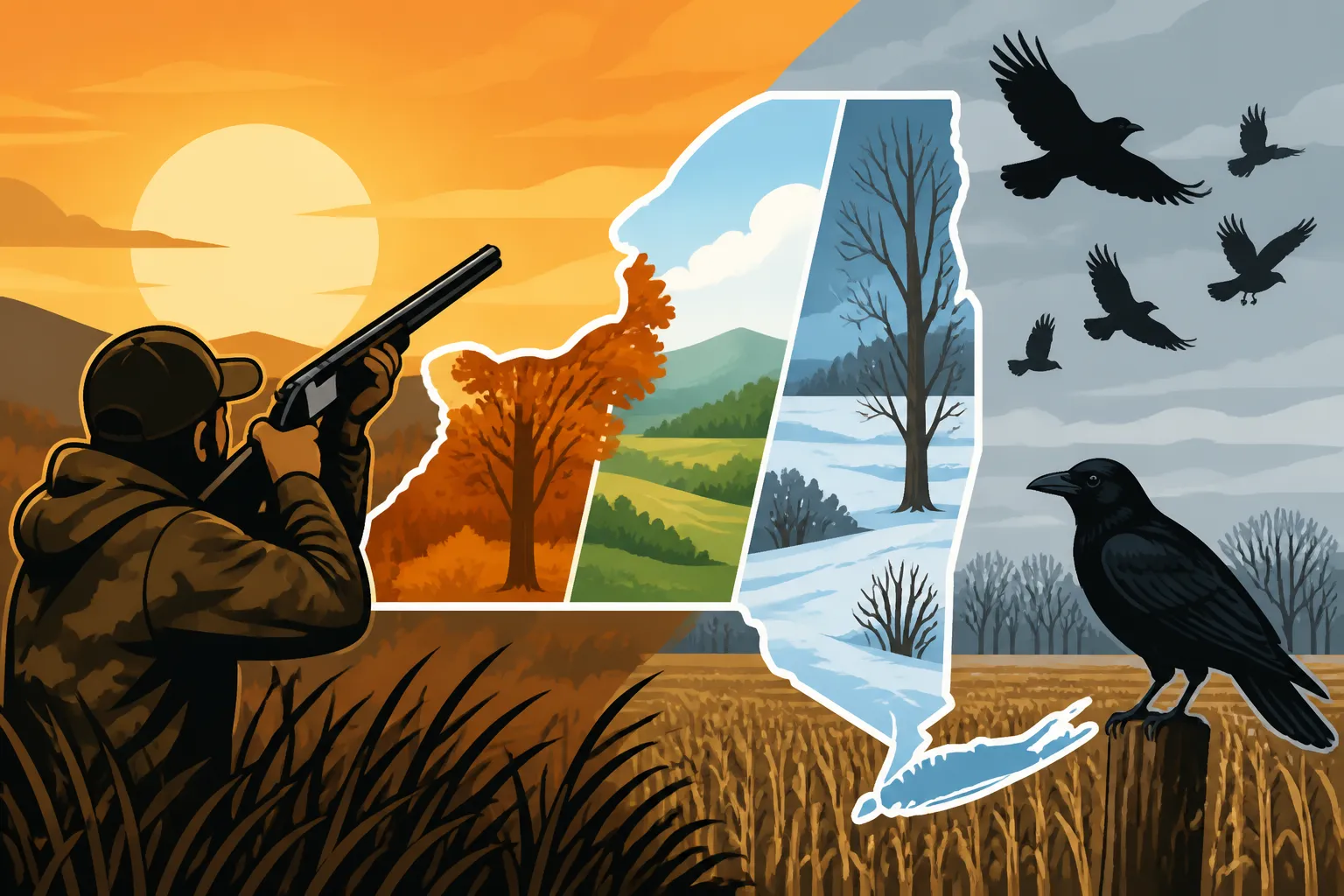
Unlike many popular game animals with highly restricted windows, crow hunting in New York offers a surprisingly generous season, providing ample opportunity to get out and chase them. Generally, the season runs for much of the year, often with a brief closure period during the spring nesting season to protect breeding birds. For instance, recent regulations typically see an open season from September 1st through March 31st, then a short closure, followed by a re-opening in July for a specific period, often through early to mid-August. This split season provides hunters with both fall/winter and mid-summer opportunities.
Legal hunting hours are typically from one-half hour before sunrise to one-half hour after sunset, mirroring the regulations for most other small game species. This means you can effectively hunt crows during prime activity periods, often in the early morning as they leave their roosts or in the late afternoon as they return. Always double-check the current year's New York Small Game and Upland Bird Seasons on the DEC website or in the hunting guide, as these dates and times can occasionally shift. Planning your hunts around these legal hours is essential for success and compliance.
Licensing Requirements and Bag Limits for Crows
One of the great things about crow hunting is its accessibility. To hunt crows in New York, you simply need a valid New York State small game hunting license. You don't need any special permits or additional stamps beyond that. If you already hold a big game license, it typically includes your small game privileges, so you're likely already good to go. This makes it a cost-effective way to get more hunting days under your belt.
Perhaps the most unique and appealing aspect of crow hunting in New York is the absence of a daily or seasonal bag limit. That's right, there's no limit to the number of crows you can harvest. This allows for high-volume action, making it an excellent opportunity to refine your shooting skills and call techniques without worrying about reaching a quota. For hunters looking to truly immerse themselves in a high-action hunt, this liberal bag limit is a major draw. However, remember that while there's no limit, ethical hunting means making good use of your harvest, even if it's not for the dinner table in the traditional sense.
Legal Hunting Methods and Permissible Firearms
New York offers a variety of legal methods for crow hunting, allowing hunters to utilize their preferred style. You can use shotguns, rifles, or even archery equipment. Shotguns are a popular choice, especially when crows are coming into decoys or calls at closer ranges, offering a good spread pattern. Many hunters opt for a 12-gauge with a modified or full choke, loaded with #4, #5, or #6 lead shot.
For longer-range shots, particularly in open agricultural areas, rifles are completely permissible. Calibers like .22LR, .17 HMR, .22 Hornet, or even .223 Remington are common choices, depending on the typical shooting distance and personal preference. Just ensure you are aware of all New York Legal Firearms for Deer Hunting and other game, as some calibers might be restricted in certain areas or for specific game, though crows are generally more permissive. It's always crucial to know your backdrop and maintain safe shooting practices, especially when using high-powered rifles. Electronic calls are also legal for crow hunting in New York, which is a significant advantage, allowing hunters to broadcast a wide range of realistic crow vocalizations to attract birds.
Here's a quick reference table for New York crow hunting basics:
| Category | Details |
|---|---|
| Open Season (Typical) | September 1 – March 31 & specific July/August dates (Always confirm current year's DEC guide) |
| Legal Hunting Hours | One-half hour before sunrise to one-half hour after sunset |
| License Required | New York State Small Game Hunting License |
| Bag Limit | No daily or seasonal bag limit |
| Legal Methods | Shotguns, Rifles, Archery, Electronic Calls |
| Nontoxic Shot | Not required for crows (unless hunting over water or in specific federal refuges, as per migratory bird rules) |
Essential Gear for Successful Crow Hunting in New York
Having the right gear can make all the difference between a frustrating day and a high-action crow hunt. While crow hunting doesn't require a massive investment, a few key items will significantly increase your success rate and overall enjoyment. Think about what will help you blend in, attract crows, and make clean, ethical shots.
Firearms and Ammunition for Crow Hunting
When it comes to firearms, versatility is key for crow hunting. Shotguns are often the go-to for many hunters, especially when engaging in decoying and calling tactics that bring crows into closer range. A 12-gauge shotgun, fitted with a modified or full choke, is an excellent choice. This allows for a good pattern density that can handle fast-moving targets without over-constricting your shot. For ammunition, shot sizes from #4 to #6 lead are ideal. These offer a good balance of pellet count and energy to effectively dispatch crows. Three-inch shells will give you a bit more payload and range, which can be useful when crows hang up just outside typical shotgun range.
For those who prefer a longer reach, or when hunting vast open fields where crows might approach cautiously, a rifle is a solid option. Small-caliber rimfire rifles like a .22LR or .17 HMR are perfect for this, offering precision and minimal noise, which can be less disruptive to other game or nearby residents. If you're comfortable with centerfire rifles and your hunting area allows for safe long-range shooting, a .223 Remington or similar varmint caliber can be highly effective. The key is to match your firearm to the typical ranges you expect to encounter crows and always prioritize a safe and ethical shot. Remember that Rifle and Shotgun Choices for New York Deer will differ due to the size of the animal, but for crows, lighter and faster is often better.
Decoys and Calls to Lure Crows In
This is where crow hunting really shines and often dictates success. Crows are highly social and incredibly responsive to calls and decoys. Electronic calls, like those offered by companies such as Foxpro or Lucky Duck, are invaluable. They can broadcast a variety of realistic crow sounds – distress calls, aggregation calls, fighting crows, and even owl or hawk sounds that trigger mobbing behavior. Experimenting with different sequences and volumes is crucial. Start with a softer aggregation call, then amp it up with a distress call once crows are spotted.
Physical decoys also play a huge role. A spread of full-bodied crow decoys, positioned strategically, can draw in wary birds. Even better, combining crow decoys with a plastic owl or hawk decoy can be incredibly effective. Crows are notorious for "mobbing" predators, meaning they'll gang up and harass raptors to drive them away. Setting up an owl decoy with a few crow decoys aggressively positioned around it often elicits an immediate, aggressive response from crows flying overhead. Place your decoys within shotgun range of your concealed position, usually 20-30 yards. Many hunters use mapping tools like the GoHunt app to mark precise decoy locations and ensure they are within an effective shooting zone.
Camouflage and Concealment for Close Encounters
Crows have exceptionally keen eyesight, often compared to that of a wild turkey. This means excellent camouflage and concealment are non-negotiable for close-range success. Full camouflage, including face masks or paint, gloves, and clothing that matches the local vegetation, is paramount. Browns, greens, and grays, depending on the season and your surroundings, will help you disappear into the environment. Don't skimp on breaking up your outline.
Beyond personal camo, a good ground blind is almost essential for static crow hunts, especially in open areas. A pop-up blind or even natural cover brushed in heavily can provide the necessary concealment to allow crows to commit to your decoy spread. Make sure your blind allows for clear shooting lanes but still keeps you hidden. When hunting a woodline, utilizing the natural shadows and thick undergrowth can be sufficient, but avoid any exposed skin or shiny objects that could reflect sunlight and alert the sharp-eyed birds. Hunters can learn a lot from Using a Ground Blind on New York Public Land articles, as the principles of concealment remain the same for many wary species.
Mastering Crow Hunting Tactics in Diverse New York Landscapes
Crow hunting isn't just about shooting; it's a strategic game of cat and mouse, or rather, hunter and crow. Understanding crow behavior and adapting your tactics to the varied New York landscape will put more birds in front of your barrel.
Scouting and Location Selection for Crow Hotspots
Effective crow hunting begins long before you set up your first decoy. Scouting is critical. Crows are creatures of habit, often flying predictable routes between roosting sites, feeding areas, and loafing spots. Look for large groups of crows, especially in the late afternoon, heading towards communal roosts. These roosts can sometimes hold hundreds or even thousands of birds. Flying near these major flyways or between known feeding areas and roosts can yield excellent results.
Prime locations often include agricultural fields, especially those with standing corn, harvested fields with spilled grain, or areas with fruit trees. Crows are omnivores and will feast on various crops, insects, and even carrion. Large woodlots adjacent to these food sources are also key, providing cover and roosting opportunities. Use mapping applications like the GoHunt app or the Scouting With the New York HuntFishNY App to identify potential roosts, flight corridors, and food sources. Driving secondary roads and stopping to listen for caw-caws or observe flight patterns can reveal hotspots. Pay attention to how crows use the terrain, whether they prefer to fly over valleys, along ridge lines, or through open timber.
Effective Calling Strategies for Aggressive Crows
Calling is the heart and soul of crow hunting. The goal is to mimic the sounds that will draw them in, primarily distress calls or aggregation calls, often combined with mobbing calls. Start your calling session conservatively. If you see crows in the distance, begin with a softer, questioning "caw-caw" or a basic aggregation call to pique their interest. As they turn towards you or get closer, you can increase the intensity.
A "distress call" is one of the most effective sounds. This mimics a crow in trouble, often being harassed by a predator. Crows have a strong instinct to investigate and mob the source of distress. When you play a distress call, especially combined with an owl or hawk decoy, crows will often come in aggressively, circling overhead, cawing loudly, and attempting to drive the perceived predator away. Be ready for fast action when they commit. Varying your calls, using both electronic and mouth calls to add realism, and understanding the rhythm of a crow's response are skills that develop with practice. Sometimes, a short, sharp series of aggressive caws can challenge nearby crows into responding and investigating.
Setting Up Your Ambush in Open Fields and Woodlines
Your setup is everything. Once you've identified a promising location through scouting and decided on your calling strategy, it’s time to choose your ambush point. The ideal spot provides excellent concealment, good shooting lanes, and is downwind or crosswind from the direction you expect crows to approach. Crows will often fly into the wind when committing to a decoy spread, making wind direction a critical factor.
In open agricultural fields, a pop-up ground blind positioned along a fenceline, hedgerow, or the edge of a woodlot is ideal. Make sure you have clear lines of sight to your decoys, which should be placed 20-30 yards out. If hunting a woodline, find dense cover, ideally against a dark background, and ensure you're completely concealed. Crows will typically circle overhead to assess the situation before committing fully. This circling gives you an opportunity to make the shot before they get too close and spot you. A common tactic is to have two hunters, one calling and one shooting, or both ready to shoot once the crows are in range. Hunters pursuing Predator and Furbearer Hunting in New York can also pick up valuable tips on concealment and ambush, as many of these principles cross over.
Ethical Considerations and Responsible Crow Hunting
While crows are not typically considered table fare in the same way deer or turkey are, and they have no bag limit, ethical considerations remain paramount. Responsible hunting practices ensure the future of the sport and maintain a positive image for all hunters.
Respecting Property and Public Land Rules
Crow hunting, like all hunting, requires strict adherence to property laws and regulations. If you're hunting on private land, always obtain permission from the landowner beforehand. This is not just a courtesy but a legal requirement. Having a good relationship with landowners can open up many crow hunting opportunities, especially on agricultural properties where crows can be a nuisance.
On public lands, always check the specific regulations for that area. While general state regulations allow crow hunting, some Wildlife Management Areas or State Forests might have additional restrictions, such as seasonal closures for other game or designated hunting zones. The New York Waterfowl Hunting by Zone regulations, for example, might have specific rules about shooting over certain water bodies that could indirectly affect crow hunting if they are near wetlands. Always be aware of other users of public land – hikers, birdwatchers, and other hunters. Maintain safe shooting angles, be mindful of noise, and always clean up your spent shells and any other trash. Leaving a clean hunting site is a sign of respect and responsibility.
Public Perception and Sportsman Image
Because crows are so numerous and are not traditionally hunted for meat, some non-hunters might question the practice. As hunters, it's our responsibility to uphold a positive image of conservation and ethical engagement with wildlife. While there's no requirement to consume crows, some hunters do use them in various recipes or for dog training. If you're not planning to use the crows, consider how their disposal might appear to others. Burying them or placing them in a discreet location is often preferable to leaving them in plain sight.
Remember, every time you are in the field, you are an ambassador for hunting. Practicing safe firearm handling, respecting property, and being mindful of your actions contributes to a positive perception of hunters. Crow hunting is a fantastic way to enjoy the outdoors, sharpen your shooting skills, and participate in wildlife management, but it should always be done with respect for the animal and the environment. Learning about other methods like Coyote Calling in a New York Winter can also instill a deeper appreciation for ethical predator management and how it impacts broader ecosystem health.
Disclaimer
This guide is for informational purposes only. Hunting regulations can change. Always consult the most current New York State Department of Environmental Conservation (DEC) hunting regulations guide before heading afield to ensure compliance with all laws and safety guidelines.