Dove Hunting Rules in New York
Navigating the world of migratory bird hunting in New York can feel like deciphering an ancient scroll, especially when it comes to doves. Many hunters, new and seasoned, get tangled in the mix of state and federal regulations, leaving them unsure of where to even begin. This guide aims to untangle those complexities, walking you through the essential rules and practical tips for successful, legal dove hunting in the Empire State.
Understanding New York's Dove Season Framework
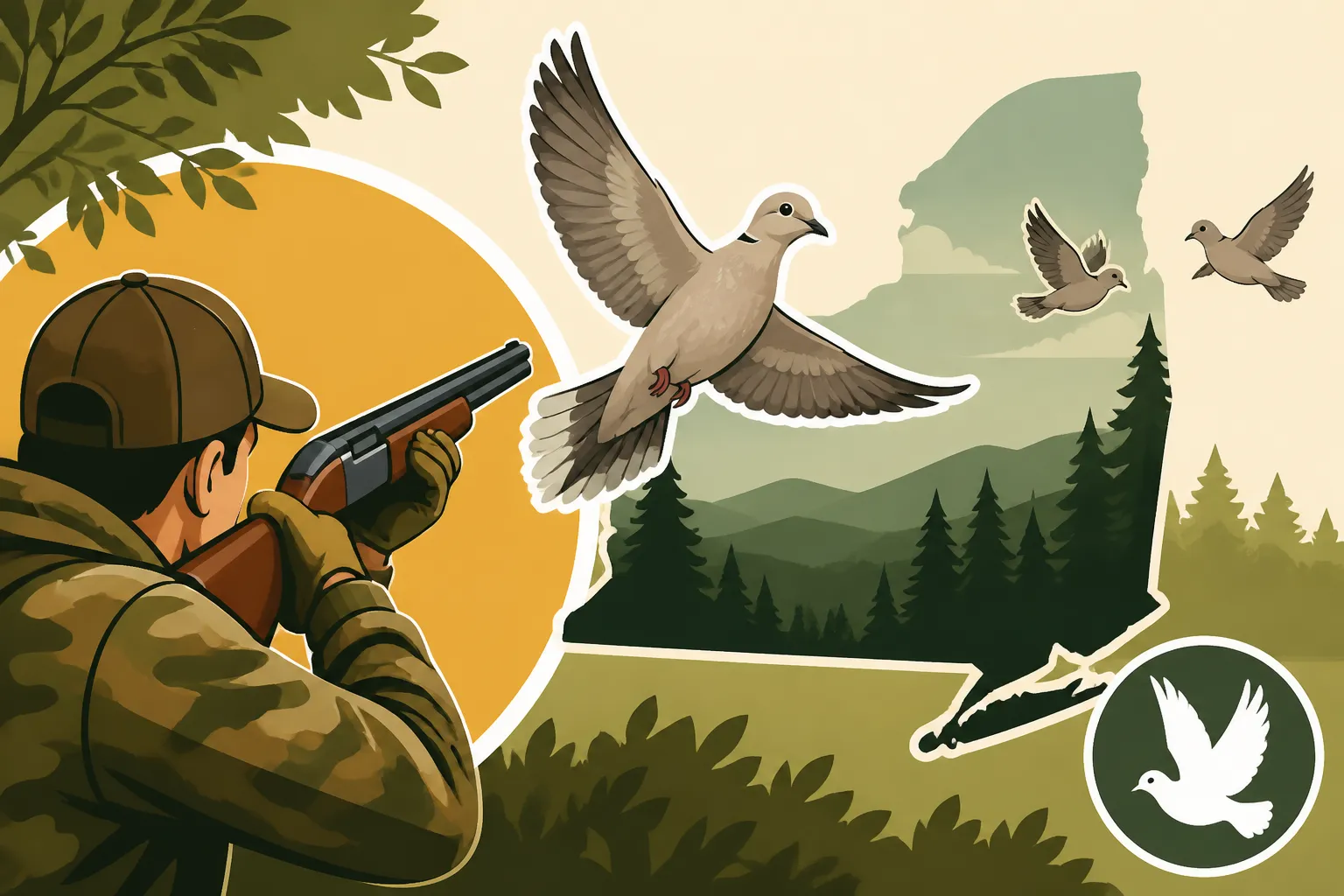
Dove hunting offers a unique, fast-paced challenge often considered the unofficial start to the fall hunting season for many across the country. In New York, it's a bit more niche, but no less exciting when you find the right spot. However, because doves are migratory game birds, their hunting seasons and rules are shaped by both state and federal guidelines, making it crucial to understand the overarching framework.
When is Dove Season Open in New York?
Unlike deer or turkey seasons which can vary dramatically between the Northern and Southern Zones, mourning dove season in New York typically opens statewide on September 1st. This early start means dove hunters are often out in warm weather, long before the chill of fall truly sets in. The season usually runs for a period, often extending into November, sometimes with a break in between. It’s absolutely vital to check the current year’s New York Department of Environmental Conservation (DEC) regulations guide, as these dates can shift slightly year to year based on federal frameworks. For instance, in recent years, the season has generally followed a split, with an initial segment from September 1st through early November, offering plenty of opportunity. Always double-check the official DEC website or the Hunting & Trapping Regulations Guide before heading afield.
Daily Bag and Possession Limits
To maintain healthy dove populations and ensure sustainable hunting, strict bag and possession limits are in place. For mourning doves in New York, the daily bag limit is typically 15 birds. This means you can legally harvest up to 15 doves within a single calendar day. The possession limit, which refers to the maximum number of lawfully taken doves you can have in your possession at any given time (including those at home or in transit), is generally three times the daily bag limit, or 45 birds. These limits are designed to prevent overharvesting and distribute hunting pressure, ensuring that future generations of hunters can also enjoy the thrill of doves rocketing over a field. It's not uncommon for newer hunters to accidentally exceed the possession limit by forgetting about birds in the freezer from previous hunts, so always keep track!
HIP Certification and Federal Duck Stamp
This is where many New York hunters, particularly those accustomed to solely hunting deer or turkeys, often hit a snag. Because doves are migratory birds, federal regulations apply, and that includes the Harvest Information Program (HIP) certification. Every single hunter, regardless of age, who plans to hunt migratory game birds – doves included – in New York and across the United States, must be HIP certified. This is a free, simple process, usually completed when you purchase your New York Hunting Licenses and What They Cost. It involves answering a few questions about your migratory bird hunting activity from the previous year. The data collected through HIP is crucial for wildlife agencies to estimate harvest numbers and make informed management decisions.
Additionally, while you don't need a Federal Duck Stamp for doves (that's specifically for ducks, geese, and swans), it’s easy to get them confused. However, you do need to ensure your small game license is current, and if you’re venturing onto state land, you might even consider using mapping tools like GoHunt to confirm boundaries and access points, ensuring you’re compliant with all local rules. For more details on this requirement, check out our guide on New York Migratory Bird Certification.
Legal Firearms and Ammunition for Dove Hunting in NY
Dove hunting is almost exclusively a shotgun sport, requiring quick reflexes and a good swing. But just like everything else in New York hunting, there are specific rules regarding what firearms and ammunition you can legally use.
Legal Shotgun Gauges and Action Types
For dove hunting in New York, shotguns are the only legal firearm. Most popular gauges are permissible, including 12-gauge, 20-gauge, and even smaller options like 28-gauge or .410 bore for those who enjoy an extra challenge. Semi-automatic, pump-action, over/under, and side-by-side shotguns are all fair game. However, there's a critical federal rule that applies to all migratory bird hunting: your shotgun must be plugged or permanently altered so it cannot hold more than three shells total (one in the chamber, two in the magazine). This "three-shell limit" is a long-standing federal regulation designed to prevent excessive harvest and give birds a fighting chance. If you have a semi-automatic or pump shotgun, make sure you have a working plug installed. Most new shotguns come with one, but it's your responsibility to ensure it's in place and functional.
Nontoxic Shot Requirements and Best Practices
Here's another important federal regulation that trips up many hunters: nontoxic shot is required for all migratory bird hunting, including doves, if you are hunting on any federal land (like National Wildlife Refuges) or on most state-owned or state-managed lands (like Wildlife Management Areas – WMAs). While lead shot may be permissible for doves on private land in some areas (always verify local town ordinances and DEC regulations), it is a very good practice to simply use nontoxic shot exclusively for all dove hunting in New York. This eliminates any confusion and ensures you're always compliant, especially since many prime dove fields are often found on or near public access areas.
Common nontoxic shot alternatives include steel, bismuth, and tungsten-matrix loads. Steel shot is the most affordable and widely available, though it's lighter than lead, requiring you to often go up one or two shot sizes for equivalent pellet energy and choose your chokes carefully. Bismuth and tungsten-matrix are denser and perform more like lead but come at a higher cost. Understanding Where Nontoxic Shot Is Required in New York is essential before you head out.
Shot Size Recommendations for Doves
When it comes to shot size, doves are relatively small birds, so you don't need large pellets. The most common and effective shot sizes for doves are 7 ½, 8, or even 9. These smaller pellets create a dense pattern, increasing your chances of hitting a fast-flying target.
Here’s a quick breakdown:
| Shot Size | Common Use | Advantages | Disadvantages |
|---|---|---|---|
| 7 ½ | General Purpose | Good balance of pattern density and energy; effective out to 40 yards. | May have slightly fewer pellets than smaller sizes. |
| 8 | Most Common | Excellent pattern density; ideal for typical dove ranges (20-35 yards). | Less energy than 7 ½ at longer ranges. |
| 9 | Close Range | Maximum pellet count and pattern density; very effective up close. | Limited range and energy; less forgiving on longer shots. |
Remember, when using steel shot, you might consider going one size larger (e.g., 6 or 7) to compensate for its lighter weight and ensure enough energy for clean kills. Always pattern your shotgun with your chosen loads and chokes beforehand to see how they perform.
Hunting Methods and Ethics for Doves in New York
Successfully hunting doves requires more than just understanding the rules; it demands scouting, strategic setup, and a strong commitment to ethical practices. Finding the right spot in New York can be a bit more challenging than in states with vast agricultural landscapes specifically managed for doves, but the rewards are equally sweet.
Finding Dove Fields in New York
Doves are attracted to agricultural fields, particularly those with harvested grains like corn, wheat, sunflowers, or millet. They also frequent areas with abundant weed seeds. In New York, your best bets for finding dove hunting opportunities often lie in the agricultural regions of the Southern Tier, the Finger Lakes, and parts of Western New York.
- Public Lands: Some New York Wildlife Management Areas (WMAs) are specifically managed with dove fields. These areas might plant sunflower or millet plots, or maintain fields of cut grain to attract doves. The DEC website and its HuntFishNY mapping application are invaluable resources for identifying these WMAs. You can often find maps that highlight specific dove fields or areas where special permits might be required. Tools like GoHunt can provide satellite imagery and land ownership information, which helps immensely when trying to locate potential fields on public land, or even when scouting around a known WMA.
- Private Lands: Obtaining permission from private landowners, particularly farmers, can unlock some of the best dove hunting. Farmers often welcome hunters who can help manage dove populations, especially if doves are feeding heavily on their crops. When approaching landowners, always be respectful, offer to share some of your harvest, and leave the property cleaner than you found it. Our articles on Hunting Small Private Tracts in New York and Asking a New York Farmer for Permission offer great advice on how to do this effectively.
- Scouting: The key to successful dove hunting is scouting. Doves are creatures of habit and will use specific flyways between roosting areas, feeding grounds, and water sources. Spend time observing fields in the late afternoon before the season opens. Look for doves flying into fields, perched on power lines, or congregating near water. Pay attention to wind direction, as doves often fly into the wind when approaching a field.
Setting Up for Success: Decoys and Blinds
Once you've found a promising spot, your setup can make all the difference. Doves have excellent eyesight and are wary, so camouflage and strategic decoy placement are crucial.
- Blinds: While not always strictly necessary, a simple blind can break up your silhouette and help you remain concealed. This could be as elaborate as a commercial pop-up blind or as simple as sitting against a fencerow, in a patch of tall weeds, or even in a natural depression. Remember, you want to blend into your surroundings.
- Decoys: Dove decoys, especially spinning-wing models, can be incredibly effective. Place decoys on bare branches, fence posts, or on the ground in the field where doves are feeding. Spinning-wing decoys simulate a landing bird, drawing in passing doves. The more natural your spread, the better. Position yourself so incoming doves will be flying towards your decoys, giving you a good shooting opportunity.
- Field Placement: Position yourself where you can intercept doves flying into the field, or along a major flyway. Often, doves will skirt the edges of fields, use fencerows, or follow treelines. Set up with the sun at your back if possible to hide your position and make it harder for doves to see you.
Ethical Hunting Practices and Safety
Ethical hunting and safety are paramount in any hunting pursuit, and dove hunting is no exception.
- "Sky-Busting": Avoid "sky-busting"—shooting at birds that are too far away. This often results in wounded birds that are difficult to recover and wastes ammunition. Wait for doves to be within effective range, typically 20-40 yards. Knowing your effective range through patterning your shotgun is crucial.
- Retrieving Birds: Make every effort to retrieve downed birds immediately. Doves can be tough to find in tall grass or brush, so marking where your bird fell is essential. A good bird dog can be an incredible asset for this, but if you don't have one, walk quickly to the spot, mentally marking landmarks.
- Safety Zones: Always be aware of your surroundings, especially if hunting with others. Maintain safe shooting lanes and know where other hunters are positioned. Remember New York's requirements for New York Blaze Orange Requirements, which generally apply to firearm hunting for big game but are still a good idea in any crowded field. Even if not legally required for doves, wearing some blaze orange or pink can increase your visibility to other hunters, especially if you're on public land.
- Respect Private Property: If hunting on private land, be mindful of property lines and ensure your shot pattern doesn't land on adjacent properties or near dwellings. Adhere strictly to New York Posted Land Rules to avoid any issues.
Reporting and Post-Harvest Rules for New York Doves
The hunt isn't truly over until your harvest is properly reported (if required) and cared for. For migratory birds like doves, there are specific federal requirements tied to the Harvest Information Program that hunters need to be aware of.
Harvest Information Program (HIP) Explained
We touched on HIP certification earlier, but it’s worth reiterating its importance for post-harvest compliance. While you don't typically "report" individual dove harvests in the same way you report a deer or bear in New York, your participation in the Harvest Information Program is how the federal government collects data. When you obtain your HIP certification, you're essentially registering as a migratory bird hunter, and the short survey helps wildlife managers estimate overall hunting pressure and harvest trends. This information is vital for setting future season dates and bag limits. Failing to be HIP certified before hunting migratory birds is a federal violation, so make sure you're covered! The New York HIP Certification for Bird Hunters guide has all the details.
Transporting and Preparing Your Dove Harvest
Once you've retrieved your doves, proper handling is key to preserving the quality of the meat. Doves are delicious table fare, often considered one of the best-tasting game birds.
- Field Dressing: In warm early-season conditions, it’s a good idea to field dress your doves promptly. While you don’t need a fancy Field Dressing Knives Worth Carrying, a sharp pocket knife will do. Most hunters simply breast out doves, removing the breast meat from the bone, as this is the primary meat source. You can also pluck and gut the whole bird if you prefer.
- Cooling: Doves will spoil quickly in warm weather. Get them on ice or into a cooler as soon as possible. A small cooler with ice in the truck is a necessity for early September hunts.
- Transporting Whole Birds: When transporting migratory game birds, the head or one fully feathered wing must remain attached to the bird while in the field and during transport from the field to your home or processing facility. This allows law enforcement to identify the species and confirm legal take. Once you're back home and ready to process them further, you can remove the head or wing.
- Preparation: Dove breasts are incredibly versatile. They can be grilled, fried, wrapped in bacon, or added to stews. Many consider them one of the Best-Eating Game in New York.
Final Thoughts on Dove Hunting in New York
Dove hunting in New York might not have the same widespread tradition as it does in other parts of the country, but for those who embrace the challenge, it offers an exhilarating experience. The fast-flying nature of these birds tests your shooting skills, and the early season start provides a fantastic opportunity to shake off the rust before deer season truly kicks in. Remember that thorough preparation, from understanding complex regulations to scouting promising fields, is your best bet for a safe and successful hunt. Whether you're targeting a WMA known for its managed dove fields or securing permission on private agricultural land, being informed and respectful of both the rules and the land will ensure a rewarding experience.
Always prioritize safety, respect wildlife, and cherish the opportunity to be out in New York’s beautiful wild spaces.
Disclaimer
Please remember that hunting regulations can change. While every effort has been made to provide accurate and up-to-date information, it is the individual hunter's responsibility to consult the most current New York State Department of Environmental Conservation (DEC) hunting and trapping regulations guide and federal migratory bird regulations before engaging in any hunting activity. This content is for informational purposes only and does not constitute legal advice.