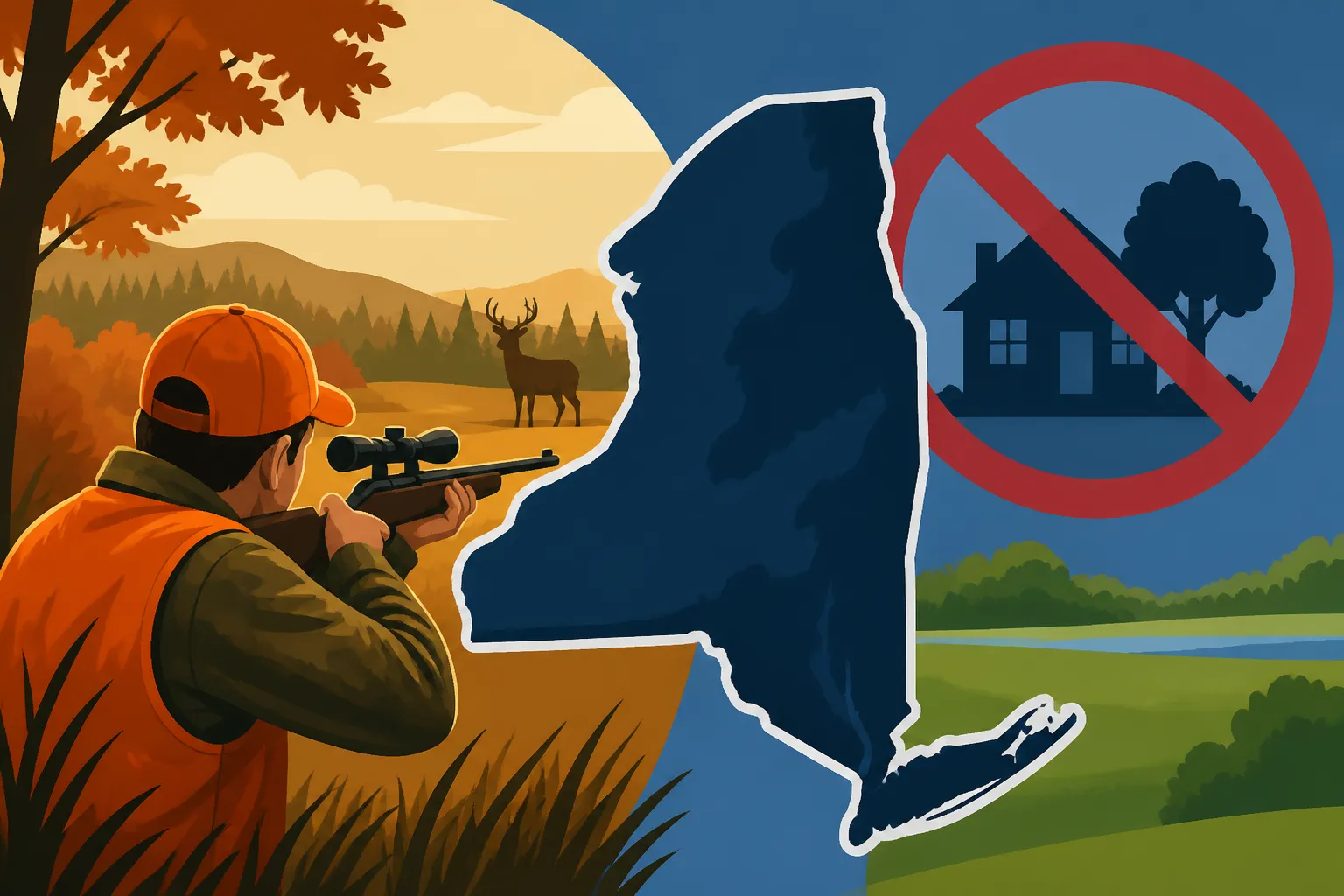
New York Firearms Discharge Setback Rules
It can be incredibly frustrating to try and understand all the nuances of hunting regulations, especially when it comes to something as critical as where you can legally discharge a firearm. Many new hunters, and even some seasoned veterans, wrestle with the exact distances and specific scenarios that define New York’s firearms discharge setback rules, leading to anxiety about accidentally breaking the law or, worse, compromising safety. This guide aims to clear up that confusion, offering a comprehensive breakdown of these vital regulations so you can hunt confidently and responsibly across the Empire State.
The Foundational 500-Foot Rule for Firearm Discharge
Let's cut right to the chase with the most widely known and fundamental rule in New York: the 500-foot setback. This regulation is designed to ensure public safety by creating a buffer zone between hunting activities and occupied buildings or structures. It's the cornerstone of responsible firearm use in a state with diverse landscapes, from dense wilderness to sprawling suburban edges.
What Exactly Constitutes an "Occupied Building or Structure"?
The New York State Environmental Conservation Law (ECL) is pretty clear on this, but it’s easy for hunters to misinterpret the specifics. An "occupied building or structure" isn't just someone's home. It extends to any building, public or private, that is regularly used or occupied by people, or any barn, cowshed, or similar structure used to shelter domestic animals. This includes residences, schools, businesses, and even certain outbuildings on a farm. The key is regular use. A long-abandoned shack in the middle of the woods might not count, but a hunting camp that’s used seasonally absolutely would.
The biggest pitfall here is assuming a building isn't occupied just because you don't see anyone. You have to consider its potential use. A remote cabin might look empty, but it could be someone's weekend getaway. The burden of proof, and therefore the responsibility, falls squarely on the hunter to know their surroundings and to err on the side of caution. This is where scouting and using reliable mapping tools become absolutely essential to identify potential structures long before you ever carry a firearm into the field.
Measuring the Distance: Your Responsibility
The 500-foot measurement isn't from your target; it's from where you discharge your firearm to the nearest occupied building or structure. This distinction is crucial. You might be aiming at a deer 50 yards away, but if your shooting position is only 400 feet from a neighboring barn, you're in violation. Hunters must be acutely aware of their immediate surroundings and the trajectory of their shot.
Think about the terrain you're hunting. In flat, open fields, judging 500 feet might seem straightforward, but in hilly, wooded areas, that distance can be incredibly deceptive. Sound also travels differently in various environments, and a shot that seems harmlessly far away can carry sound – and the potential for a stray projectile – much further than anticipated. Using a rangefinder isn't just for target distance; it can be an invaluable tool for ensuring you're a legal and safe distance from any structure. Always take the time to confirm your position relative to buildings, even if it means walking around a bit before you settle into a stand.
Navigating Exceptions and Special Circumstances
While the 500-foot rule is generally steadfast, like most legal frameworks, it comes with a few important exceptions and specific considerations that every New York hunter needs to understand. These aren't loopholes; they're designed for particular situations to allow safe and legal hunting under defined conditions.
Hunting on Your Own Land: When the Rules Change
One of the most significant exceptions involves hunting on your own land. If you own a property and are hunting within its boundaries, the 500-foot setback rule typically does not apply to structures on your own property. This means you can legally discharge a firearm closer than 500 feet to your own home, barn, or other occupied structures on your land.
However, this exception comes with a massive caveat: it only applies to structures on your property. You are still absolutely bound by the 500-foot rule for any occupied building or structure on a neighboring property. So, if your house is 100 feet from your property line, and your neighbor's house is 200 feet from their side of the property line, meaning they are only 300 feet from your house, you still cannot shoot towards your neighbor's house if you are within 500 feet of it. This makes understanding property lines paramount. Many hunters who hunt on their own acreage find it helpful to clearly mark their property boundaries and know the precise locations of their neighbors' homes and outbuildings to avoid any accidental violations. For more on navigating property boundaries, consider checking out resources like New York Trespass and Permission Law.
Waterfowl Hunting Specifics
Waterfowlers often find themselves in unique environments, and the law recognizes this. For hunting migratory game birds over water, the 500-foot setback rule is reduced to 200 feet. This adjustment acknowledges the specific nature of waterfowl hunting, often occurring from blinds located near shorelines or in open water, where traditional setback distances might be impractical or unnecessary for safety given the shot patterns of scatterguns.
Even with the reduced distance, safety remains the top priority. This 200-foot rule applies specifically to shotguns discharging shot, not single projectiles. Additionally, you still need to be mindful of the direction of your shot. Even shot from a shotgun can travel a considerable distance, and ensuring a safe zone of fire, particularly over populated shorelines or near marinas, is critical. Always be aware of other boaters, homeowners, or recreational users who might be in the vicinity.
Target Shooting vs. Hunting
It's also important to distinguish between target shooting and hunting. The 500-foot setback rule primarily pertains to hunting. If you are target shooting on your own property, the local laws and ordinances might have different rules, but the state's hunting setback rules typically don't apply. However, that doesn't mean you can just shoot wherever you want. Safe shooting practices, including adequate backstops and ensuring your projectiles stay on your property, are always essential.
Many ranges and shooting clubs exist specifically to provide safe, controlled environments for target practice. If you’re ever unsure, always check with your local authorities or the New York State Department of Environmental Conservation (DEC) for clarification. Safety should never be compromised, regardless of whether you’re hunting or just honing your shooting skills.
Practical Implications for New York Hunters
Understanding these setback rules isn't just about avoiding a ticket; it's about fostering a safe and responsible hunting culture. The practical application of these regulations touches everything from scouting new hunting grounds to choosing your setup location.
Public Land Considerations
Hunting on public lands in New York, such as State Forests or Wildlife Management Areas, presents its own set of challenges regarding setback rules. While these lands are typically expansive, they are often bordered by private properties with occupied structures. It's not uncommon to find homes or cabins adjacent to public land boundaries. This means that even on vast tracts of public ground, your choice of hunting spot might be limited by these safety zones.
Hunters need to be diligent about identifying property lines and potential structures. Tools like the New York HuntFishNY Map Tool or commercial mapping apps can be invaluable for pinpointing these boundaries. Always scout potential hunting areas thoroughly, looking for signs of habitation near public land borders. Remember, just because you’re on public land doesn’t exempt you from respecting the setback laws that protect adjacent private property owners. For those interested in Public Hunting Land in New York, knowing these nuances is key.
Private Land Permission and Communication
When hunting private land with permission, the responsibility to adhere to setback rules becomes a shared effort between the hunter and the landowner. While the landowner might be familiar with their property, it's ultimately the hunter's legal obligation to ensure compliance. Before you even set foot on the land with a firearm, have a clear conversation with the landowner about neighboring properties, any occupied structures near the boundaries, and the safest shooting lanes.
In some cases, landowners might not be fully aware of the precise distances or the location of every neighboring structure. This is where your diligence as a hunter comes in. Walk the property lines, use maps, and identify all potential setback concerns. A transparent discussion about Getting Private Land Permission in New York should always include a review of potential safety zones and shooting directions. Building trust through responsible behavior is crucial for maintaining access to private land.
Safety and Ethical Hunting Beyond the Law
While the 500-foot (or 200-foot for waterfowl) setback is a legal requirement, responsible hunting extends far beyond simply adhering to minimum distances. Ethical hunters prioritize safety above all else, always considering their backdrop and the potential path of their projectile. Even if you're 600 feet from a house, shooting directly towards it, even with a seemingly clear path, is irresponsible and dangerous.
Table: New York Firearms Discharge Setback Rules Summary
| Scenario | Minimum Setback Distance | Applies To | Key Considerations |
|---|---|---|---|
| General Hunting (Rifle, Shotgun with Slugs, Muzzleloader) | 500 feet | Any occupied building/structure (public or private) | From where you discharge the firearm. Your responsibility to know surroundings. |
| Waterfowl Hunting (Shotgun with Shot) | 200 feet | Any occupied building/structure (public or private) | Applies over water. Still requires safe zone of fire, especially near populated areas. |
| Hunting on Your Own Land | 500 feet | Neighboring occupied buildings/structures only | Does not apply to your own occupied structures. Still applies to adjacent properties. |
| Target Shooting | Consult local ordinances | Varies | State hunting setback rules typically don't apply, but local laws and safety rules are critical. |
Always remember the cardinal rules of firearm safety: treat every firearm as if it's loaded, always point the muzzle in a safe direction, be sure of your target and what’s beyond it, and keep your finger off the trigger until you’re ready to shoot. These principles, combined with a thorough understanding of New York’s setback rules, ensure a safer environment for everyone. Hunters who want to remain truly safe in the field should also be familiar with topics like New York Blaze Orange Requirements and New York Hunter Education Requirements. By knowing and practicing these regulations and safety protocols, we can all contribute to a positive and secure hunting experience in New York.
Disclaimer
The information provided in this guide is for informational purposes only and does not constitute legal advice. Hunting regulations can change, and interpretations may vary. It is always the hunter's responsibility to consult the most current New York State Environmental Conservation Law (ECL) and DEC regulations, as well as any local ordinances, before engaging in any hunting activities.