Why New York Grouse Numbers Keep Falling
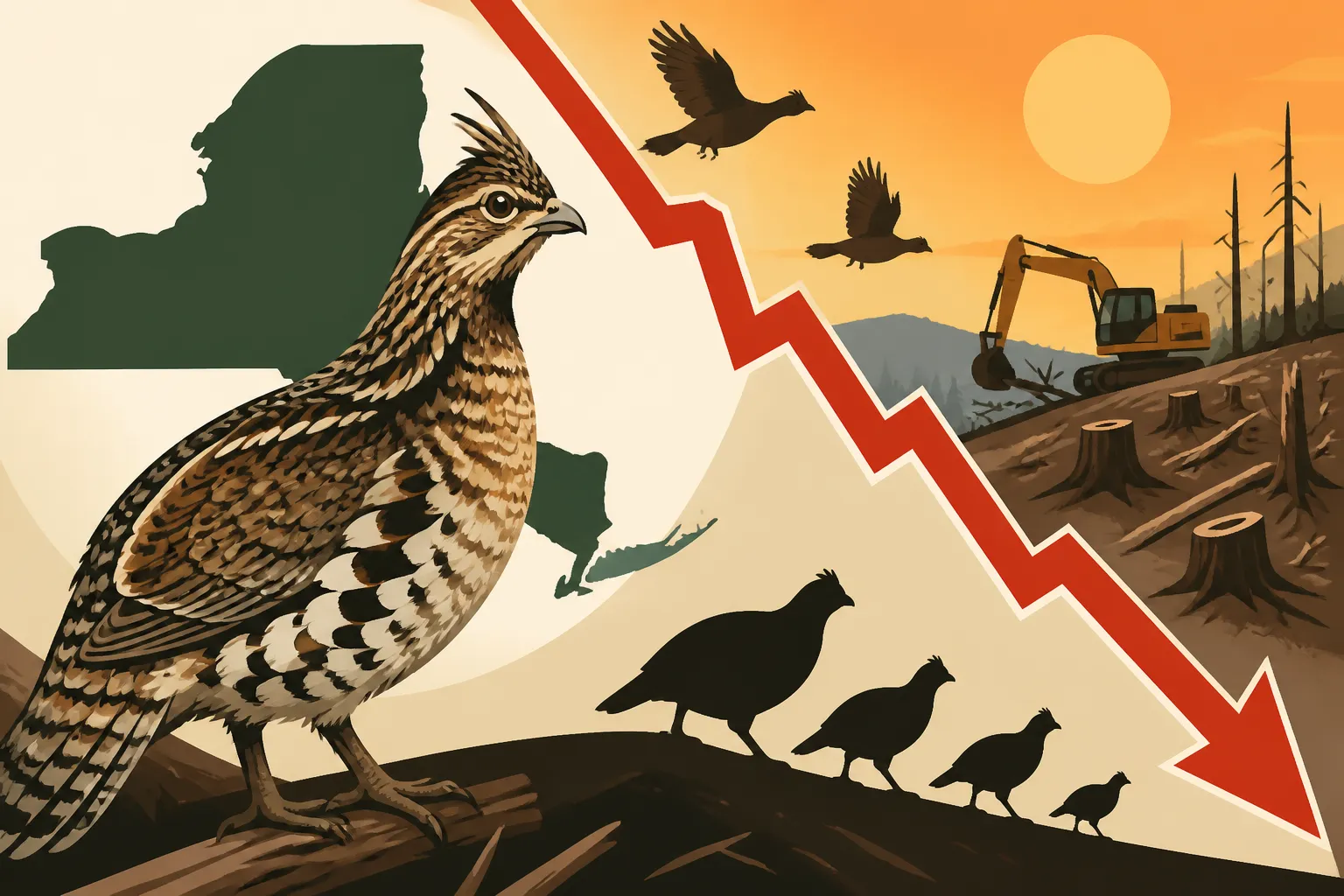
If you've spent any time chasing ruffed grouse through the regenerating woods and alder thickets of New York, you've likely felt a familiar ache: the sound of fewer flushes, the sight of fewer birds. It’s not just a feeling; for many years now, the numbers have been showing a concerning trend. This guide will dive deep into the multifaceted reasons behind the decline in New York's ruffed grouse population, offering insight into what's happening in our cherished coverts.
The Shrinking Home: Habitat Loss and Degradation
One of the most profound and widely recognized factors contributing to the decline of ruffed grouse across New York is the loss and degradation of suitable habitat. Grouse are not wilderness birds in the way a moose might be; they thrive in a very specific type of young, disturbed forest, and unfortunately, those kinds of places are becoming increasingly scarce.
Maturing Forests and Lack of Early Successional Habitat
Imagine a forest left alone for decades. What you get is tall, mature timber, a relatively open understory, and a beautiful canopy that shades out much of the ground growth. While this provides fantastic habitat for some species, it's essentially a desert for ruffed grouse. These birds depend heavily on dense, young cover for nesting, rearing chicks, and escaping predators. They need thick tangles of saplings, shrubs, and brush that are often found in areas recovering from logging, fire, or other disturbances.
As New York's forests have matured, especially in areas where active timber management has slowed or ceased, the critical balance of age classes has shifted dramatically. There are simply fewer of those 5-20 year old stands that provide ideal conditions. This isn't just about clear-cuts; it's about a consistent rotation of forestry practices that create a mosaic of young and old growth. Without it, the "drumming logs" might still be there, but the secure cover around them to attract and protect a breeding pair is gone. Many hunters using tools like GoHunt can visually see this shift on aerial maps, noticing how many once-productive areas have grown up into less desirable habitat.
Aspen and Alder Decline
When we talk about prime grouse habitat, two tree species often come to mind: aspen and alder. Both are fast-growing, pioneer species that quickly colonize disturbed sites and create the dense, twiggy cover that grouse crave. Aspen stands, particularly, are like five-star resorts for grouse, providing food from their buds in winter and incredible security cover year-round.
Unfortunately, New York has seen a significant decline in both aspen and alder communities. Aspen often regenerates best after a clear-cut or severe fire, but without such intense disturbance or targeted management, older aspen stands are replaced by longer-lived hardwoods. Similarly, alder thickets, common along stream banks and wet areas, are susceptible to hydrological changes and can be outcompeted by other vegetation. The loss of these specific, high-quality cover types directly impacts the grouse's ability to find food, shelter, and nesting sites. Without these crucial components of their ecosystem, local grouse populations struggle to maintain viable numbers. Many hunters, when Grouse Hunting New York Aspen Cover, lament the difficulty of finding these shrinking pockets of prime habitat.
The Pressure Cooker: Predation and Environmental Stressors
Beyond habitat, a complex web of environmental pressures, particularly predation and disease, adds to the challenges faced by New York's ruffed grouse. These factors can significantly impact survival rates, especially for vulnerable chicks and nesting hens.
Increased Predator Populations
It’s a natural part of any ecosystem: predators eat prey. However, a significant shift in predator populations can put undue stress on species like the ruffed grouse. In many parts of New York, we've seen increases in generalist predators such as coyotes, foxes, raccoons, and even some avian predators like hawks and owls. These animals are often highly adaptable and can thrive in human-modified landscapes, including suburban edges, where grouse struggle to find safe haven.
These predators impact grouse in several ways. They prey on adult birds, but perhaps more critically, they decimate nests and young chicks. Ground-nesting birds like grouse are incredibly vulnerable to nest predation, and if a hen successfully hatches a brood, those tiny, flightless chicks are easy targets for a variety of mammals and birds. A poor nesting year compounded by high predation can severely limit recruitment into the adult population, leading to fewer birds overall. Understanding New York Predator Impact on Fawn Recruitment for deer can give some context, but the impact on a smaller, ground-nesting bird like a grouse can be even more acute.
Disease and Climate Impacts
While habitat and predation are often cited first, more subtle environmental stressors, particularly disease and climate change, are also playing a role. One of the most discussed diseases affecting grouse populations in recent years is West Nile Virus (WNV). Research in various parts of their range has shown that grouse are highly susceptible to WNV, which is transmitted by mosquitoes. An outbreak can cause significant mortality in local populations. The virus doesn't necessarily wipe out entire regions, but sustained low-level mortality, especially in years with high mosquito populations, can prevent populations from rebounding. Hunters who track data with platforms like GoHunt sometimes see correlations between wet, mosquito-heavy summers and subsequent drops in bird sightings.
Climate change also presents challenges. While New York might not see drastic temperature swings that directly kill birds, altered weather patterns can impact nesting success. Unseasonably cold, wet springs can reduce insect availability—a critical food source for newly hatched chicks—or even lead to hypothermia in young birds. Erratic weather, like severe thunderstorms during nesting, can also flood nests or expose chicks to elements they can't survive. These subtle shifts accumulate, making it harder for grouse to complete their life cycle successfully. For more on this, you might look into West Nile Virus in New York Grouse.
The Human Factor: Management Challenges and Hunter Behavior
Even with the best intentions, human decisions and behaviors inevitably play a part in the health of our game populations. For ruffed grouse, this includes the complexities of habitat management on a large scale and how hunting pressure might interact with declining numbers.
Challenges in Large-Scale Habitat Management
Managing habitat on a scale large enough to make a difference for a species like ruffed grouse is a monumental undertaking. New York contains a mix of private land, state forests, and the vast "Forever Wild" Adirondack and Catskill Forest Preserves. While state forests often allow for active timber management that can create early successional habitat, the Forest Preserves are legally protected from commercial logging. This means huge tracts of land will naturally mature into older forests, limiting where significant habitat creation can occur.
Furthermore, even on lands where management is possible, funding, personnel, and public perception can be barriers. Large-scale timber sales, which are crucial for creating young forest, can be controversial. There's also the challenge of coordinating efforts across multiple landowners and agencies to create a connected patchwork of suitable habitat. Without a unified, proactive approach to create and maintain young forest, grouse will continue to struggle for adequate space. Understanding Why Forest Preserve Land Cannot Be Logged helps explain some of these inherent challenges.
Hunter Pressure and Ethical Considerations
While hunting is rarely the primary driver of a population decline, it's a factor that is often discussed, especially when numbers are low. New York's grouse season typically allows for a generous bag limit and a long season. When grouse numbers are robust, hunting pressure is generally seen as compensatory mortality, meaning hunters are primarily taking birds that would likely die from other causes anyway.
However, when populations are already struggling due to habitat loss and other environmental factors, even a seemingly small amount of hunting pressure can become additive mortality, potentially slowing recovery. This puts a greater onus on hunters to be ethical and responsible. Some hunters choose to voluntarily limit their take, focus more on dog training, or scout new areas rather than repeatedly hunting declining local spots. It’s also important to accurately report harvests, as this data helps wildlife managers understand trends, although New York ruffed grouse drumming surveys are usually a better indicator of population health.
Here's a quick look at some key factors influencing grouse numbers:
| Factor | Description | Impact on Grouse Population | Management Implications |
|---|---|---|---|
| Habitat Loss | Maturation of forests, lack of young, dense cover. | Direct reduction in breeding and survival due to lack of shelter. | Need for active forest management, creating diverse age classes. |
| Aspen/Alder Decline | Reduction in specific high-quality food and cover sources. | Limits food availability and critical escape cover. | Targeted silviculture to regenerate these species. |
| Increased Predation | Higher numbers of generalist predators (coyotes, foxes, raccoons). | Significant nest and chick mortality, increased adult predation. | Predator management can be complex and controversial; habitat is key. |
| West Nile Virus | Mosquito-borne disease affecting grouse, particularly in warmer months. | Direct mortality, especially in high mosquito years. | Limited direct management; healthy habitat helps overall resilience. |
| Climate Change | Unpredictable weather patterns (wet springs, severe storms). | Reduced chick survival, poor insect hatches for young birds. | No direct management for grouse; broader climate efforts. |
| Human Management | Challenges in funding, land access, and public perception for timbering. | Limits proactive habitat creation and maintenance. | Policy changes, increased funding, public education on forest health. |
The Path Forward: Hope and Action
While the picture for New York's ruffed grouse may seem grim, it's not without hope. Understanding the challenges is the first step toward finding solutions, and many dedicated individuals and organizations are working to improve the situation.
Advocating for Active Forest Management
One of the most impactful things we can do is advocate for more active and intelligent forest management across New York. This doesn't mean indiscriminate clear-cutting, but rather a science-based approach to creating a diverse forest landscape. This includes periodic, targeted timber harvests that mimic natural disturbances, creating patches of young forest while maintaining older growth. Organizations dedicated to forest wildlife and conservation play a crucial role in educating the public and policymakers about the benefits of such practices for a multitude of species, including ruffed grouse. When you're using a tool like GoHunt to scout, think about how land use history has shaped the cover you're seeing today.
Supporting initiatives that promote sustainable forestry on state lands, and encouraging private landowners to engage in similar practices, can slowly but surely begin to reverse the trend of maturing, uniform forests. This also means understanding and promoting the value of young forest to the broader public, moving beyond the misconception that "leaving it alone" is always best for wildlife.
Supporting Research and Conservation Efforts
Continued research is vital to understanding the precise impacts of various factors on grouse populations, particularly issues like disease prevalence and specific predator effects in different regions. By supporting wildlife agencies and non-profit conservation groups through donations, volunteer work, or even purchasing specific conservation stamps, hunters can contribute directly to these efforts. These funds often go towards habitat improvement projects, population monitoring, and research into issues like New York Ruffed Grouse Decline and what specific interventions might be most effective.
Conservation groups are often at the forefront of identifying and implementing habitat projects, whether it's encouraging aspen regeneration, planting beneficial shrubs, or enhancing alder thickets. Their work on the ground, often in partnership with state agencies, is critical for creating the pockets of prime habitat that grouse desperately need to thrive.
Responsible Hunting and Ethical Practices
For hunters, continuing to be responsible and ethical is always paramount. This means knowing your quarry, understanding the health of local populations, and making informed decisions about your harvest. Some hunters might choose to focus on quality over quantity, perhaps passing on a bird if numbers seem particularly low in a favored covert. Others may simply enjoy the challenge and experience of chasing these elusive birds, with the harvest being a secondary bonus.
Educating new hunters about the importance of habitat and the challenges facing grouse also helps build a stronger conservation ethic within the hunting community. Ultimately, a healthy grouse population benefits everyone who enjoys New York's wild spaces. We all have a role to play, from understanding New York Grouse Season Dates to supporting broader habitat initiatives, in ensuring that the iconic flush of a ruffed grouse remains a vibrant part of our outdoor heritage for generations to come.
Disclaimer
This article is for general informational purposes only and does not constitute professional advice. Laws, prices and regulations vary by location and change over time. Consult a qualified professional for guidance on your specific situation.