Why Forest Preserve Land Cannot Be Logged
It's a common question among New York hunters, especially those new to our vast public lands: why are certain areas seemingly untouched by the logging industry, even when neighboring state forests show active timber management? This isn't just a matter of differing management styles; it stems from a deeply rooted constitutional protection that sets New York's Forest Preserve lands apart. Understanding this unique legal framework is key to appreciating the distinct character of these wild spaces and how they impact your hunting strategy.
The "Forever Wild" Constitutional Mandate
The reason certain public lands in New York, specifically the Adirondack and Catskill Forest Preserves, cannot be logged boils down to one powerful phrase embedded in our state's constitution: "Forever Wild." This isn't just a catchy slogan; it's a legal cornerstone, codified in Article XIV, Section 1 of the New York State Constitution, that dictates how these lands must be managed.
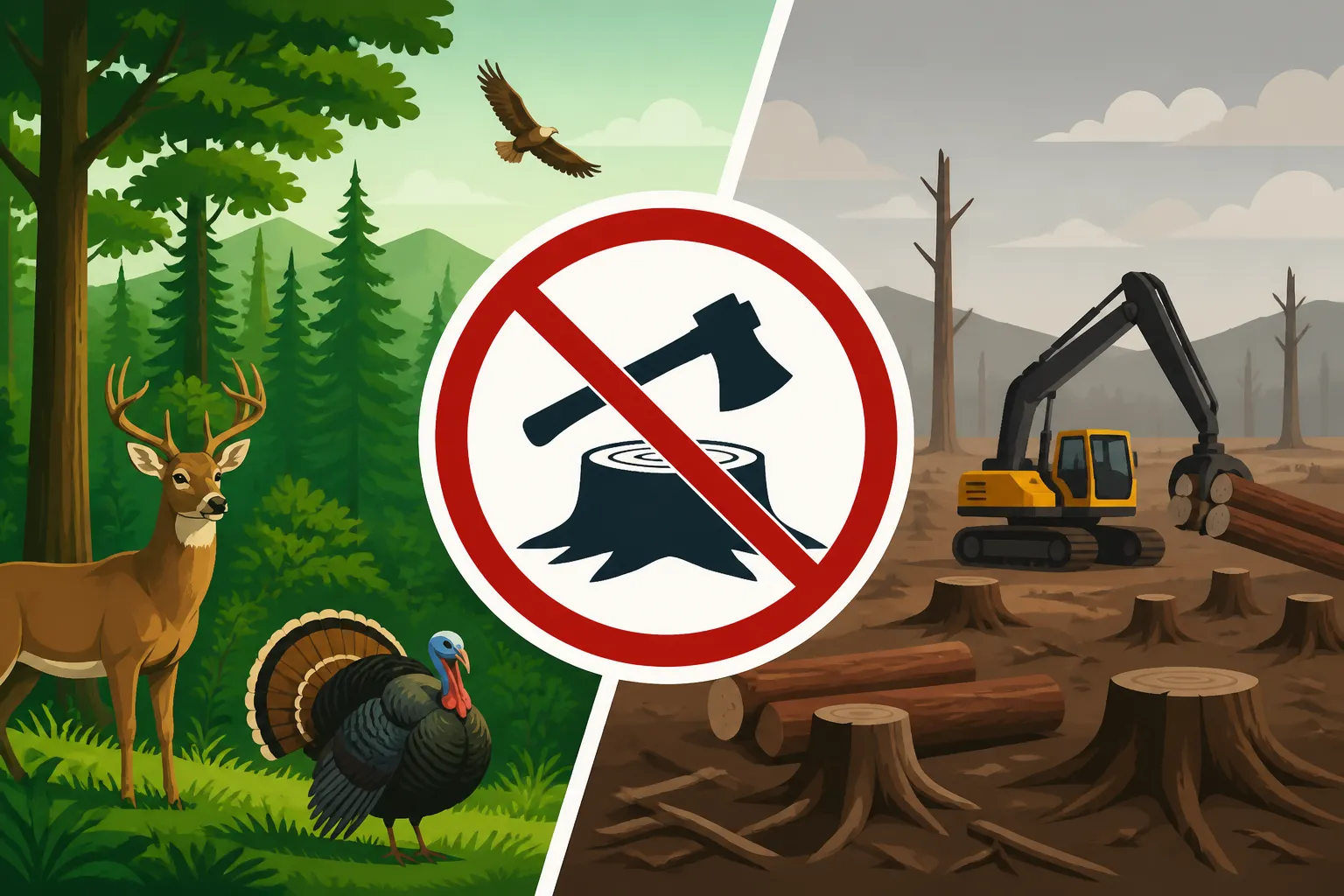
This clause states, "The lands of the state, now owned or hereafter acquired, constituting the forest preserve as now fixed by law, shall be forever kept as wild forest lands. They shall not be leased, sold or exchanged, or be taken by any corporation, public or private, nor shall the timber thereon be sold, removed or destroyed." That last part is the kicker for logging. It's an absolute prohibition. Unlike many other state or federal public lands, where sustainable timber harvesting is often a management tool to create diverse habitats, generate revenue, or reduce wildfire risk, that option is simply off the table in New York's Forest Preserve.
This strict interpretation means that once land is designated as part of the Forest Preserve, it's essentially locked in a perpetual state of natural growth, free from human intervention like commercial logging. The intent was, and remains, to preserve the wild character of these forests for future generations, ensuring clean water, protecting wildlife habitat, and providing opportunities for primitive recreation. For hunters, this translates into vast, mature timber stands, often with dense undergrowth in places, and a distinct lack of the clearcuts or regeneration patches you might find elsewhere. It demands a different approach to scouting and hunting, as the habitat dynamics are purely natural. What "Forever Wild" Means for Hunters is more than just a concept; it's the very foundation of how we interact with these lands.
A Legacy of Conservation: Why "Forever Wild" Came to Be
To truly grasp why logging is prohibited in New York's Forest Preserve, we need to take a step back in time. The "Forever Wild" clause wasn't born out of an abstract love for trees but out of a very real crisis and a visionary understanding of long-term environmental and economic needs.
The Looming Threat of Deforestation
In the mid-19th century, New York's vast northern forests, particularly in the Adirondacks, were facing severe deforestation. Logging, driven by the booming lumber and tanning industries, was rampant. Vast tracts were clearcut, often without any thought for regeneration. This indiscriminate harvesting led to widespread ecological damage. Critical watersheds, which fed the state's canals and rivers vital for commerce and drinking water, began to suffer. With the protective canopy of trees gone, snowmelt and rainfall rushed off the denuded hillsides, causing devastating floods in the spring and severe droughts in the summer. Rivers became choked with silt, and the water quality declined dramatically. The economic lifeblood of the state, reliant on reliable water flow for transport and industry, was directly threatened.
Beyond the economic concerns, there was a growing awareness of the unique natural beauty and recreational potential of these wild areas. Conservationists, sportsmen, and concerned citizens began to advocate fiercely for the protection of these lands. They understood that once the timber was gone and the watersheds destroyed, the damage would be irreversible for generations. This wasn't just about saving trees; it was about saving the future of New York.
The Constitutional Solution and the Birth of the Forest Preserve
The pressure to protect these crucial lands culminated in 1885 with the creation of the Adirondack Forest Preserve and the Catskill Forest Preserve. However, simple legislative acts were found to be insufficient, as future legislatures could easily reverse them. A more permanent solution was needed.
In 1894, the delegates to the New York State Constitutional Convention took the bold step of embedding the "Forever Wild" clause directly into the state constitution. This was a revolutionary move, making New York one of the first, if not the first, state to provide such an ironclad, constitutional protection for its wilderness. The intent was clear: to remove these lands from political whims and ensure their perpetual wildness. It was a farsighted decision, recognizing that some natural resources are so vital that they must be protected from exploitation, even by the state itself. Today, these preserves represent enormous tracts of untrammeled wilderness, offering unparalleled opportunities for solitude and immersion in nature. The Adirondack Forest Preserve alone is a testament to this enduring vision, as is The Catskill Forest Preserve.
Impact on Habitat and Hunting Strategy
For hunters, the "Forever Wild" status of the Forest Preserve presents both unique challenges and incredible opportunities. The absence of commercial logging fundamentally shapes the habitat, influencing everything from deer movement to game density.
Mature Timber and Dense Undergrowth
When you step into the Adirondack or Catskill Forest Preserve, you're entering a realm dominated by mature, unbroken timber. Think towering hardwoods, ancient pines, and a canopy that often blocks out significant sunlight. This creates a very different kind of habitat than the patchwork of clearcuts, regenerating saplings, and managed woodlots found on many State Forests or private lands.
Mature forests, by their nature, generally have less dense undergrowth on the forest floor, as the canopy limits light penetration. However, where natural disturbances occur (windthrow, disease, ice storms) or along transition zones and stream bottoms, you can find incredibly thick pockets of regeneration. These areas become crucial pockets of browse and cover for deer. Overall, though, the continuous canopy means browse is often higher up, and food sources like acorns or beech nuts become incredibly important. Deer densities in these mature forest environments tend to be lower than in areas with more diverse, regenerating habitat. Bucks will use the mature timber for security cover, bedding in the thickest sections and relying on natural terrain features. Where Adirondack Bucks Bed is often deep within these undisturbed zones.
Navigating Unmanaged Wilderness
Hunting these lands requires a keen understanding of natural terrain, microhabitats, and game behavior in a truly wild setting. You won't find logging roads leading to fresh clearcuts or strategically managed food plots. Instead, you'll be navigating by ridge lines, stream drainages, old growth features, and natural funnels.
This is where understanding topography and using advanced mapping tools becomes invaluable. Services like onX Hunt provide detailed topographic maps, satellite imagery, and even layers showing public land boundaries, which are essential for staying legal and oriented in these vast areas. Similarly, GoHunt's robust mapping features can help you identify subtle terrain changes, potential bedding areas, and travel corridors that might go unnoticed on a basic map. Knowing how to read aerial photos for subtle changes in forest density or elevation can reveal hidden benches or saddlebacks that serve as natural pathways for deer. Even the state's own Scouting With the New York HuntFishNY App can be a great resource for initial planning.
The sheer scale of these unmanaged forests also means hunting pressure can be concentrated near easy access points. To find unpressured game, you often need to be willing to walk further, deeper into the backcountry, utilizing maps to identify areas that others might overlook. Hunting Pressure on New York Public Land is a real factor, and finding ground others walk past is a learned skill.
| Feature | Forest Preserve (Article XIV, Section 1) | State Forests (Environmental Conservation Law) |
|---|---|---|
| Logging Allowed | No, constitutionally prohibited ("Forever Wild") | Yes, sustainable timber harvesting is a management tool |
| Primary Goal | Preserve wild forest character, watershed protection, primitive recreation | Sustainable timber production, wildlife habitat, recreation |
| Habitat Impact | Mature, often dense canopy, limited browse, natural disturbances | Diverse habitat, varying stages of regeneration, abundant browse |
| Management | Minimal intervention, natural processes | Active management (logging, planting, thinning) |
| Recreation | Primitive camping, hiking, hunting, fishing (emphasis on wildness) | Hunting, hiking, ATV trails (often on logging roads), camping |
| Terrain Examples | The Adirondack Forest Preserve, The Catskill Forest Preserve | Various State Forests across New York, e.g., in the Southern Tier |
Modern Challenges and the Future of "Forever Wild"
While the "Forever Wild" mandate has successfully protected vast tracts of New York's wilderness for over a century, these lands are not immune to modern challenges. Managing such expansive, unlogged ecosystems in the 21st century requires careful consideration, even without the option of traditional timber management.
Adapting to a Changing Environment
The prohibition on logging means that forest health issues must be addressed through natural processes or very limited, targeted interventions that do not violate the spirit of "Forever Wild." For instance, widespread invasive species like emerald ash borer or hemlock woolly adelgid can devastate specific tree populations, altering the forest composition without any human-caused clearcuts. Climate change also brings new pressures, from shifting precipitation patterns to increased storm intensity, which can lead to larger-scale blowdowns and natural disturbances.
Disease is another concern. While the Forest Preserve is not directly impacted by human-managed deer populations in the same way, the threat of diseases like Chronic Wasting Disease (CWD) is real. Should CWD be detected within the core of the Forest Preserve, management strategies to control its spread would need to be carefully considered under the constitutional constraints. While logging isn't a CWD management tool, forest health plays a role in overall ecosystem resilience. For example, understanding issues like How Many Deer Were Sampled After the Herkimer Case or Moving a Deer Carcass Out of Herkimer County highlights the need for vigilance even in wild settings.
Maintaining Ecosystem Integrity Without Mechanical Intervention
The primary challenge for land managers in the Forest Preserve is how to maintain the ecological integrity and health of these vast ecosystems without the tools available on actively managed lands. This means relying on science and monitoring to understand natural cycles, disease outbreaks, and wildlife population dynamics.
For example, when a severe windstorm creates a massive blowdown, that area is allowed to regenerate naturally, becoming a thick, impassable tangle that eventually offers exceptional deer and bear cover, but also presents challenges for human access. This natural regeneration fosters a different kind of biodiversity than areas subjected to mechanical logging. Similarly, fire, a natural component of many forest ecosystems, is often suppressed due to safety concerns and proximity to human habitation, but its absence can also alter forest dynamics over the long term.
Ultimately, the "Forever Wild" clause ensures that these magnificent lands remain a testament to raw, untamed nature. For hunters, it offers an experience steeped in tradition and demands a deeper connection to the wild, where success often comes from understanding the subtle nuances of an unmanaged, ancient forest. Exploring these unique environments, Finding Sign in Big Adirondack Timber or Reading a Ridge for Catskill Deer Movement, is part of the deep satisfaction of hunting in New York's Forest Preserve.
Disclaimer
This article is for general informational purposes only and does not constitute professional advice. Laws, prices and regulations vary by location and change over time. Consult a qualified professional for guidance on your specific situation.