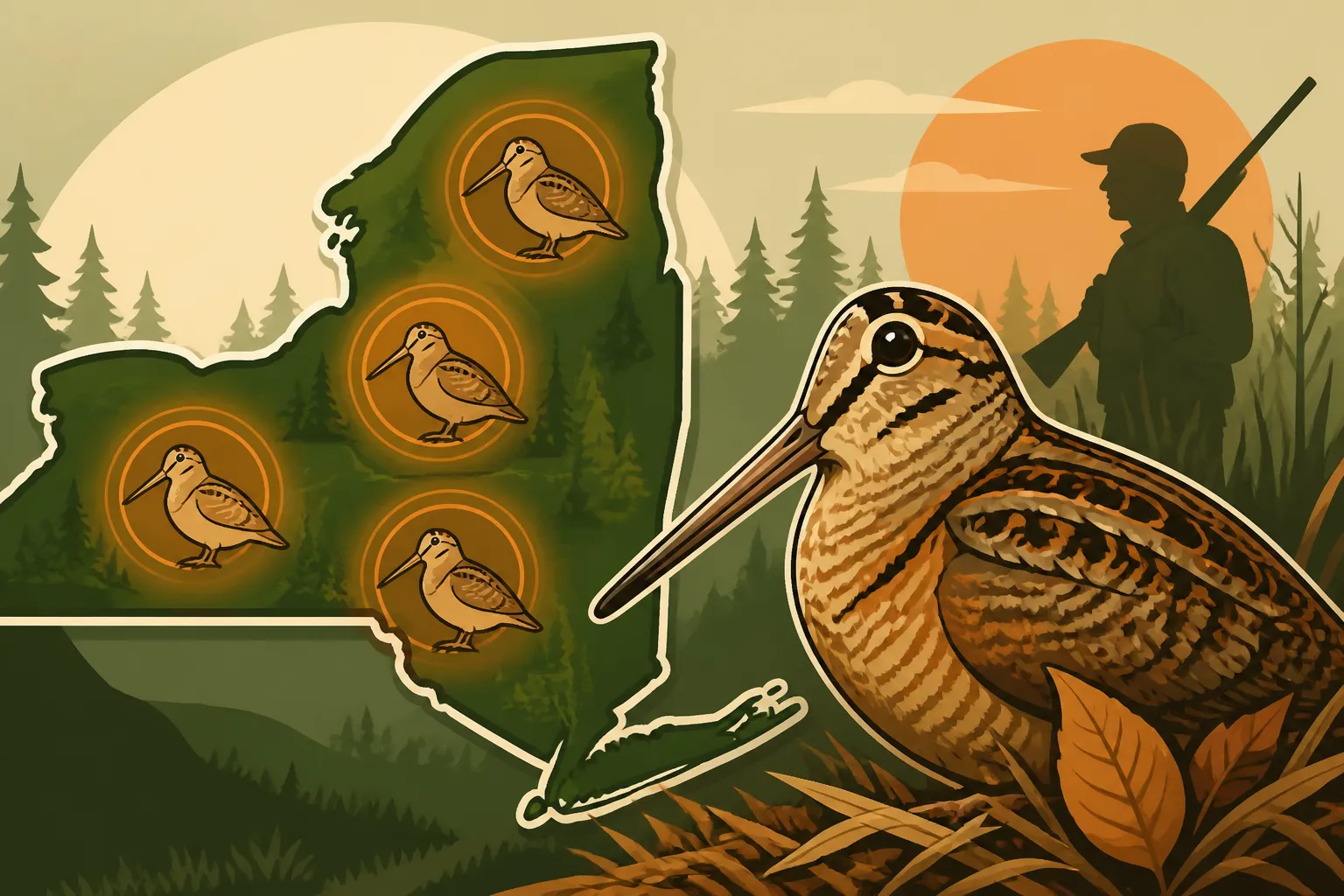
Where New York Woodcock Concentrate
For many New York upland hunters, chasing woodcock can feel like a fleeting dream. These little timberdoodles are notoriously difficult to pin down, often appearing in a covert one day and vanishing the next, leaving hunters scratching their heads and wondering where they went. It’s a common frustration, especially with their unique habitat needs and migratory habits. This guide aims to pull back the curtain on the mystery, helping you understand where New York woodcock concentrate throughout the season, so you can spend less time guessing and more time enjoying those incredible flushes.
Understanding Prime Woodcock Habitat in New York
The key to finding woodcock isn't just knowing the general areas, but understanding the precise types of cover and soil conditions they absolutely adore. They're not like grouse, which can be found in a broader range of young forest. Woodcock are much more particular about their living arrangements, driven by their unique diet and nocturnal habits. If you can learn to "read" the landscape for these specific features, you'll dramatically improve your odds.
The Allure of Alder Swamps and Moist Lowlands
If there's one habitat feature that screams "woodcock," it's dense alder thickets. These areas, often found along stream bottoms, beaver flows, or in low-lying depressions, provide the perfect combination of cover and food. Alders grow thick, offering excellent protection from predators both aerial and terrestrial. But it's what's under the alders that truly draws the woodcock: rich, moist, soft soil.
Imagine trudging through a tag alder swamp in early October. The ground squishes slightly underfoot, and the air is damp. You might notice small, conical probing holes in the mud—evidence of woodcock feeding. These birds primarily eat earthworms, and they need soft, permeable soil to push their long bills deep underground to extract their meals. A hard, dry ridge top won't hold woodcock for long, no matter how much cover it has. Finding Woodcock in Alder Runs explores this habitat in more detail.
Young Aspen Stands and Early Successional Growth
While alder swamps are a prime target, don't overlook young aspen stands, particularly those adjacent to or interspersed with wetter areas. Aspen, especially in the 5-15 year age class, offers thick vertical cover, which woodcock appreciate. The leaf litter under young aspen can also retain moisture, especially in shaded areas, creating suitable foraging conditions.
These early successional habitats are often found where old fields are reverting to forest, or in areas that have been timbered in the last couple of decades. A mixed bag of young aspen, birch, and even some blackberry brambles can be dynamite. It provides both feeding opportunities and crucial daytime cover where they can rest after a night of probing for worms. Think about how a young woodlot on the edge of a damp field might look on a mapping app like GoHunt; those interfaces can often highlight areas of specific timber types or recent cutting activity.
Field Edges and Abandoned Farmland
Many hunters overlook old fields and abandoned farmlands, but these spots can be woodcock magnets, especially during migration or in the evenings when birds move to "singing grounds." These are typically open areas or sparse cover where male woodcock perform their elaborate courtship flights in the spring, but they also use similar, open areas in the fall for roosting.
During the daytime, woodcock might stick to the thicker cover of the alder or young aspen bordering these fields. But as dusk approaches, or if they're looking for different foraging opportunities, they might venture into wetter sections of overgrown fields, particularly those with a lot of goldenrod, multiflora rose, or scattered small pines. These areas often have higher worm concentrations and less dense overhead canopy, making it easier for them to move.
Key Regions and Geographic Concentrations
New York is a big state, and while woodcock can be found almost anywhere suitable habitat exists, some regions consistently hold higher concentrations due to the prevalence of their preferred environments. Knowing these general hotspots can help you narrow down your search and maximize your hunting time.
Western and Central New York Wetlands
The western and central parts of New York, particularly regions like the Finger Lakes and areas extending towards Lake Ontario, boast a wealth of wetlands, stream corridors, and early successional forests. These areas often have a mix of agricultural land transitioning into woods, creating ideal edge habitats and plenty of moist bottomlands.
Counties like Oswego, Wayne, Cayuga, and even parts of Cattaraugus and Chautauqua have numerous small state forests, wildlife management areas, and private lands with prime woodcock cover. Look for the confluence of small creeks, beaver ponds, and areas where logging has recently occurred, encouraging the growth of young aspen and alder. These landscapes are constantly evolving, so using updated mapping tools on platforms like GoHunt can be immensely helpful to identify newer cuts or regenerating areas that might not be obvious on older maps.
Adirondack and Catskill Fringe Areas
While the deep, mature forests of the Adirondack and Catskill high peaks might not seem like typical woodcock country, the fringes and lower elevations of these mountain ranges can be surprisingly productive. The key here is to focus on the river valleys, stream bottoms, and areas with younger timber growth or recent disturbances (like logging or storm damage) that have created early successional patches.
In the Adirondacks, areas along the Saranac River, the Raquette River, and other major drainages often have ribbons of alder and young spruce. In the Catskills, look for similar conditions along the Esopus Creek, the Delaware River tributaries, and smaller mountain streams. These areas can be rugged, so be prepared for some challenging walks, but the reward of finding a pocket of timberdoodles in big woods country is truly special. Grouse and Woodcock Hunting in New York covers more about hunting both species in these diverse areas.
Southern Tier and Hudson Valley River Corridors
The Southern Tier, with its rolling hills and a mix of agriculture and forest, also offers excellent woodcock opportunities. The river corridors of the Chemung, Susquehanna, and Delaware, as well as their countless smaller tributaries, create extensive systems of moist bottomlands and early successional growth.
Similarly, the Hudson Valley, especially north of the more densely populated areas, has numerous state forests and wildlife management areas with suitable habitat. Look for brushy creek bottoms and areas where old farms are being reclaimed by nature. These regions, particularly after a good rain, can hold a surprising number of birds, especially during the peak of migration.
Here's a quick overview of habitat preferences:
| Habitat Type | Key Features | Why Woodcock Love It | Best Time to Hunt |
|---|---|---|---|
| Alder Swamps | Dense thickets, moist to wet soil, often near water | Excellent cover, abundant earthworms | Early morning, late afternoon, overcast days |
| Young Aspen Stands | 5-15 year old trees, thick vertical growth | Good cover, decent foraging, often near moist areas | Mid-day, especially if sunning after cold night |
| Wet Field Edges | Overgrown fields, goldenrod, multiflora, saplings | Foraging, roosting, escape cover from predators | Dusk and dawn, during migration |
| Brushy Creek Bottoms | Mix of small trees, shrubs, moist sandy soil | Worm-rich soil, travel corridors, good escape cover | All day, especially during dry spells |
Migration Patterns and Timing for New York Woodcock
Woodcock are highly migratory, and their presence in any given New York covert is often a temporary affair. Understanding their migration patterns is crucial to timing your hunts and focusing your efforts on new birds moving through the state. New York's Place on the Woodcock Flight is a great resource for understanding their broader migratory journey.
Early Season Arrivals and Local Breeding Birds
New York hosts a resident population of woodcock that breed throughout the state. These are the birds you'll find in the early weeks of the season, typically in early to mid-September, before the main push of migrants arrives. These local birds tend to be less concentrated and more scattered, holding tightly to their home territories.
During this early period, you'll want to focus on established, consistent coverts that fit the habitat descriptions above. These are the spots where you might have flushed birds during summer scouting or heard the "peent" calls of males in the spring. As the season progresses, these local birds might start to move, but they often linger longer than the transient migrants if food and weather remain favorable.
The Peak of the Fall Migration
The real excitement for many woodcock hunters comes with the fall migration. This is when birds from further north, including Canada and northern New England, begin their southward journey and pass through New York. The timing of this peak can vary significantly from year to year, but generally, it occurs from late September through mid-October. When Woodcock Migrate Through New York delves deeper into these seasonal movements.
Several factors influence the timing and intensity of the migration:
- Cold Fronts: The most significant trigger for woodcock migration is a strong cold front. As temperatures drop and northerly winds pick up, birds will often move in large numbers.
- Moon Phases: Some hunters observe that birds move more heavily around full moons, using the extra light for nocturnal travel.
- Food Availability: As soils begin to freeze further north, woodcock are forced to move to areas where the ground remains soft enough for them to feed.
During the peak migration, you can find incredible concentrations of birds in suitable cover. A covert that held only a few local birds one week might be packed with dozens of new arrivals the next. These migrating birds tend to be a bit more flighty, perhaps less familiar with the local terrain, and can offer fast-paced action.
Late Season and Southern Push
As November progresses and colder weather sets in, most of the woodcock will have pushed further south. However, if New York experiences a mild fall, birds can linger into the late season, especially in the southern-most regions and along major river systems where soils remain unfrozen.
In the late season, birds will often concentrate in the thickest, most sheltered cover they can find. Think dense conifer stands adjacent to alder swamps, or thick multiflora rose patches. Any area that offers both warmth and access to soft ground for feeding will be a late-season magnet. These birds are often the last to leave, holding out as long as possible before the deep freeze forces them to continue their journey south.
Scouting for Woodcock Sign and Locating Concentrations
You can read all the habitat descriptions in the world, but nothing beats boots on the ground (or smart scouting with tools like GoHunt) for finding active woodcock coverts. These birds leave subtle clues, and learning to spot them will drastically improve your success.
Identifying Key Food Sources and Probing Holes
As mentioned, woodcock are earthworm specialists. When you're in promising habitat, get down and look closely at the ground. You're searching for small, round, or conical holes, about the size of a pencil eraser, where the woodcock have probed for worms. These holes are usually found in soft, moist soil, often under the canopy of alder or young aspen.
If you find an area riddled with these probing holes, especially fresh ones (they'll look moist and distinct), you've likely found an active feeding area. These birds will often return to the same patches day after day until the food source is depleted or they're pushed out by weather or pressure. Even without birds present, these signs tell you that the habitat is suitable and worth revisiting, especially if new migrants are expected.
Roosting Sites and Droppings
Woodcock often roost in more open areas at night, but during the day, they prefer dense cover. Look for their distinct chalky droppings, which are often squiggly and white, like a bird's version of a snail trail. These can be found on leaves, small logs, or on the ground in areas where they've been resting.
In addition to droppings, sometimes you'll find small, white "splash marks" on the ground or on the lower branches of shrubs where a bird has been sitting. These signs, coupled with probing holes, confirm that woodcock are not just passing through, but actively using the covert. If you can identify these areas, you're well on your way to locating a concentration.
Using Mapping Tools and Aerial Imagery
Before you even step foot in the woods, modern mapping applications like those offered by GoHunt can be invaluable for pinpointing potential woodcock concentrations. Look for features such as:
- Wetland Designations: Many apps highlight wetlands, swamps, and riparian zones. These are prime areas to focus on.
- Contour Lines: Flat, low-lying areas often indicate moist ground. Look for depressions or areas near water bodies.
- Timber Type Layers: If available, look for areas designated as "young forest," "early successional," or "brushy wetlands."
- Recent Logging Activity: Satellite imagery can sometimes show areas that have been recently logged, leading to young, regenerating forest perfect for woodcock within a few years.
By using these tools, you can scout from your couch, identifying dozens of potential spots across a larger area than you could ever cover on foot. This allows you to prioritize your in-field scouting, focusing your time on the most promising looking coverts.
Listening for the "Peent" and Flight Whistle
While more common in the spring, during the early fall, you might still occasionally hear a male woodcock's distinctive "peent" call at dusk from a singing ground. In the fall, however, your primary auditory cue will be the unique, whistling sound their wings make when they flush. It's a sound unlike any other upland bird, a high-pitched, almost ethereal whistle that's unmistakable once you've heard it.
When you're walking through promising cover, move slowly and deliberately. Stop frequently and listen. The sudden burst of that wing whistle is often your first (and sometimes only) warning before the bird disappears into the thick cover. Learning to pinpoint where that sound came from, even if you don't see the bird, can help you understand where concentrations might be holding.
Finding woodcock in New York is a rewarding challenge, one that requires a keen eye for habitat and an understanding of their transient nature. By focusing on moist, brushy lowlands, young aspen stands, and understanding the ebb and flow of migration, you'll be much better equipped to unlock the secrets of these fascinating little birds. So grab your shotgun, pull on your brush pants, and get out there – those timberdoodles are waiting!
Disclaimer
This article is for general informational purposes only and does not constitute professional advice. Laws, prices and regulations vary by location and change over time. Consult a qualified professional for guidance on your specific situation.