New York Predator Impact on Fawn Recruitment
One of the most persistent worries among New York deer hunters and wildlife managers alike is the question of fawn survival. We all want to see healthy deer numbers, and it's frustrating when you see fewer young deer than you expect making it to adulthood. A significant piece of that puzzle often comes down to predation. This guide will dive deep into the role predators play in fawn recruitment across New York, helping you understand how these natural interactions shape our deer herds.
Understanding Fawn Recruitment and Its Critical Importance
Fawn recruitment is a fancy term for something quite simple: it's the number of fawns that survive to be recruited into the adult deer population. Usually, this means surviving their first few months of life, typically until they're old enough to lose their spots and become more self-sufficient, often around the time of the fall hunting seasons. It’s not just about how many fawns are born, but how many make it.
What Fawn Recruitment Really Means for Deer Populations
Think of fawn recruitment as the lifeblood of a deer herd. If a population isn't recruiting enough new young deer, that population is either stagnant or, more likely, declining. Conversely, high recruitment means a robust, growing population, assuming other factors like disease and severe winter mortality aren't overwhelming. For hunters, strong fawn recruitment eventually translates to more deer on the landscape and, in time, more mature bucks down the road. It directly impacts your hunting opportunities and the health of the overall herd. This figure is crucial for wildlife agencies when they're making decisions about antlerless tags and season lengths, trying to balance herd health with hunter opportunity.
Why Fawn Survival is Such a Vulnerable Point
The fawn stage is perhaps the most precarious time in a deer's life. Born small, scent-free, and largely immobile for their first few days, fawns rely heavily on camouflage and their mother's vigilance. They are highly susceptible to a range of threats, from adverse weather conditions to disease, and, yes, predation. A deer herd can produce a lot of fawns in the spring, but if many of them don't survive their first few weeks, that high birth rate won't translate into sustained population growth. Understanding this vulnerability is key to grasping the full New York Fawn Survival Rates picture.
The Main Players: New York's Fawn Predators
New York is home to several natural predators that, to varying degrees, prey on white-tailed deer fawns. While some might be more obvious, others play a more subtle yet significant role in shaping recruitment numbers.
Coyotes: The Usual Suspect
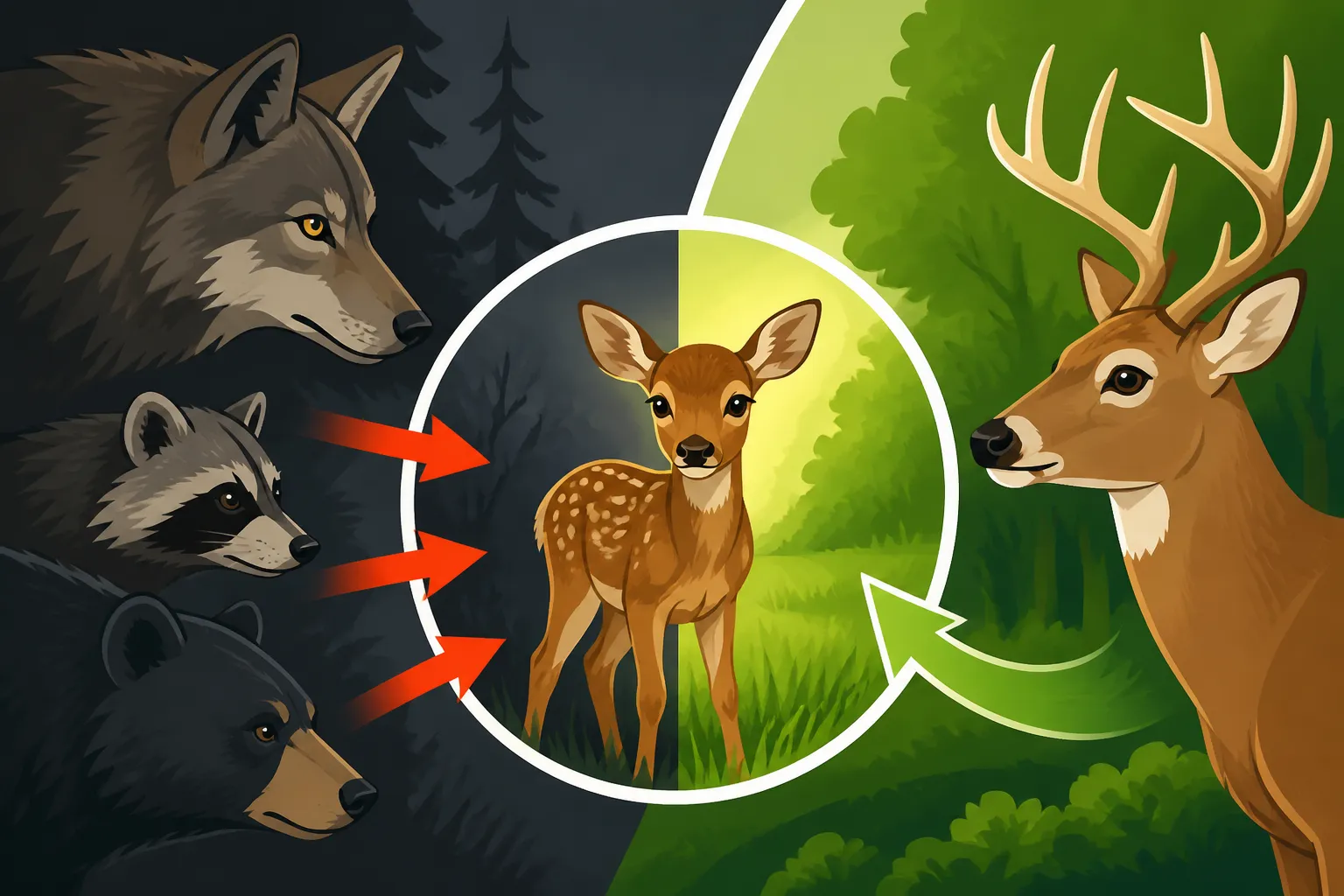
When most hunters think of fawn predation in New York, the first animal that comes to mind is almost always the coyote. And for good reason: coyotes are abundant across the state, from remote wilderness to suburban fringes, and they are opportunistic predators well-adapted to hunting deer. Studies have consistently shown coyotes to be a primary cause of fawn mortality in many regions. They are particularly effective during the fawning season, often keying in on newborn fawns that are still bedding down and vulnerable.
Coyotes will actively seek out fawning areas, often patrolling fields, clearcuts, and dense brush where does typically hide their young. Their highly developed sense of smell makes locating well-hidden fawns easier, and their pack dynamics, even if loose, can lead to more efficient hunting. The impact of coyotes on local deer numbers can vary greatly depending on coyote density, alternative food sources available to them, and the overall health and density of the deer herd itself. For more on these cunning canids, check out Coyotes Across New York State.
Black Bears: An Underestimated Threat
While often thought of as primarily foraging for berries and nuts, New York's black bear population is a significant predator of fawns, sometimes even surpassing coyote predation in certain localized areas, particularly where bear densities are high. Many hunters are surprised to learn how effective bears can be at finding and consuming fawns. Bears are incredibly strong and possess an excellent sense of smell, allowing them to track down fawns that might be expertly hidden from other predators.
During the fawning season, a doe often leaves her fawns bedded while she forages nearby. A bear, lumbering through the woods, can easily stumble upon a fawn, or actively seek them out if other food sources are scarce. Bear predation tends to be more prevalent in heavily forested areas like the Catskills and Adirondacks, where bears are common and deer fawns are a readily available protein source in late spring and early summer. Understanding the nuances of their behavior is key, as highlighted in New York's Black Bear Population.
Bobcats and Other Localized Pressures
Bobcats, while less common and generally smaller than coyotes, are also very efficient predators of fawns. Their stealthy hunting style and ability to navigate dense cover make them perfectly suited to ambushing young deer. Bobcat predation is usually more localized, occurring where bobcat populations are higher and dense cover provides ideal hunting grounds. While their overall impact across the state might be less than coyotes or bears, in specific areas, they can be a significant factor in fawn mortality. You can learn more about their distribution in Bobcat Range and Numbers in New York.
Other predators, such as foxes and even eagles in some areas, might occasionally take a fawn, but their overall impact on fawn recruitment across the state is generally considered negligible compared to coyotes and bears. These smaller predators are more likely to target fawns that are already weakened or abandoned.
Assessing Predator Impact: Studies and Observations
Quantifying the exact impact of predators on fawn recruitment isn't as simple as it sounds. Wildlife biologists use various methods, but it's a complex endeavor influenced by many interacting factors.
Challenges in Quantifying Predation
One of the biggest hurdles in understanding predator impact is that it's notoriously difficult to witness a predation event in the wild. Fawns are excellent at hiding, and predators are adept at being stealthy. When a fawn disappears, it could be due to predation, disease, accidental death, or even abandonment. To accurately determine the cause, biologists often rely on capturing and radio-collaring newborn fawns. This allows them to track the fawn's movements and quickly investigate if a mortality signal is received, often finding the remains and evidence left by a predator.
Moreover, the impact of predators isn't static. It can fluctuate year to year based on the health of the deer herd, the density of predator populations, the availability of alternative prey, and even environmental conditions. A harsh winter might weaken does, leading to smaller, less vigorous fawns that are more susceptible to predation. A bountiful mast crop might mean bears are less reliant on fawns as a food source. These variables make broad generalizations challenging.
Data Collection and What It Tells Us
Despite the challenges, studies in New York and surrounding states have provided valuable insights. By collaring fawns and conducting necropsies on deceased animals, biologists can determine the primary causes of death. This data, often combined with population estimates for both deer and predators, helps paint a clearer picture. For instance, some research has indicated that in areas with high coyote or bear densities, predation can account for a substantial percentage of fawn deaths, sometimes 50% or more. This directly influences the Deer Density by New York Wildlife Unit and overall herd health.
GoHunt, with its mapping and data visualization tools, can offer hunters a way to examine specific areas for predator sign or analyze harvest data that might indicate recruitment trends. While GoHunt itself doesn't directly track fawn mortality, understanding the landscape features, historical harvest data for coyotes or bears, and even anecdotal reports shared on community forums can help paint a more complete picture of what's happening in your local hunting grounds.
Here's a simplified look at the primary fawn predators in New York:
| Predator Species | Primary Impact | Geographical Prevalence | Key Characteristics |
|---|---|---|---|
| Coyote | Significant | Statewide | Opportunistic, keen sense of smell, adaptable |
| Black Bear | Moderate-High | Catskills, Adirondacks, Western NY | Strong, excellent smell, forest dwellers |
| Bobcat | Localized | Patchy across state, denser in some areas | Stealthy, ambush hunter, dense cover reliant |
| Fox/Others | Minor | Statewide | Opportunistic, generally target already weakened fawns |
Mitigating Factors and the Hunter's Role
While predation is a natural part of any ecosystem, understanding its dynamics allows for informed management decisions and provides context for hunters who are observing their local deer populations.
Habitat Quality: The Ultimate Defense
One of the most critical factors influencing fawn survival, even more so than predator numbers, is habitat quality. Does that give birth in areas with dense, thick cover are providing their fawns with a much better chance of survival. This kind of "nursery" habitat helps fawns hide from predators during their most vulnerable stage. Areas with good escape cover, plentiful food, and minimal disturbance are prime spots for does to raise their young. When habitat quality declines, fawns are more exposed, making them easier targets for predators.
This means that efforts to improve habitat, such as creating early successional growth through responsible timber harvests, planting native shrubs, or allowing areas to revert to dense cover, can be incredibly beneficial for fawn recruitment. Healthy habitat not only provides hiding spots but also ensures does are well-nourished, leading to stronger, healthier fawns. Many of our state's Wildlife Management Areas focus on this kind of Habitat Work on New York WMAs.
Human Hunting Pressure and Predator Dynamics
The relationship between human hunting of deer and predator populations is complex. In some cases, deer hunters might mistakenly believe that reducing predator numbers will automatically lead to more deer. However, it's rarely that simple. Predator populations are often regulated by the availability of prey and other factors, and simply removing some individuals might not have a lasting effect on fawn recruitment if the habitat can't support more fawns or if other predators quickly fill the void.
While there's certainly an argument for managing predator populations in specific contexts, particularly if local deer numbers are critically low due to predation, it's not a silver bullet. Hunters who engage in Coyote Calling in a New York Winter or participate in bear seasons contribute to management efforts, but the broader impact on fawn recruitment is multifactorial.
What Hunters Can Do to Help
As hunters, understanding these dynamics allows us to be more informed and engaged stewards of the resource.
- Be a Smart Scout: When you're out Scouting New York Public Land Before Season, pay attention not just to deer sign, but to potential fawning cover. Notice areas of dense thickets, overgrown fields, or brushy edges. These are the places where does are most likely to hide their fawns, and understanding good habitat helps you appreciate where recruitment is most likely to be successful. Mapping tools like those from GoHunt can help you identify these pockets of prime habitat and analyze their connectivity.
- Support Habitat Improvement: Advocate for and participate in habitat improvement projects on public and private lands. This might mean joining conservation organizations, volunteering for workdays, or managing your own land with fawn recruitment in mind. Healthy habitat is the best defense against predation.
- Report Observations: If you observe unusually high predator activity in a specific fawning area, or repeatedly find fawn remains, consider reporting it to your local DEC wildlife biologist. Your observations from the field provide valuable anecdotal data that, when combined with scientific studies, can help build a better picture.
- Practice Ethical Hunting: Adhering to regulations and practicing ethical harvest management for all game species, including predators, contributes to overall ecosystem health. For example, understanding New York Deer Management Permits Explained and utilizing them where appropriate helps keep the deer herd in balance with its habitat and predator base.
Understanding the impact of predators on fawn recruitment in New York is more than just knowing that coyotes eat fawns. It's about appreciating the intricate web of life, the critical role of habitat, and the part hunters play in being informed and responsible participants in wildlife management.
Disclaimer
This article is for general informational purposes only and does not constitute professional advice. Laws, prices and regulations vary by location and change over time. Consult a qualified professional for guidance on your specific situation.