Adirondack Wild Forest Versus Wilderness Areas
Hunting in the vast and majestic Adirondack Park can be an incredible experience, but it often comes with a unique set of challenges, especially when trying to understand the different land designations. Many hunters, myself included, have stood at a trailhead sign, scratching our heads, wondering if we're entering a Wild Forest or a Wilderness Area and what that actually means for our hunt. It's frustrating to feel unsure about where you can legally drive, set up a camp, or even use a game cart. This guide is here to untangle that confusion, breaking down the crucial differences between Adirondack Wild Forest and Wilderness Areas so you can plan your next New York hunting adventure with confidence and clarity.
Understanding the Adirondack Park's Unique Landscape
The Adirondack Park isn't just a park in the traditional sense; it's a dynamic mix of public and private lands, spanning over six million acres. It's a place where communities thrive alongside vast tracts of wild country, and understanding this intricate tapestry is the first step to becoming a successful and responsible hunter here. It's truly unlike any other landscape in New York, demanding a little extra homework from us as sportsmen and women.
The "Forever Wild" Constitutional Protection
At the heart of the Adirondack Park lies a foundational principle: the "Forever Wild" clause of the New York State Constitution. This isn't just a motto; it's a legal safeguard that ensures public lands within the Forest Preserve, which includes much of the Adirondacks, remain "forever wild forest lands." For hunters, this translates to protection from logging, development, and commercial exploitation. It means the wild character of these woods, their rugged beauty and challenging terrain, will be preserved for generations. What "Forever Wild" Means for Hunters is a concept that truly shapes everything we do here.
While it guarantees wildness, it also means certain activities common elsewhere, like extensive road building for timber, are strictly prohibited. This "Forever Wild" designation is why you won't find the same kind of industrial logging operations you might see in some other states' public forests. It's a double-edged sword: pristine wilderness, but also less accessible areas without the infrastructure that some industrial forests provide. This commitment to wildness informs every management decision, from trail maintenance to what kind of hunting access is permitted.
A Patchwork of Public and Private Land
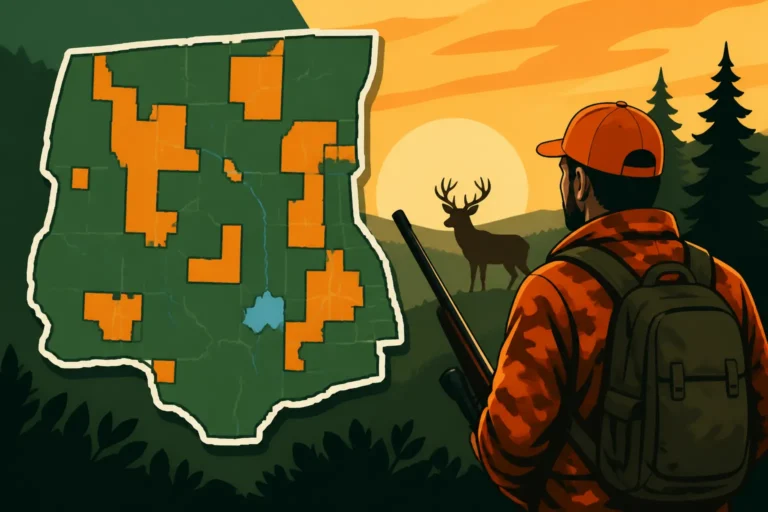
Navigating the Adirondack Park is really about understanding a complex mosaic of ownership. You'll find vast stretches of State Forest Preserve land – the public land we can hunt – intertwined with private land, ranging from large timber holdings to small family camps. This intermingling can be confusing, especially when maps show alternating blocks of public and private ownership. It's crucial to always know where you stand, quite literally, to avoid accidental trespass.
This patchwork necessitates careful planning. You might be hunting a public parcel, only to find the next ridge or valley is privately owned. Tools like onX Hunt are invaluable here, as they allow you to clearly see property lines and land ownership directly on your phone, even when you're deep in the woods without cell service. Relying solely on intuition or memory can lead to trouble. It also means access points can be tricky; a public parcel might only be reachable by crossing private land, requiring explicit permission.
Adirondack Wild Forest Areas: Your Hunting Playground
If you're looking for a balance between wildness and accessibility, Wild Forest areas are often where you'll spend a lot of your time hunting in the Adirondacks. They offer a fantastic opportunity to get away from the crowds while still benefiting from some infrastructure that makes a hunt a bit less daunting than true wilderness.
What Defines a Wild Forest Area
Wild Forest areas are designated public lands within the Adirondack Park that allow for a broader range of recreational uses compared to Wilderness Areas. Think of them as the slightly less restrictive, more "user-friendly" wild lands. While they are still managed for their wild character, you'll find things like designated dirt roads, snowmobile trails, and even some limited motorized access for specific purposes. They are often less remote and might butt up against towns or private land more frequently.
These areas provide a diverse range of habitats, from mature hardwood ridges to mixed forest and swampy lowlands, often with a network of old logging roads or trails that make for easier foot travel. You'll also encounter lean-tos and designated primitive camping sites, making multi-day trips more feasible without having to pack in a full tent setup. The presence of these amenities means you can often cover more ground, especially if you're comfortable with a mountain bike on certain designated trails, or if you're using an ATV on specific routes where permitted for game retrieval.
Hunting Regulations and Allowed Activities
Hunting in Wild Forest areas generally aligns with statewide New York hunting regulations, but with some Adirondack-specific nuances. The key difference here is the allowed level of access. While true motor vehicle use is often restricted to designated roads, you might find more flexibility for things like mountain bikes on marked trails. This can be a game-changer for covering miles and accessing areas deeper than most walk-in hunters are willing to go.
When it comes to camping, Wild Forest areas often have designated primitive campsites and lean-tos that are available on a first-come, first-served basis. This makes planning overnight trips a bit easier, though you should always be prepared to pack out everything you pack in. Treestands are generally permitted, but remember that on public land, they cannot be left overnight unless they are specifically designed to be non-damaging and removed by the end of the season. Treestand Rules on New York Public Land are important to know. Pay close attention to signage at trailheads, as specific areas might have unique restrictions, especially during certain times of the year or for specific wildlife management purposes.
Tips for Hunting Wild Forest Lands
Hunting Wild Forest lands effectively often means leveraging the access they provide. Don't be afraid to use those old logging roads or marked trails to get a few miles in before striking off into the timber. This can put you in front of deer and bears that rarely see hunting pressure from road hunters. Early mornings are perfect for quiet walking along these routes, listening for sounds of deer moving off a feeding area or the distant gobble of a spring turkey.
Scouting is paramount. Before the season, pore over maps, looking for natural funnels, pinch points, and varied topography. Consider Using the New York HuntFishNY Map Tool or onX Hunt to identify potential bedding areas, transition zones, and water sources. Remember that while there's more access, there can also be more human activity, so getting off the beaten path a bit will always increase your chances. Focus on areas with diverse habitat, like where mature hardwoods meet thick conifer stands, or where a ridge drops off into a swamp. Deer, bear, and turkey all use these transition zones heavily.
Adirondack Wilderness Areas: Backcountry Challenges and Rewards
For the hunter seeking true solitude and a deep dive into the wild, Adirondack Wilderness Areas are the ultimate destination. These lands represent the purest form of "Forever Wild," demanding self-reliance and a willingness to embrace primitive conditions.
The Strict Nature of Wilderness Designation
Wilderness Areas within the Adirondack Park are the most restrictive classification of public land, designated for their wild, untrammeled character. The fundamental principle here is to preserve an experience of solitude and an environment where human impact is minimal. This means no motorized vehicles, no mechanized equipment (including mountain bikes), and minimal, if any, developed infrastructure. Forget about driving to your spot or even using a game cart with wheels; everything is on your back.
This strict designation extends to trails, which are often less maintained and more rugged than in Wild Forest areas. Bridges might be absent, requiring stream crossings, and blowdowns can be common. Campsites are generally undesignated, requiring hunters to follow specific "Leave No Trace" principles, camping a certain distance from water, roads, and trails. The goal is to make it feel like you're truly alone in the wild, an experience many backcountry hunters cherish. This is a place where The Adirondack Forest Preserve truly lives up to its name.
Hunting in Wilderness Areas: Embrace the Primitive
Hunting in a Wilderness Area is a commitment to a primitive style of hunting. Your feet are your primary mode of transportation. This means extensive hiking, often over rugged terrain, and a keen sense of navigation. You'll need to pack in everything you need and pack out everything you bring in, including all your trash and, of course, your game. Game retrieval from deep within a Wilderness Area is a major consideration; you'll need a plan for breaking down an animal or using a heavy-duty pack frame.
Because of the challenges, Wilderness Areas tend to see significantly less hunting pressure than more accessible Wild Forest lands. This can translate to less wary game and a more natural hunting experience. You'll often be hunting older, more mature animals simply because they haven't been as pressured by humans. This kind of hunting is less about speed and more about patience, stealth, and a deep understanding of the environment. Expect to put in serious miles and to potentially spend multiple days away from any hint of civilization.
Preparing for a Wilderness Hunt
A successful wilderness hunt starts long before you ever set foot on the trail. Physical conditioning is crucial; you'll be covering miles with a heavy pack, possibly over steep, uneven terrain. Navigation skills are non-negotiable. While onX Hunt or GoHunt can be incredibly helpful for showing you your exact location and property boundaries, always carry a physical map and compass and know how to use them. Electronics can fail, batteries die, and you don't want to be lost deep in the Adirondack backcountry. GPS Units for Adirondack Backcountry Hunts are a must-have, but always have a backup.
Your gear needs to be robust, lightweight, and versatile. Every ounce counts when you're carrying it for miles. Think about compact shelter, water purification systems, and a well-stocked first-aid kit. Prepare for all types of weather, as conditions can change rapidly in the mountains. Tell someone exactly where you're going and when you expect to return. A wilderness hunt is an incredible adventure, but it demands respect, preparation, and a deep understanding of your own limits. Packs for a Backcountry Adirondack Hunt are designed for this kind of rigorous use.
Key Differences for the New York Hunter
The distinction between Wild Forest and Wilderness Areas isn't just bureaucratic; it fundamentally changes how you plan, execute, and experience your New York hunting trip. Ignoring these differences can lead to frustration, potential legal issues, or even dangerous situations.
Access and Transportation
This is perhaps the most glaring difference and often the first thing a hunter considers. In Wild Forest areas, you might find some designated roads open to vehicle traffic, or trails where mountain bikes are permitted. This can allow you to get further from paved roads, reducing your walking distance and opening up more ground. You might even be able to use a game cart on designated trails for easier game retrieval, although Vehicle Rules on New York Public Land still apply to motor vehicles.
In stark contrast, Wilderness Areas mean no vehicles and no mechanized transport. This includes mountain bikes, ATVs, and even game carts with wheels. Everything you bring in and out must be on your back, or for game, potentially dragged by hand or broken down into packable loads. This forces a different hunting style: often slower, more focused on a smaller core area, or requiring multi-day backpack hunts. The trade-off is often greater solitude and less pressured game. Knowing your target area's classification is critical before you load up the truck.
Camping and Shelter Rules
The rules around setting up camp also vary significantly. In Wild Forest areas, you'll often encounter designated primitive campsites or lean-tos, making overnight stays more convenient. These spots are usually marked, and while they might not have amenities beyond a fire ring and a flat spot for a tent, they're a known quantity. You typically still need to adhere to rules regarding length of stay and proper sanitation. Camping Rules in the Adirondack Preserve are uniform, but their application varies by land classification.
In Wilderness Areas, the approach is much more self-reliant. There are generally no designated campsites or lean-tos. You're expected to practice dispersed camping, meaning you find your own spot that adheres to specific "Leave No Trace" principles – typically a certain distance from water, trails, and roads. The emphasis is on minimizing your impact on the natural environment, leaving no trace that you were ever there. This requires a bit more forethought about where to set up camp and how to manage your waste.
Impact on Hunting Strategy and Gear
These differing classifications will dictate your entire hunting strategy and the gear you bring. For Wild Forest, you might opt for a daypack, lighter boots, and a more mobile approach, potentially using a mountain bike to cover ground quickly. You might plan to return to your vehicle or a designated camp each night. The ability to use a game cart can influence whether you field dress an animal whole or quarter it.
| Feature | Adirondack Wild Forest Areas | Adirondack Wilderness Areas |
|---|---|---|
| Motorized Access | Limited, designated roads, snowmobile trails (seasonal) | None (no cars, ATVs, snowmobiles) |
| Mechanized Access | Mountain bikes on designated trails, game carts allowed | None (no mountain bikes, game carts) |
| Developed Trails | Often more numerous, sometimes better maintained | Fewer, more rugged, less maintained |
| Camping | Designated primitive campsites, lean-tos, dispersed camping | Primarily dispersed camping (rules apply), no lean-tos |
| Infrastructure | More likely to find signage, some bridges, parking areas | Minimal to no human-made infrastructure |
| Hunting Pressure | Generally higher, especially near access points | Significantly lower due to access challenges |
| Experience | Balance of wildness and accessibility | Primitive, remote, deep backcountry solitude |
For Wilderness Areas, your strategy shifts to a true backcountry approach. This means a heavier pack with multi-day supplies, robust and comfortable hiking boots, and often a more compact, modular gear system. You'll need to be proficient in breaking down game in the field and packing it out. Scouting will be done entirely on foot, and your knowledge of topography, wind, and animal behavior will be your primary tools. Finding Sign in Big Adirondack Timber becomes even more critical when you're far from any roads.
Navigating the Adirondack Park: Tools and Resources
Successfully hunting in the Adirondacks, whether in Wild Forest or Wilderness, hinges on effective navigation. The terrain can be challenging, and the sheer scale of the park means getting lost is a real concern if you're not prepared.
Official Maps and Digital Tools
The New York State Department of Environmental Conservation (DEC) provides excellent resources, including detailed maps of the Forest Preserve. These maps often show designated trails, lean-tos, and critical land classifications. It's always a good idea to have a paper map in your pack, even if you rely heavily on digital tools. Technology can fail, but a paper map won't lose battery power.
However, for real-time navigation and boundary awareness, digital mapping apps like onX Hunt are truly invaluable. They offer satellite imagery, topographical maps, and most importantly, property ownership overlays that clearly distinguish public from private land. This is critical in the Adirondack patchwork, helping you stay legal and on track. Other apps, like those used by GoHunt users in different regions, follow similar principles of providing detailed mapping solutions. Learning to use these tools before you enter the woods is key, especially understanding how to download offline maps when cell service is nonexistent. onX Layers for New York Land Status can highlight specific land types and features important to hunters.
Interpreting Boundary Markers
Once you're in the field, knowing what the boundary markers mean is crucial. You'll often see yellow paint blazes on trees, usually indicating the boundary of State Forest Preserve land. However, distinguishing between Wild Forest and Wilderness areas on the ground might not always be explicitly marked with different colors. Instead, look for signs indicating "Wilderness Area" at trailheads or entry points. Pay attention to any signs restricting specific activities, as these will be your primary clue.
For private land boundaries, you'll typically see "Posted" signs, often with orange paint. It’s important to understand New York Posted Land Rules before you head out. These signs clearly mark land where hunting or trespass is prohibited without permission. If you're ever in doubt about a boundary, err on the side of caution. Remember that map reading, both digital and paper, combined with a careful eye for these markers, will keep you on legal and public ground.
Respecting the Adirondack Park's Ethos
Hunting in the Adirondack Park isn't just about pursuing game; it's about being a steward of an irreplaceable natural treasure. The "Forever Wild" designation comes with a responsibility to uphold the principles of conservation and leave these lands as pristine as we found them.
Leave No Trace Principles
Whether you're in a Wild Forest or a Wilderness Area, adhering to "Leave No Trace" principles is paramount. This means planning ahead and preparing, traveling and camping on durable surfaces, disposing of waste properly, leaving what you find, minimizing campfire impacts, respecting wildlife, and being considerate of other visitors. For hunters, this translates to things like packing out all spent shell casings, gut piles moved away from trails and water sources, and never leaving treestands or ground blinds permanently installed on public land.
The goal is to ensure that your presence in the woods is virtually undetectable once you've moved on. This protects the environment, preserves the wild experience for others, and maintains hunting as a privilege in these special places. We are guests in this incredible ecosystem, and it's our duty to treat it with the utmost respect.
Being a Responsible Backcountry Hunter
Being a responsible backcountry hunter in the Adirondacks means more than just following the rules; it's about embodying an ethical approach to the outdoors. It involves knowing your limits, being prepared for emergencies, and always prioritizing safety. This is especially true when venturing into remote Wilderness Areas where help can be hours, or even days, away. Always carry a comprehensive first-aid kit, know how to use it, and consider carrying a satellite communication device for emergencies.
Furthermore, it means sharing the woods respectfully with other users – hikers, birdwatchers, and fellow hunters. A friendly greeting goes a long way. Understanding and respecting the specific regulations for the area you are in, whether it's a Wild Forest with some access or a strictly primitive Wilderness Area, ensures that hunting remains a sustainable and cherished tradition in the Adirondack Park for years to come.
Disclaimer
This article is for general informational purposes only and does not constitute professional advice. Laws, prices and regulations vary by location and change over time. Consult a qualified professional for guidance on your specific situation.