Finding Ground That Sees Fewer Hunters
There's nothing quite as deflating as hitting your favorite public hunting spot on opening day, only to find a line of trucks already parked down the road. You came out here for the peace, the challenge, and the connection to the wild, not to navigate a maze of other hunters. It feels like every good spot is either leased, private, or so hammered by pressure that the deer are practically wearing orange vests themselves. This guide is all about helping you break free from those frustrating crowds and discover those quieter, more productive corners of New York's vast hunting landscape.
Understanding Hunter Pressure in New York
It's a common lament among New York hunters: "Where did all the quiet spots go?" The reality is, New York has a huge population, and a significant portion of us love to hunt. When you combine passionate hunters with increasingly accessible public lands, you naturally get pressure. But "pressure" isn't a uniform thing; it ebbs and flows, and smart hunters learn to read it and work around it.
The Lure of Accessibility and "Easy" Spots
Let's be honest, we all want to make hunting as enjoyable and, dare I say, as easy as possible. That often means gravitating towards spots that are easy to get to. Think about it: designated parking areas, well-worn logging roads, established trail systems, or public land parcels right off a main highway. These are the spots that, by their very nature, attract the lion's share of hunters. People might pick these areas because they're short on time, have physical limitations, or simply don't know any better.
The frustration sets in when you've scouted a beautiful ridge or a promising field edge, only to arrive before dawn on opening day and see three other sets of headlights already there. Those "easy" spots are easy for everyone, including the 10,000 other hunters who might have the same idea. Deer, being incredibly astute animals, learn this quickly. They understand that a road system equals danger, and those areas become travel corridors under the cover of darkness, not places where they linger during legal shooting light. It's not that these areas never hold deer, but the deer that are there are often highly educated and on high alert.
Identifying High-Pressure Zones with Tools
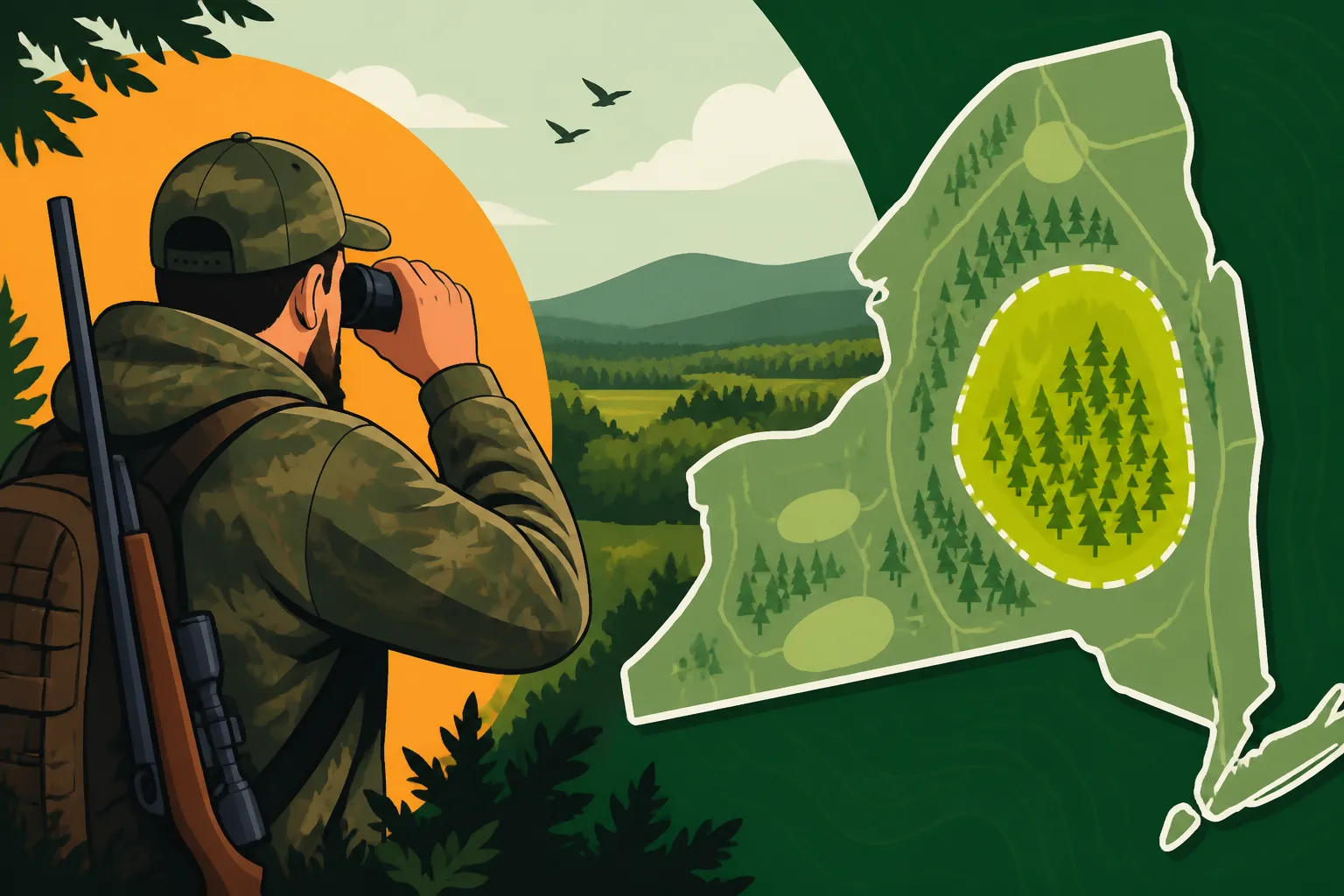
One of the biggest game-changers in modern hunting has been the advent of powerful mapping applications. While they might feel like they're giving away all the secrets, they are actually your best friend for avoiding the crowds, not joining them. Using an app like onX Hunt, you can zoom in on any piece of public land in New York and instantly see a wealth of information. Roads, designated parking areas, hiking trails, snowmobile trails – these are all red flags for potential hunter pressure.
Take a moment to analyze the topography and aerial imagery around these access points. Are there obvious funnels like narrow strips of timber between fields, saddlebacks on ridges, or thick points of cover that extend close to a road? These are natural attractants for both deer and hunters. If you can see an easy walking path from a parking area to a prime-looking deer crossing, you can bet other hunters have too. Another valuable perspective can come from community-driven platforms. While I can't speak to specific features, some platforms like GoHunt aim to provide detailed information that can sometimes hint at popular areas or, conversely, less trafficked ones. The key is to use these tools not just to find deer sign, but to find hunter sign or potential hunter access points that you then plan to avoid. Off-season scouting, looking for old boot prints, discarded soda cans, or even ancient treestand straps, can also give you a clear picture of what areas are getting hammered. Remember, the goal isn't just to find deer, it's to find deer where other hunters aren't pushing them.
Strategies for Finding Unpressured Pockets
Finding those hidden gems, those pockets of public land where deer feel safe and hunters are scarce, requires a shift in mindset and a willingness to work. It’s about leveraging terrain, timing, and often, plain old sweat equity.
The "Go Deeper" Mentality and Its Limits
The oldest piece of public land hunting advice is "walk further than anyone else." And you know what? It's often true. Many hunters will only go 400-800 yards from their vehicle. If you're willing to go a mile or two, you immediately eliminate a huge percentage of the competition. However, "deeper" isn't just about mileage; it's about perceived effort. A half-mile straight up a steep, rocky incline through thick brush might deter more hunters than three miles on a relatively flat, open logging road.
Consider the diverse terrain across New York. In the vastness of the Adirondack timber, "going deeper" might mean navigating dense blowdowns and beaver swamps for miles to reach a remote deer yard. For those Hunting Steep Finger Lakes Gorges, it could mean a grueling descent and ascent into a ravine that few others bother with. In the Southern Tier, it might involve pushing through a tangled multiflora rose thicket into an overlooked patch of mature oaks. The real magic happens when you combine distance with difficult terrain. Don't just walk far; walk far into the nastiest stuff you can find. That's where the deer will be seeking refuge, especially once the season gets going. The question shouldn't just be "how far can I walk?", but "how much effort am I willing to put in that others aren't?" Thinking about How Far to Walk From a Trailhead can shift from a simple distance to an assessment of the physical challenge involved.
Embracing Difficult Terrain and Overlooked Cover
Deer are masters of avoiding trouble, and that often means taking up residence in places that are a pain for humans to access. These are the thickest swamps, the steepest ravines, the rockiest hillsides, and the densest evergreen thickets. When hunters hit the woods, deer will gravitate to these "sanctuaries." Learning to identify and embrace these challenging spots is key to finding unpressured deer.
For instance, consider a massive swamp. Most hunters will skirt the edges, hoping to catch deer moving in or out. But what if you put on your hip waders or chest waders and push through the heart of it? You might find dry islands, hidden benches, or even subtle ridges within the swamp that offer prime bedding or feeding areas that see virtually no human intrusion. The same goes for incredibly steep, broken country. Those cliff faces and jagged rock outcroppings might seem impassable, but deer often find benches or narrow trails along them. Scouting during the off-season, when leaves are down, can reveal these hidden havens. I’ve found some incredible sign by exploring thickets and ravines that looked impenetrable on the map. It's not comfortable, but the reward of finding a mature buck's core area, untouched by other hunters, is priceless. Think about areas like those described in Entry Routes on Steep Catskill Ground, where the sheer effort of access deters many. Or understanding Where Adirondack Bucks Bed often means seeking out these challenging, dense areas. You can also explore pockets of cover, like when Hunting a Funnel Between Two Swamps, that are naturally difficult to access and therefore less pressured.
Utilizing Lesser-Known Public Lands and Access Points
New York has a remarkable amount of public hunting land, but not all of it gets equal attention. Everyone knows about the big, famous Wildlife Management Areas (WMAs) or large blocks of the Forest Preserve that show up prominently on maps. However, there are also numerous smaller State Forests, County Forests, and even sometimes unique local parks that permit hunting, often tucked away and less publicized. These smaller parcels, while they might not hold a trophy buck on every acre, often provide fantastic opportunities for an unpressured hunt.
The trick is doing your homework. Don't just look for "WMAs" on a map. Dive into the details. Use a mapping application like onX Hunt or even the state's official Using the New York HuntFishNY Map Tool to scour different land classifications. You might find a small 50-acre state forest block that's surrounded by private land, with only one obscure access point. Hunters tend to overlook these fragmented pieces, thinking they're too small to hold deer, but deer often use them as safe havens, especially if they connect to larger private tracts. Furthermore, don't always rely on designated parking areas. Sometimes, an old gas line right-of-way, an unmarked lane, or even an agreement with a private landowner for access across their property (always ask permission!) can get you into a public parcel from a totally unexpected and unpressured angle. Building relationships can open doors, and Asking a New York Farmer for Permission for access across their land to reach public ground is a powerful strategy. Remember, the less obvious the access, the less likely you are to encounter another hunter.
Leveraging Off-Season Scouting and Technology
Finding truly unpressured ground isn't a "show up opening morning" affair; it's a year-round commitment to understanding the landscape and the habits of its inhabitants. The more homework you do, the less you'll deal with the frustrations of crowded woods.
Year-Round Intelligence Gathering
The off-season is your secret weapon. When most hunters have hung up their gear, you should be lacing up your boots. Scouting New York Public Land Before Season is absolutely critical for finding those hidden sanctuaries. In late winter and early spring, after the snow has melted and before the leaves burst forth, the woods reveal so much. You can spot old deer beds, track lines in the residual snow, and identify subtle terrain features that are obscured by summer foliage. This is when you can confirm that challenging ravine holds more than just rocks, or that dense swamp has a dry ridge perfect for a late-season sit.
Think about shed hunting, not just for antlers, but for insights into where deer spend their time when undisturbed. Look for areas with heavy browse, old rubs, and distinct trails that don't seem to lead to any obvious human trail. These are the places deer feel comfortable. When you find these spots, mark them on your mapping app. Pay attention to water sources and natural barriers. If a creek swells in spring, making certain areas harder to reach, those areas will likely see less pressure once hunting season arrives. Identifying these features now means you'll have a game plan when the leaves are back and visibility drops.
Advanced Mapping and Data Interpretation
Modern hunting apps are so much more than just a picture of the woods. They're powerful analytical tools. Beyond simply showing public and private land boundaries (a must-have for any hunter, by the way), apps like onX Hunt offer incredible layers that help you dissect the landscape. Look at the topographic lines: where are the steepest grades? Where do contours flatten out into subtle benches on a hillside? These are often overlooked deer magnets. Switch to the satellite view and really zoom in: can you identify different timber types? Are there thick stands of pines surrounded by hardwoods? Old clear-cuts grown up in briars? These are the impenetrable cover types that deer seek out when pressure hits, and they often look daunting to the average hunter.
I’ve spent countless hours scrolling through different layers, finding tiny pockets of thick cover in the middle of a larger, more open forest, or noticing a small, hidden drainage that connects two larger bedding areas. While I don't have specifics on their offerings, other advanced tools like GoHunt might provide additional data points that help further refine your search for unpressured areas. The key is to interpret this data with a hunter's eye: ask yourself, "If I were a deer and being pressured, where would I go to feel safe?" Then, ask, "How difficult would it be for a hunter to get into that spot?" If the answer to the second question is "very difficult," you're likely on the right track.
Adapting to Hunting Pressure as the Season Progresses
Deer aren't static; their behavior changes dramatically as the hunting season progresses and they experience more human interaction. Early in the season, before much pressure, deer might still be found in predictable patterns, utilizing food sources in more open areas. But once the guns start booming and hunters are consistently in the woods, deer become incredibly nocturnal and will seek the deepest, nastiest cover they can find. This is where your earlier scouting for unpressured pockets truly pays off.
When the pressure is high, especially on public land, deer will move to those overlooked swamps, steep hillsides, and dense thickets you identified. They'll also often extend their daylight movements to those hard-to-reach spots. Instead of abandoning a pressured area entirely, think about how the deer are reacting. Are they shifting their bedding from a ridge-top near a trail to a deeper, thicker bottomland? Are they using a narrow, brushy creek bottom as a travel corridor instead of a more open logging road? Adapt your tactics to their reactions. Focus on hunting the transition zones into those sanctuaries, or even daring to hunt within the sanctuaries themselves during the middle of the day. Understanding Hunting Pressure on New York Public Land will inform how you adjust your strategy throughout the season.
Thinking Beyond Deer – Broader Implications for Hunters
While the quest for unpressured ground often centers on deer hunting, the principles apply across the board for anyone looking for a more solitary and potentially more successful experience in the New York woods.
Finding Solitude for Other Species
The exact same strategies for finding unpressured whitetails work wonders for other game species in New York. If you're a turkey hunter, those remote, hard-to-reach ridges and hollows might hold gobblers that are less "call-shy" because they haven't been pressured by countless hunters setting up on easy-to-access field edges. For bear hunters, especially in areas where baiting isn't allowed (like New York!), finding unpressured terrain can lead you to natural food sources and undisturbed travel corridors where bears feel secure. Take a look at Hunting Bears Without Bait in New York for more on this.
Similarly, grouse and woodcock hunters often find the best flushes not along well-maintained trails, but by busting through the thickest, most tangled aspen cuts and alder runs that others avoid. These dense covers provide both food and protection from predators, including humans. Grouse Hunting New York Aspen Cover is a prime example of seeking out specific, often difficult, habitat to find birds that haven't been pushed hard. The less human disturbance, the more natural the behavior of the game, regardless of the species.
The Value of Private Land Access
While this guide focuses on finding unpressured public land, it would be remiss not to mention the ultimate way to escape pressure: securing private land access. Having exclusive permission to hunt a parcel, even a small one, completely removes the variable of other hunters. This can range from formal leases to simply knocking on doors and building relationships with landowners.
Many private landowners, especially farmers, are open to allowing respectful hunters on their property, particularly if deer are causing crop damage. The key is to be polite, offer help, and always, always respect their property and rules. A small, unpressured private parcel, even one close to town, can often produce more consistent success than a highly pressured public tract ten times its size. Consider it a complementary strategy; while you're mastering public land, always keep an eye out for private opportunities. Learning how to effectively approach landowners, as described in Asking a New York Farmer for Permission, can open up incredible hunting opportunities. Even relatively Hunting Small Private Tracts in New York can be highly productive sanctuaries for deer.
High-Pressure vs. Low-Pressure Hunting Ground Characteristics
Understanding the difference between these types of areas is the first step to making smarter decisions about where to spend your hunting time.
| Feature | High-Pressure Ground | Low-Pressure Ground |
|---|---|---|
| Access | Easy, near roads, designated parking, established trails | Difficult, distant from roads, steep terrain, thick cover, minimal trails |
| Terrain | Relatively flat, open timber, easy to walk | Steep ravines, dense swamps, thickets, blowdowns |
| Sign | Abundant deer sign (tracks, rubs, scrapes), but often old/stale; also boot tracks, treestands | Fresh, consistent deer sign, often less disturbed |
| Deer Behavior | Highly nocturnal, skittish, move quickly, rely on dense cover | More natural movement during daylight, less wary |
| Hunter Encounters | Frequent sightings of other hunters, vehicles | Rare sightings of other hunters, vehicles |
| Effort Required | Low to moderate | Moderate to high (physical and mental) |
Disclaimer
This article is for general informational purposes only and does not constitute professional advice. Laws, prices and regulations vary by location and change over time. Consult a qualified professional for guidance on your specific situation.