Adirondack Deer Density Compared to the Southern Tier
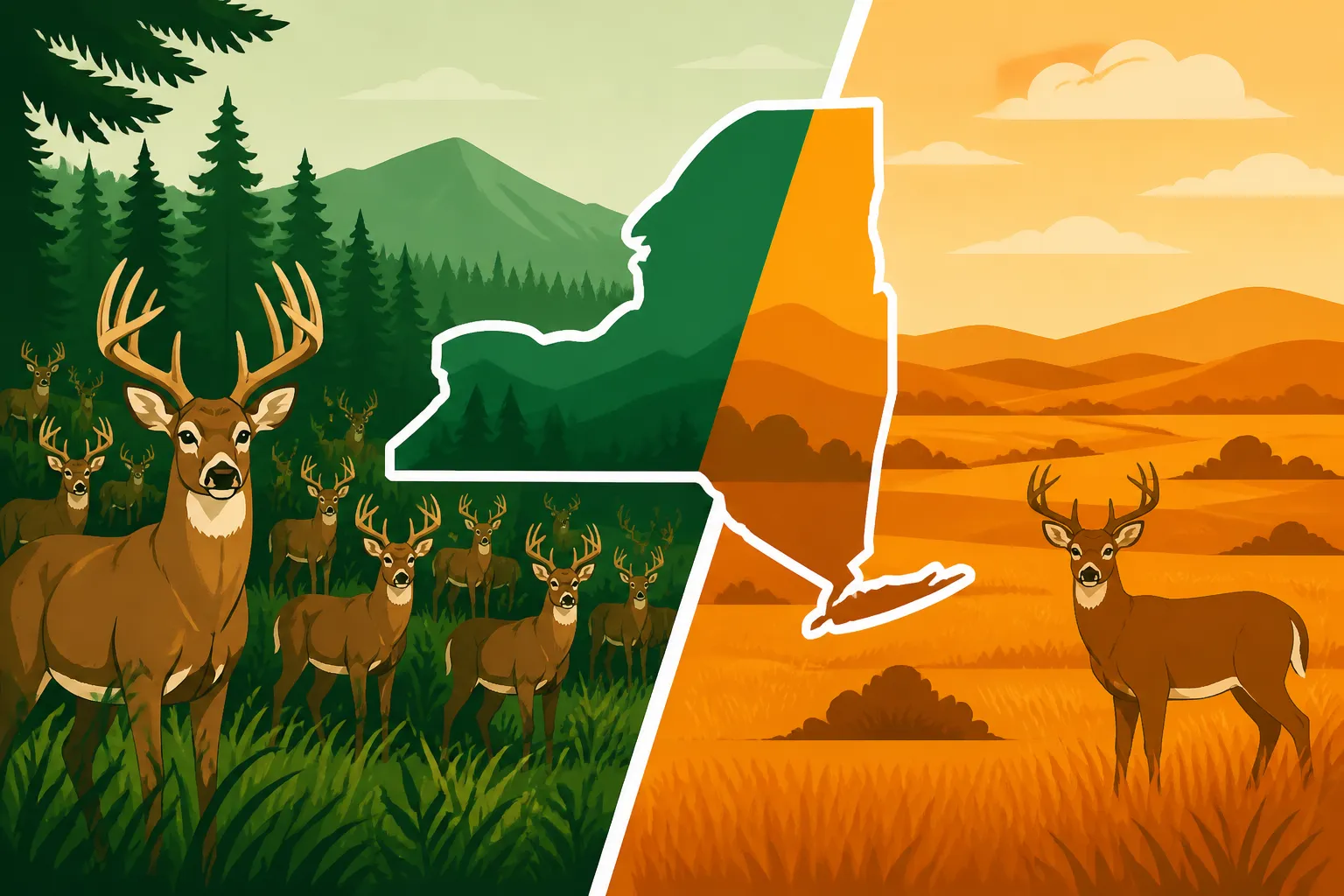
It’s a common frustration for New York hunters: trying to understand where the deer are and why, especially when you compare vastly different landscapes like the sprawling Adirondack wilderness and the productive Southern Tier. What works for finding deer in one region often feels completely out of place in the other. This guide aims to clear up that confusion by diving deep into the stark differences in deer density between these two iconic New York hunting regions, offering insights into why these disparities exist and how they should shape your hunting approach.
Understanding Deer Density: Why It Matters to New York Hunters
When we talk about deer density, we're not just throwing around numbers; we're discussing the very fabric of how you hunt, where you focus your efforts, and what kind of success you can realistically expect. It's a fundamental concept that can make or break your season, guiding your strategy whether you're still-hunting a remote ridge or setting up on a field edge.
What "Deer Density" Really Means
At its simplest, deer density refers to the number of deer per square mile in a given area. But it's so much more than a statistic. For a hunter, high density often translates to more deer sightings, more fresh sign, and a greater chance of filling a tag. Conversely, low density means you're likely to see fewer deer, require more patience, and often need to cover significantly more ground to locate animals. The numbers themselves are influenced by a complex interplay of environmental factors, historical land use, and current wildlife management practices. Understanding these figures, even broadly, helps you align your expectations with reality and adjust your tactics accordingly. Platforms like GoHunt, while often focused on western states, provide invaluable tools for general land analysis and topographical mapping that can help any hunter visualize the lay of the land, regardless of specific regional deer density data.
Factors Influencing Deer Numbers in New York
Deer populations are incredibly sensitive to their surroundings. In New York, a multitude of factors contribute to the density variations we see across the state. Habitat, first and foremost, is king. Deer need food, cover, and water, and the availability and quality of these resources directly dictate how many deer an area can support. Think about the rich agricultural fields of the Southern Tier versus the vast, mature forests of the Adirondacks – the difference in food production is immense. Predation also plays a role, with coyotes and bears impacting fawn survival, especially in wilderness areas. Disease outbreaks, while often localized, can also temporarily depress populations. Perhaps most significantly, especially in the northern reaches of the state, is winter severity. Deep snow and prolonged cold can lead to significant winter kill, particularly among fawns and older deer. Finally, human factors like hunting pressure, urbanization, and even highway density can all influence where deer thrive and where they struggle.
The Adirondack Challenge: Sparse Herds in the Forever Wild
The Adirondack Park is a jewel of New York, an immense landscape of mountains, forests, and lakes. For hunters, it offers an unparalleled wilderness experience, but it also presents a significant challenge: deer numbers here are notoriously lower than in much of the rest of the state.
Low Deer Numbers in a Vast Wilderness
The "Forever Wild" designation, while protecting this incredible ecosystem, also means that much of the Adirondack Forest Preserve remains mature, unbroken forest. This isn't prime deer habitat. Mature timber, while beautiful, doesn't offer the dense undergrowth and diverse food sources that deer prefer. Acorns can be present in some areas, but extensive clear-cuts that create abundant browse are largely absent. Coupled with this is the harsh reality of Adirondack winters, where deep snow often arrives early and stays late, making foraging difficult and leading to higher rates of winter mortality. Deer in these northern climes have to work incredibly hard to survive, and this naturally keeps their numbers lower. Furthermore, the Adirondacks host healthy populations of coyotes and black bears, which, in a low-density deer environment, can have a more pronounced impact on fawn survival. If you're planning an Adirondack hunt, it's essential to recognize these biological realities. For a deeper understanding of the seasonal splits, consider exploring How New York's Two Deer Zones Split the Calendar.
Adapting Your Hunt to Adirondack Realities
Hunting in the Adirondacks is a different beast entirely. It's not about seeing dozens of deer; it's about the patient pursuit of a truly wild animal in a demanding landscape. Success here often hinges on covering vast amounts of ground, focusing on subtle sign, and understanding how deer utilize limited resources. You'll spend more time scouting for pinch points, old logging roads, and south-facing slopes where snow might melt earlier, revealing browse. Still-hunting becomes an art form, moving slowly and deliberately, reading the terrain. Forget the idea of sitting over a food plot; instead, you're looking for natural browse lines, cedar swamps for thermal cover, or small pockets of early successional growth that provide critical food. Patience is paramount, as is the willingness to walk miles for a single opportunity. Tools like topographical maps from GoHunt can be particularly useful for identifying potential travel corridors and subtle elevation changes that might concentrate deer. If you're looking for more specific tactics, check out articles like Finding Sign in Big Adirondack Timber for strategies tailored to this unique environment. You might also encounter black bears, and understanding Hunting Bears in the Adirondack Interior can provide valuable context for the general wilderness experience.
The Southern Tier Abundance: Prime Habitat and Thriving Herds
Shift your focus south, and you'll find a dramatically different picture. New York's Southern Tier, encompassing a diverse mix of agriculture, woodlots, and rolling hills, is a deer hunter's paradise, boasting some of the highest deer densities in the state.
Why the Southern Tier Holds More Deer
The Southern Tier's landscape is a mosaic tailor-made for whitetails. Unlike the vast, unbroken forests of the north, this region features abundant agricultural fields – corn, soybeans, alfalfa – providing a consistent, high-calorie food source throughout the year. These fields are interspersed with woodlots, brushy fencerows, and early successional growth from old clear-cuts or abandoned farms. This creates an ideal edge habitat: deer can feed in the open fields under the cover of darkness and then retreat to dense bedding cover nearby during daylight hours. The winters here are generally milder than in the Adirondacks, with less persistent deep snow, which significantly reduces winter mortality and allows more deer to survive and reproduce. The combination of plentiful food, excellent cover, and less severe winters creates an environment where deer populations can truly flourish, leading to a much higher deer density. For those interested in this specific kind of hunting, read more about Hunting Southern Tier Farmland Deer.
Hunting the Southern Tier's Denser Deer
With higher deer densities comes a different set of hunting strategies and, often, a greater chance of success. Stand hunting is a very effective method here, particularly along field edges, pinch points between woodlots, or funnel areas where deer are forced to travel. Scouting focuses on identifying active food sources, fresh trails, and bedding areas adjacent to fields. Understanding deer movement patterns between these critical resources is key. The higher population density also means that Deer Management Permits (DMPs) are often more readily available, offering hunters opportunities to fill additional tags, especially for antlerless deer. This is a region where hunters can often be more selective or, if looking to put meat in the freezer, have multiple opportunities. Consider how your tactics might change during key periods, such as those covered in Opening Weekend Tactics in the Southern Zone. The opportunity to apply for multiple DMPs in some WMUs, as detailed in New York Deer Management Permits Explained, is a direct result of these higher populations.
Bridging the Gap: Practical Takeaways for New York Hunters
Understanding the fundamental differences in deer density between the Adirondacks and the Southern Tier isn't just academic; it's essential for anyone who wants to be a consistently successful deer hunter in New York.
Regional Differences in Harvest Strategies
The varying deer densities directly impact how the state manages its deer herd and, consequently, how hunters should approach their harvest strategies. In the Adirondacks, where deer numbers are naturally lower, the focus is often on managing for stability and quality, with fewer antlerless permits and a greater emphasis on buck harvest. Hunters often consider a single deer a significant trophy. Conversely, in the Southern Tier, with its robust and often burgeoning deer populations, there's a greater emphasis on antlerless harvest to help control numbers, reduce crop damage, and maintain herd health. This is why you'll see more opportunities for additional DMPs in many Southern Tier Wildlife Management Units. Hunters in these areas might aim to fill multiple tags, contributing directly to herd management. It's crucial to consult the annual regulations specific to the zone and WMU you plan to hunt, as they will reflect these population realities.
Leveraging Technology and Local Knowledge
Whether you're tackling the sparse wilderness or the abundant farmlands, modern tools can significantly enhance your hunting experience. Mapping applications, whether it's the official Scouting With the New York HuntFishNY App or third-party platforms, are indispensable for understanding terrain, property boundaries, and potential access points. For the Southern Tier, specifically, learning Reading Aerial Photos for Southern Tier Deer can reveal hidden travel corridors or prime bedding areas adjacent to agricultural fields. While GoHunt might not offer New York-specific deer density heatmaps, its robust features for researching land ownership, studying topographical data, and planning routes are universally beneficial for any hunter doing their homework. However, technology should always be augmented by local knowledge. Talking to landowners, fellow hunters, and local DEC wildlife biologists can provide invaluable insights that no app can replicate. They can tell you about recent timber cuts, unusual mast crops, or how severe a particular winter was, all of which directly affect deer behavior and density.
The table below summarizes some key differences between hunting the two regions based on deer density:
| Feature | Adirondack Region (Northern Zone) | Southern Tier (Southern Zone) |
|---|---|---|
| Deer Density | Low (often 5-15 deer/sq mile) | High (often 20-40+ deer/sq mile) |
| Primary Habitat | Vast, mature hardwood/conifer forests, wilderness areas | Mixed agriculture, diverse woodlots, early successional growth |
| Winter Severity Impact | High; significant winter kill in harsh years | Moderate; generally less severe winters, lower mortality |
| Food Availability | Limited natural browse, mast crops dependent on specific trees | Abundant agricultural crops, diverse natural browse, mast |
| Hunting Style | Still-hunting, tracking, covering vast ground, patience crucial | Stand hunting, focusing on food-to-cover transitions, drives |
| DMP Availability | Limited; often difficult to obtain antlerless permits | High; often readily available, encourages antlerless harvest |
| Predator Pressure | Present (coyotes, bears), can impact fawn survival more visibly | Present (coyotes), but less impact due to higher deer numbers |
| Typical Harvest | Often one deer, usually a buck, hard-earned trophy | Multiple deer, often includes antlerless tags, meat hunting |
Ultimately, hunting in New York, whether in the challenging Adirondacks or the bountiful Southern Tier, offers unique and rewarding experiences. By understanding the underlying ecological factors that drive deer density in each region, you can tailor your approach, manage your expectations, and increase your chances of a successful and memorable hunt. Embrace the differences, learn the nuances, and enjoy the pursuit of whitetails across New York's incredible landscapes. To further refine your understanding of specific population data, diving into resources like Deer Density by New York Wildlife Unit can be incredibly insightful.
Disclaimer
This article is for general informational purposes only and does not constitute professional advice. Laws, prices and regulations vary by location and change over time. Consult a qualified professional for guidance on your specific situation.