Hunting Southern Tier Farmland Deer
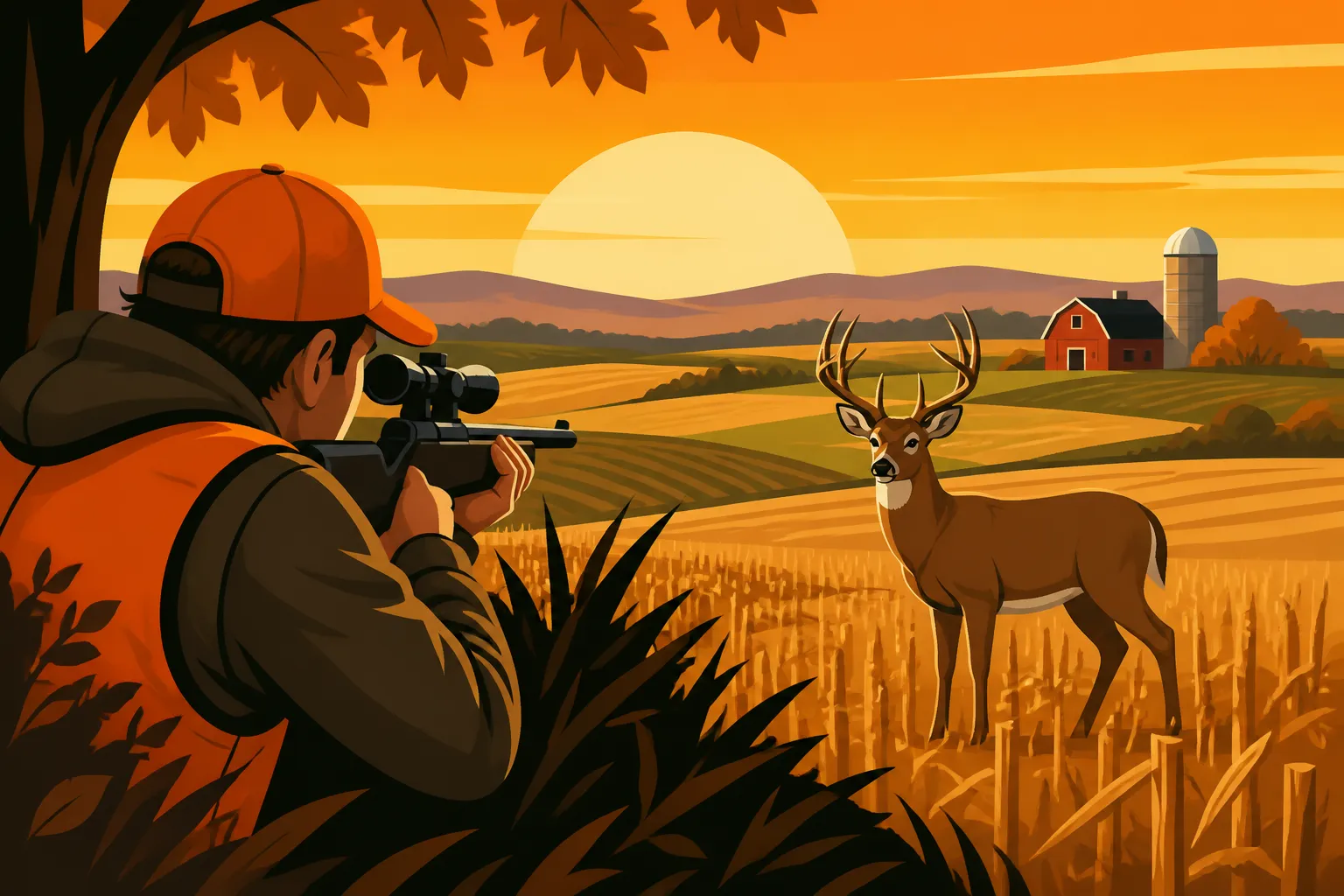
Hunting Southern Tier farmland deer presents a unique challenge for many New York hunters. It’s not the thick, unbroken woods of the Adirondacks or the steep, rugged mountains of the Catskills. Instead, you're often dealing with smaller woodlots, expansive fields, and deer that are incredibly attuned to human activity. This guide will walk you through everything you need to know to successfully navigate and hunt these shrewd farmland whitetails, transforming your approach to these often-pressured areas.
Understanding the Southern Tier Farmland Deer Landscape
The Southern Tier of New York is a mosaic of agricultural fields, brushy hedgerows, small woodlots, and scattered pockets of more substantial timber. This varied terrain shapes deer behavior in profound ways, making it distinctly different from hunting deer in big, continuous forests. If you've ever felt like the deer on farmland just seem to vanish, it's often because they've adapted perfectly to exploit every bit of cover and food available in this human-dominated landscape.
Topography and Habitat Diversity
Unlike the more dramatic elevation changes you find in other parts of New York, the Southern Tier generally features rolling hills, river bottoms, and broad valleys. This gentler topography might seem less daunting at first glance, but it means deer have different travel patterns and bedding preferences. Instead of navigating steep ravines or vast wilderness, they often stick to creek bottoms, brushy draws, and the edges where woodlots meet fields. These subtle changes in elevation, even a small rise or dip, can create crucial thermal currents and travel corridors.
The habitat diversity is also a double-edged sword. While deer have abundant food in the agricultural fields, they also have numerous places to hide and feel secure. You'll find everything from open pastures and hayfields to standing corn, soybean plots, dense thickets of multiflora rose, old orchards, and mature timber stands. Understanding how deer utilize each of these elements throughout the season is paramount. For instance, early season might see them frequenting alfalfa fields, while later in the fall, standing corn or a mast crop in a nearby woodlot becomes the primary draw. The key is recognizing that these deer aren’t just living in one type of habitat; they are constantly moving between them based on food availability, cover needs, and hunting pressure.
Agricultural Impact on Deer Behavior
Agriculture is the driving force behind deer behavior in the Southern Tier. These deer are often referred to as "farm deer" for a reason – their lives revolve around the crops and the cover these farms provide. This means their daily routines are heavily influenced by planting schedules, harvest times, and the type of crops grown.
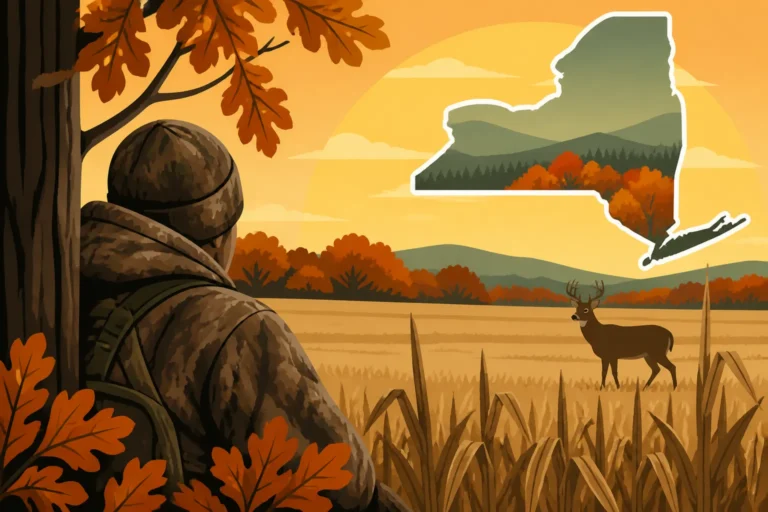
In the early archery season, deer might be practically invisible in towering cornfields, using them as both food and bedding cover. Once those fields are cut, their patterns drastically change, often pushing them into adjacent woodlots or drawing them to fresh food sources like leftover grain or late-season brassicas. Similarly, soybean fields offer high-protein forage throughout the summer and early fall, only to become less attractive once the beans are picked clean. This constant flux means that what worked in September might be completely ineffective by November.
Deer in these areas also become incredibly wary of human activity. They see farmers, hikers, and other hunters constantly, leading them to become largely nocturnal, especially when feeding in open fields. They learn where the safe zones are, often gravitating towards unhunted woodlots, thick creek bottoms, or properties where hunting pressure is low. Their movements might be limited to dusk and dawn, or even exclusively after dark, making stand placement and timing critical. Successfully hunting these deer isn't just about finding food; it's about understanding their daily rhythm and finding the exact moments and locations where they feel safe enough to move during legal shooting hours.
Key Scouting Strategies for Farmland Deer
Scouting for farmland deer is an art form that blends traditional woodsmanship with modern technology. You can't just walk into a woodlot and expect to find all the answers. These deer are masters of subtlety, and you need to become just as subtle in your approach to uncovering their secrets. It's about piecing together the puzzle of their movements between food, cover, and water.
Interpreting Crop Rotation and Food Sources
One of the most crucial aspects of scouting Southern Tier farmland is understanding crop rotation and how it dictates food availability. Farmers don't plant the same thing in the same field year after year, and deer patterns will shift dramatically based on these changes. A field that was a hotbed of activity last season with standing corn might be hay this year, or even worse, fallow ground. Before the season even begins, take time to drive or walk the perimeter of the farms you plan to hunt. Observe what's being planted where. Is it corn, soybeans, alfalfa, winter wheat, or a mixture?
Understanding when these crops are harvested is equally vital. A standing cornfield provides unparalleled cover and food, making deer practically invisible. The moment that corn is cut, deer are displaced and will quickly find new patterns, often congregating around any remaining unharvested fields, oak flats, or food plots if they're available. Pay attention to the remnants left behind too; many deer will feed on dropped ears of corn or soybeans long after the combine has gone through. Sometimes, the most overlooked food source is simply a lush green patch of winter wheat or a clover plot hidden away in a small corner of a field. Even a small apple orchard can be a huge draw. As the season progresses and temperatures drop, focus on high-energy food sources that provide immediate fuel for deer to maintain body heat.
Identifying Sanctuaries and Bedding Areas
Farmland deer, despite living among fields of plenty, are constantly seeking sanctuary. These sanctuaries are often small, overlooked pockets of cover where they feel safe from human intrusion. These could be incredibly dense brushy draws, a tangled creek bottom, a forgotten corner of a woodlot choked with multiflora rose, or even just a thick fencerow bordering a busy road. Deer will use these areas to bed down during daylight hours, especially after feeding heavily at night. They learn quickly which areas offer relief from pressure.
To identify these crucial bedding areas, you need to think like a deer. Look for dense cover that offers good visibility out but is hard to see into. Walk the edges of these thickets, paying close attention to trails leading in and out, fresh droppings, and rubs or scrapes that indicate a buck's presence. In the Southern Tier, these sanctuaries often aren't vast, but they are incredibly dense. They might be smaller than you expect, which is why they are often overlooked by other hunters. A key sign of a bedding area is finding multiple trails converging into a thicket, especially if you also discover fresh tracks and droppings within the cover. Remember, deer will often bed on the downwind side of a thicket or ridge, allowing them to smell danger approaching from behind while watching ahead. Scouting for these hidden sanctuaries can be tedious, but it's where you'll unlock the puzzle of daytime deer movement.
Using Technology for Farmland Scouting
Modern technology has revolutionized how we scout for deer, especially in varied landscapes like the Southern Tier. Forget the days of just paper maps; today's tools offer incredible detail that can save you countless hours of tromping through brush. Applications like GoHunt are invaluable. They provide high-resolution satellite imagery that lets you analyze terrain features, identify potential funnels, spot small woodlots, and even pick out subtle changes in elevation without ever stepping foot on the property. You can mark potential bedding areas, food sources, and stand locations from your couch, then verify them on the ground.
Another game-changer is trail cameras. Deploying them strategically around potential food sources, pinch points, or known travel corridors can provide real-time intelligence on deer movement patterns, preferred feeding times, and the caliber of bucks in the area. Focus on placing them along field edges where trails enter and exit, or deeper in woodlots on scrape lines. When you're Reading Aerial Photos for Southern Tier Deer, look for those subtle terrain features that might concentrate deer, like a narrow strip of timber connecting two larger woodlots, or a small drainage that deer use to avoid open fields. Using these tools allows you to gather data discreetly and efficiently, giving you a massive advantage over hunters who rely solely on old-school methods. This combination of digital mapping and physical scouting forms the backbone of a successful farmland hunting strategy.
Effective Hunting Tactics for Farmland Environments
Once you’ve done your homework and understand the landscape and the deer that inhabit it, it’s time to talk tactics. Hunting farmland deer requires a blend of patience, precision, and adaptability. These aren't the kind of deer you can typically just stumble upon; they demand a calculated approach.
Stand Placement on Field Edges and Funnels
When you're Setting Up on a Southern Tier Field Edge, remember that precision is key. A stand placed just a few yards off a main trail can mean the difference between a successful hunt and seeing nothing but distant flickers of movement. On farmland, deer often hug the cover. They might walk just inside the woodline, rather than out in the open, or follow a hedgerow to its conclusion before darting across a small opening. Identify these subtle travel lanes where deer transition from cover to food, or from one woodlot to another. Look for pinch points created by terrain, thick brush, or even man-made structures that force deer into a narrower path.
Setting up along the downwind side of these field edges or funnels is crucial, as mature deer will almost always circle downwind before entering an open area. Consider the sun's position, especially in the mornings and evenings, to ensure you're not silhouetted or blinded. Also, don't overlook natural high points or overlooks that allow you to quietly glass fields from a distance before making a move. A good location isn't just about where the deer are but where they will be when you're there, considering wind, light, and their innate wariness.
Still-Hunting and Drives in Woodlots
While treestands are effective, still-hunting and deer drives can be incredibly productive, especially in the smaller woodlots and thicker cover found throughout the Southern Tier. Still-hunting requires extreme stealth and patience. Move slowly, taking one or two steps, then pausing to scan for movement, listening intently for crunching leaves or the subtle flick of an ear. Focus on transitions: where heavy cover meets lighter woods, along old logging roads, or through creek bottoms. These are often natural travel lanes, especially during midday when deer are bedded. Pay close attention to wind direction and thermals, always trying to move into the wind or with a crosswind. In these fragmented woodlots, deer often won't run far, giving you a chance to relocate or set up for a shot if you bump one.
Deer drives, especially smaller ones with three or four hunters, can be very effective for pushing deer out of dense cover patches or larger woodlots. The key is to have the drivers move slowly and deliberately, pausing frequently, while the standers are strategically placed on escape routes. The challenge is coordinating the drive effectively in these smaller, often irregular-shaped woodlots. Knowing the layout of the land, including where deer are likely to try to slip out, is critical. For example, if you know a particular patch of woods connects to a larger piece of unpressured private land, you might position standers along that escape route. It's a method that requires good communication and a solid understanding of how deer use the specific cover you're hunting.
Leveraging the Rut in Farm Country
The rut is a magical time to hunt anywhere in New York, and the Southern Tier is no exception. While many farmland bucks become primarily nocturnal during the early season due to pressure, the urge to breed will often override their caution, making them more visible during daylight hours. This is when Hunting the Rut in the Southern Zone becomes truly exciting.
During the pre-rut, look for increased rub and scrape activity along field edges, fencerows, and primary travel corridors. Bucks will be actively scent-checking these areas. As the rut intensifies, focus your efforts on bottlenecks and funnels that connect bedding areas to known doe groups. Bucks will cruise these areas relentlessly, searching for receptive does. Don't be afraid to try rattling and grunting during this period, especially in woodlots adjacent to fields. A buck might investigate a "fight" or a "hot doe" call if he thinks there's a chance to breed or chase off a rival.
Later in the rut, when bucks are exhausted from chasing, they might seek out high-calorie food sources again, making those unharvested cornfields or late-season food plots prime locations. The intensity of the rut can vary from year to year, but generally, the period from late October through mid-November is prime time. Be persistent, hunt all day if possible, and be ready for that unexpected appearance of a mature buck searching for a doe.
Overcoming Common Farmland Hunting Challenges
Hunting farmland deer isn't without its unique frustrations. The constant presence of human activity, changing food sources, and the need for precision makes it a dynamic environment that demands flexibility and ingenuity from hunters.
Managing Pressure and Access Issues
One of the biggest hurdles for Southern Tier hunters is managing hunting pressure and gaining access to quality ground. Much of the prime farmland is privately owned, and deer quickly learn where hunting pressure is heavy and where they can find refuge. Public lands in the Southern Tier, such as some of the larger State Forest Blocks, can offer good hunting, but they also tend to see more pressure.
When it comes to private land, gaining permission is paramount. Often, Knocking on Doors in Southern Tier Farm Country can yield results, but it takes politeness, respect, and often an offer to help the landowner in some way. Be prepared to be told no, but persistence and a good reputation can open doors. Once you have access, treat the land with the utmost respect. Avoid driving over fields, close all gates, and report any suspicious activity you see. Building trust is key.
On public land, think outside the box. Don't just hunt the easy-to-access areas near roads or parking lots. Deer will often gravitate to the hardest-to-reach pockets, deep within brushy draws or far from typical access points. Use mapping apps like GoHunt to identify these overlooked sanctuaries and be willing to walk further than most. Hunting midweek, rather than just on weekends, can also drastically reduce the amount of pressure you encounter.
Adapting to Changing Food Sources
As mentioned earlier, food sources in farmland environments are constantly changing. What was a magnet for deer in September might be completely barren by November. This requires constant adaptation and scouting throughout the season. Don't fall into the trap of hunting the same spot all season if the food source that attracted deer there is gone.
For example, if you've been Hunting a Standing Cornfield in Farm Country during the early firearm season, once that corn is harvested, you need to quickly identify where the deer have shifted. Are they now hitting leftover grain? Have they moved to a nearby oak flat in search of acorns? Or have they relocated entirely to a different part of the property where a new crop, like winter wheat or brassicas, is growing? Carrying a good pair of binoculars and scouting from a distance is critical. Observe fields at dawn and dusk to see where deer are entering and exiting. Sometimes, a subtle shift in wind or temperature can make a previously ignored food source suddenly appealing. Being flexible and willing to move your stand or change your strategy is vital to consistent success.
Dealing with Wind and Scent in Open Areas
Hunting in open farmland means dealing with wind and scent management more rigorously than in dense woods. In large fields or areas with limited cover, your scent can carry for long distances, and deer have ample opportunity to detect it. This makes wind direction your absolute highest priority when choosing a stand location.
Always hunt with the wind in your favor, blowing your scent away from where you expect deer to approach. Even a slight shift in wind can ruin a hunt. Use scent control sprays and scent-reducing clothing, but understand that these are aids, not replacements for playing the wind correctly. Consider using a ground blind if the terrain offers limited natural cover, as it can help contain your scent to some degree, especially if brushed in effectively.
In hillier areas of the Southern Tier, thermals also come into play, particularly during the first and last hours of daylight. In the morning, cold air sinks, carrying your scent downhill. In the evening, as the air warms, it rises, carrying your scent uphill. Factor these thermal shifts into your stand placement, especially if you're hunting along a ridgeline or in a valley. A slight elevation change can act as a natural "scent barrier" if you position yourself correctly. Pay attention to how deer approach these open areas – they will almost always circle downwind, using their nose to detect danger before entering.
Essential Gear and Setup Considerations
Having the right gear won't guarantee a harvest, but it will certainly improve your comfort, extend your effective range, and make your time in the field more productive. Farmland hunting has specific gear considerations that differ from deep woods hunting.
Optics for Long-Range Observation
In the open expanses of the Southern Tier, good optics are your best friend. A quality pair of binoculars, like an 8×42 or 10×42, is indispensable for scanning fields, identifying deer at a distance, and picking out subtle movements in distant woodlots. Don't skimp here; clear, bright optics will pay dividends, especially in low light conditions at dawn and dusk when deer are most active.
For even more detailed observation, especially if you're glassing from a hilltop overlooking multiple fields, a spotting scope can be a game-changer. It allows you to identify antler size, sex, and even specific deer without disturbing them. Coupled with a good rangefinder, you'll be able to precisely judge distances, whether you're planning a stalk or evaluating a potential shot from your stand. The ability to observe deer from a distance and understand their patterns before committing to a setup is a huge advantage in farmland settings. If you're pondering your next purchase, consider our guide on Binocular Choice for New York Whitetails for more in-depth advice.
Clothing and Scent Control for Open Terrain
When hunting farmland, your clothing needs to be both functional and strategic. Layering is always important for New York's variable weather, allowing you to adjust to temperature swings from chilly mornings to warmer afternoons. However, in open fields, camouflage and scent control take on added importance.
Choose camouflage patterns that blend with the colors of harvested fields, tree bark, and brush. Many modern patterns do an excellent job of breaking up your silhouette. For scent control, a full regimen is advisable: shower with scent-free soap, wash your hunting clothes in scent-free detergent, and store them in airtight bags or containers. While no system is foolproof, minimizing human odor is especially crucial in areas where deer are accustomed to smelling people. Consider a full scent-elimination suit or spray-down system, and always dress in the field to avoid picking up car or household odors. Remember, even a slight breeze can carry your scent across an open field for hundreds of yards, making meticulous scent control a non-negotiable part of your routine.
Stand Types and Ground Blind Options
Choosing the right stand for farmland hunting depends heavily on the specific setup. Fixed-position treestands are excellent for field edge setups where you've identified a consistent travel route. They allow you to get above a deer's line of sight and minimize your scent footprint. Just make sure you pick a tree that offers good cover and doesn't silhouette you against the skyline.
Climbing stands can offer more flexibility if you need to move based on changing food sources or deer patterns, but finding the right tree in some woodlots can be a challenge. Saddle hunting is also gaining popularity for its mobility and ability to hunt trees that traditional stands can't handle.
Ground blinds are exceptionally versatile for farmland, especially in areas with limited suitable trees or when Using a Ground Blind on New York Public Land. A good pop-up blind, well-brushed in with natural vegetation, can provide excellent concealment, weather protection, and help contain your scent. They are ideal for hunting field edges, small food plots, or even within standing crops where elevation isn't possible. The key with a ground blind is to set it up well in advance of your hunt, allowing deer to get accustomed to its presence and taking the time to truly brush it into its surroundings.
Here's a quick comparison of stand types for Southern Tier farmland:
| Stand Type | Pros | Cons | Best Use Case |
|---|---|---|---|
| Fixed Treestand | Excellent concealment, elevated position, minimal scent cone, stable. | Limited mobility, requires suitable trees, noisy to set up mid-season. | Consistent field edge trails, funnels between woodlots. |
| Climbing Treestand | High mobility, good elevation, quiet setup once at height. | Requires straight, limbless trees, can be heavy to transport. | Changing food sources in varied woodlots, public land. |
| Hunting Saddle | Ultra-portable, allows 360-degree shooting, can hunt awkward trees. | Steeper learning curve, requires minimal cover for concealment. | Mobile public land hunting, highly pressured areas. |
| Ground Blind | Excellent concealment, weather protection, scent containment, comfortable. | Limited sightlines, noisy to set up, requires brushing in, lower vantage point. | Open fields, hedgerows, small food plots, no suitable trees. |
Ultimately, success in hunting Southern Tier farmland deer boils down to meticulous preparation, understanding deer behavior in an agricultural landscape, and adapting your tactics to the conditions. These deer are smart, but by putting in the work, you can absolutely fill your tags. Whether it's the thrill of Opening Weekend Tactics in the Southern Zone or a late-season sit during the New York Southern Zone Firearm Dates, these tactics will serve you well. Don't forget, if you're looking to fill an additional tag, especially during the later portions of the season, applying for a Applying for a Bonus DMP Mid-Season can provide extra opportunities in many of these high-deer-density farmland WMUs.
Disclaimer
Hunting is an inherently dangerous activity. Always prioritize safety, understand and follow all New York State hunting regulations, and ensure you have proper training and equipment. The information provided in this guide is for informational purposes only and should not replace professional guidance or official DEC resources.