Coyotes and Predators in New York
For many of us who cherish New York's wild places, the thought of predators often brings a mix of fascination and frustration. You see their tracks, hear their calls, and sometimes, you catch a glimpse of their elusive forms, but understanding their true impact and how to manage them can feel like a moving target. This guide is here to shed some light on the diverse world of coyotes and other key predators in our state, offering a deep dive into their lives, their role in the ecosystem, and how hunters and trappers can ethically and effectively pursue them.
Understanding New York's Primary Predators
New York is home to a fascinating array of predators, each playing a critical role in the natural balance of our diverse ecosystems. From the vast Adirondack wilderness to the farmlands of the Southern Tier, these animals help keep populations of other species in check, acting as nature's ultimate cleanup crew. But for hunters and landowners, understanding these creatures goes beyond just appreciating their ecological value; it’s about recognizing their presence, managing their populations, and sometimes, even pursuing them.
The Eastern Coyote: A Success Story with Challenges
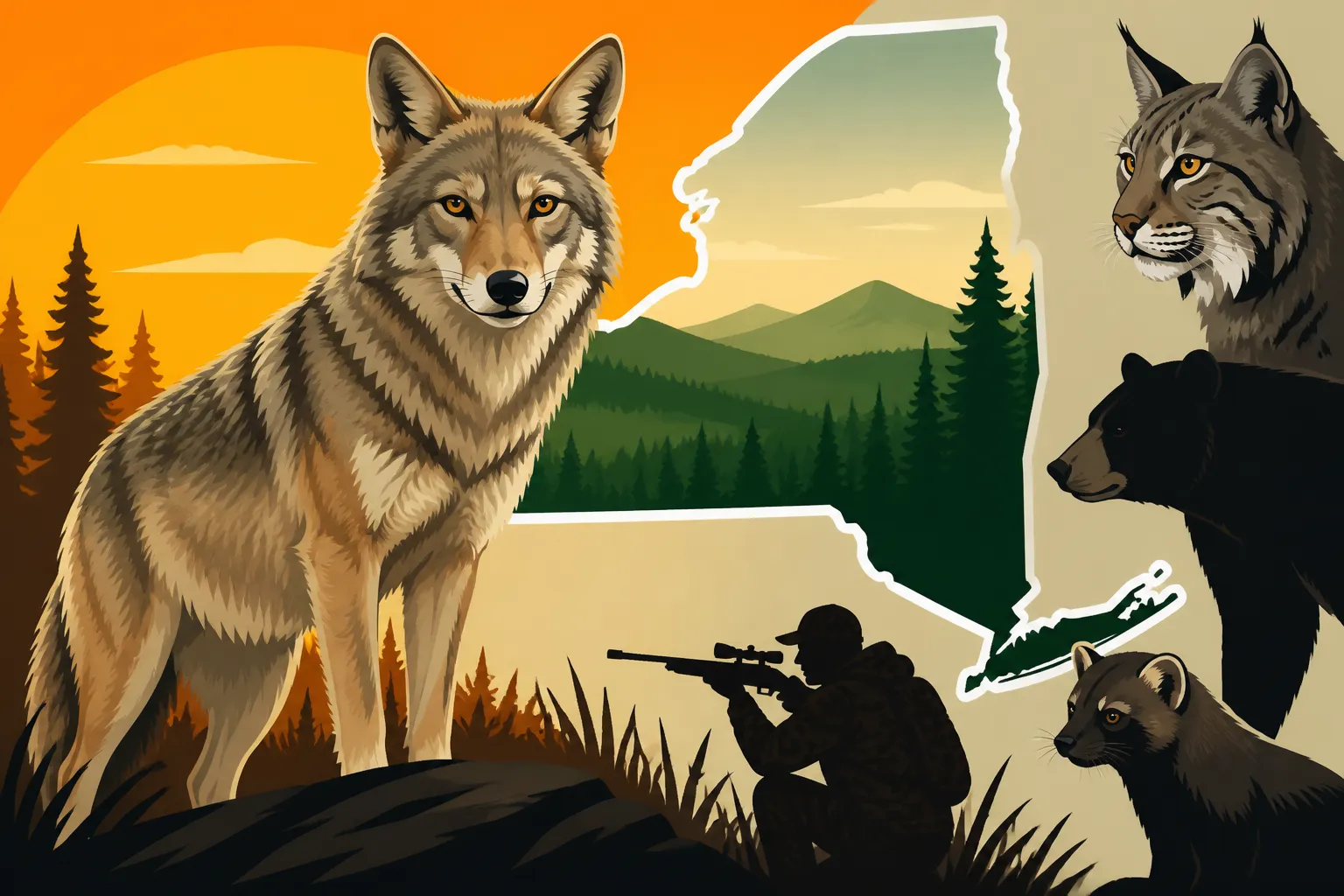
The Eastern coyote (often colloquially called a "coywolf" due to some interbreeding with wolves in their ancestry) is undeniably the most prominent and widespread predator across New York. Their adaptability is truly remarkable; you can find them thriving in dense forests, suburban fringes, and even agricultural landscapes. Unlike their western counterparts, Eastern coyotes tend to be larger, sometimes weighing over 50 pounds, a characteristic that likely stems from their genetic blending with wolves. This larger size allows them to take down bigger prey, including adult deer, especially during harsh winter conditions or when deer are weakened.
Their proliferation across the state over the last century is a testament to their resilience and ability to exploit new territories as larger predators like wolves were extirpated. While beneficial in controlling rodent populations and scavenging carrion, their expanding presence has sparked concerns among deer and turkey hunters, who sometimes observe local declines in game species coinciding with high coyote numbers. This doesn't mean coyotes are solely to blame for every dip in game populations, but their consistent presence and efficient hunting methods certainly factor into the complex predator-prey dynamics we see today. They are highly intelligent, learn quickly, and can be notoriously difficult to hunt consistently, which only adds to their mystique and challenge for those who pursue them.
Elusive Bobcats: Cats of the New York Wild
When you talk about truly wild and elusive predators in New York, the bobcat often comes to mind. These beautiful felines, with their distinctive short tails and tufted ears, are masters of stealth. They prefer dense cover, rocky outcrops, and thick swamps, making them incredibly difficult to spot, let alone hunt or trap. While their population is generally stable and even expanding in some areas, their secretive nature means most New Yorkers will never see one in the wild. Bobcat Range and Numbers in New York indicates they are found throughout much of the state, especially in the more rugged, less populated regions like the Catskills and parts of the Adirondacks.
Bobcats are opportunistic predators, with their diet primarily consisting of rabbits, hares, squirrels, and various birds. They are also known to take smaller deer, particularly fawns, and will readily scavenge. For trappers, catching a bobcat is considered a significant achievement, requiring keen woodsman skills and a deep understanding of their movements and habits. They have stringent trapping regulations, reflecting their value as a furbearer and their somewhat more sensitive population dynamics compared to coyotes. Their contribution to the ecosystem is vital, helping to keep small game populations healthy and preventing overpopulation.
Red and Gray Foxes: Opportunistic Hunters
Often overlooked in the "top predator" discussion, red and gray foxes are common and highly effective smaller predators throughout New York. The red fox is instantly recognizable by its vibrant reddish-orange fur and bushy white-tipped tail, while the gray fox has a more salt-and-pepper coat and a distinct black stripe running down its tail. Gray foxes also possess the unique ability to climb trees, an adaptation that helps them escape larger predators and hunt arboreal prey.
Both species are highly adaptable and can be found in a wide range of habitats, from agricultural fields and open woodlands to suburban areas. Their diets are incredibly varied, consisting of mice, voles, rabbits, birds, insects, and even fruits and berries. For turkey hunters, foxes can be a concern during nesting season, as they are notorious for preying on eggs and poults. They also contribute to the overall predation pressure on deer fawns and small game. While not typically viewed as a threat to adult deer, their constant presence keeps populations of smaller animals in check and helps clean up carrion, ensuring a healthy, balanced environment. These clever canids provide excellent opportunities for predator calling and trapping, especially during the colder months when their fur is at its prime.
Historical Context and Current Populations
To truly understand New York's predator landscape today, we need to glance back at how these populations have shifted over time. It's a dynamic story of adaptation, extirpation, and resurgence, influenced heavily by human activity and habitat changes. Knowing this history helps us appreciate the resilience of these animals and informs our approach to management.
The Return of the Wild Canid: From Wolves to Coyotes
Not so long ago, New York's primary wild canid predator was the gray wolf. However, by the late 1800s, intensive hunting, trapping, and habitat destruction led to the complete extirpation of wolves from the state. This left a significant ecological void, particularly in the larger forest ecosystems. It didn't take long, however, for another cunning predator to begin filling that niche: the coyote. Starting in the western states, coyotes began expanding their range eastward, eventually arriving in New York by the 1930s.
These Eastern coyotes, as mentioned earlier, are unique. They are not genetically pure western coyotes but a hybrid species, often with measurable wolf and even domestic dog DNA. This genetic admixture is believed to contribute to their larger size and ability to thrive in a wider range of habitats, from wilderness to agricultural and even semi-urban environments. Their colonization of New York is a fascinating case study in ecological succession and adaptation. Where once the howl of the wolf echoed through the Adirondacks, now it's the distinctive yipping and howling chorus of the Eastern coyote that defines our wilderness nights. Their successful expansion has made them the most ubiquitous large predator, forever changing the state's predator-prey dynamics. Understanding how many coyotes New York has is crucial for managing their impact.
Tracking Furbearer Trends: Martens, Fishers, and Otters
Beyond the more common predators like coyotes and foxes, New York is also home to several fascinating furbearers that, while not typically large game predators, certainly contribute to the overall predator community. Fishers and martens, members of the weasel family, are excellent examples. Historically, these forest-dwelling carnivores faced significant population declines due to unregulated trapping and deforestation. However, thanks to conservation efforts, reintroduction programs, and improved forest management, Fishers and Martens in the Adirondacks and Catskills have made a remarkable comeback.
Fishers, often called "fisher cats" (though they are not felines), are renowned for their ability to hunt porcupines and are fierce predators of squirrels, rabbits, and birds. Martens, smaller and more arboreal, primarily prey on red squirrels and other small mammals in old-growth forests. River otters, once severely depleted, have also rebounded significantly and are now found in healthy numbers across many of New York's waterways. These semi-aquatic predators primarily feed on fish, frogs, and crayfish, but their presence indicates a healthy aquatic ecosystem. Monitoring these species, often through harvest reports and track surveys, helps the DEC assess the health of forest and aquatic habitats.
Population Estimates and Distribution Across the State
Accurate population estimates for many of New York's predators are incredibly challenging to obtain due given their elusive nature and widespread distribution. However, the New York State Department of Environmental Conservation (DEC) relies on a combination of hunter and trapper harvest data, public sightings, and scientific research to monitor trends and inform management decisions.
Coyotes, as the most widespread, are found in every county of New York, though their densities vary. They are particularly abundant in agricultural and mixed-forest regions where food sources are plentiful. Bobcats are more concentrated in the rugged, forested areas of the Catskills, Adirondacks, and the Tug Hill Plateau, preferring areas with dense cover and less human disturbance. Fox populations, both red and gray, are robust across the entire state, thriving in both rural and semi-urban settings. GoHunt mapping tools can be particularly useful for identifying potential predator hotspots based on terrain features, land cover, and proximity to game populations. While precise numbers are often broad estimates, long-term data collection through various means allows wildlife managers to identify population trends, assess impacts on other wildlife, and set appropriate hunting and trapping seasons. This ongoing monitoring ensures that predator populations remain healthy while also considering the concerns of landowners and hunters.
Impact on Game Species
The presence of predators is a natural, integral part of any healthy ecosystem. However, for hunters, understanding the specific impact these animals have on popular game species like deer, turkey, and grouse is a constant source of discussion and, at times, concern. It’s a complex relationship, not always as simple as "more predators equals fewer deer."
Deer Fawn Predation: A Natural but Sometimes Concerning Factor
Every year, a significant number of white-tailed deer fawns succumb to predation, and coyotes are certainly among the primary culprits, alongside black bears and even bobcats. In the critical first few weeks of a fawn's life, they are incredibly vulnerable, relying on camouflage and remaining still to avoid detection. This natural process is essential for culling the weakest animals and helping to regulate deer populations.
However, in areas where deer populations are struggling or where coyote numbers are particularly high, fawn predation can become a more significant concern for hunters hoping to see a strong rebound in their local deer herd. Research on New York deer herd size and fawn survival often indicates that while predators certainly take fawns, factors like habitat quality, winter severity, and adult doe health often play an even larger role in overall fawn recruitment. For instance, a doe in poor condition due to a harsh winter or insufficient food sources may give birth to weaker fawns, making them more susceptible to predation. Hunters frequently discuss these dynamics, wondering if local predator management could help boost deer numbers. It’s a nuanced issue, and simply removing predators doesn't always guarantee a booming deer population if other limiting factors are at play.
Turkey Poult Survival and Predator Influence
Wild turkeys, with their booming populations across New York, are another species frequently impacted by predators, especially during their vulnerable nesting and poult-rearing stages. Red and gray foxes, raccoons, opossums, and, yes, even coyotes, are all known nest predators, eagerly seeking out turkey eggs. Once hatched, young turkey poults are extremely susceptible to a wide range of predators, including raptors, snakes, and ground-dwelling carnivores like foxes and coyotes. New York Turkey Population Trends shows that poult survival is a critical factor in the overall health of the turkey population.
The success of a turkey hatch can fluctuate wildly year to year, often influenced by spring weather conditions and, of course, predator abundance. A cold, wet spring can reduce insect availability, which poults depend on for protein, and make them more vulnerable to exposure and predation. While hunters might instinctively focus on managing ground predators to boost turkey numbers, studies often highlight the importance of dense nesting cover and brood habitat. Areas with good escape cover and abundant food sources can help poults evade predators more effectively. The relationship is always a balancing act, and while predators are an undeniable part of the turkey's life cycle, a healthy habitat often provides the best defense.
Grouse and Small Game: Life in the Shadows
For upland bird hunters, the topic of predator impact on Ruffed Grouse and Woodcock in New York can be particularly poignant, especially given the ongoing decline of grouse populations. Grouse, woodcock, pheasants, and rabbits all live their lives under constant threat from a variety of predators. Foxes and coyotes regularly prey on these species, as do various raptors like hawks and owls.
The complex decline of New York Ruffed Grouse numbers is attributed to many factors, with habitat loss and fragmentation being primary drivers. However, predation certainly plays a role, especially in areas where habitat might be suboptimal, leaving birds and small mammals more exposed. For pheasants, particularly wild populations, predation on nests and young birds by foxes, skunks, and raccoons can be significant. Rabbit and hare populations, while often cyclic, also face consistent pressure. While predators are natural components of these ecosystems, their cumulative effect, especially on species already facing other challenges, underscores the delicate balance of wildlife management. Efforts to improve habitat — creating dense cover, brush piles, and healthy food sources — are often the most effective ways to mitigate predator impacts on these smaller game species.
Hunting and Trapping Regulations in New York
Participating in predator management through hunting and trapping in New York requires a clear understanding of the rules. These regulations are designed to ensure ethical practices, maintain healthy wildlife populations, and address potential conflicts with human interests. Ignorance of the law is never an excuse, so let’s delve into what you need to know.
Coyote Hunting Seasons and Methods
Coyote hunting in New York offers a unique and extended opportunity for hunters, often serving as a way to extend time in the field outside of regular big game seasons. The good news is that coyotes can be hunted year-round in New York, with the exception of certain restrictions. During the big game firearm season (deer and bear), coyotes can be harvested without a special permit by anyone holding a valid big game license. However, outside of big game seasons, you generally need a small game hunting license. This flexible season reflects the DEC's management approach to a species that is abundant and often seen as a significant predator.
Methods vary, but calling is incredibly popular and effective. Hunters use various calls – electronic and mouth calls alike – to mimic distress sounds of prey or the vocalizations of other coyotes, luring them into range. Night hunting rules for New York Coyotes are also in place, allowing for hunting at night with the aid of artificial lights or night vision/thermal devices in most areas, provided you possess a special permit and adhere to specific safety zones. This adds another dimension to coyote hunting, particularly in winter months when nights are long. You cannot use bait to hunt coyotes in New York, and there are specific regulations regarding discharge distances from occupied dwellings, so always double-check local ordinances and the current DEC hunting guide.
Trapping Seasons and Regulations for Furbearers
Trapping is an ancient skill that plays a vital role in furbearer management, including coyotes, foxes, bobcats, and various other species like beaver, muskrat, and fisher. New York Trapping Seasons and Tagging are highly regulated, with specific open and close dates that vary by species and geographic zone. For instance, bobcat trapping seasons are typically shorter and have strict bag limits, reflecting the species' lower population density and higher value as a furbearer. Trappers must possess a valid trapping license, and typically must complete a trapping education course.
The types of traps allowed are also regulated, with an emphasis on humane practices. For example, specific size limits and jaw spreads for leghold traps are mandated to ensure the animal is held securely and safely. Cable restraints (often called snares) are permitted for coyotes and foxes in certain situations, but with strict requirements for stops and break-away features to prevent non-target captures. All trapped furbearers must be checked within a specific timeframe (usually 24-36 hours). Harvest reporting is also critical, especially for species like bobcats and fishers, where trappers must submit pelts or specific parts (like the lower jaw) to the DEC for biological data collection. GoHunt's mapping features can assist trappers in identifying suitable locations for sets away from trails or residential areas.
Important Rules for Predator Management
Beyond seasons and methods, several overarching rules apply to predator management in New York, ensuring safety and ethical conduct. First and foremost, you must always carry your valid hunting or trapping license and any necessary permits while afield. Safety is paramount; blaze orange requirements for hunters pursuing deer and bear also apply when hunting coyotes during those big game seasons.
Discharge restrictions are critical. Hunters must be a certain distance from occupied dwellings or public roads when discharging a firearm. For night hunting coyotes, the safety considerations are even more stringent, often requiring coordination with local law enforcement or neighbors. It's also illegal to transfer tags between hunters, and all harvested animals must be reported if required by regulation, such as for bobcats or bears. The general rule of respecting property lines and knowing where you are hunting (public versus private land) cannot be overstated. When hunting or trapping on private land, you must always have permission from the landowner. The DEC's annual Hunting and Trapping Guide is your primary resource for the most up-to-date and specific regulations, which can sometimes change year to year. Regularly consulting the New York State Department of Environmental Conservation website ensures you are always in compliance.
Effective Predator Hunting and Trapping Strategies
Predator hunting and trapping are challenging and rewarding pursuits that test a hunter's woodcraft, patience, and understanding of animal behavior. It's not just about pulling a trigger; it's about outsmarting an animal that relies on its wits and senses for survival.
Calling Coyotes in New York Landscapes
Coyote calling is arguably the most popular and exciting method for pursuing these cunning canids. The core principle is to use sound to mimic a situation that will draw a coyote into range. This typically involves two main types of calls: distress sounds and coyote vocalizations. Distress calls, such as a rabbit in distress or a fawn bleat, exploit a coyote's predatory instinct, making them think an easy meal is nearby. These are often most effective when hunting an area for the first time or when coyotes haven't been heavily pressured.
Coyote vocalizations, like howls, barks, and challenges, appeal to a coyote's social nature and territorial instincts. A lone howl might bring in a curious coyote, while a challenge howl could draw out a dominant animal looking to defend its territory. Setting up for a call involves careful consideration of the wind, cover, and potential approach lanes of the coyote. You want to be hidden, have good visibility, and ensure the wind is blowing from the coyotes towards you, carrying your scent away. Many successful hunters use electronic calls, like those from FoxPro or Primos, for their versatility and range of sounds, often paired with a decoy to give the coyote something to focus on other than the hunter. But even a simple mouth call, skillfully used, can be incredibly effective. Consider the specific advice in Coyote Calling in a New York Winter for cold-weather tactics, as these can vary significantly from calling during warmer months.
Setting Traps for Furbearers: Techniques and Ethics
Trapping New York Furbearers is a highly skilled endeavor that requires not only knowledge of animal behavior but also a deep understanding of trap placement, safety, and ethical considerations. Trappers often focus on areas where furbearer activity is high, such as along creek beds, game trails, pinch points, or near known feeding areas. For coyotes and foxes, popular sets include "dirt hole" sets (mimicking a caching animal) and "flat sets" (mimicking a scent post or territorial marker), using lures and baits to draw the animal to the trap location.
For bobcats, blind sets along natural travel corridors or cubby sets (a small box-like enclosure with bait inside) are often preferred, as bobcats are less likely to respond to open baits. Ethics are paramount in trapping. Trappers must use appropriate traps for the target species, check their traps regularly (as mandated by law), and dispatch animals humanely. Proper trap preparation, including cleaning and dying to remove human scent, is also crucial for success. Detailed knowledge of local topography, available food sources, and understanding how animals use the landscape is vital. Services like GoHunt's detailed maps can help trappers scout locations, identify pinch points, and plan their trap line routes efficiently, avoiding areas of high human traffic.
Locating Predator Sign and Understanding Their Movements
Success in predator hunting and trapping hinges on your ability to read the landscape and understand how predators move through it. This means becoming a master of scouting and interpreting animal sign. Tracks are often the most obvious sign. Coyote tracks are typically oval, with noticeable claw marks, and their gait often follows a straight line. Bobcat tracks are more rounded, typically without claw marks (as they retract their claws), and their strides are often shorter and more deliberate. Fox tracks are similar to coyotes but smaller and more delicate.
Beyond tracks, look for scat (droppings), which can often reveal what the animal has been eating – bones, fur, or even berries. Scrapes, urinations, and even rub marks on trees can indicate territorial marking. Studying aerial photos and topographic maps, perhaps through the New York HuntFishNY app or GoHunt, is invaluable for identifying natural funnels, travel corridors, and dense cover where predators might bed or hunt. Look for saddles in ridges, creek bottoms, logging roads, and field edges that provide easy travel or good ambush points. Understanding the wind and thermals, especially in mountainous terrain like the Catskills, is also critical for planning your approach and avoiding detection. The more time you spend in the field, actively looking for these signs, the better you'll become at predicting predator movements and increasing your odds of success.
Coexisting with Predators
While hunting and trapping play a role in managing predator populations, many New Yorkers encounter predators in their daily lives, leading to concerns about pets, livestock, and general safety. Coexisting with these wild neighbors requires a blend of awareness, preventative measures, and understanding their natural behavior.
Protecting Livestock and Pets from Predation
For rural landowners and farmers, preventing predation on livestock can be a serious concern. Coyotes, foxes, and even bears can pose a threat to chickens, sheep, and other small livestock. The key to prevention often lies in proactive measures. Secure fencing, especially woven wire or electric fencing, can be highly effective. Burying the bottom of fences can deter digging predators like coyotes and foxes. Bringing smaller livestock into secure barns or pens overnight is also a crucial step, as predators are often most active during dawn, dusk, and nighttime hours.
Guard animals, such as llamas, donkeys, or specific breeds of dogs (e.g., Great Pyrenees), can be excellent deterrents when properly trained and integrated with livestock. Simple practices like promptly removing dead animals and securing pet food can also reduce attractants. For pet owners, especially those in areas bordering wildlands, keeping cats indoors and supervising dogs, especially small breeds, when outside is essential. Leashing dogs, particularly in known coyote or bear country, can prevent encounters. Even in suburban areas, coyotes can learn to associate humans with food, so never feed them, intentionally or unintentionally. A common frustration is losing a beloved pet, and these preventative measures are often the best defense.
Understanding Predator Behavior to Minimize Conflict
Minimizing conflicts with predators starts with understanding their natural behaviors and tendencies. Most predators, including coyotes, bobcats, and foxes, are naturally wary of humans and will typically avoid contact. Conflicts often arise when animals become habituated to human presence, usually due to readily available food sources. This could be anything from unsecured garbage cans and pet food left outdoors to deliberate feeding.
When encountering a predator, especially a coyote, it's important to make your presence known. Don't run; instead, stand tall, wave your arms, make loud noises, and throw small objects. This process, often called "hazing," reinforces their natural fear of humans. If you see a coyote or fox frequently near your home, hazing can help deter them from becoming too comfortable. It's also important to recognize that a predator's behavior can change during certain times of the year, such as during denning season (spring and early summer) when they are protecting young. Being aware of these cycles can help you take extra precautions. The DEC offers valuable resources on safely coexisting with wildlife, including tips on preventing bear encounters and managing coyote presence.
The Role of Predators in a Healthy Ecosystem
Beyond the concerns about predation, it's vital to remember the indispensable role predators play in maintaining healthy and balanced ecosystems. They are not simply "bad" animals that kill game; they are essential components of the natural world. Predators help regulate prey populations, preventing overpopulation that can lead to habitat degradation and disease outbreaks. For instance, by culling the sick, weak, or old individuals from a deer herd, predators contribute to the overall health and vigor of the remaining animals.
They also act as scavengers, cleaning up carrion and preventing the spread of disease. Coyotes and foxes, in particular, are highly efficient at controlling rodent and rabbit populations, which can have significant agricultural benefits. The presence of a diverse and healthy predator community is often an indicator of a thriving ecosystem. While hunters and trappers contribute to predator management, their efforts must be viewed within the broader context of promoting ecological balance. Respecting these animals for their role, even as we manage their numbers, is a hallmark of responsible wildlife stewardship.
Future of Predator Management in New York
The landscape of wildlife management is constantly evolving, and the approach to predators in New York is no exception. As environmental conditions change, human populations expand, and scientific understanding grows, so too do our strategies for coexisting with and managing these vital components of our ecosystem.
Ongoing Research and Monitoring Efforts
The New York State DEC is continuously engaged in research and monitoring efforts to better understand predator populations and their dynamics. This includes studies on coyote movements, bobcat reproductive success, and the impact of predators on various game species. Techniques can range from radio-collaring individual animals to track their movements and survival rates, to analyzing harvested specimens (like submitting a bear tooth sample for aging). Such data helps biologists estimate population sizes, assess health, and identify trends.
For example, ongoing research might investigate the specific impact of coyote density on fawn recruitment in different regions of the state, or analyze turkey poult-to-hen ratios to understand reproductive success. This scientific approach ensures that management decisions are based on the best available data, rather than anecdotal evidence or emotional responses. Hunters and trappers contribute significantly to this data collection by reporting their harvests and sometimes submitting samples, providing valuable ground-level information that helps paint a clearer picture of predator populations across the state.
Hunter Contributions to Predator Data
Hunters and trappers are often the eyes and ears of the DEC in the field, spending countless hours observing wildlife. Their harvest data, submitted through the online New York Deer Reporting Requirements or through other furbearer tagging systems, is incredibly valuable. Every harvested coyote, bobcat, or fox contributes to a larger dataset that helps the DEC track population trends and distribution.
Beyond official reporting, many hunters participate in voluntary surveys or share observations with local wildlife managers. For instance, reporting unusual sightings, such as a possible cougar (though rare, they occasionally appear as transients) or an observation of a sick animal, can be crucial. This citizen science aspect is an invaluable resource for wildlife agencies that simply cannot have staff in every corner of the state at all times. By diligently reporting harvests and sharing observations, the hunting and trapping community plays a direct and meaningful role in the ongoing management and conservation of New York's predator species. Reading a New York Harvest Report can provide insights into these trends.
Balancing Conservation with Management Needs
The future of predator management in New York lies in striking a delicate balance between conservation efforts and the practical needs of managing wildlife populations, minimizing conflicts with humans, and providing recreational opportunities for hunters and trappers. It's not about eradication, but about responsible stewardship. This often involves adaptive management – adjusting regulations and strategies based on new scientific findings and changing environmental conditions.
As New York's human population continues to grow and expand into traditional wildlife habitats, the need for effective coexistence strategies will only increase. This includes educating the public about predator behavior, implementing preventative measures for livestock and pet protection, and ensuring that hunting and trapping seasons are set appropriately to maintain healthy predator populations while also considering their impact on other species. The goal is a resilient and diverse ecosystem where predators can thrive, and where humans can safely and responsibly share the landscape with these fascinating wild animals.
| Predator Species | Typical Adult Weight (lbs) | Primary Diet | Typical Habitat | Hunting/Trapping Method |
|---|---|---|---|---|
| Eastern Coyote | 30-55 | Deer, rabbits, rodents, small game, carrion | Forests, farmlands, suburban areas | Calling, incidental harvest, trapping |
| Bobcat | 15-35 | Rabbits, hares, squirrels, birds, fawns | Dense forests, rocky areas, swamps | Trapping, incidental hunting |
| Red Fox | 7-15 | Rodents, rabbits, birds, insects, fruit | Farmlands, open woodlands, suburban areas | Calling, trapping, incidental hunting |
| Gray Fox | 7-15 | Rodents, rabbits, birds, insects, fruit | Dense woods, swamps, rocky areas (can climb trees) | Calling, trapping, incidental hunting |
| Fisher | 7-15 | Squirrels, rabbits, porcupines, martens | Dense, mature forests, mixed woods | Trapping |
| River Otter | 15-25 | Fish, frogs, crayfish, aquatic insects | Rivers, streams, ponds, lakes | Trapping |
Disclaimer
Please be aware that hunting and trapping regulations are subject to change. Always consult the most current New York State Department of Environmental Conservation (DEC) hunting and trapping guides and local ordinances before engaging in any hunting or trapping activities. Safety should always be your top priority in the field.