Muzzleloader Tactics in December Cold
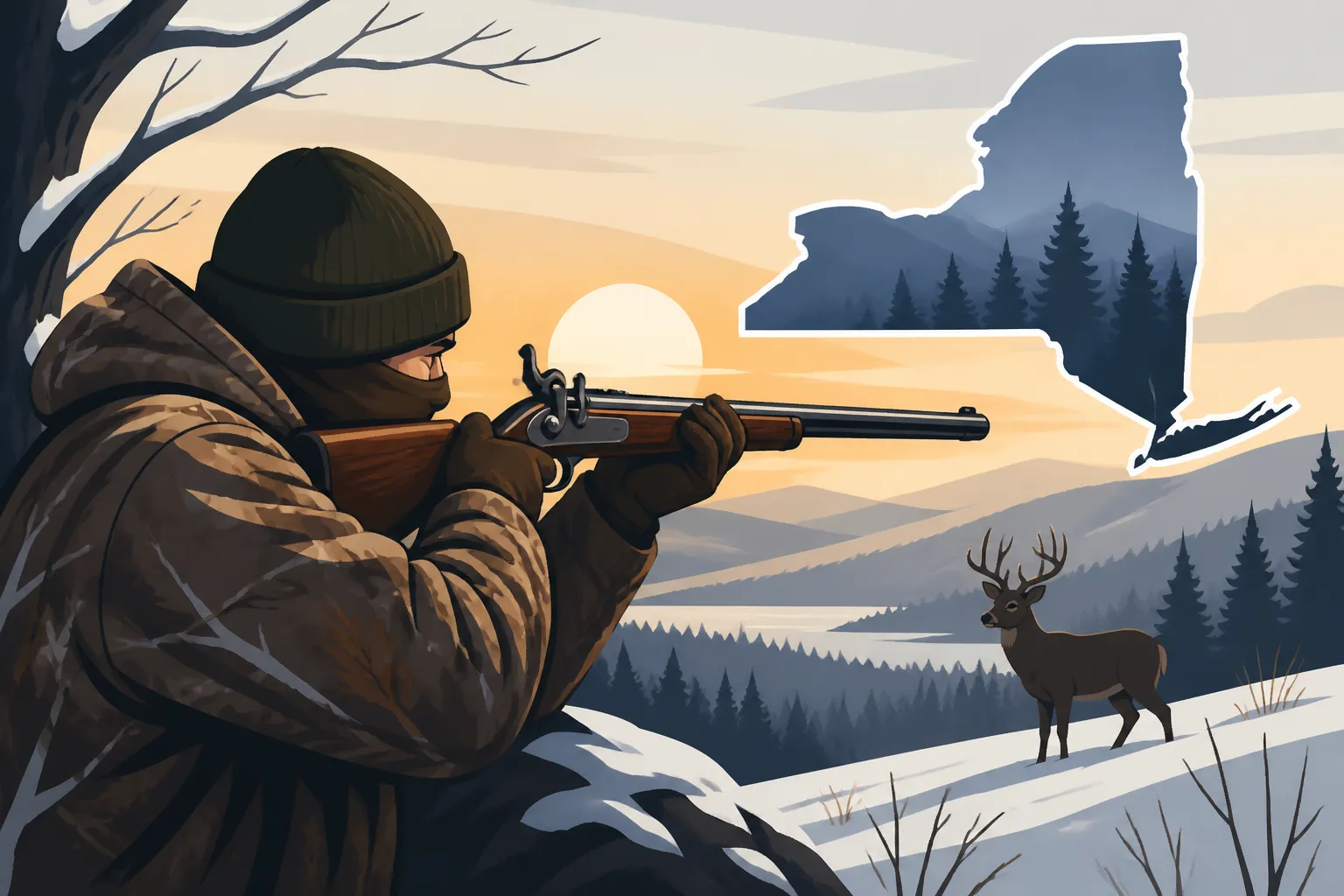
Hunting with a muzzleloader in New York during December is a whole different beast. It's not just about battling the biting cold, but also figuring out where the deer have vanished to, how to keep your trusty black powder rifle firing, and staying warm enough to actually hunt effectively. This guide is here to walk you through the proven strategies and essential preparations that will make your late-season muzzleloader hunt in the Empire State a success, even when the thermometer plummets and the snow piles up.
Preparing Your Muzzleloader for New York's Winter Chill
The biggest hurdle in December muzzleloader hunting is often not the deer, but the weather itself. Cold, moisture, and snow can conspire against you, leading to frustrating misfires or hangfires when the moment of truth arrives. Proper preparation of your firearm is paramount.
Keeping Powder Dry and Primers Hot
There's nothing quite like the stomach-dropping feeling of hearing a "click" instead of a "boom" when a deer of a lifetime steps out. New York's December weather, with its potential for rain, freezing rain, wet snow, or even heavy lake-effect snow, makes keeping your powder absolutely dry a critical concern. Moisture is the archenemy of black powder and most modern substitutes. Many experienced hunters will go the extra mile by taping over their primer pocket with electrical tape, or even using a small balloon or unlubricated condom stretched over the muzzle to prevent moisture from entering the barrel. It might look a little unconventional, but it can save your hunt.
Beyond external protection, consider your powder and projectile choice. Some modern synthetic sabot loads, especially those designed for cold weather, can offer a bit more forgiveness if a tiny bit of moisture makes its way in. However, the best defense is always prevention. Make sure your breech plug is meticulously clean before heading out, ensuring a clear path for the primer's spark to ignite the powder charge. A dirty or fouled breech plug is a primary culprit for misfires, and cold temperatures can exacerbate these issues. Always use fresh primers, stored in a dry, sealed container, as older primers can sometimes lose their potency, leading to an unreliable ignition. For those looking to dive deeper into protecting their firearm, you might find specific tips on how to keep a muzzleloader dry in lake-effect snow particularly helpful.
Opting for Reliable Optics and Sights
December hunting in New York often means low light conditions, either from dense timber, overcast skies, or shortened daylight hours. Add in potential fog, rain, or snow, and your optics can quickly become a hindrance rather than a help. When selecting optics for your muzzleloader, simplicity and reliability are key. Anti-fog coatings on scope lenses are a godsend, and flip-up scope caps can protect your glass from accumulating snow and moisture until the shot presents itself. While high magnification might be tempting, an 8x or 10x fixed power, or a low-power variable scope (like a 1.5-5x or 2-7x), is often more practical in the close-to-medium ranges typical of muzzleloader hunting in New York's diverse terrain.
For hunters venturing into extremely heavy snow or dense brush where a scope might be constantly covered or prone to fogging, open sights or ghost ring setups can be a surprisingly effective alternative. They are less prone to issues from precipitation and offer a wider field of view, which can be beneficial when a deer jumps suddenly in thick cover. Regardless of your choice, familiarize yourself with your setup in cold conditions. Adjusting scope turrets or even just flipping off lens caps with numb fingers can be surprisingly difficult in sub-freezing temperatures. Consider practicing your draw and aiming while wearing your typical winter gloves to ensure you can operate your firearm efficiently when it truly counts.
Deciphering Late-Season Deer Movement in the Cold
As December progresses in New York, deer behavior shifts dramatically. The rut is largely over, and the primary driver for whitetails becomes survival. This means finding food and seeking shelter from the harsh elements. Understanding these critical needs is the cornerstone of successful late-season muzzleloader hunting.
Targeting Prime Food Sources
By December, the natural buffet of acorns and other mast crops from the early season is often depleted or buried under snow. Deer will be focusing almost exclusively on easily accessible, high-energy food sources to maintain their body fat reserves and generate warmth. On agricultural lands, this means fields of standing corn, unpicked soybeans, or winter wheat plots become absolute magnets for deer. These crops offer both vital calories and often some degree of cover. However, even on public lands or in timber, deer will still seek out remaining browse, such as blackberry canes, regenerating clear-cuts, or even evergreens if nothing else is available. Snow depth plays a huge role; if the snow gets too deep, deer will struggle to dig for fallen mast or paw through it for browse, forcing them to concentrate on whatever food remains exposed.
Sharp hunters use aerial maps, like those available on platforms such as GoHunt, to identify these critical late-season food plots and potential holding areas. Pay particular attention to south-facing slopes. These areas receive more direct sunlight, causing snow to melt faster and often exposing more forage earlier in the day. Deer will gravitate to these sun-drenched slopes not just for food, but also to warm themselves. Understanding late-season food sources for New York whitetails is crucial, as a well-placed stand overlooking a hot food plot or a well-used browse line can be the difference between a cold, empty hunt and a filled tag.
Locating Thermal Cover and Bedding Areas
Just as important as food is thermal cover. In December, New York deer are constantly battling the cold and wind. They will seek out the densest cover available that offers protection from the elements, helping them conserve precious body heat. This typically means thick stands of conifers (pines, hemlocks, spruces), dense cedars swamps, or thickets of brush and regenerating timber. These areas act like natural windbreaks, creating microclimclimates that are noticeably warmer and less windy than open hardwoods. Again, south-facing slopes are prime locations for bedding, as the sun's warmth offers additional relief.
For hunters in the Northern Zone, understanding where Adirondack bucks bed can be particularly enlightening, as deer often gravitate towards traditional deer yards in deeper snow conditions. Scouting before the snow falls can reveal these bedding hideouts, but even after a fresh snowfall, you can often identify these areas by increased track concentrations leading into and out of thick cover. When approaching these bedding areas, extreme caution and an understanding of wind direction are paramount. Deer will be alert, and a wrong move can send them scattering, making recovery nearly impossible. Using detailed topographical maps and satellite imagery, perhaps through a tool like GoHunt, can help you pinpoint these potential thermal refuges and plan your approach carefully.
Strategies for a Successful December Muzzleloader Hunt
With your gear prepared and an understanding of deer behavior, it’s time to focus on effective hunting strategies that maximize your chances during New York’s late muzzleloader season.
Still-Hunting and Tracking in Snow
One of the greatest advantages of December hunting, especially after a fresh snowfall, is the ability to still-hunt and track effectively. A new blanket of snow reveals every movement, making it much easier to identify fresh deer sign. When tracking, pay close attention to the size and shape of the tracks, the length of the stride (indicating if the deer is walking or moving fast), and the freshness of the tracks (sharp edges mean very recent passage). For an in-depth look, consult our guide on tracking a deer in fresh New York snow. Your pace should be incredibly slow and deliberate, taking a few steps, then pausing to glass ahead, using your binoculars to scan for any flick of an ear, a patch of brown hide, or the tell-tale horizontal line of a deer's back against the vertical trees.
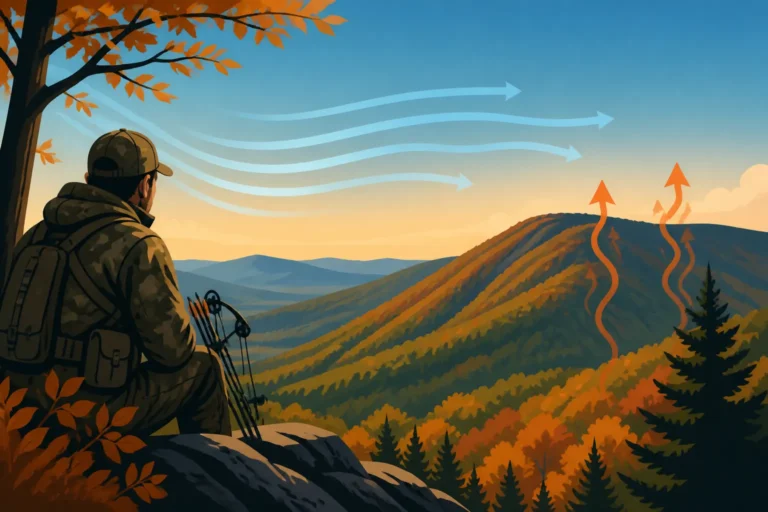
When still-hunting, remember that deer in December are often bedded in thick cover, keeping a close eye on their backtrail. Always hunt into the wind, or with a crosswind, to minimize scent detection. Use the terrain to your advantage, moving along ridge lines or through dips to stay concealed. As you slowly move through the woods, pay attention to thermals, especially in hilly country; cold air sinks into valleys, and warm air rises, which can affect how your scent travels. The key is patience. Many experienced late-season hunters attribute their success to moving only when absolutely necessary and spending significant time observing.
Stand Placement and Cold-Weather Endurance
If still-hunting isn't your preference or the conditions don't allow for it, stand hunting remains a highly effective tactic, provided you can endure the cold. Effective stand placement in December focuses on intercepting deer as they move between their bedding areas and those crucial late-season food sources. Look for pinch points, funnels, and natural barriers that concentrate deer movement. A saddle between two ridges, a narrow strip of timber connecting two larger woodlots, or a thick transition zone between a conifer stand and a feeding field are all prime candidates. Identifying these choke points requires good scouting and understanding the local topography.
Enduring New York's December cold on a stand is a test of will and preparation. Layering clothing is essential, starting with moisture-wicking base layers, insulating mid-layers like fleece or down, and a waterproof, windproof outer shell. Consider heated vests or socks for added warmth. Hand warmers and foot warmers are not optional; they are a necessity for all-day sits. A comfortable, insulated seat and a quiet entry and exit route are also paramount. Getting to your stand without disturbing deer, especially in fresh snow, requires extra stealth. Staying warm enough to remain motionless and alert for extended periods can be the hardest part of the hunt, but it's often rewarded. You'll find more helpful tips on effective cold-weather sitting strategy in New York that can extend your time on stand.
Overcoming Unique Muzzleloader Challenges
Muzzleloaders, while offering a rewarding hunting experience, come with their own set of quirks, especially in cold, damp December conditions. Being prepared for these specific challenges can save your hunt.
Dealing with Misfires and Hangfires
The fear of a misfire or a hangfire is a common anxiety for muzzleloader hunters, and it’s heightened in the cold, damp environment of December. A misfire means the primer fired, but the main powder charge did not ignite, resulting in just a "click." A hangfire is even more unnerving: the primer fires, there's a delay, and then the main charge ignites, a moment that feels like an eternity. If you experience either, it's absolutely crucial to remain safe. Keep the muzzle pointed in a safe direction – typically downrange towards your target – and wait for a full 30 to 60 seconds before taking any action. This waiting period is critical to ensure that a hangfire doesn't unexpectedly discharge the rifle.
Preventative maintenance is your best friend. A scrupulously clean breech plug, free of any carbon buildup, is essential for reliable ignition. Always use the proper amount of powder and ensure your bullet is seated firmly against the powder charge with no air gap, as an air gap can also lead to hangfires or even dangerous pressure spikes. If you do have a misfire, carefully remove the primer and try a new one. If it still doesn't fire, you'll need to safely discharge the load from the rifle (often by removing the breech plug and pushing the bullet out from the breech, or using a CO2 discharge tool if your rifle allows). This is why having some basic tools and knowing how to disassemble and reassemble your muzzleloader quickly in the field can be a real asset. Consider practicing this at home beforehand, rather than figuring it out with cold, shaking hands and a frustrated mind in the deer woods.
Field Dressing and Recovery in Harsh Conditions
Successfully harvesting a deer with your muzzleloader in December cold brings a new set of challenges: field dressing and recovery. While cooling the meat is important to prevent spoilage, in freezing temperatures, your concern shifts to preventing the meat from freezing solid before you can get it processed. Field dress the deer as quickly and efficiently as possible to begin the cooling process. However, if temperatures are well below freezing, you might consider leaving the hide on during transport to offer a layer of protection from freezing too quickly, which can make butchering difficult later.
Recovering a deer in deep New York snow can be an incredibly arduous task. That seemingly short drag back to the truck can feel like miles. Mark your shot location meticulously, especially if there's any snow, as blood trails can sometimes be difficult to follow against a white backdrop. If you're hunting with a partner, taking turns dragging can make the process manageable. If you're solo, consider investing in a good deer sled or deer cart. These tools can turn an impossible drag into a merely difficult one, greatly reducing the physical strain. For hunters facing steep or broken terrain, knowing how to drag a deer off a Catskill ridge, for example, is invaluable. Remember, safety first: deep snow and cold temperatures can lead to exhaustion and hypothermia if you're not careful. Stay hydrated, take breaks, and don't be afraid to leave the deer overnight if conditions are too harsh, provided you can mark its location and ensure it's safe from scavengers.
| December Muzzleloader Prep Checklist | Why It Matters | Notes for NY Hunters |
|---|---|---|
| Clean Breech Plug & Barrel | Prevents misfires/hangfires; ensures accuracy | Use a pick and solvent to clear all carbon; check threads |
| Fresh, Dry Primers | Essential for reliable ignition in cold | Store in a sealed container; avoid moisture |
| Muzzle Protection | Keeps snow/rain out of barrel | Electrical tape or small balloon over muzzle |
| Optics Anti-Fog/Caps | Maintains clear sight picture in damp cold | Practice removing caps with gloves on |
| Layered Clothing | Stay warm, prevent hypothermia | Wool/synthetics for moisture wicking; waterproof outer |
| Hand/Foot Warmers | Crucial for long, cold sits | Bring extra; consider battery-powered options |
| Deer Sled/Cart | Eases recovery in deep snow | Essential for solo hunters or rough terrain |
| GoHunt Map (Offline) | Locate food/cover; track movement | Download maps for areas without cell service |
Disclaimer
Hunting carries inherent risks, and conditions in New York can be unpredictable and dangerous. Always prioritize safety, understand and follow all New York State Department of Environmental Conservation (DEC) hunting regulations, and be prepared for rapidly changing weather conditions. This guide provides general advice and should not replace proper hunter education or personal experience.