Posted Land and Public Access Cooperator Farms
It's incredibly frustrating when you're looking for a new spot to hunt in New York, only to find endless "POSTED" signs staring back at you from what looks like perfect habitat. We all know that feeling of driving past prime farmland or dense woodlots, knowing the deer are there, but access seems impossible. This guide will delve into the nuances of posted land in New York and, more importantly, introduce you to the often-underutilized resource of Public Access Cooperator Farms, explaining how they work and how you can find these hidden gems to expand your hunting opportunities.
Understanding Posted Land in New York
The vast majority of land in New York State is privately owned, and a significant portion of that is posted against trespassing. For hunters, this can feel like a constant barrier, shrinking the available landscape and pushing more pressure onto already crowded public areas. It's a reality that shapes how we approach hunting here, forcing us to be resourceful and respectful.
What "Posted" Really Means for Hunters
When you see a "POSTED" sign, or any sign indicating "No Trespassing," "Private Property," or "Hunting by Permission Only," it means exactly what it says: you cannot enter that property without the landowner's explicit permission. This isn't just a polite request; it's the law. Violating these signs can lead to fines, confiscation of your hunting license, and even criminal charges, depending on the severity of the offense. It's a swift way to ruin your season and give all hunters a bad name. New York Posted Land Rules are pretty clear on this. Even if you see a deer run onto posted land after you've shot it, you generally cannot retrieve it without permission, which is a gut-wrenching situation for any hunter. The rules exist to protect private property rights, and as ethical hunters, we must absolutely respect them.
Many hunters, especially those new to an area or the state, sometimes misunderstand the implications. They might think that if the land isn't fenced, or if they're "just tracking a wounded animal," it's okay to step onto it. This is a dangerous misconception. The absence of a fence doesn't negate the "posted" status, and even tracking a wounded animal usually requires immediate contact with the landowner. Failing to do so can quickly turn an otherwise ethical hunt into a legal nightmare. It's always best to err on the side of caution and assume that if there isn't clear public access, you need permission.
Common Reasons Landowners Post Their Property
Landowners post their property for a variety of legitimate reasons, and it's important to understand these perspectives. Often, it's not simply to be unwelcoming. One of the biggest concerns is liability. Landowners worry about hunters getting injured on their property and the potential for lawsuits. Even if they're not charging you for access, a landowner can still be held liable for certain types of injuries. Posting helps mitigate this perceived risk, even if specific laws like New York's Recreational Use Statute offer some protection.
Beyond liability, privacy is a huge factor. Many people own land for their own enjoyment, for peace and quiet, or to manage it for personal recreation. They don't want strangers wandering through their woods or fields, especially during hunting season when activity can be unpredictable. Property damage, such as cut fences, rutted fields from ATVs, or litter, is another common complaint that leads landowners to post their land. Sadly, a few bad apples can spoil it for everyone, leading to more and more land being taken out of public access. Landowners also use posting as a management tool, perhaps to control deer populations on their property, protect specific stands of timber, or to simply know who is on their land at any given time.
The Concept of New York's Public Access Cooperator Farms
In recognition of the challenges hunters face with limited access and the benefits that hunting can provide to landowners (like deer herd control), New York has several programs designed to facilitate public hunting access on private lands. Among these, the Public Access Cooperator Farms program is a fantastic, if sometimes overlooked, resource. It's essentially a partnership where landowners receive various forms of assistance or benefits from the state in exchange for opening their private land to public hunting.
How the Program Works for Hunters and Landowners
At its heart, the Public Access Cooperator Farms program is a win-win, designed to alleviate some of the common pain points for both hunters and landowners. For landowners, especially those with agricultural operations, having hunters on their property can help manage nuisance wildlife that might otherwise damage crops or property. Deer, in particular, can be incredibly destructive to corn, soybean, and fruit tree operations. In exchange for allowing public hunting access, the state might offer incentives like posting services (they'll put up the signs for you), assistance with wildlife damage control, or even tax benefits. This takes some of the burden off the landowner while opening up acres that would otherwise be entirely off-limits.
From a hunter's perspective, this program opens doors – literally – to private lands that might offer excellent hunting opportunities, often with less pressure than highly trafficked state forests or wildlife management areas. Hunters get a chance to pursue game in diverse habitats, from open farm fields to woodlots and fencerows, expanding their hunting experiences beyond the typical big woods. While these lands are still private, the agreement with the state ensures that hunters adhering to the rules are legally allowed to be there. It's crucial to remember that these are not "free-for-all" lands; they come with specific regulations and expectations of respectful conduct.
Types of Cooperator Farms and Available Game
New York's Public Access Cooperator Farms encompass a diverse array of land types, which means they can offer a wide range of hunting experiences. Most commonly, you'll find active agricultural properties: cornfields, soybean fields, hayfields, and orchards. These areas are, naturally, prime habitat for whitetail deer, especially during the late season when standing crops or residual forage can be critical food sources. Hunting Southern Tier Farmland Deer often revolves around these types of properties. You might also encounter dairy farms with associated pastures and woodlots, offering opportunities for deer and sometimes wild turkeys.
Beyond deer, these farms can provide excellent small game hunting. Many cooperator farms have brushy fencerows, overgrown hedgerows, and small woodlots that are ideal for cottontail rabbits and various squirrel species. Some may even be enrolled in programs that include pheasant stocking, particularly in regions like Western New York. For turkey hunters, the mix of fields and timber can be fantastic for both spring and fall seasons. Turkey Tactics for Southern Tier Field Edges are definitely applicable here. It's always best to check the specific regulations and the types of game permitted on each individual cooperator farm, as they can vary based on the landowner's agreement and the habitat available. The key is diversity; you're often getting a mosaic of cover and food that can be incredibly productive.
Finding and Accessing Cooperator Farms
So, you're intrigued by the idea of hunting these cooperator farms, but how do you actually find them? This is where a little research and utilizing the right tools become paramount. The state has made efforts to centralize this information, but it still requires some initiative on the hunter's part to dig in and understand the specifics.
Navigating the DEC Resources for Public Access
The primary resource for locating Public Access Cooperator Farms and other public hunting opportunities in New York is the Department of Environmental Conservation (DEC). They maintain a wealth of information, often through interactive maps and downloadable lists. The Using the New York HuntFishNY Map Tool is your best friend here. This online map system allows you to filter by hunting opportunities, including public access lands, state forests, wildlife management areas (WMAs), and crucially, these cooperator farms. You can zoom in on specific regions, see property boundaries, and often find special regulations pertaining to that particular parcel.
When you're looking at these DEC resources, pay close attention to the details. Each cooperator farm might have specific rules beyond the general statewide hunting regulations. Some might be archery-only, some might have restrictions on the types of game that can be harvested, or specific parking instructions. It's not uncommon to find areas designated for shotgun-only use, even if the surrounding area allows rifles, due to proximity to residences or roads. Taking the time to read these specific rules before you head out is non-negotiable. A quick call to the regional DEC office can also clarify any ambiguities or provide insights into recent changes or closures.
Utilizing Mapping Tools for Boundaries and Access Points
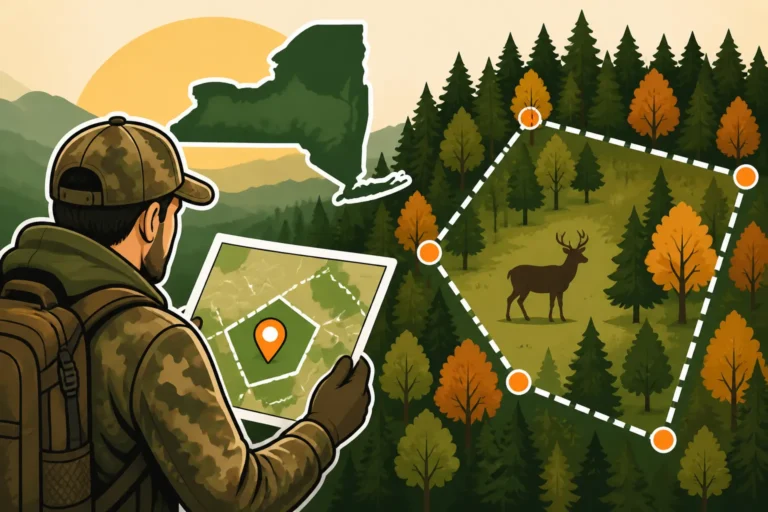
Once you've identified potential cooperator farms through the DEC, advanced mapping tools become invaluable for actual on-the-ground planning. Platforms like onX Hunt have revolutionized how hunters navigate both public and private land. With onX Hunt, you can overlay property boundaries, including those of cooperator farms, directly onto satellite imagery. This allows you to see exactly where the public access ends and where truly private, non-cooperating land begins. This is essential for staying legal and avoiding accidental trespass. You can mark potential access points, identify fencerows, woodlots, and field edges that might hold game, and even plan your walk-in routes.
While onX Hunt is a powerful tool, other mapping solutions like GoHunt also offer similar capabilities for understanding land ownership and topography. The key is to use these tools to visualize the terrain, identify potential pinch points, food sources, and bedding areas within the cooperator farm boundaries. For example, you might notice a small stand of oaks within a cornfield, or a thick cattail marsh bordering a hayfield. These are features you can plan to scout and hunt. Reading Aerial Photos for Southern Tier Deer is a skill that translates perfectly to these agricultural landscapes, allowing you to pick out subtle terrain features that might concentrate deer movement. Using a GPS unit or your phone with one of these apps is highly recommended, especially when you're in unfamiliar territory.
Rules and Etiquette Specific to Cooperator Farms
Hunting on Public Access Cooperator Farms comes with an implied understanding: you are a guest on someone's working property. This means your behavior directly impacts the landowner's willingness to continue participating in the program. Therefore, exceptional etiquette and adherence to specific rules are paramount. Always park in designated areas, even if it means a longer walk. Never block farm equipment or access roads. Gates should always be left as you found them – if it was closed, close it behind you. If it was open, leave it open. Respecting livestock, fences, and farm infrastructure is crucial; damaging anything can lead to the landowner withdrawing from the program.
Furthermore, many cooperator farms will have rules about where you can hunt in relation to buildings or active farm operations. Stay away from residential structures, barns, and areas where farmers might be working. Think about the impact of your presence. Keep noise to a minimum, and always pick up any trash, including spent shell casings. The goal is to leave no trace that you were there, other than successful game taken. Remember, the relationship between the landowner and the state, and by extension, with hunters, is built on trust. Upholding that trust ensures these vital hunting opportunities remain available for everyone. When in doubt, assume stricter rules of conduct apply than on vast, remote public lands.
Benefits and Challenges of Hunting Cooperator Farms
Hunting Public Access Cooperator Farms isn't always easy, but it offers a unique set of advantages and can present some distinct challenges compared to other hunting venues. Understanding both sides of the coin will help you decide if these properties are right for your next hunt.
The Advantages: More Access, Less Pressure?
One of the most compelling advantages of hunting cooperator farms is, quite simply, more access. With so much private land posted, finding new places to hunt can be a significant hurdle. These farms offer legal, designated hunting ground that would otherwise be completely off-limits. This expansion of accessible land can be a game-changer, especially in regions with high human population density or limited state-owned public lands. It diversifies the types of habitat you can hunt, moving beyond the traditional big timber to include agricultural fields, brushy fencerows, and smaller woodlots that can be incredibly productive for a variety of game.
While not always guaranteed, cooperator farms can sometimes offer less hunting pressure than traditional, well-known public lands. Because they require a bit more research and may not be as widely advertised, some hunters overlook them. This isn't to say you'll always have the place to yourself, especially on opening day, but it's often a less crowded experience than the popular state forests. The nature of farm country, with its mosaic of cover and food, can also lead to different game behavior, potentially creating unique opportunities. Deer, for instance, might pattern differently around crop fields than they do in continuous woods. These lands also tend to hold healthy populations of game due to the abundance of food and cover found in agricultural landscapes.
Potential Drawbacks and Considerations
Despite the many benefits, hunting cooperator farms does come with its own set of challenges. One major consideration is the acreage. While some farms might be quite large, many are smaller parcels interspersed among other private lands. This means less room to roam, and you'll need to be acutely aware of property boundaries at all times. This can restrict certain hunting methods, like large-scale deer drives, and places a premium on stealth and precise shot placement. The smaller size also means that hunting pressure, even if from fewer hunters, can have a more concentrated impact. Hunting Pressure on New York Public Land is a real thing, and even on cooperator farms, you might find yourself sharing relatively small areas with others.
Another potential drawback is the strictness of the rules. As mentioned, you are on private property, and the landowner's comfort and ongoing farm operations take precedence. This might mean limitations on where you can park, where you can walk, or even when you can hunt. For example, a landowner might restrict hunting during planting or harvesting seasons, or prohibit access to certain fields where livestock are present. These restrictions, while understandable, can sometimes feel limiting. Moreover, the habitat on cooperator farms is often heavily influenced by agricultural practices. This means less "wild" habitat and more edge habitat. While excellent for deer and small game, it might not suit hunters looking for a deep woods experience for species like black bear or specific grouse covers. Finally, getting permission to retrieve a wounded animal that crosses onto a non-cooperating posted parcel adjacent to the farm can still be a challenge.
Maximizing Your Success on Public Access Farms
Once you've found a promising Public Access Cooperator Farm, the next step is to strategize how to hunt it effectively. These properties often require a slightly different approach than vast tracts of wilderness or dense state forests. Understanding the nuances of farm country can significantly boost your chances of success.
Scouting Strategies Tailored to Farm Land
Scouting a cooperator farm needs to be a thoughtful process, blending traditional woodsmanship with an understanding of agricultural practices. Start by doing your "digital scouting" using the New York HuntFishNY App and other mapping tools like onX Hunt. Look for the edges: where woodlots meet fields, where hedgerows cross, and where swamps or thickets provide cover near open feeding areas. Deer, especially, are creatures of the edge. They'll bed in the cover and move out into the fields to feed, particularly at dawn and dusk. Pay attention to pinch points—narrow strips of cover that funnel deer movement between bedding and feeding areas.
Once on the ground, focus on fresh sign. Look for tracks along field edges, rub lines in smaller woodlots, and active scrapes along fencerows. Think about what crops are in the fields and when they were planted or harvested. A standing cornfield in the early season offers incredible cover and food, but once it's cut, deer patterns will shift dramatically. Hunting a Standing Cornfield in Farm Country requires a very specific approach. Don't overlook low-impact areas like creek bottoms, drainage ditches, or brushy draws that might not look like much but can offer hidden travel corridors. Remember to scout respectfully; avoid disturbing any livestock or farm equipment, and try to scout during times when you're least likely to interfere with farming activities or other hunters.
Adapting Hunting Tactics for Farm Country
Hunting on cooperator farms often means adapting your usual tactics. Given the prevalence of fields, sitting on an elevated stand or in a ground blind overlooking a food source or travel corridor can be extremely effective. Sitting a Field Edge in Late Season is a classic strategy that works wonders in farm country, especially when deer are hitting a specific crop. Because these areas tend to be more open, shot distances might be longer than in dense timber, so practice your shooting at various ranges. If using a rifle, ensure it's zeroed appropriately.
For archery hunters, setting up tight to a woodlot edge or in a fencerow can be productive. Consider using ground blinds, especially if cover is sparse, but make sure they're brushed in naturally to avoid spooking wary deer. If hunting small game like rabbits or pheasants, focus on the dense, brushy cover found in hedgerows, creek bottoms, and overgrown field corners. Walk these areas slowly, paying attention to escape routes. For turkeys, the combination of open fields and adjacent timber makes for classic spring and fall hunting. Set up where you can call birds out of the woods into a field, or intercept them as they travel between them. Whatever your quarry, quiet movement, patience, and a deep respect for the working farm environment will lead to the most success.
| Feature | Public Access Cooperator Farms | Traditional Public Land (e.g., State Forests, WMAs) |
|---|---|---|
| Land Ownership | Private land, publicly accessible via state agreement | State-owned and managed land |
| Primary Habitat Type | Agricultural fields, woodlots, fencerows, small thickets | Diverse: forests, wetlands, old fields, mountains, river bottoms |
| Hunting Pressure | Can be less than popular public lands, but acreage often smaller | Varies widely; popular areas can be very crowded, remote areas less so |
| Specific Rules | Varies by farm; landowner rules, often related to farm ops/safety | General state regulations, some WMA-specific rules |
| Game Opportunities | Excellent for deer, turkey, small game; sometimes pheasant stocked | Wide range, including bear, waterfowl, grouse, depending on location |
| Access | Clearly marked parking/access points, often off main roads | Road access, designated parking; deep woods require longer walks |
| Liability Concern | State program helps mitigate landowner liability | State assumes liability within reasonable use |
| Scouting Intensity | Focus on edges, field patterns, specific crops, property lines | Focus on terrain, food sources (mast), water, remote areas |
| Required Conduct | High emphasis on respect for private property, farm operations | Respect for nature, other hunters, general regulations |
Disclaimer
This article is for general informational purposes only and does not constitute professional advice. Laws, prices and regulations vary by location and change over time. Consult a qualified professional for guidance on your specific situation.