Snow and Forest Road Access Up North
There's nothing quite like the allure of hunting "up north" in New York, whether that's the vast Adirondack wilderness, the rugged Tug Hill Plateau, or the diverse Northern Zone. But if you've ever tried to access prime hunting ground when the snow starts piling up or the temperatures drop, you know that the journey to your stand can be just as challenging as the hunt itself. From icy dirt roads to deep drifts blocking remote access, winter conditions can make or break your hunt. This guide will help you understand and navigate the unique challenges of snow and forest road access in New York's northern regions, ensuring you're prepared for whatever Mother Nature throws your way.
The Reality of Winter Conditions "Up North"
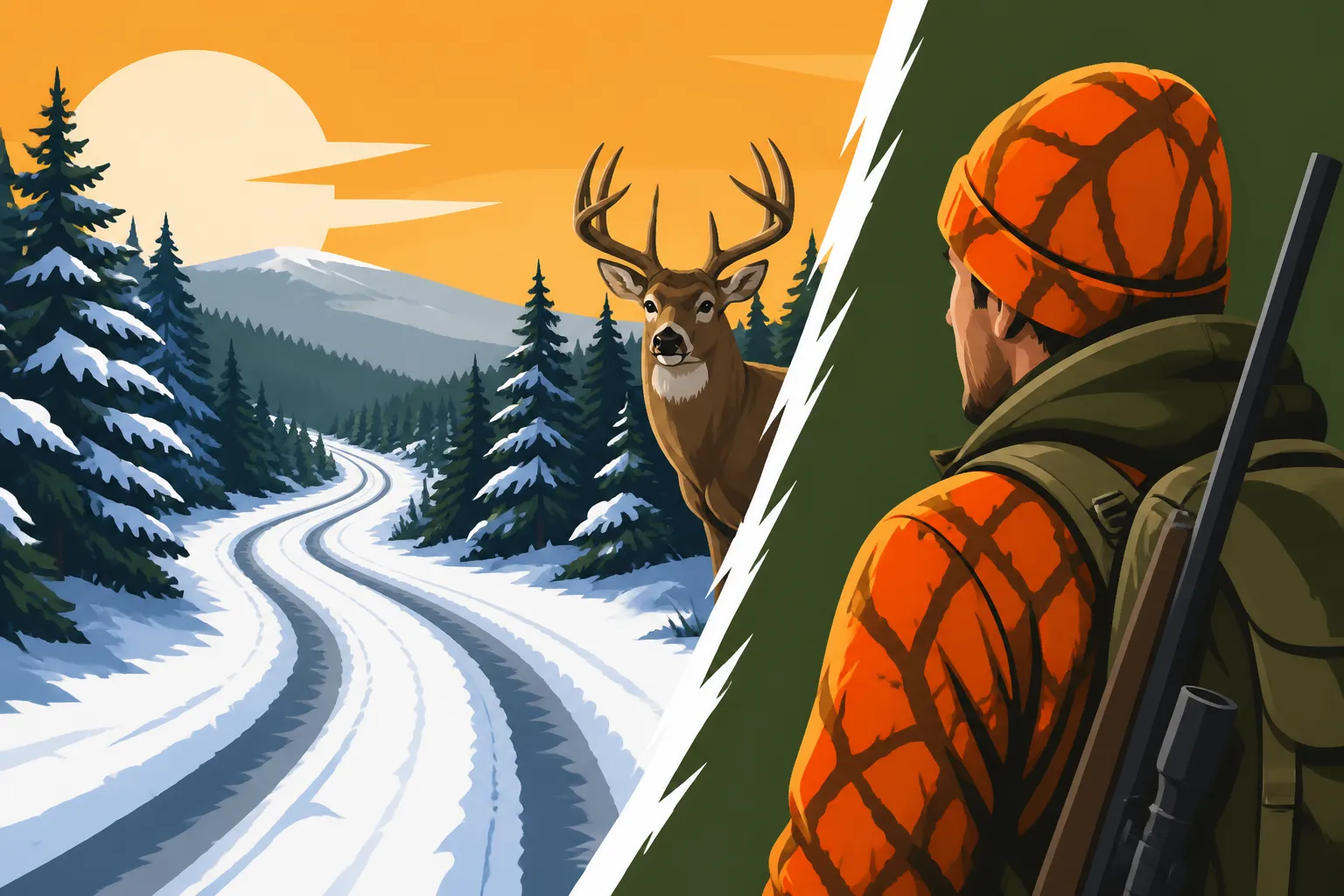
Hunting in New York's Northern Zone, especially in the Adirondack Park or on the Tug Hill Plateau, means contending with some of the most intense winter weather in the state. Unlike the Southern Zone where significant snow might be sporadic, up north, winter arrives early and stays late, often impacting hunting access long before the official close of the season.
Early Season Snow and Its Impact
Even in late October or early November, while many in the Southern Zone are still thinking about crisp fall mornings, the higher elevations and northern reaches can already be seeing their first significant snowfalls. These early snows can be a blessing and a curse. On one hand, fresh snow reveals deer and bear tracks like an open book, making it easier to locate active areas and formulate a plan. On the other hand, even a few inches of wet, heavy snow can turn a graded dirt road into a slick, rutted mess, especially for vehicles without four-wheel drive or adequate clearance.
Imagine you've been scouting a remote patch of state land in St. Lawrence County, diligently marking rub lines and pinch points on your Scouting New York Public Land Before Season trips. You've got your spot picked for the opening day of the rifle season. Then, a surprise early November storm dumps eight inches of wet snow. That logging road you planned to drive down? It's now a slushy, impassable trench. Your carefully laid plans suddenly involve an extra two miles of slogging through heavy snow before you even reach your intended starting point. This isn't just an inconvenience; it can genuinely alter your hunting strategy, forcing you to choose more accessible, and often more pressured, areas.
Dealing with Lake-Effect Snow Events
For those hunting regions like the Tug Hill Plateau or areas bordering Lake Ontario and Lake Erie, "lake-effect snow" isn't just a weather forecast; it's a way of life. These localized snowstorms can dump feet of snow in a matter of hours, often creating wildly different conditions just a few miles apart. While one side of a ridge might be clear, the other could be buried under drifts.
Hunting the Tug Hill, for example, often means planning for the possibility of a foot or more of new snow overnight, even if the forecast for nearby Watertown is only a few inches. This kind of heavy, localized snowfall can quickly cut off access to forest roads that were perfectly passable the day before. You might find yourself parked much further from your desired hunting area than anticipated, needing to adjust your Cold-Weather Sitting Strategy in New York or even your entire approach. It means relying on more than just the general forecast; understanding the microclimates and specific weather patterns of your chosen hunting grounds is crucial. If you're planning on Hunting Deer in Deep Tug Hill Snow, be prepared for the full experience.
Navigating Forest Road Closures and Restrictions
Accessing public land in New York's northern regions often means utilizing a network of forest roads, ranging from well-maintained gravel paths to barely-there two-tracks. However, these roads are not always open, especially as winter deepens.
Seasonal Closures and Gates
Many forest roads, particularly those managed by the Department of Environmental Conservation (DEC) or within the Adirondack and Catskill Forest Preserves, are subject to seasonal closures. These closures are typically implemented to prevent road damage from freezing and thawing cycles, protect wildlife, and reduce maintenance costs during periods of heavy snow. You'll often find gates or signage indicating that a road is closed to vehicular traffic for the season.
It’s tempting to think, "Oh, it's just a gate, I can walk around it." And while walking is often permitted, understanding why the road is closed is important. Beyond protecting the roadbed, these closures ensure safety. A seemingly benign dirt road can quickly become treacherous with snow and ice, and rescue operations in remote areas are costly and dangerous. Always check the DEC's regional notices or land manager's website for specific closure dates, as they can vary by location and year. Some roads might close on a specific date, while others close when snow depth reaches a certain point. A tool like onX Hunt can be incredibly helpful here, as it often has layers indicating public land boundaries and sometimes even seasonal road closures, giving you a visual aid for planning your approach.
Understanding Foot, Snowmobile, and ATV Access
When a forest road is closed to full-size vehicles, it doesn't necessarily mean all access is denied. Often, these roads become thoroughfares for other forms of winter travel.
- Foot Access: Hiking in is almost always permitted. This is where Packs Built for a Multi-Day Backcountry Hunt and good Insulated Boots for All-Day Sits become essential, as your walk-in might be significantly longer than planned.
- Snowmobile Access: In many areas of the Adirondacks and Tug Hill, once sufficient snow cover is established, closed forest roads transform into designated snowmobile trails. Hunters sometimes use snowmobiles to get closer to their hunting areas, but be aware of specific rules regarding carrying firearms on snowmobiles and proximity to designated hunting zones. Always ensure you're following regulations and being respectful of other trail users.
- ATV Access: Less common than snowmobiles, but some areas might allow ATV use during specific periods or for individuals with special permits. Always verify local regulations before attempting to use an ATV on a closed forest road.
It's crucial to distinguish between roads that are merely snowed in and those that are officially closed. A road that is simply impassable due to snow might eventually clear up, or you might choose to navigate it with a capable 4×4. An officially closed road, however, means adhering to specific rules regarding vehicle type and travel.
Here's a quick reference for common access considerations:
| Road Type/Condition | Vehicle Access | Foot Access | Snowmobile/ATV Access | Key Consideration |
|---|---|---|---|---|
| Open, Maintained Forest Road | Yes | Yes | No (unless designated) | Can become slick/rutted with snow. |
| Open, Unmaintained/Primitive | High Clearance/4×4 | Yes | No (unless designated) | Extreme caution in snow, possibility of getting stuck. |
| Seasonally Gated Road | No | Yes | Often yes (snowmobile) | Check specific dates/conditions for closure. |
| Deeply Snowed In (but open) | Possible (track/4×4) | Yes | Often yes (snowmobile) | Assess your vehicle's capability carefully. Risk of getting stuck. |
Using Mapping Tools for Access Planning
This is where modern technology really shines. Services like onX Hunt and even tools within the GoHunt platform can be invaluable. They provide detailed satellite imagery, topographic maps, and often, property boundaries and public land designations. More importantly for this topic, many mapping apps allow users to see trail systems and, with a bit of cross-referencing with DEC websites, identify roads that might be seasonally closed.
Before you even leave home, you can use these tools to identify potential access points, calculate distances from gates, and mark alternative routes. For example, if you know a particular gate usually closes by mid-November, you can use onX Hunt to calculate the extra mileage you'll have to walk to get to your stand and mentally prepare for that added effort. Don't forget that GPS Units Versus Phone Apps can be a lifesaver when cell service inevitably drops in remote northern areas.
Practical Strategies for Winter Access
So, you're committed to hunting the "up north" experience, complete with snow and challenging access. How do you prepare and adapt to ensure a successful, safe, and enjoyable hunt?
Vehicle Preparation for Snowy Roads
Your vehicle is your first line of defense against difficult access. Simply having four-wheel drive isn't always enough, especially on unplowed or heavily rutted forest roads.
- Tires: Invest in good all-terrain or winter tires. The difference in traction on snow and ice is monumental. Don't wait until the first big snow to realize your summer tires aren't cutting it.
- Ground Clearance: Many forest roads have rocks, ruts, and deep snow patches. A vehicle with higher ground clearance (like an SUV or pickup truck) will fare much better than a low-slung sedan.
- Recovery Gear: Always carry a shovel, tow strap, and traction boards. Even experienced drivers get stuck, and being prepared means you won't be stranded for hours in freezing temperatures. A small chainsaw can also be a lifesaver if a downed tree blocks your path.
- Emergency Kit: Beyond hunting gear, pack a dedicated emergency kit for your vehicle: extra warm clothing, blankets, food, water, a first-aid kit, a fully charged power bank for your phone, and jumper cables. Cell service can be spotty, so don't rely on it for emergencies.
Consider the time you lost last year trying to navigate a slushy, unplowed logging road to reach your stand for New York's Northern Zone Firearm Season. With proper tires, a bit more ground clearance, and a set of traction boards, you might have saved yourself an hour of slipping and sliding, getting you to your spot quietly and on time.
Adapting Your Hunt to Limited Access
When you can't drive as close as you'd like, your hunting strategy needs to adapt. This often means focusing on areas closer to accessible roads, or being willing to put in significant boot time.
- Embrace the Hike: Longer walks mean you'll naturally get deeper into areas that other hunters avoid. This can lead to less pressured deer and bear. However, this requires excellent physical conditioning and lighter gear. Think about minimizing weight in your Packs Built for a Multi-Day Backcountry Hunt and focusing on essential items.
- Scout Smarter: Use those mapping apps to identify areas that are just beyond the reasonable walking distance for most hunters. These "fringe" areas, just past the half-mile mark from a parking area, often hold deer that have been pushed out of more easily accessed spots. You might find a perfect bedding area or a critical food source that is overlooked because of the extra effort required to reach it.
- Focus on Funnels and Pinch Points: When deer move more in heavy snow, they often stick to the path of least resistance. Look for natural funnels, saddlebacks, and dense cover that provides thermal protection. These areas become even more crucial as access becomes more difficult, concentrating deer movement. When Finding Sign in Big Adirondack Timber, look for trails that suggest deer are utilizing the easiest routes through the snow.
- Muzzleloader Season Considerations: If you're hunting during the late muzzleloader season, snow and cold are almost a guarantee. Keeping your muzzleloader dry and functioning in these conditions is paramount. Read up on Keeping a Muzzleloader Dry in Lake-Effect Snow to avoid a misfire when that big buck finally steps out.
One hunter I know, after years of frustration with closed gates in the Adirondacks, started focusing entirely on remote areas only reachable by a three-mile hike in. He'd scout religiously in the off-season, identifying remote food sources and bedding areas, knowing full well that come late November, he'd be the only one willing to put in the work. He consistently fills his tags with mature bucks because he's hunting where others won't go due to the access challenges. This kind of persistence, coupled with smart planning and the right gear, is what separates successful winter hunters.
Equipment and Preparation for Snowy Hunts
Beyond vehicle considerations, your personal gear must also be up to the task of northern New York's winter conditions.
Essential Winter Hunting Gear
Proper layering and specialized equipment are non-negotiable when hunting in areas prone to heavy snow and extreme cold.
- Layered Clothing: Forget the bulky insulated suit. A system of base layers (moisture-wicking), mid-layers (insulating fleece or down), and an outer shell (waterproof and windproof) allows you to adjust to changing activity levels and temperatures. Wool is a fantastic choice for quietness and warmth even when wet.
- Insulated, Waterproof Boots: Your feet are your foundation. Good Insulated Boots for All-Day Sits that are rated for sub-zero temperatures and are completely waterproof are a must. There's nothing worse than cold, wet feet ending a hunt prematurely.
- Navigation Tools: Even with the best maps, deep snow can obscure trails and landmarks. A reliable GPS unit or a smartphone with downloaded offline maps (like those from onX Hunt) is critical, especially when Hunting Bears in the Adirondack Interior where vast stretches of wilderness mean getting turned around can be dangerous. Always carry a compass and know how to use it as a backup.
- Headlamp with Extra Batteries: Winter days are short, and hiking in or out in the dark is common. A powerful headlamp with fresh batteries, plus spares, is essential for safety.
- Trekking Poles: When traversing uneven, snowy, or icy terrain, trekking poles provide stability and reduce fatigue, especially when dragging a deer. Tracking a Deer in Fresh New York Snow over varied terrain is much easier with good balance.
Planning for the Unexpected
No matter how well you prepare, winter hunting "up north" always has the potential for unexpected challenges. Being ready for them is part of the experience.
- Leave a Plan: Always tell someone your hunting location, your intended return time, and your planned route. This is critical for your safety, especially if you're hunting solo in remote areas.
- Communication Devices: A fully charged cell phone is a start, but don't rely solely on it. Consider a satellite messenger or a two-way radio for areas with no cell service.
- Extra Food and Water: Pack more than you think you'll need. Getting stuck, taking longer to retrieve a deer, or simply needing more energy in the cold can quickly deplete your reserves. High-energy snacks like nuts, dried fruit, and protein bars are excellent.
- Fire Starting Kit: Matches, a lighter, or a ferro rod can be life-saving if you get stranded or need to warm up quickly.
- Small Emergency Shelter: A lightweight emergency bivy or space blanket can provide critical protection from the elements if you have to spend an unexpected night out.
By anticipating the challenges that snow and forest road closures present, and equipping yourself appropriately, you can turn potential frustrations into opportunities. The "up north" experience in New York is truly special, offering solitude and a chance at big game that many other areas can't match. But it demands respect for the wild and preparation for its inherent difficulties.
Disclaimer
This article is for general informational purposes only and does not constitute professional advice. Laws, prices and regulations vary by location and change over time. Consult a qualified professional for guidance on your specific situation.