Insulated Boots for All-Day Sits
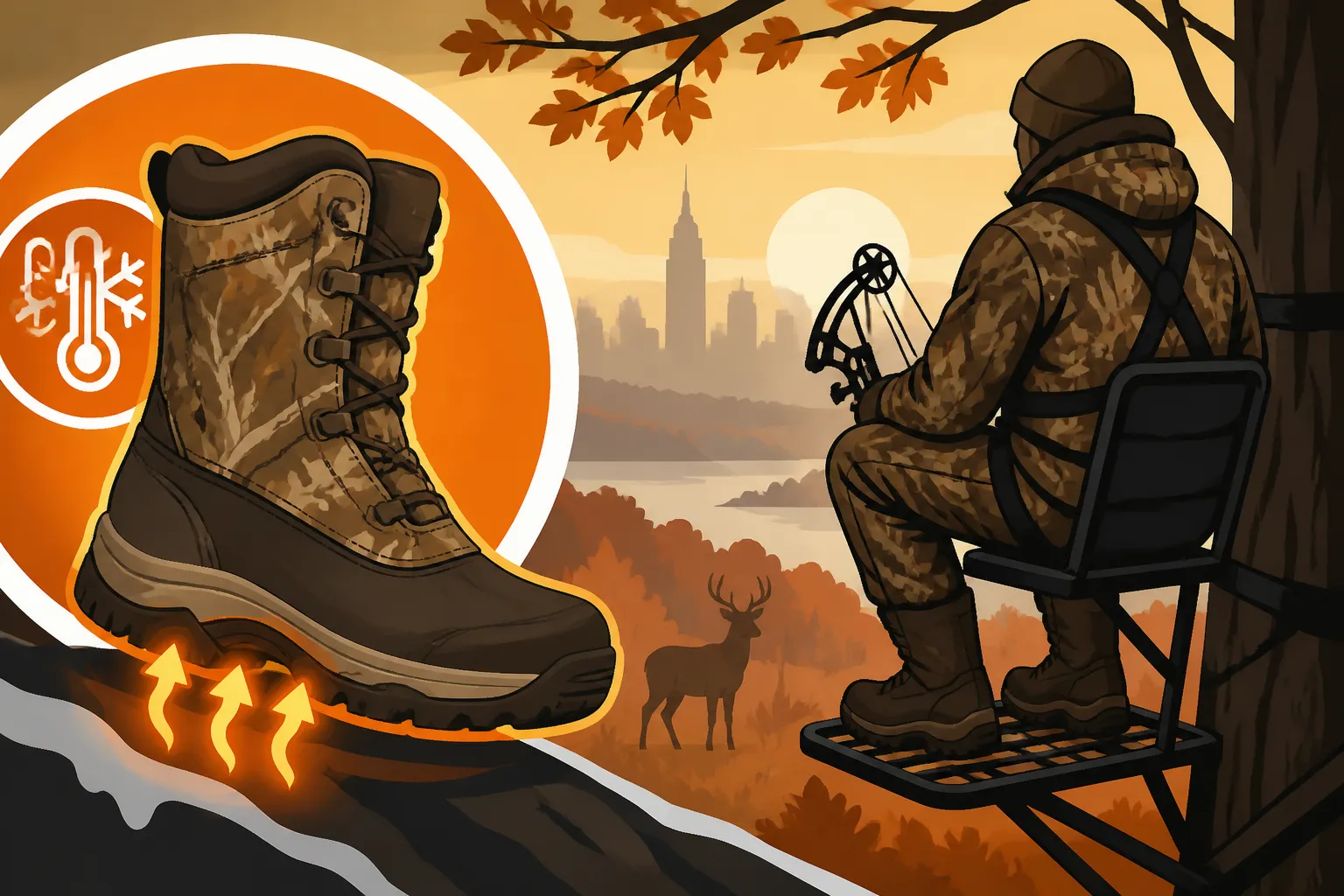
There’s almost nothing worse than being out on a cold New York morning, perched patiently on a stand, and feeling that tell-tale chill creep into your toes. It starts as a minor discomfort, but soon enough, it’s a full-blown distraction, pulling your focus from the woods and making you question why you even bothered getting out of bed. For anyone who has spent long hours waiting for a whitetail in chilly conditions, you know exactly what I’m talking about. This guide is all about tackling that exact problem: choosing the right insulated boots to keep your feet warm, comfortable, and focused during those all-day sits in New York's diverse hunting seasons.
Why Your Feet Get Cold on a Deer Stand and Why It Matters
It's not just about the thermometer reading; it's about the combination of temperature, inactivity, and often, dampness that makes your feet suffer most. Understanding these factors is the first step to conquering the cold from the ground up.
The Science of Heat Loss and Inactivity
When you're actively hiking to your stand, blood is pumping, muscles are working, and your body is generating plenty of heat. But the moment you settle in, that changes dramatically. Your body's core temperature regulation kicks in, prioritizing vital organs, and blood flow to your extremities, like your feet, naturally decreases. This reduced circulation means less warm blood reaching your toes.
Compounding this is the simple fact of conduction. Your boots are in direct contact with cold air, cold metal of a treestand platform, or cold, damp ground. Heat always moves from warmer objects to colder ones. If your boots aren't adequately insulated, that precious body heat will quickly transfer out through the soles and sides, leaving your feet chilled. Think about a brisk November morning in the Southern Zone, or a late December sit along a frozen Finger Lakes field edge – the ground can be like an icebox. The challenge only increases as the season progresses and conditions often include wet snow or sleet, especially if you're hunting in the Tug Hill region where lake-effect snow can be relentless.
The Impact of Cold Feet on Your Hunt
Beyond the obvious discomfort, cold feet can completely derail your hunting efforts. Firstly, the pain and distraction lead to fidgeting. You shift, you stomp your feet, you try to rub your toes back to life – all movements that can spook a wary whitetail. It’s nearly impossible to stay perfectly still and observant when half your mind is focused on how numb your digits are.
Secondly, cold feet often mean a shortened hunt. How many times have you climbed down from a stand an hour or two earlier than planned, not because you saw something, but because you just couldn’t take the cold anymore? Every minute you're off the stand is a missed opportunity. This is especially true during prime times like Hunting the Rut in the Southern Zone where every hour can count.
Finally, there are health and safety implications. Prolonged exposure to extreme cold can lead to frostnip or, in severe cases, frostbite. While rare for most deer hunting scenarios in New York, it’s a real risk if you're out in deep winter conditions without proper gear. Beyond that, general hypothermia can set in, even if your core is warm, simply because your body is working overtime to maintain temperature. Staying safe and effective in the field means staying warm from head to toe.
Understanding Insulation Ratings and Materials
When you start looking at insulated boots, you'll quickly notice numbers like "200g" or "1000g." This refers to the amount of insulation packed into the boot. But what does that really mean for your feet in a cold New York timber stand?
Grams of Thinsulate and Other Synthetics
The "gram" rating usually refers to grams of Thinsulate, a synthetic micro-fiber insulation developed by 3M, though other brands use similar synthetic materials. This number indicates the weight of insulation per square meter of material. So, a boot with 200 grams of Thinsulate has 200 grams of that insulation per square meter. The higher the number, the more insulation, and generally, the warmer the boot will be.
Synthetic insulations like Thinsulate are fantastic for hunting boots for a few key reasons. They are lightweight, which is crucial when you're trekking into remote spots on New York State Forest Hunting land. More importantly, they retain much of their insulating properties even when wet. If you're slogging through slush or wet snow, or your feet start to sweat, synthetic insulation will still provide warmth. This is a huge advantage over some natural materials. They also tend to dry faster and are often more resistant to compression over time, meaning they maintain their loft and warmth season after season. Many boot manufacturers now use proprietary synthetic insulations that offer similar benefits, constantly evolving the technology to provide better warmth-to-weight ratios.
The Role of Natural Insulation (Wool, Down)
While synthetic insulations dominate the boot market, natural materials like wool and down play important roles, primarily in your layering system or specialized footwear.
Wool, especially merino wool, is a phenomenal natural insulator. It's unique in its ability to keep you warm even when it's wet, which is why it's a staple for base layers and socks. You'll rarely find wool as the primary insulation inside a hunting boot itself, but it's the absolute king for socks. Layering a thin merino liner sock under a thicker, heavier merino wool sock can make a dramatic difference in how warm your feet feel inside even moderately insulated boots. Wool Versus Synthetics in Wet Snow is an important consideration for clothing, and the same principle applies to socks.
Down, made from the soft under-feathers of ducks or geese, offers an incredible warmth-to-weight ratio. It's incredibly lofty and traps a lot of air, making it extremely efficient at insulating. However, down loses nearly all of its insulating power when it gets wet, and it takes a long time to dry. For this reason, down is almost never used as the primary insulation in hunting boots, which are exposed to harsh, wet conditions. You might find it in specialized camp booties or extremely cold-weather pac boots, but it’s generally avoided for boots you'll be actively hunting in.
Waterproofing is Non-Negotiable
No matter how many grams of insulation your boots have, if your feet get wet, they will get cold. Period. Water conducts heat away from your body twenty-five times faster than air. That means even slightly damp socks can lead to rapidly chilling feet, negating all the effort you put into choosing an insulated boot.
This is why waterproofing is absolutely critical for any hunting boot, especially in New York where conditions can range from soggy leaf litter in October to deep, melting snow in December. Look for boots that feature a waterproof membrane, with GORE-TEX being the industry standard and most well-known. Many other brands use their own proprietary membranes that offer similar performance. This membrane is a barrier that prevents external water from getting in while still allowing moisture vapor (sweat) from your feet to escape, helping to keep your feet dry from the inside out.
Ensure the boot's construction also supports its waterproof claims. High-quality stitching, seam sealing, and durable outer materials are all part of the package. A rubber rand around the base of the boot, or a full rubber bottom (as seen in pac boots), adds an extra layer of protection from ground moisture and abrasions, especially useful when navigating muddy creek bottoms or wet swamps.
Choosing the Right Insulation Level for New York Conditions
New York's hunting seasons span a wide range of temperatures and weather patterns. What works for an early archery hunt won't cut it for a late-season muzzleloader sit. Matching your boot's insulation to the conditions is key.
Early Season to Mild Late Season (200-600 Grams)
For early archery season, or even the opening weeks of rifle season when temperatures can still be quite mild, boots in the 200-600 gram insulation range are often perfect. These boots strike a great balance between warmth and breathability, preventing your feet from overheating and sweating excessively when you're still-hunting or making a long walk to your stand.
Think about a crisp October morning where the temperature hovers around 30-40 degrees Fahrenheit, or even a warmer November day in the 40s. If you’re planning on being relatively active – say, still-hunting Catskill ridges or covering ground to reach a new area on public land – a lighter insulation prevents sweat buildup, which is a major contributor to cold feet once you stop moving. Even a sit-down hunter might find 400 grams sufficient for a few hours if they are layering their socks correctly. For hunts in warmer weather that still carry a chill, like the early parts of New York's Southern Zone Firearm Season, this range is often ideal.
Peak Rut and Colder Weather (800-1200 Grams)
When the peak of the rut hits in November, and especially as we move into the colder days of late November and early December, you'll want to step up your insulation game. Temperatures often drop into the 20s or even teens, and all-day sits become more common as deer activity increases. This is where 800-1200 gram insulated boots really shine.
This level of insulation is designed for those long, static sits in typical New York cold weather. If you're planning to spend six, eight, or even ten hours on a stand during the heart of the rut, waiting patiently for a cruising buck, this is your sweet spot. Your feet will be generating very little heat on their own, so the boot needs to provide substantial warmth. These boots often feel a bit bulkier than their lighter counterparts, but the warmth trade-off is well worth it. When looking for boots in this range, you might consult resources like GoHunt, which often features user reviews and gear guides, to help you narrow down models that have proven effective for extended cold-weather sits. Checking out what other hunters are wearing for Cold-Weather Sitting Strategy in New York can give you good insights.
Deep Winter and Extreme Cold (1600+ Grams)
For the truly bone-chilling conditions that New York can throw at us – think late December muzzleloader season, Hunting Deer in Deep Tug Hill Snow, or any hunt where temperatures consistently dip into single digits or below zero – you'll need the heavy artillery: boots with 1600 grams of insulation or more. Many of these extreme-cold boots are pac-style boots, featuring a removable felt liner for added warmth and moisture wicking.
These boots prioritize warmth above all else. They are often heavier and bulkier, which can make long walks challenging, but if your primary goal is to stay warm during stationary sits in extreme cold, they are indispensable. They create a massive thermal barrier, keeping your feet isolated from the freezing environment. While they might feel like overkill for a 30-degree day, on a 5-degree morning with a biting wind, you'll be thankful for every gram of insulation. When gearing up for these conditions, consider checking out forums or gear sections on sites like GoHunt to see what models are recommended for New York's harshest winter hunts.
Beyond Insulation: Other Crucial Boot Features
While insulation is paramount for warmth, a truly effective hunting boot for all-day sits encompasses several other critical features that impact comfort, performance, and durability.
Fit and Layering with Socks
A common mistake hunters make is buying boots that are too snug, thinking a tighter fit means more warmth. In reality, a boot that's too tight restricts blood circulation, which is vital for keeping your feet warm. You need a little bit of wiggle room for your toes and enough space to accommodate proper sock layering.
Always try on new hunting boots with the same kind of socks you plan to wear during your hunts. This typically means a two-sock system: a thin, moisture-wicking liner sock (often synthetic or merino wool) directly against your skin, and a thicker, insulated merino wool sock over it. The liner helps pull sweat away, and the outer sock provides the bulk of the warmth. When you try them on, make sure you can comfortably wiggle your toes. If your feet feel compressed, you're hindering circulation, and they'll likely get cold faster. It's better for a boot to feel slightly loose than too tight, as you can always add another thin sock layer if needed.
Sole Aggressiveness and Support
New York's terrain is incredibly varied, from the rocky, steep climbs of the Catskills to the muddy, flat agricultural lands of the Southern Tier, and the potential for snow and ice almost everywhere. Your boot's sole needs to be up to the task. Look for an aggressive tread pattern that provides excellent traction on mud, wet leaves, snow, and ice. Deep lugs will bite into soft ground, preventing slips and falls.
Beyond traction, good sole support is essential for comfort during long hours on your feet, whether walking to the stand or just shifting your weight while waiting. A stiff midsole provides stability and prevents fatigue, especially if you're carrying a heavy pack or traversing uneven terrain. Features like a reinforced shank (internal support structure) can significantly reduce foot strain. If you're doing a lot of hiking in and out of remote areas, like deeper into the Adirondack Forest Preserve or larger State Forest blocks, the support and durability of the sole become even more critical.
Material Durability and Construction
Hunting boots are an investment, and you want them to last through many seasons of abuse. The materials and construction methods used are key indicators of durability.
Leather, often full-grain, remains a popular choice for its ruggedness, breathability, and ability to mold to your foot over time. Modern boots often combine leather with durable synthetic panels (like Cordura nylon) to reduce weight and increase flexibility in certain areas. Rubber is crucial, especially in the lower sections, forming a waterproof barrier and protecting against scuffs and punctures. A full rubber bottom, common in pac boots, excels in deep snow and wet environments, preventing water seepage entirely.
Pay attention to details like stitching – double or triple stitching in high-wear areas indicates quality. Glued and stitched sole construction is generally more durable and re-soleable than solely glued designs. A protective toe cap and heel counter will extend the life of the boot, especially if you're navigating rocky or brushy terrain. Investing in a well-constructed boot means you won't be replacing them mid-season because a seam blew out or the sole started delaminating after a few cold, wet hunts.
Here's a quick reference for matching insulation levels to common New York hunting scenarios:
| Insulation Level | Typical New York Conditions | Recommended Hunting Style | Notes |
|---|---|---|---|
| 200-400 Grams | Early Archery (Sep-Oct), Mild Nov. | Active still-hunting, short to moderate sits | Best with good sock layering; prevents overheating during exertion. |
| 600-800 Grams | Peak Nov. Rut, Moderate Dec. | Moderate sits, mix of walking and waiting | Versatile for typical rifle season, good balance for varied activity. |
| 1000-1200 Grams | Cold Dec., Late Season | Longer, static sits (4-8+ hours), very cold temps | Ideal for dedicated stand hunters in the rut and colder late seasons. |
| 1600+ Grams | Deep Winter (Jan-Feb), Extreme Cold | All-day static sits in frigid conditions | Often pac-style boots; bulkier but maximum warmth for minimal activity. |
No matter which boots you choose, remember that proper care, like drying them out thoroughly after each hunt and treating the leather or fabric as needed, will significantly extend their lifespan and performance. Don't let cold feet cut short another promising hunt in the beautiful woods of New York!
Disclaimer
This article is for general informational purposes only and does not constitute professional advice. Laws, prices and regulations vary by location and change over time. Consult a qualified professional for guidance on your specific situation.