Finding Access Near Syracuse
Finding solid hunting ground near a populated area like Syracuse can feel like searching for a needle in a haystack, especially if you're new to the area or frustrated with overcrowded public spots. But don't despair! While it certainly presents unique challenges compared to the vast wilderness of the Adirondacks, there are absolutely opportunities to be had. This guide will walk you through the realities of hunting around Syracuse, exploring both public and private land strategies to help you fill your tags and enjoy the great outdoors.
Understanding the Syracuse Hunting Landscape
Let's be real, hunting near a city isn't the same as heading deep into the backcountry. The landscape around Syracuse is a mix of suburban sprawl, agricultural fields, small woodlots, and some larger state land tracts. This means different challenges and different strategies.
The Reality of Hunting Pressure Near Urban Centers
One of the biggest hurdles you'll face when looking for hunting access around Syracuse is the sheer volume of other hunters, especially on public land. It's a tale as old as time: convenient access often equals heavy pressure. You'll likely encounter more orange vests during firearm season, more trucks parked along state forest roads, and more boot prints on trails than you might in more remote regions of New York. This pressure can make deer more nocturnal, turkeys warier, and simply make it harder to find a quiet spot to yourself. It's a frustrating reality, but understanding it is the first step to developing effective counter-strategies. Don't let it discourage you; it just means you need to be a little smarter and perhaps work a little harder. Hunting Pressure on New York Public Land is a real factor, but it's not insurmountable.
Game Species You Can Expect to Find
Despite the population density, the areas surrounding Syracuse are rich in wildlife. White-tailed deer are abundant, adapting incredibly well to fragmented habitats. You'll find them in small woodlots bordering farms, along creek bottoms, and even venturing close to residential areas. Wild turkeys have also made a phenomenal comeback across the state, and the mix of agricultural fields and mature timber around Syracuse provides excellent habitat for them. For those who enjoy chasing smaller game, cottontail rabbits, squirrels, and various migratory birds (like waterfowl in specific wetlands) are also present. While you might not be encountering moose here, the diversity of common game species means there's usually something to hunt if you can find the access. Expect to focus primarily on White-Tailed Deer Across New York and Wild Turkeys in New York.
Navigating New York's Public Land Near Syracuse
New York State does a commendable job of providing public hunting opportunities, even relatively close to urban centers. While these areas often see more traffic, they are still a viable option for many hunters. The key is to know where to look and how to hunt them effectively.
Exploring State Forests and Reforestation Areas
Around Syracuse, you'll find a number of State Forests and Reforestation Areas. These lands are managed for multiple uses, including timber production, recreation, and wildlife habitat. They are typically open to public hunting during legal seasons. Unlike some wilderness areas, these forests often have a network of old logging roads or trails, which can provide good access, but also means others might be using them. The terrain can vary from rolling hills to steeper ravines, and the mix of successional growth from timber harvests can create excellent deer and turkey habitat.
For example, areas like Morgan Hill State Forest or Highland Forest (though some parts may have specific regulations) offer substantial acreage within a reasonable drive. It's crucial to consult the New York Department of Environmental Conservation (DEC) website or the Using the New York HuntFishNY Map Tool to verify boundaries and any specific regulations for each parcel. These areas can hold good numbers of deer, especially if you're willing to walk a bit further than the average hunter. Look for areas with diverse habitat – patches of mature timber, recent clearcuts, and dense cover for bedding. New York State Forest Hunting is a great resource to understand what to expect.
Maximizing Wildlife Management Areas (WMAs)
Wildlife Management Areas (WMAs) are specifically managed by the DEC for wildlife habitat and public recreation, including hunting. These are often some of the best public lands you can find, as their primary purpose is to benefit game species. Near Syracuse, places like Three Rivers WMA, Happy Valley WMA, and Cicero Swamp WMA offer significant hunting opportunities. Three Rivers, for instance, is known for its diverse habitat including wetlands, uplands, and agricultural fields, supporting deer, turkey, waterfowl, and small game. Happy Valley offers a mix of forest and open land. Cicero Swamp is, as the name suggests, a substantial wetland complex that can be challenging to navigate but offers unique opportunities, particularly for waterfowl and deer accustomed to thick cover.
While WMAs are excellent, they are also well-known and can draw significant crowds. To maximize your success, consider hunting mid-week, during less popular seasons (like early archery or late muzzleloader), or focusing on areas that require more effort to access. Don't just stick to the main trails; dive into the thicker stuff. These areas are designed for wildlife, so understanding their management goals can help you predict animal movement. New York Wildlife Management Areas will give you a deeper dive into how these areas function.
Smaller, Often Overlooked Public Parcels
Beyond the large State Forests and WMAs, there are often smaller, less obvious public parcels that can be goldmines for dedicated hunters. These might include small town or county forest lands, utility line corridors (with permission from the utility company, if required), or even tiny, fragmented state-owned pieces that are too small for most hunters to bother with. These overlooked spots often harbor game that has learned to avoid larger, more pressured areas. The trick is finding them. This is where detailed mapping apps like onX Hunt come into their own. They can reveal small tracts of public land, often landlocked or with limited access points, that don't show up on a quick glance at a general map. These require careful scouting and sometimes creative access planning, but the reward can be a low-pressure hunting experience close to home.
| Public Land Type | Key Features | Hunting Pressure (near Syracuse) | Best For | Common Challenges |
|---|---|---|---|---|
| State Forests | Timberland, varied habitat, old logging roads | Moderate to High | Deer, Turkey, Small Game | Shared use with other recreationists |
| Wildlife Management Areas | Managed specifically for wildlife, diverse habitats | High | Deer, Turkey, Waterfowl, Small Game | Very high pressure, especially early season |
| Smaller Public Parcels | Fragmented, often isolated, varied habitat | Low to Moderate | Deer, Turkey, Small Game | Difficult to locate, limited access, potential for "landlocked" parcels |
Securing Private Land Access Around Syracuse
For many hunters near Syracuse, private land permission is the holy grail. It offers lower pressure, more control over your hunting experience, and often holds bigger, less pressured animals. However, obtaining permission requires effort, respect, and persistence.
The Art of Knocking on Doors and Building Relationships
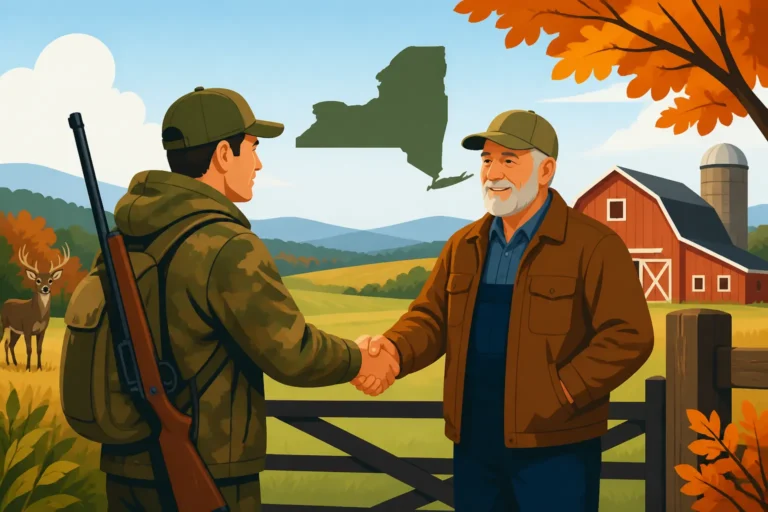
This is the classic approach, and it's still incredibly effective around Syracuse. Farmers, landowners with woodlots, or even those with larger residential properties might be open to allowing hunting, especially if they have deer damage issues or simply appreciate the help in managing local wildlife populations. The key is to approach them with respect, courtesy, and a clear understanding of their needs and concerns.
Start by identifying potential properties using mapping tools (like onX Hunt, which shows property boundaries and owner names). Dress presentably, avoid showing up in full camo, and always ask permission in person, rather than by phone or email. Explain who you are, what you're looking to hunt, and highlight your commitment to safety and respect for their property. Offer to share venison, help with chores, or assist with nuisance animal issues. Be prepared for "no," but don't be discouraged. One "yes" can open up a world of opportunity. Consistency and building a relationship over time are far more valuable than a one-time request. Getting Private Land Permission in New York delves deeper into these strategies.
Leasing and Cooperator Programs
Hunting leases are another avenue for private land access, though they can be costly and might not be as prevalent directly around Syracuse as in some other agricultural regions. A lease grants you exclusive hunting rights for a specific period, usually a year, on a landowner's property. This provides certainty and allows for more intensive habitat management or stand placement without worrying about other hunters. While not typically a primary resource for New York, platforms like GoHunt sometimes have information or connections to guide services or broader lease opportunities that might indirectly lead to New York options, though it's more common for Western states. However, the best way to find leases locally is often through word-of-mouth or by directly asking landowners.
New York also has Cooperator Programs where the DEC partners with landowners to allow public access. These are typically larger farms or land tracts that are posted but allow hunting under specific rules. While not as common as outright private permission, it's worth checking the DEC's public access maps or contacting regional offices to see if any such programs exist near Syracuse. These can provide excellent opportunities that fall between traditional public and private land.
Essential Tools and Resources for Finding Access
In today's hunting world, technology can be your best friend when it comes to finding and navigating hunting land, especially near a complex urban-wildland interface like Syracuse.
Mapping Applications and GPS Units
Gone are the days of relying solely on paper maps and compasses (though those are still essential backups!). Modern mapping applications are indispensable for finding hunting access near Syracuse. onX Hunt is a prime example, allowing you to view satellite imagery, topo maps, and most importantly, property boundaries with landowner names, alongside public land designations. This is invaluable for identifying potential private land to ask permission on, or for differentiating between public and private parcels when you're scouting.
Using an app like onX Hunt, you can:
- Identify state forests, WMAs, and other public lands.
- See detailed parcel lines, helping you stay off private property when on public land, or know exactly whose door to knock on.
- Mark waypoints for potential stand locations, game sign, or access points.
- Navigate off-trail with confidence, even without cell service (by downloading maps beforehand).
Pairing a robust mapping app with a reliable GPS unit provides redundancy and ensures you always know where you are, especially when venturing into dense cover or unfamiliar terrain. This is vital for safety and for staying within legal boundaries.
DEC Resources and Local Knowledge
The New York State Department of Environmental Conservation (DEC) website is your official source for all hunting regulations, season dates, and public land maps. Their interactive mapping tools are fantastic for identifying state-owned lands, WMAs, and even some cooperator properties. Regularly checking their site for updates on new access programs or temporary closures is a must.
Beyond official resources, don't underestimate the power of local knowledge. Chatting with hardware store owners, gas station attendants, or even other hunters (respectfully, of course) can sometimes unearth valuable insights about local patterns, less-pressured areas, or landowners who might be amenable to hunters. Join local sportsmen's clubs; these groups often have members with extensive local knowledge and sometimes even exclusive access to private lands through club leases or arrangements. A little friendly conversation can go a long way.
Overcoming Common Challenges and Staying Ethical
Hunting near Syracuse isn't always easy, but a proactive mindset and a commitment to ethical practices can make all the difference.
Dealing with Crowds and Pressure
As mentioned, public lands near Syracuse can get busy. To deal with this, consider these strategies:
- Hunt Mid-Week: If your schedule allows, hunting on Tuesday, Wednesday, or Thursday can significantly reduce the number of other hunters you encounter.
- Hunt the "Unattractive" Areas: Everyone wants to hunt the easy-to-access woodlot. Look at swamp edges, thick cedar stands, or areas with difficult topography. Finding Ground Others Walk Past is a principle that applies everywhere, especially near cities. Hunters often stick to trails; going just a few hundred yards off the beaten path can get you into unpressured territory.
- Time Your Hunts: Early morning, late evening, or during adverse weather (light rain, snow) can deter fair-weather hunters and increase your odds.
- Scout, Scout, Scout: Pre-season scouting is always important, but it's paramount in high-pressure areas. Identify fresh sign, travel corridors, and bedding areas. Scouting New York Public Land Before Season will give you a leg up. The more you know about the specific parcel, the better you can predict deer movement and avoid other hunters.
Respecting Landowners and Local Regulations
Whether you're on public or private land, maintaining a stellar reputation is crucial. For private land, this means:
- Always have written permission: Even if you have a verbal "yes," a simple written note detailing who, what, when, and where you can hunt protects both you and the landowner. It also demonstrates your seriousness and respect for their property. Do You Need Written Permission in New York? is a question often asked, and the answer is usually 'yes, to be safe.'
- Know the boundaries: Use your mapping apps, but also walk the property with the landowner to clearly understand where you can and cannot go.
- Leave no trace: Pack out everything you pack in. Don't litter, damage fences, or cut trees without explicit permission.
- Report your success (and failures): Keep the landowner informed. Share your harvest stories, and if you don't get anything, thank them for the opportunity. This builds goodwill for future seasons.
On public land, be mindful of other users – hikers, birdwatchers, and other hunters. Maintain safe shooting lanes, adhere to blaze orange requirements, and always follow all New York State hunting regulations. Remember, we're all ambassadors for hunting. Ethical behavior not only ensures your own access but also helps maintain a positive image for all hunters in the community. New York Hunter Education Requirements covers the fundamental principles of safe and ethical hunting.
Finding good hunting access near Syracuse requires a blend of strategy, technology, social skills, and plain old hard work. It's not always easy, but the satisfaction of finding that unpressured woodlot or gaining permission on a productive farm makes the effort entirely worthwhile. Happy hunting!
Disclaimer
This article is for general informational purposes only and does not constitute professional advice. Laws, prices and regulations vary by location and change over time. Consult a qualified professional for guidance on your specific situation.